Football has never been more valuable.
Broadcast rights continue to generate billions of dollars, commercial partnerships are growing in scale, and clubs are investing heavily in new stadiums, technology and fan experiences. On the surface, the business of football appears to be in excellent health.
But there is a question worth asking.
As clubs continue searching for new revenue streams, are they making it harder for the very people who built the game to remain part of it?
The Rising Cost of Being a Football Fan
Over the past decade, supporting a football club has become increasingly expensive. Ticket prices have risen, particularly at Europe’s biggest clubs; for example, Manchester United have recently increased ticket prices for a fourth consecutive year.
The debate reached a global audience during the 2026 FIFA World Cup. Ticket prices prompted widespread criticism from supporter groups, with concerns over dynamic pricing and the overall cost of attending matches.
For many travelling fans, the cost extended well beyond admission, with flights, accommodation and local transport adding to an already significant financial commitment.
Even national team kits surged in price: Nike’s replica kits for nations such as England, France and Brazil retailed for €110 ($178 AUD), while the official match versions blew out as far as €110 ($260 AUD)
FIFA defended its adoption of the United States’ dynamic pricing model, arguing low prices would lead to inflated secondary market prices, which meant less money going back into football.
Yet the backlash highlighted a growing tension between maximising commercial returns and preserving accessibility for the game’s loyal supporters. Football Supporters Europe released a statement following the release of tickets, describing the prices as a “monumental betrayal to the tradition of the World Cup.”
None of these decisions exist in isolation.
Football clubs face rising operating costs, increasing player wages and growing expectations around facilities, technology and supporter engagement.
Stadium redevelopments, academy investment and player recruitment all require significant financial investment. Finding new sources of revenue has become a commercial necessity rather than a luxury.
Football Clubs Are Becoming Entertainment Businesses
Modern football clubs are no longer operating solely as sporting organisations. Many have evolved into entertainment businesses, with stadiums hosting concerts, corporate events, hospitality experiences and conferences alongside football matches.
From Tottenham Hotspur Stadium to Real Madrid’s redeveloped Santiago Bernabéu, clubs are investing in assets designed to generate income every day of the year, not just on matchday.
Since moving to Tottenham Hotspur Stadium, matchday revenue has more than doubled over the last ten years and commercial revenue has nearly tripled during that same period.
That strategy makes practical business sense.
The concern is whether supporters are gradually becoming customers first and fans second.
Loyalty Isn’t Transactional
Sport has always been different from other forms of entertainment because loyalty is rarely transactional. Supporters do not simply choose another club if prices rise or performances decline.
Many inherit their club through generations, travelling thousands of kilometres and investing countless hours because of an emotional connection that cannot be measured on a balance sheet.
That relationship is one of football’s greatest commercial strengths, but it also creates a responsibility.
Every pricing decision, whether it involves tickets, memberships or merchandise, should consider not only the revenue it generates today but the supporters it may exclude tomorrow.
The Cost of Watching Football
The cost of supporting a club doesn’t end once the final whistle blows. For many supporters, following football now also means paying for access to the game itself.
In Australia, broadcast rights are spread across multiple platforms, meaning fans who want to watch the A-League, Premier League, UEFA competitions and other major European leagues need several subscriptions.
Individually, each service may represent reasonable value, but collectively they have increased the cost of following football throughout an entire season.
Broadcast Deals Come With Benefits
There is, however, another side to the argument. Broadcast rights are one of football’s biggest revenue streams, funding everything from player wages and production quality to grassroots investment and the continued growth of women’s football.
Broadcasters are paying significant sums for exclusive rights because live sport remains one of the few forms of content capable of attracting large audiences in real time. Without those investments, many competitions would struggle to maintain their current standard both on and off the pitch.
The issue, then, isn’t that football is harder to watch. It’s that following it has become increasingly fragmented. With matches spread across different platforms and services, football may be more accessible than ever, yet actually keeping up with the game can feel more challenging than ever before.
A supporter shouldn’t need multiple subscriptions simply to follow their club, their national team and Europe’s biggest competitions. As football’s media landscape becomes more complex, convenience risks becoming another cost borne by supporters.
The recent Australia Cup match between South Melbourne and Preston Lions offered a timely reminder of what football looks like when supporters feel connected to their clubs. An official crowd of 6,673 created a vibrant atmosphere that translated brilliantly on television, or free on Football Australia’s YouTube channel.
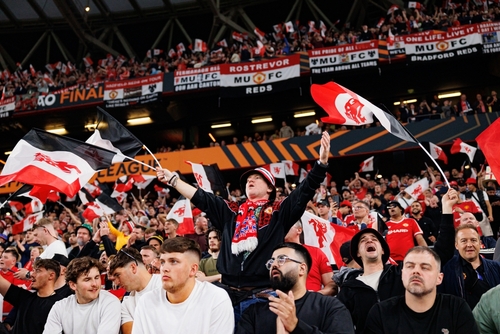
The spectacle wasn’t driven by premium hospitality or corporate experiences. It was driven by passionate fans filling the stands and creating a classic football environment.
Finding the Balance
The challenge for football is finding the balance between commercial success and supporter accessibility.
Clubs, leagues and governing bodies don’t necessarily need to lower every ticket’s price or abandon lucrative broadcast deals. But they should continue asking whether growth is making the game easier to experience or simply more expensive to follow.
That could mean preserving affordable ticket categories, simplifying access to live broadcasts, investing in community initiatives or ensuring stadiums remain places where families and lifelong supporters feel welcome. Commercial innovation and supporter accessibility do not have to be mutually exclusive.
Football’s commercial growth is essential. Without it, clubs cannot invest in players, facilities or community programmes.
But growth should never come at the expense of accessibility.
The most successful clubs of the future will not simply be those that generate the highest revenues. They will be the ones that continue to fill their stadiums with supporters who feel they belong.
After all, football’s greatest asset has never been its broadcast deals or sponsorship agreements.
It has always been the people in the stands.