

Football NSW builds life‑saving network as cardiac safety push expands

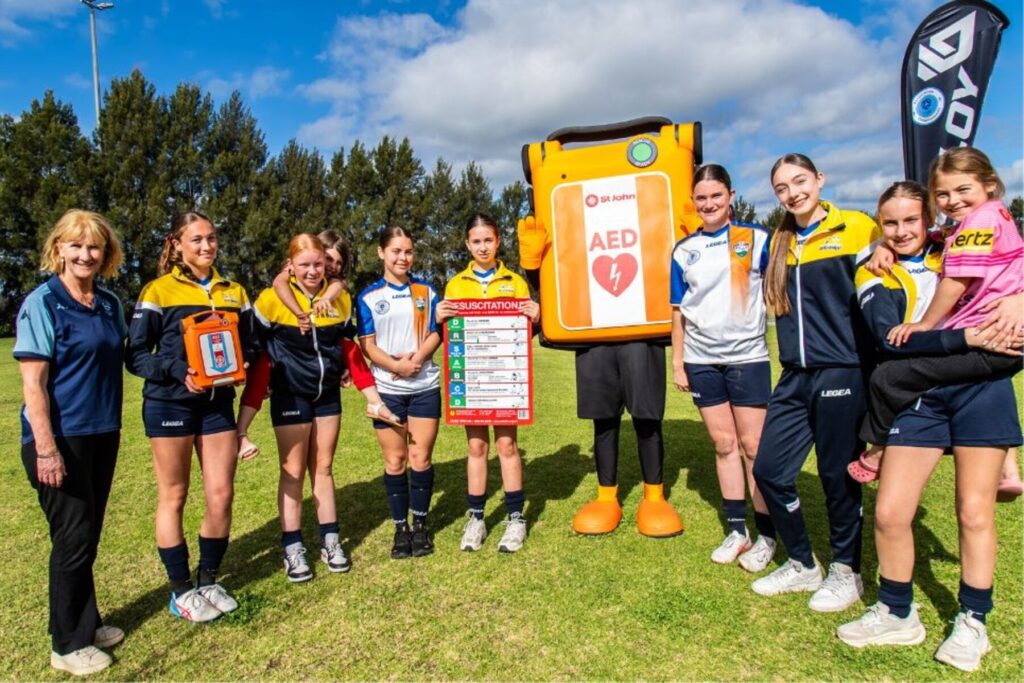
Football NSW has distributed 20 defibrillators to associations and regional clubs through its Every Beat Matters campaign, part of a broader push to improve cardiac emergency preparedness across the state’s football network.

Sixteen of the devices were presented to participating associations at the inaugural Football NSW Association Championships in Mudgee. A further four went to regional clubs: Cowra and District Soccer Club, Westside Panthers, Yerrinbool Bargo Soccer Club and Narooma Football Club.

The rollout builds on the Heartbeat of Sport AED Mapping Project, which is mapping defibrillator placement at sporting facilities across NSW with funding from the Minns Labor Government. Twelve football associations have joined the effort, including Eastern Suburbs, Manly Warringah, Granville, Southern Districts, Nepean, Northern Suburbs, Football Canterbury, Bankstown, Hills, Sutherland Shire, North West Sydney Football and Football South Coast.

Data collected through the mapping project is being fed into NSW Ambulance’s GoodSAM emergency response system and NSW Health’s public AED map, enabling first responders to locate nearby defibrillators in real time.

The initiative responds to a gap that had gone largely unexamined. More than 2,400 defibrillators have been deployed across NSW sports facilities through the Local Sport Defibrillator Grant Program, which offers grants of up to $3,000 to eligible organisations. But a device not registered in emergency response systems provides significantly less value than one that is accurately mapped and immediately locatable.

The urgency is not abstract. At Doyalson Wyee Football Club, a 70‑year‑old player survived a sudden on‑field cardiac arrest because an AED was available on site. Survival rates drop by about 10 per cent for every minute without defibrillation.

Football NSW is also establishing a long‑term defibrillator register to track equipment distribution, access and maintenance across all 636 clubs and 31 associations. The Every Beat Matters campaign, supported by Toyota and St John Ambulance, aims to raise about $240,000 through a raffle to fund an initial rollout of 65 defibrillators to clubs currently without access, prioritising regional and lower socio‑economic areas.

The #HeartHealthMatters Program is delivering CPR and AED familiarisation training to sporting organisations, with a particular focus on regional communities where ambulance response times are often longer and volunteer bases smaller.

The ambition, in the words of project organisers, is straightforward: that no preventable death occurs on a football ground because the right equipment was not there, or could not be found.
Previous ArticleNext Article

Bentleigh Greens and Metricon Bring Local Business Community Together Through Networking Initiative

Bentleigh Greens FC has reinforced its commitment to supporting its community beyond football, partnering with Metricon Homes to host a business networking evening designed to strengthen relationships between local businesses, sponsors and club stakeholders.


A unique setting for meaningful connections

Held inside one of Metricon’s display homes, the Bentleigh Greens Business Networking Night welcomed around 60 local business owners, club partners and community leaders for an evening focused on connection, collaboration and knowledge sharing.

Rather than a traditional function space, Metricon opened the doors of one of its display homes, creating a unique networking environment that highlighted how the space could be transformed into a premium venue while providing guests with a relaxed setting to build professional relationships.

The event reflects a growing trend across community football, where clubs are increasingly positioning themselves as platforms for business engagement and local economic development, alongside their role in delivering participation opportunities on the pitch.

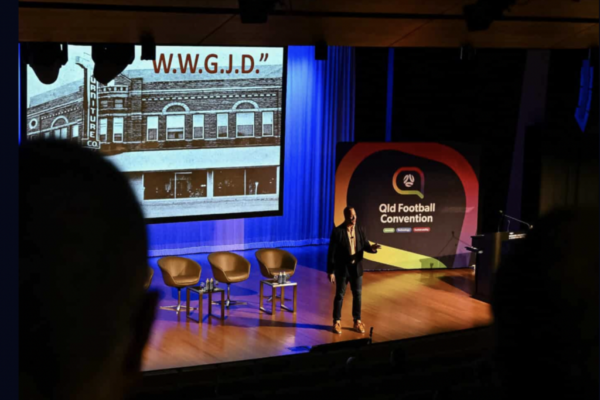
Guests also heard from strategic futurist Marcus Barber, who delivered a presentation examining the growing influence of artificial intelligence on modern business. His insights encouraged attendees to consider how emerging technologies are reshaping industries and the importance of preparing for future change.


Creating value beyond sponsorship

While commercial outcomes were never the primary objective, the evening was designed to create long-term value by fostering meaningful relationships between businesses connected to the Bentleigh Greens community.

Early feedback has been overwhelmingly positive, with several attendees already establishing new contacts and beginning discussions around potential collaborations.

The initiative also highlights Metricon’s broader commitment to supporting local communities beyond residential construction. By partnering with Bentleigh Greens and providing the venue, the company helped facilitate an event that encouraged learning, networking and stronger community connections.


Football clubs as community business hubs

For community football clubs, initiatives such as these demonstrate how partnerships can extend beyond traditional sponsorship models. By creating opportunities for local businesses to engage with one another, clubs can strengthen their commercial networks while delivering tangible value to sponsors and the wider community.

As football clubs continue to explore new ways of engaging stakeholders off the field, events like the Bentleigh Greens Business Networking Night illustrate how sport can serve as a catalyst for meaningful business relationships and long-term community growth.

Regional carnival puts Football West’s Country Pathway in Focus

Football West’s first State Regional Carnival has done what many federation pathway initiatives promise but do not always deliver: it brought regional players into a central high-performance environment and made them visible on equal terms, at least for a weekend.

Almost 160 players from six Football West Regional Academy zones: South West, Goldfields, Great Southern, Mid West/Gascoyne, Pilbara and Kimberley, were brought to the Sam Kerr Football Centre in Queens Park for the three-day event last week. For the governing body, the carnival is now being positioned as a formal part of its talent identification and development pathway.

Football West general manager of football David Lewis said the carnival had highlighted the standard of regional football and the role country programs continue to play in the state game’s future. He described the event as an “important part” of the development pathway and thanked players, staff, volunteers and families who travelled from around WA to attend.

From event success to system performance

Western Australia’s structural constraint is distance. Regional players face layered costs that metropolitan players usually do not: long-haul travel into Perth, additional accommodation, time away from school and work, and repeated trips if selected into subsequent camps. Those costs are not incidental. They influence who can stay in the system.

That is why the next stage of this initiative matters more than the launch optics. If identified players cannot progress because the second and third steps of the pathway carry prohibitive financial or logistical burdens, then early identification becomes a limited intervention.

In governance terms, the carnival has shifted Football West’s accountability point. The federation has now demonstrated it can convene regional talent at scale. The policy obligation is to show what proportion of those players can be retained and advanced across the following 12 to 24 months, and on what support settings.

Infrastructure is in Place; Distribution as the Issue

The use of the Sam Kerr Football Centre means WA now has a purpose-built football base capable of hosting large-format pathway activity in one location. That removes one of the traditional constraints often cited in state development systems. Once infrastructure is available, attention moves to distribution: who accesses the environment, how often, and under what conditions.

If Football West wants this carnival to function as a durable pathway mechanism rather than a showcase event, several design questions become central. What are the progression criteria after carnival selection? What travel and accommodation support is available for players invited back into metro-based programs? How is regional representation balanced across age groups and cohorts? What protections exist to prevent early dropout linked to cost rather than capability?

A broader shift in Australian pathway policy

The Football West carnival also reflects a wider trend in Australian football administration. Federations are increasingly moving from ad hoc regional scouting to more formal, event-based talent aggregation tied to defined development structures. The logic is straightforward: centralised assessment improves comparability, increases selector confidence, and reduces the chance that players are missed because of location alone.

Yet national and state systems alike continue to confront the same bottleneck. Identification has improved faster than inclusion in later stages. The policy challenge is less about finding players than funding continuity for players whose families absorb higher participation burdens.

Football West does not need to prove that regional football has quality; that case has already been made repeatedly by player outcomes and now by event scale. It needs to publish evidence that regional players can convert recognition into progression at rates that are not materially depressed by geography or household income.

That means performance should be measured against more than attendance and event satisfaction. Over time, the federation will likely be judged on transition rates from regional carnival cohorts into advanced programs, retention across seasons, gender balance in progression outcomes, and the level of practical support delivered to remote participants.

For now, the inaugural carnival can be read as a constructive step with genuine strategic value. It created a focal point for regional talent and signalled administrative intent. Whether it becomes consequential policy will depend on what Football West builds around it next: transparent progression settings, repeatable support, and a funding model that does not turn distance into exclusion.

Most Popular Topics

Editor Picks

Send this to a friend