Australian football has spent years trying to create a clearer structure for the game.
But one question keeps resurfacing: who is actually responsible when the interests of Australian football collide?
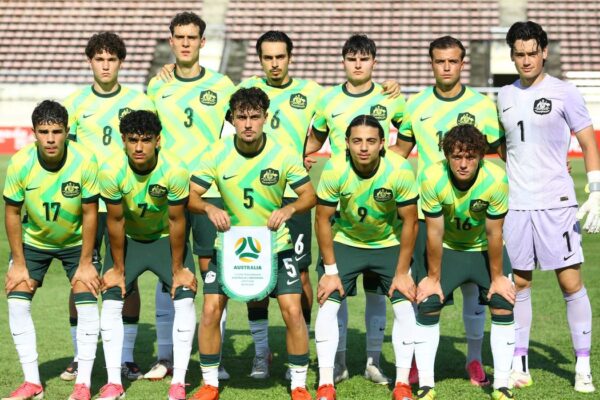
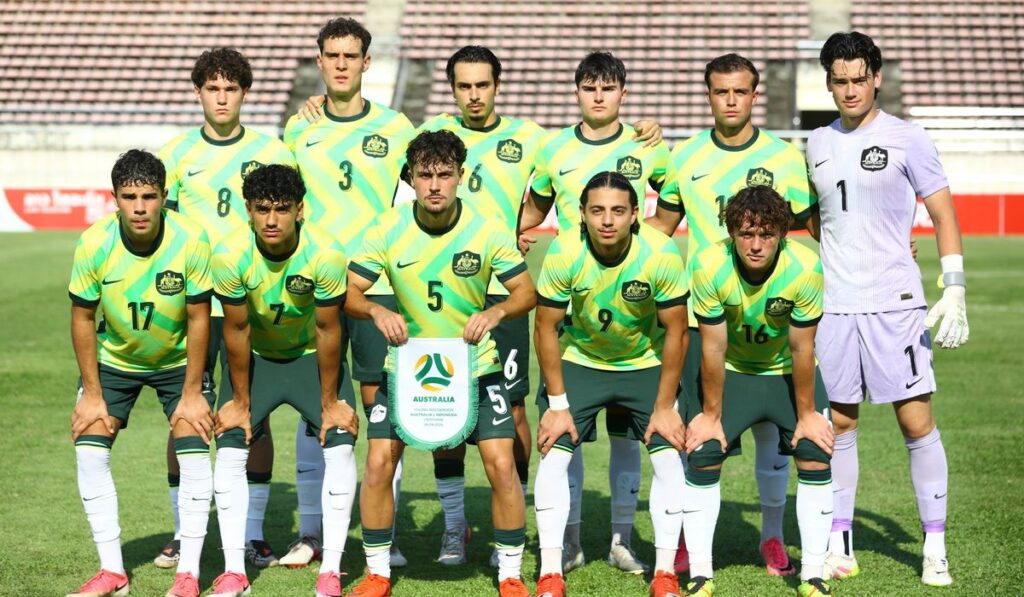
The Young Socceroos failing to qualify for the 2027 AFC U20 Asian Cup is the latest example.
Australia finished third in its qualification group after a 2-0 defeat to Indonesia, failing to qualify for a tournament it won in 2025.
The result itself was disappointing. But the circumstances around the squad selection were arguably more so.
Several A-League players were unavailable because their clubs did not release them for the qualification campaign. Melbourne City’s Lawrence Wong and Medin Memeti and Adelaide United’s Amlani Tatu were among those affected.
The reason is straightforward. The U20 qualification tournament fell outside a FIFA international window, meaning clubs were not obliged to release players. A previous agreement between Football Australia and A-League clubs had allowed national teams to select domestic players outside those windows, but that arrangement expired.
That leaves a much bigger question than whether three players should have been available.
Why was there not a structure in place that could resolve this conflict before it became a problem?
One game, multiple priorities
The answer is partly structural.
Football Australia is responsible for the national teams and the broader national framework. The APL operates and commercialises the A-Leagues. State federations oversee their own competitions and development structures, while clubs have their own commercial, sporting and player-development priorities. Meanwhile, the PFA represents the players.
Football Australia’s own governance outline acknowledges the unbundling of Football Australia and the APL was completed at the end of 2020, while noting the two organisations still need to collaborate across areas including pathways, community football and national teams.
On paper, that separation makes sense.
In practice, difficulties emerge when the model is tested and conflicts of interest emerge.
A club has an obligation to its competition and its squad. Football Australia has an obligation to its national teams. Players have career considerations, while the APL has commercial and scheduling interests. State bodies have their own competitions and pathways.
None of those interests in isolation are necessarily unreasonable.
The problem comes when they point in different directions.
The cost of fragmentation
This is not the first time the club-versus-country question has reared its head.
The same issue has affected Australia’s youth pathways before. In 2012, then-national technical director Han Berger acknowledged the particular difficulty Australia faces because many young players are overseas and youth international tournaments are often held outside FIFA windows, meaning clubs are not obligated to release their players.
And there is a broader irony here.
Australian football is producing young players good enough to attract serious international interest. A-League clubs are increasingly important development environments, with 15 A-League players included in Australia’s 2025 U20 World Cup squad.
Yet the system seems to struggle coordinating those same players when the national team needs them.
That is not necessarily a club problem.
It is a system problem.
Who gets the final say?
The answer cannot simply be that Football Australia should have more power.
Nor should clubs be expected to sacrifice their own interests whenever national teams come calling.
The real issue is whether Australian football has clearly defined the points at which the interests of the national team, professional clubs and players intersect and importantly, where they take priority.
If it has, those rules need to be understood and consistently applied.
If it hasn’t, this should be the catalyst to fix them.
Because the consequences extend beyond one U20 tournament.
Australia’s youth national teams are part of the country’s player-development pathway. International tournaments provide players with experience, exposure and opportunities to progress. The U20 Asian Cup also serves as a pathway towards the FIFA U20 World Cup.
Missing that pathway matters.
At the same time, A-League clubs are investing in academies, recruiting young players and trying to build sustainable professional businesses. They cannot simply operate as talent suppliers for national teams without considering their own competitive and commercial interests.
That tension is natural, and not going away.
Australian football needs alignment, not another power struggle
The answer may therefore be less about deciding who is in charge and more about establishing who is responsible for what.
Football Australia, the APL, clubs, state federations and the PFA do not need identical objectives.
But they do need a common framework for the moments when those objectives collide.
That could mean clearer player-release agreements, longer-term scheduling coordination and defined mechanisms for resolving disputes before squads are announced.
The alternative is a cycle of arguments.
Clubs blame national team scheduling. National teams point to player availability. Players find themselves caught between employers and country. Fans are left wondering why a supposedly connected football system cannot agree on something as fundamental as making Australia’s best young players available for an international tournament.
That is why the Young Socceroos’ failure to qualify should prompt a bigger conversation than whether three A-League players were released.
Australian football has spent years building separate professional, national and community structures.
The next challenge is making those structures work as one.
Because when nobody has the authority or responsibility to resolve the competing interests, everyone can have a legitimate position and Australian football can still lose.