




Eastern Suburbs Football Association Announces First All-Female Referee Course and Expanded Women’s Competition

The Eastern Suburbs Football Association has opened its 2026 season with three structural investments that reflect the growing ambition of community football associations to address participation, representation and development gaps simultaneously, beginning with the delivery of its first all-female Football Match Official Course.

The course, held at Matraville Sports High School and led by female liaison committee member Michelle Hilton and 2025 Referee of the Year Ariella Richards, brought 25 new female referees into the association ahead of Round 1. The initiative targets one of the most persistent imbalances in community sport, with women remaining significantly underrepresented in officiating roles at every level of the game, by creating a dedicated entry point separate from the mixed course environment that many women find unwelcoming.

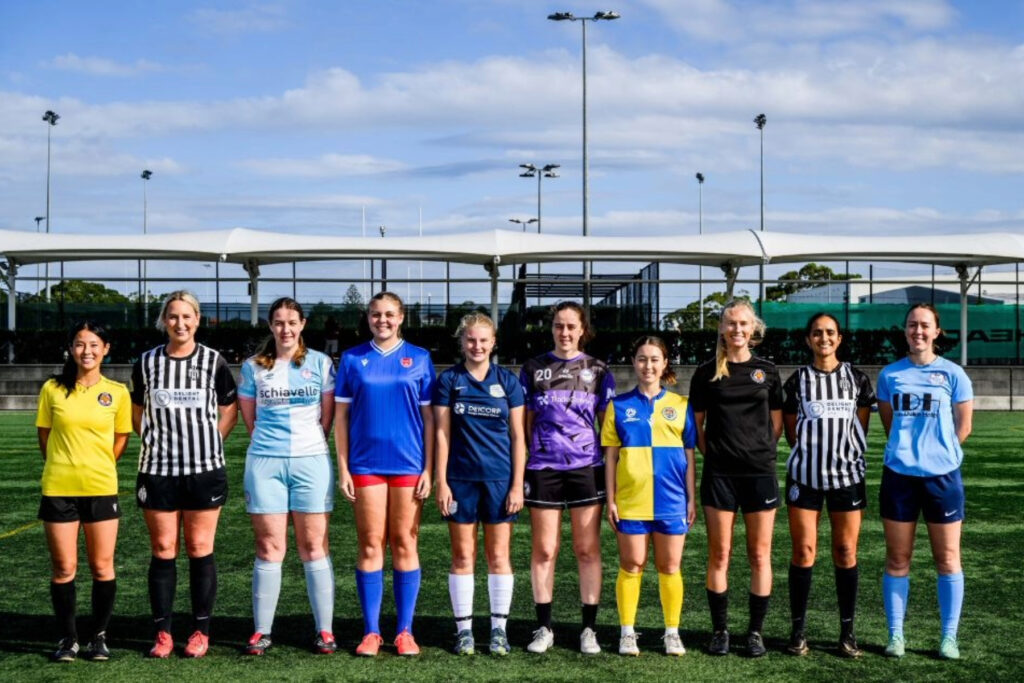
The Women’s Premier League has also expanded, now featuring eleven teams and introducing a WPL1 and WPL2 structure following the first ten rounds of the season. The tiered format creates more competition opportunities for clubs across the region while providing a clearer development pathway for teams at different stages of growth. Returning clubs Randwick City, Glebe Wanderers, Easts FC and Sydney University join established sides in what the association describes as one of its most competitive women’s seasons. ESFA clubs have continued to perform strongly in state-wide competitions including the Football NSW Sapphire Cup, State Cup and Champion of Champions.

Building the next generation

The season opened with an inaugural Development League Gala Day for Under-9 to Under-12 boys and girls, bringing eight clubs together in a structured development environment ahead of Round 1. Sydney FC A-League Women’s players attended the event and engaged directly with young participants, a deliberate effort to connect grassroots players with visible examples of where the pathway leads.

“We are committed to creating more opportunities for clubs, players, coaches and referees to thrive, with a strong focus on participation opportunities to suit participants of all abilities and aspirations,” said ESFA CEO John Boulous.

The three initiatives, a new referee entry point for women, an expanded women’s competition structure, and a development-focused junior gala day with elite role models present, together reflect an association responding to the participation pressures the AFC Women’s Asian Cup has brought into sharp relief across Australian football.

Previous ArticleNext Article

Spain’s Liga F receives history-making investment into women’s football

The deal, worth AUD 91 million (€55 million) across four seasons, represents a monumental investment into Liga F and women’s football by Gasol16 Ventures and Fortified Partners.


Setting the pace

The investment comes as a hugely signficant moment in the history of women’s football not just in Spain, but across Europe.

But, given Spain’s commitment to growing the women’s game in recent years (and the world-beating teams it produces as a result), it is hardly a surprise that Liga F is at the centre of this milestone.

In the 2024-25 season, Liga F distributed AUD 28 million to its clubs, as well as doubling television audiences across two years.

The rate of growth is astounding, and shows no signs of slowing down.

“Women’s football in Spain has made a spectacular leap in recent years: audiences have almost doubled in two seasons, and stadiums are incresingly full,” explained Founder and President of Gasol16 Ventures, Pau Gasol.

“Therefore, this is not a sentimental commitment to women’s sport. It is an investment decision based on data, market trends, and the conviction that women’s football represents a growth opportunity with enormous potential for value creation.”

Thus, Gasol’s motivation reveals much about his own reasons for investing, as well as about the current status of women’s football in Spain.

The landscape does not want, or need, sentimental commitment. It is a financial and sporting powerhouse in its own right, and one which can grow to new heights year-on-year.


Securing a successful future

Furthermore, the long-term nature of the deal (set for the next four seasons from the 2026-27 campaign) shows vision and ambition for what the league can become.

“This agreement allows us to look further ahead and equip ourselves with the necessary tools to continue building an increasingly strong, more competitive league with greater capacity to generate value for our clubs,” outlined President of Liga F Beatriz Álvarez Mesa.

“What excites me most about this alliance is not just the investment it brings, but the message it sends: there are people and institutions who believe in the potential of Liga F and want to be part of its growth.”


Final thoughts

This is in stark contrast to the current situation of the A League Women in Australia, which PFA Chief Executive Beua Busch described as at a “tipping point”.

The problems remain the same as they were several years ago. Investment, player satisfaction and attendances are well below other major leagues. The key is creating a product which presents the immense value of clubs, players and commercial opportunities.

Because when intentional investment comes, the question stops being ‘who will invest?’ but ‘who wouldn’t?’ .

Victorian Labor commits $500,000 to Thornbury Football Facility as State Election Advocacy Intensifies

The Victorian Labor Party has confirmed $500,000 in 2026-27 State Budget funding to upgrade facilities at Mayer Park in Thornbury, with Northcote MP Kat Theophanous joining Darebin United juniors for a training session earlier this month to mark the commitment. The funding follows a public campaign by Football Victoria highlighting the ground’s deteriorating conditions, and lands within an escalating advocacy effort by the sport ahead of the next Victorian election.

The money will go toward upgrading the playing surface and planning a new pavilion at a ground that has received no infrastructure investment in over a decade, according to Football Victoria, despite participation at Darebin United more than quadrupling in that time. The club fielded five teams in 2021. It now fields more than 20, with over 300 players including more than 130 children under 12 and over 70 female players.

That growth has collided directly with the limits of the ground itself. Mayer Park has no drainage and no synthetic surface, and Football Victoria reported that Darebin United lost 23 training sessions in 2024 alone due to unsafe, waterlogged conditions. Club President Michael Slaughter described a pitch that was uneven and at times dangerous, particularly for junior and female players.

“I have been there for six years, and the club is at a stage now that we need something new,” Slaughter said in comments to Football Victoria earlier this year. “There’s only so many training sessions you can cancel, and then there’s the cost of finding alternative grounds indoors or outdoors, which isn’t ideal.”

A campaign that found its target

Football Victoria published a dedicated article in March calling on Darebin City Council to urgently prioritise redevelopment of Mayer Park, explicitly linking the club’s case to its broader Level the Playing Field campaign. Three months later, the funding arrived, not from council, but from the state government, attached to the local member’s name and delivered with a photo opportunity on the training pitch.

A club’s need becomes visible through governing body advocacy, a local member adopts the cause, and the funding is announced as a direct response to community need rather than as a line item in a broader budget process. Theophanous’s own account of the announcement makes the local framing explicit, describing the investment alongside free public transport, school upgrades and registration discounts as part of what she has billed as “easier, safer and more affordable” support for Northcote.

“Community sporting clubs bring Northcote locals together,” Theophanous said in her budget statement. “Through our Get Active Kids voucher program, we’re making sure the cost of fees and equipment doesn’t keep kids from playing the sport they love. And we’re also investing to make local clubs even stronger.”

Earlier this year, Avondale FC secured $500,000 for lighting at Avenger Park and Hume City FC received $250,000 for upgrades at Nasiol Stadium, both delivered through the same budget cycle and both paired with local member announcements. Mayer Park follows the same pipeline, a state government commitment, a local seat, a community club whose growth has outpaced its facilities, and a governing body using the win as evidence in a larger campaign.

The equity dimension

What distinguishes the Mayer Park case is the explicit role gender and accessibility played in Football Victoria’s advocacy. The governing body noted that unsafe pitch conditions were particularly dangerous for junior and female players, and highlighted that Darebin United maintains 40% female representation on its committee with seven female coaches, alongside its status as one of Darebin’s first 2-Star Club Changer accredited clubs, a Football Victoria program recognising clubs that actively remove barriers to female participation.

A club building one of the more credible female participation pathways in the municipality was, until this announcement, doing so on a ground its own administrators described as unsafe. Infrastructure investment of this kind does not simply improve playing conditions. It determines whether programs explicitly designed to grow women’s and girls’ football can function as intended, or whether they remain constrained by the same ageing facilities that have shaped community football for a decade.

What it means for the campaign ahead

Football Victoria has framed the Mayer Park outcome as one data point within its Level the Playing Field campaign, which continues to call for more equitable government investment in football relative to other codes. The organisation has indicated further football-related announcements are expected from the 2026-27 Victorian State Budget, with the upcoming state election positioned as the decisive moment for the sport’s broader infrastructure future.

For Slaughter, the immediate outcome is more concrete. “The funding is extremely important,” he said. “It allows us to deliver our football program and to grow. This will give them a place to come, to have fun and to enjoy their soccer”.

Whether that template, governing body advocacy, local political adoption, budget announcement, repeats consistently enough to address the scale of Victoria’s grassroots facilities gap remains the open question Football Victoria’s campaign is designed to keep in front of both major parties as the election approaches.

Most Popular Topics

Editor Picks

Send this to a friend