





FQ Reinstates WinterFest 2026 at the Sunshine Coast

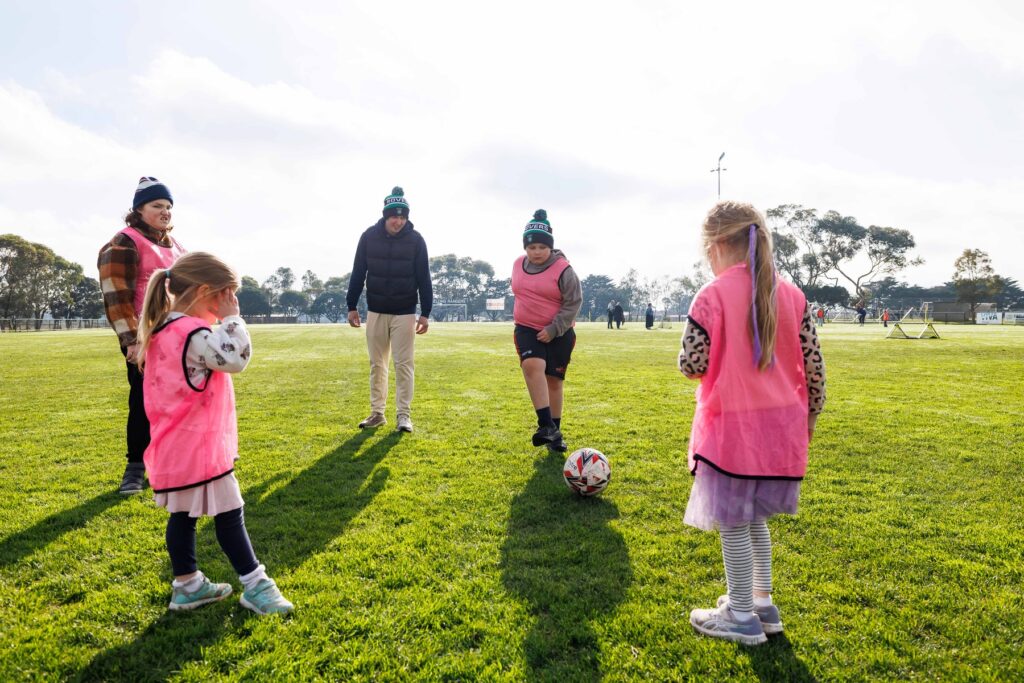
Football Queensland (FQ) has confirmed WinterFest, the state’s premier junior football carnival, will return to the Sunshine Coast from 1 to 5 July 2026; this time at a new home in the University of the Sunshine Coast (USC).

Delivered in partnership with Sunshine Coast Council and Visit Sunshine Coast, the five-day carnival will span USC and Sunshine Coast Wanderers FC, hosting Under 9 to Under 11 Boys and Under 11 Girls teams from every corner of the state.

WinterFest is not simply a competition. Within FQ’s development framework, the carnival serves a dual function, to expose elite junior players to FQ Technical staff, whilst providing emerging referees with live matchday experience under the guidance of senior officials.

“The carnival plays an important role in nurturing not only our most promising young players, who can showcase their abilities in front of FQ Technical staff who continue to monitor their ongoing development, but also our cohort of emerging referees from across Queensland,” said Ryan Fett, FQ General Manager- Football, Infrastructure & Club Development.

The shift to USC is deliberate. FQ has signalled an intention to elevate the event experience year-on-year, and a university campus venue, with its infrastructure and capacity, reflects that ambition more than a traditional football ground would.

Beyond the Pitch

The tournament’s footprint, however, extends well beyond the pitch. With thousands of visiting families descending on the region across five days, WinterFest functions as a significant economic activation for the Sunshine Coast during what is otherwise a quieter winter period.

“WinterFest brings enormous energy to the region, the USC and Buderim fields will be buzzing and the talent on show outstanding,” said Sunshine Coast Resilient Economy Portfolio Councillor Terry Landsberg.

The language- “Resilient Economy”- is worth noting. Landsberg’s portfolio title alone signals how local government now frames junior sport: not as community goodwill, but as economic infrastructure.

His reference to Brisbane 2032 made that explicit. “As we move closer to the Brisbane 2032 Olympic and Paralympic Games, these experiences are invaluable for aspiring athletes and equally important for boosting local tourism and supporting our businesses during the winter period.”

Whether a regional Under 11 carnival genuinely feeds an Olympic pipeline is debatable. What isn’t is that the political incentive to frame it that way, with 2032 drawing every level of government into the orbit of sport, is very real.

Previous ArticleNext Article

Football Queensland to celebrate Female Football Week with statewide events, awards and coaching programs

Brighton women's football motion

Football Queensland will mark the 2026 Female Football Week with a program of statewide events, competitions and professional development opportunities running from May 8-17, as the governing body continues to push for broader access and representation across all levels of the women’s game in Queensland.

The nationwide initiative, now a fixture on the Australian football calendar, provides a concentrated period of visibility for female participation across playing, coaching, officiating and administration: areas where structural underrepresentation has historically limited both the growth of the game and the opportunities available to women and girls within it.

“Female Football Week provides us with a valuable opportunity to celebrate the contributions of women and girls across our game while continuing to increase the accessibility of football in Queensland,” said Football Queensland CEO Robert Cavallucci. “We encourage our clubs to host their own Female Football Week events and activations for female participants.”


Elite Competition Meets Community Access

The centrepiece of Football Queensland’s program is the return of the NPL Women’s Magic Round to Nudgee Recreation Reserve on May 8 and 9, featuring five NPL Women’s Round 13 clashes alongside a Girls United Junior Carnival and family-friendly activations. Each Magic Round game will feature an all-female refereeing panel, a deliberate and visible commitment to developing the next generation of female match officials at a moment when referee shortages are among the most pressing structural challenges facing the game nationally.

A Women in Football networking event will be held on the opening night of Magic Round, bringing together coaches, match officials and administrators. The inclusion of that event alongside elite competition is significant because it positions professional development and community building not as supplementary activities but as core components of what Female Football Week is for.

The Central Coast region will host its own Magic Round on May 16, featuring a Youth Girls game and three FQPL Central Coast Women’s matches, while a Darling Downs Junior Girls Day will take place at Captain Cook Park on the same day, extending the reach of the week’s programming beyond the southeast corner of the state into regional Queensland.


Coaching access as a structural priority

Football Queensland will deliver a series of female-only coaching courses around Female Football Week, with clubs also able to express interest in hosting their own. The initiative addresses one of the most persistent barriers to female representation in football administration- its coaching pipeline.

Female coaches remain significantly underrepresented at all levels of the game in Australia, and the barriers to accreditation, including cost, availability and the cultural environment of mixed coaching courses, compound one another in ways that individual ambition alone cannot overcome. Female-only courses create environments where women can develop without those barriers, and their delivery during Female Football Week signals that the commitment extends beyond celebration into structural change.

The Girls United Carnivals, running in both Metro and Far North and Gulf regions alongside the Q-League Schools program at Meakin Park, extend that access to players at the earliest stages of their football journey.

Football NSW releases $600,000 towards Grassroots Grants to meet Participation Pressure

The Victorian State Government has announced new grants and funding for 11 new community infrastructure projects for local football clubs, totalling $3.8 million.

Sixty-five football clubs across New South Wales have secured a combined total of nearly $600,000 in funding through the NSW Office of Sport’s Local Sports Grant Program. It follows as a result of Football NSW’s scale of demand for community sport support and the growing pressure on clubs struggling to keep pace with surging participation.

The grants, covering 69 individual projects across the Football NSW footprint, will fund facility upgrades, equipment purchases, participation programs and accessibility improvements: the unglamorous but essential infrastructure that determines whether community clubs can function at the level their members require.

The Local Sports Grant Program made up to $4.65 million available statewide in 2025, with $50,000 allocated to each electoral district and individual grants capped at $20,000. Football’s share of nearly $600,000 reflects the sport’s status as the largest participation code in NSW, and the degree to which that status has not always been matched by corresponding investment in the facilities and resources required to sustain it.

Volunteers carrying an unsustainable load

The announcement arrives against a backdrop of mounting pressure on the volunteer workforce that keeps community football operational. Across NSW, thousands of volunteers dedicate significant unpaid time each week to administration, ground preparation, canteen operation and the logistical demands of running competitive junior and senior programs. As participation numbers climb, driven in part by the sustained visibility of the AFC Women’s Asian Cup and the legacy of the 2023 FIFA Women’s World Cup, those demands have intensified without a corresponding increase in the resources available to meet them.

“As the largest participation sport in NSW it is pleasing to see almost $600,000 will be reinvested back into supporting our players, coaches, referees and volunteers to improve the football experience across our community clubs,” said Helen Armson, Football NSW’s Group Head of Strategic Partnerships and Corporate Affairs.

The equity dimension

The distribution of the grants across 65 clubs and 69 projects also speaks to the geographic breadth of football’s footprint in NSW, and to the uneven distribution of resources that has historically characterised community sport in this country. Clubs in outer metropolitan and regional areas tend to operate with smaller budgets, older facilities and thinner volunteer bases than their inner-city counterparts. Grant programs structured around electoral allocation, rather than club size or existing resource base, provide a degree of equity that market-driven funding cannot.

The kinds of projects funded under this program disproportionately benefit clubs serving communities where the barriers to participation are highest. A club that cannot offer adequate facilities or equipment is a club that turns players away, often without intending to.

Football NSW has used the announcement to call on the NSW Government to maintain and extend its investment in the sport. “We urge the government to continue to invest in football,” Armson said, in the midst for a nation-wide push for a $343 million decade-long infrastructure fund to address the facilities gap across the state.

The nearly $600,000 secured through this round is meaningful. Against the scale of what is needed, it is also a measure of how far the investment still has to go.

Most Popular Topics

Editor Picks

Send this to a friend