


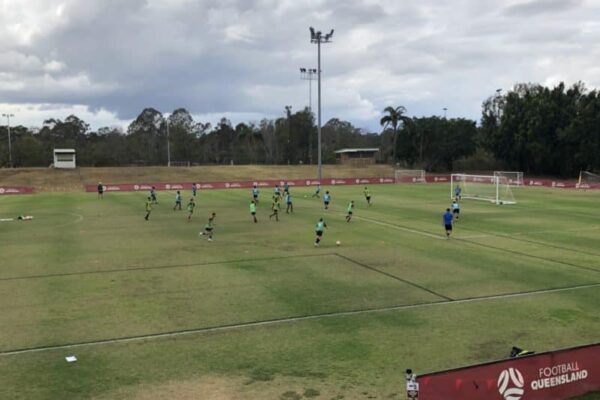

How GPS technology is helping football keep players on the pitch

Football is becoming faster. The physical demands on players are rising. Fixture lists are getting busier. Travel adds another challenge. That makes player availability one of the biggest priorities in the modern game.

Technology is now helping clubs tackle that challenge. STATSports GPS gives coaches and performance staff a clearer picture of what players do on the pitch. It turns physical performance into data that clubs can use to make better decisions.

The company’s athlete monitoring system combines GPS tracking, wearable technology and performance software. It gives coaches and sports scientists detailed information about what players are doing on the pitch. More importantly, it helps turn that information into decisions.

A GPS Tracker Built For Football

At the heart of the system is the STATSports Apex 2.0 tracker.

The wearable sits in a performance vest and tracks player movement during training and matches. The latest Apex 2.0 uses dual-band technology and can deliver centimetre-level positional accuracy according to STATSports. It also processes more than 70 metrics in real time.

For a football club, that means far more than knowing how far a player has run. Staff can monitor sprint loads, high-speed running, accelerations, decelerations, maximum speed and intensity zones. They can also examine positional information and movement patterns. That gives the performance team a much clearer picture of the physical demands placed on every player.

Live Data Changes The Training Session

One of the biggest strengths of the STATSports system is its live capability. The Sonra Live iPad app allows staff to monitor players while a session is taking place. STATSports says teams can monitor up to 96 players on one iPad.

This can change how coaches manage training. Instead of waiting until the session finishes, staff can see whether players are reaching the required intensity. They can adjust drills. They can alter workloads. They can give an individual player more exposure to a particular physical demand. The data becomes part of the coaching process rather than simply a report produced afterwards.

A More Individual Approach

No two players are the same. A young academy player may need a different workload from an established first-team player. A player’s position can ultimately decide their required workload. A player returning from injury needs a carefully controlled progression.

STATSports helps clubs build those individual profiles. Coaches can set player-specific thresholds for measures such as sprint distance, high-speed running, maximum speed and acceleration. Live alerts can then highlight when those limits are reached. That allows staff to make decisions based on the individual rather than treating the entire squad in the same way.

From First Team To Grassroots

The technology is also becoming more accessible. STATSports offers Sonra for elite and professional teams, while Sonra Lite targets semi-professional and amateur clubs. The company says Sonra Lite provides key performance metrics and tracking tools in a more affordable and user-friendly package.

That matters for the wider football community. The benefits of performance data should not belong only to the biggest clubs. If smaller teams can access useful information about workload, speed and physical development, coaches can make more informed decisions too.

The real value of STATSports is not the number of metrics it can collect. It is what clubs can do with them, and when every training session, recovery day and match matters, that information can make a significant difference.


Previous ArticleNext Article

Chelsea extends AI and digital partnership with FPT

Chelsea has extended its strategic partnership with global technology services provider FPT Corporation for the 2026/27 season.

The renewed agreement builds on a partnership that began last year and has already delivered several digital initiatives.

These initiatives are aimed at improving fan experience both on matchdays and online.

This continues the club’s focus on digital transformation and AI-driven supporter engagement.

Among the projects to be completed to date the Megastore Express, a mobile-first click-and-collect retail platform introduced earlier this year to streamline purchases at Stamford Bridge.

The partnership also delivered a new Official Supporters Club platform, providing fan groups around the world with a central hub to connect, organise activities and engage with the club.

The extension signals Chelsea’s intention to continue investing in technology as part of its wider commercial and digital strategy.

Chelsea Partnership Sales Director Oli Boden said the club remained focused on innovation and AI to strengthen supporter connections.

“At Chelsea we are continually focused on innovating and unlocking the opportunities technology and AI-based solutions present to grow our digital presence and bring our fans closer to the club,” Boden said.

The announcement is a reflection of a growing trend across professional football.

Clubs are increasingly entering into long-term partnerships that extend beyond traditional sponsorships.

Digital transformation, data analytics and AI are becoming central components of football’s commercial strategy.

Clubs continue to strive to enhance fan experiences while modernising and streamlining internal operations.

FMDB Pro aims to streamline football recruitment through data-driven insights

Football recruitment platform FMDB Pro is positioning itself as a tool to help clubs, federations and recruiters make more informed decisions by bringing greater structure and context to the early informal stages of talent identification.

The platform has been developed by Sports Interactive, the same developers who make the Football Manager game.

Supporting, not replacing, traditional scouting

FMDB Pro is designed to support traditional recruiting departments by narrowing the pool of potential signings before traditional scouting processes commence.

Rather than replacing existing channels and scouts, FMDB Pro is intended to complement existing recruitment workflows by allowing clubs to filter players.

Using hundreds of data points, it will help clubs identify prospects that meet specific technical, physical and regulatory requirement.

Powered by Football Manager’s global database

The platform draws on Football Manager’s extensive global database, covering more than 310,000 players across over 200 nations and thousands of competitions.

Users can search by a wide range of criteria, including playing attributes, positional profiles, contract status, injury history, international eligibility and governing body endorsement requirements.

FMDB Pro Business Development Director Michael Fleming said modern recruitment departments often face the challenge of assessing thousands of players across multiple competitions before deciding where to invest valuable scouting resources.

Introducing FMDB Pro | The Starting Point for Smarter Recruitment
FMDB Pro draws on Football Manager’s extensive global database. Image Credit: FMDB Pro

Streamlining the recruitment process

The platform aims to reduce that workload by providing recruiting teams with a stronger information base on each player.

This enables more specific scouting and reducing the time spent evaluating unsuitable candidates.

In addition to player data, FMDB Pro incorporates benchmarking tools, market valuations and recruitment reports to help clubs compare players across leagues and identify prospects who best fit their recruitment strategy.

According to Sports Interactive, the objective is not to replace human decision-making, but to improve the efficiency of the recruitment process.

By giving clubs better information earlier in the talent identification cycle, the process can be streamlined and make human decision-making easier.

Growing role of technology in football

As clubs continue to embrace analytics and technology across football operations, platforms such as FMDB Pro reflect the growing role of data in modern recruitment, where combining traditional scouting with advanced analysis has become an increasingly important part of identifying and securing talent.

FMDB Pro has already partnered with a number of clubs across Europe, including Newcastle United, AS Monaco and Dinamo Zagreb.

Most Popular Topics

Editor Picks

Send this to a friend