


Inside GIS’ New Executive Edge Program Driving Sport’s Future Leaders

A new executive education program designed to shape the next generation of sports industry leaders is set to launch in June 2026, offering participants a rare blend of academic insight and real-world application at the highest level of global sport.

The Executive Edge in Sport, delivered by Global Institute of Sport (GIS) in partnership with Rotman School of Management Executive Programs, will provide current and aspiring leaders with the tools needed to navigate an increasingly complex and fast-evolving sports landscape.

The seven-week program, Sports Leadership Essentials, is delivered primarily online, offering a flexible and immersive learning experience for professionals worldwide. It is tailored for individuals seeking to strengthen their leadership capabilities within sport, as well as those aiming to transition into senior roles. This includes athletes navigating their post-playing careers.

Led by Sharona Friedman, President and CEO of GIS, and Walid Hejazi, Professor of Economic Analysis and Policy at Rotman, the course combines academic rigour with industry relevance. Participants will engage with key topics shaping modern sport, including leadership and strategy, governance and ethics, finance and revenue models, marketing and fan engagement, event operations, and the growing influence of AI and emerging technologies.

The program also features exclusive masterclasses with senior figures from across the global sports industry, alongside sessions led by leading academics and practitioners from the Rotman School.

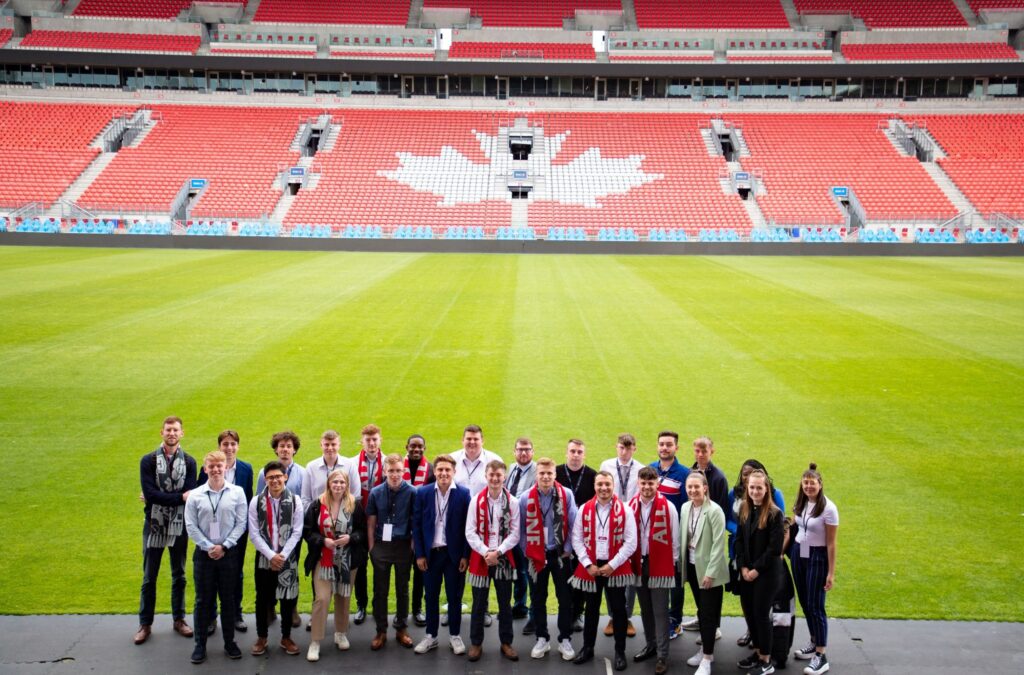
For those seeking a more hands-on experience, participants can opt into the Sports Leadership Lab. This is a four-day, in-person summit held at BMO Field in Toronto. Delivered in collaboration with Maple Leaf Sports & Entertainment, the lab provides behind-the-scenes access to elite sport operations, bridging theory with practice in a live stadium environment.

As the global sports industry continues to expand and evolve, The Executive Edge in Sport positions itself as a critical pathway for leaders looking to stay ahead. It provides students with the knowledge, network, and perspective required to lead with impact.

Previous ArticleNext Article

FIFPRO demands governance reform after FIFA’s FFE failure

While FIFA cancelled plans to move forward with FIFA Forward Enterprise (FFE), FIFPRO are demanding change at the top of football’s global governing body.

‘Abuse of power’

The plan to sell minority stakes in future FIFA competitions to private investors brought intense criticism from fans across the world.

Governing bodies including UEFA (Europe), CONCACAF (North America, Central America and the Caribbean) and the AFC (Asia) rallied against FFE and FIFA President Gianni Infantino, leading to a crisis meeting in Morocco to determine Infantino’s seemingly untenable position at the head of world football governance.

The meeting, however, confirmed Infantino will remain as FIFA President going forward – a decision which has since prompted FIFPRO to make their stance clear: governance reform is a must.

“The withdrawal of FFE was inevitable. But withdrawing the proposal does not erase what it revealed,” the organisation said via an official statement on the FIFPRO website.

“A plan capable of permanently altering the ownership and governance of the FIFA World Cup, and commercialising the competitions built by generations of players, was conceived in secrecy, negotiated behind closed doors and brought to the brink of agreement before the FIFA Council, the Member Associations, players and football’s recognised stakeholders even knew it existed.”

“That is not merely a governance failure. It is a profound abuse of presidential power.”


How to navigate governance post-FFE

As reiterated by FIFPRO, the FFE controversy arrived a mere few weeks after a Memorandum of Understanding (MoU) between FIFA and the player’s union marked an optimistic step to a more collaborative future.

But what was previously a step in the right direction, now seems an insufficient policy to protect players – and the wider landscape of world football – from future unilateral decisions at the top.

FIFPRO’s demands – agreed upon by the Presidents of all FIFPRO regional divisions across Africa, Asia/Oceania, Europe, South America and Central & North America – include measures such as:

  • Using the Global Social Dialogue Platform as fundamental part of FIFA’s governance
  • Engagement with stakeholders over future decisions affecting the professional game
  • Voting rights for professional football’s stakeholders on the FIFA Council
  • Structural reforms to prevent future unilateral decisions

The message from FIFPRO is therefore clear. Now is not the time to rest on criticism; stakeholders in the professional game must encourage action and reform.

“These reforms are now indespensable. But they are the responsibility of the future, not an absolution of the past,” FIFPRO continued via their official statement.

“The players did not create this crisis. They will insist that football emerges from it with stronger institutions, stronger safeguards and leadership worthy of the trust the game demands.”

Referees to improve consistency with new UEFA guidelines

In a meeting between Chief Refereeing Officers within UEFA and its 55 national associations, enhancing consistency and clarity underpinned the principle goals for the upcoming season.

Improving officiating

Referees – and particularly the usage of VAR – are often at the centre of post-match debates.

As the introduction of new technology into match officiating increases year-on-year, referees are in the spotlight more than ever before. The expectation was that more technology would decrease errors and controversy, but the opposite has proven to be the case.

Which is why the agreement and alignment between European nations marks a key step in the future of match officiating; the meeting between UEFA, its national associations and a representative of the International Football Association Board (IFAB) displays intention and commitment to ensuring future in-game decisions are clear, not controversial.

Meeting chair and UEFA Director for Refereeing, Roberto Rosetti, outlined why the agreement will have a vital impact on the future of European football, both domestically and internationally.

“The fact that all 55 national associations and UEFA have agreed on guidelines towards a more consistent approach to the application of the Laws of the Game marks a significant milestone,” Rosetti said.

“It will help improve the understanding of refereeing decisions among players, clubs and supporters and all stakeholders in the game.”

“For the popularity of football it is essential to remove all doubt from the game and ensure that the laws are applied with clarity.”


Limiting technology use

A widespread criticism of match officiating in recent years is the regularity with which VAR intervenes and interrupts match tempo.

The issue, however, is not that VAR can review decisions – in fact, this summer’s FIFA World Cup displayed an effective use of VAR during a case of mistaken identity, in which a player received a yellow card offence for a foul committed by an opposition player. In this regard, VAR was a vital part of ensuring a simulation offence did not go unpunished.

Frustration, however, grows when the use of VAR goes beyond checking “clear and obvious” errors. Lengthy replays, a multitude of angle-checking clips and the disruption of game flow all contribute to feelings of frustration among fans.

But recent amdendments aim to limit this in the upcoming season. VAR is an essential part of fair officiating, but responsibility must lie with the referee.

The new rules introduced by the IFAB are available here, with further initiatives to follow from UEFA in the coming weeks.

Most Popular Topics

Editor Picks

Send this to a friend