Soccerscene the only online publication dedicated to the Australian and international football industry. It serves as a practical guide for those involved in the business of running a football club and bringing readers up-to-date research and development across all football matters providing insights, discussion and information related to topics that matter.
Julie Bishop welcomed by Football Australia as a Legacy ’23 Ambassador
Football Australia have announced that the Hon. Julie Bishop has joined the Legacy ’23 Ambassador Program as its latest representative.
With Australia set to host the FIFA Women’s World Cup Australia & New Zealand 2023, the Legacy ’23 Ambassador Program will play a critical role in raising awareness and advocacy for achieving 50:50 gender participation in sport, as set out in Football Australia’s Legacy ’23 Plan.
During her time as Australia’s first female Minister for Foreign Affairs from 2013-2018, Julie was an advocate for gender equality in this country and throughout the world. Julie is keen to continue that advocacy and to support young women and girls in achieving their full potential.
Julie is currently the Chancellor of the Australian National University. As the first female to ever hold that and other roles, she is a trailblazer for young women and girls around the nation and throughout the Asia-Pacific region. After climbing the ladder of Australian politics, Julie is a passionate advocate for gender equality and keen to support other women in fulfilling their dreams, hopes and aspirations across all fields.
Of her new role as a Legacy ’23 Ambassador, Julie said in a statementvia Football Australia:
“It is important to not let others define who you are or limit what you can achieve. It’s vital we encourage the next generation of women and girls to set their own standards and work hard to achieve those standards. Striving for success and excellence is a defining feature of female sports and that is to be encouraged.”
Football Australia CEO James Johnson added of Julie’s appointment via Football Australia:
“We are so proud to welcome the Hon Julie Bishop to our Legacy ’23 Final XI. Through her heralded career in politics, to her recent move into education, Julie embodies all the values we hope to celebrate through Legacy ’23 and is a wonderful role model to help inspire the next generation of women and girls.”
Previously announced ambassadors making up the Final XI include:
Julie Dolan AM, Matildas cap #1
Azmeena Hussain OAM, Football Victoria Director and social justice advocate
Narelda Jacobs, NIAG Member and Channel 10 Presenter
Kate Jenkins, Australia’s Sex Discrimination Commissioner
Soccerscene has launched Survey 4: Commercial Confidence in Football, calling on clubs, sponsors, governing bodies, commercial leaders and football industry professionals to assess whether the game is making the most of its enormous commercial potential.
Football has the audience, participation base and community reach to be one of Australia’s most powerful commercial platforms. But does the industry have the commercial strategy, professionalism and infrastructure required to turn that potential into sustainable growth?
That is the question at the centre of Soccerscene’s latest industry research.
The survey examines how attractive grassroots football is to potential commercial partners, what industry professionals believe is limiting football’s commercial potential, and whether clubs are presenting themselves professionally enough to sponsors.
It also explores what sponsors value most when engaging with football – from community reach and participation scale to brand alignment, values and purpose – as well as whether improved facilities could directly contribute to stronger sponsorship outcomes.
Is football fully capitalising on its commercial opportunity?
Football continues to provide brands with access to highly engaged communities across grassroots, community and elite environments. Yet the commercial landscape remains fragmented, with clubs operating with vastly different levels of resources, capability, governance, media infrastructure and commercial expertise.
Soccerscene’s survey is designed to capture the industry’s perspective on where the opportunities exist – and where football may be leaving commercial value on the table.
The research will look specifically at four key areas:
Commercial attractiveness – How attractive is grassroots football as a commercial partnership?
Commercial barriers – What is holding football back from reaching its full commercial potential?
Club professionalism – Are clubs presenting themselves effectively and professionally to sponsors?
Sponsor value – What are sponsors really looking for when they invest in football?
The survey also asks whether better facilities would have a direct impact on sponsorship outcomes, highlighting the potential relationship between infrastructure, commercial presentation and investment.
Have your say
Soccerscene is encouraging football clubs, sponsors, commercial professionals, governing bodies, administrators, media professionals and industry stakeholders to participate.
The findings will contribute to Soccerscene’s ongoing program of industry research, designed to provide a clearer picture of the challenges and opportunities facing football and the organisations operating within it.
Take the Survey: Commercial Confidence in Football
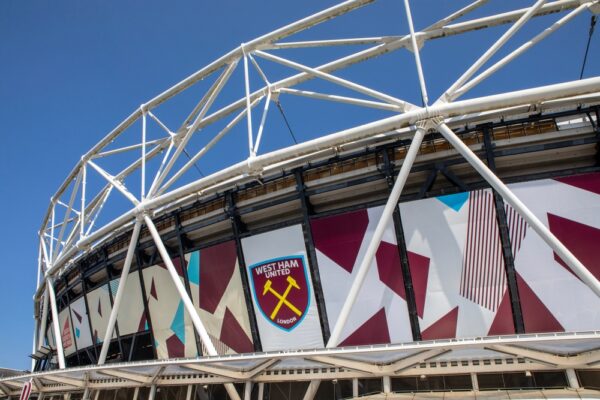
The A-League has just lost a Victorian club. The death of Western United and the suspension of its license by the Australian Professional Leagues (APL) on August 10th was inevitable. The club says it wants to rebuild and eventually return to the competition. That is unlikely to happen considering the search for new owners has to begin.
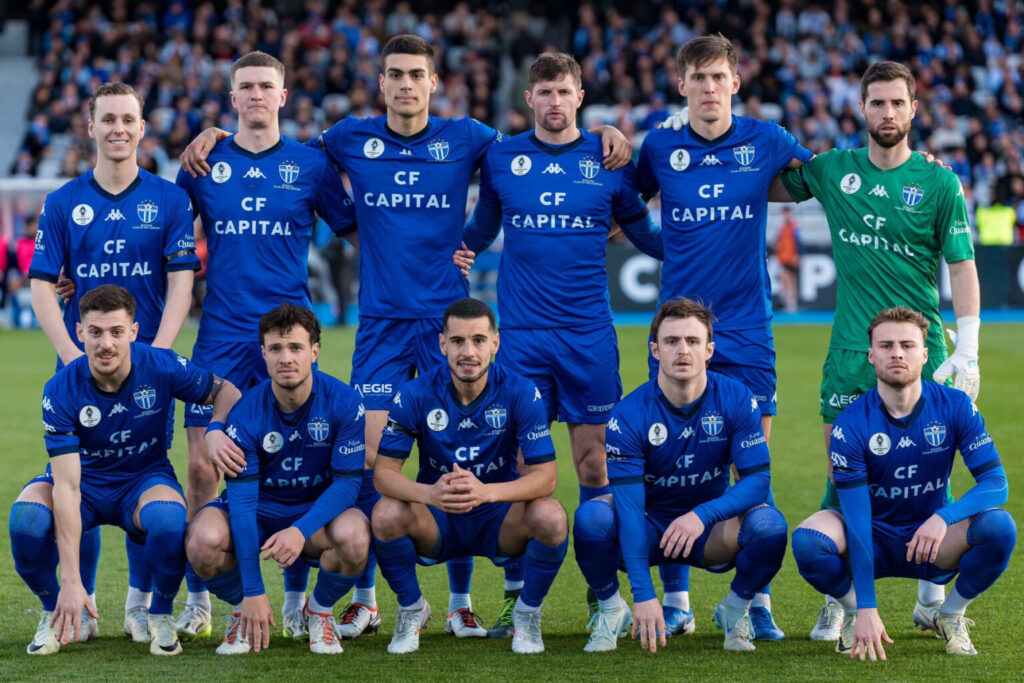
But one day after the announcement from Western United, South Melbourne stepped forward. The four-time NSL winners announced their intention to begin formal discussions with the APL about joining the A-Leagues. They believe the timing is right. Their argument is understandable. Their football credentials and history are stronger than most A-League teams.
But there is a problem. South Melbourne may have the history. It may have the supporters. It may even have one of the most attractive potential derbies in Australian football. But that does not mean it will get an A-League licence.
In fact, the more realistic prediction from my perspective is that South Melbourne will once again be told no.
South Melbourne has never been better placed
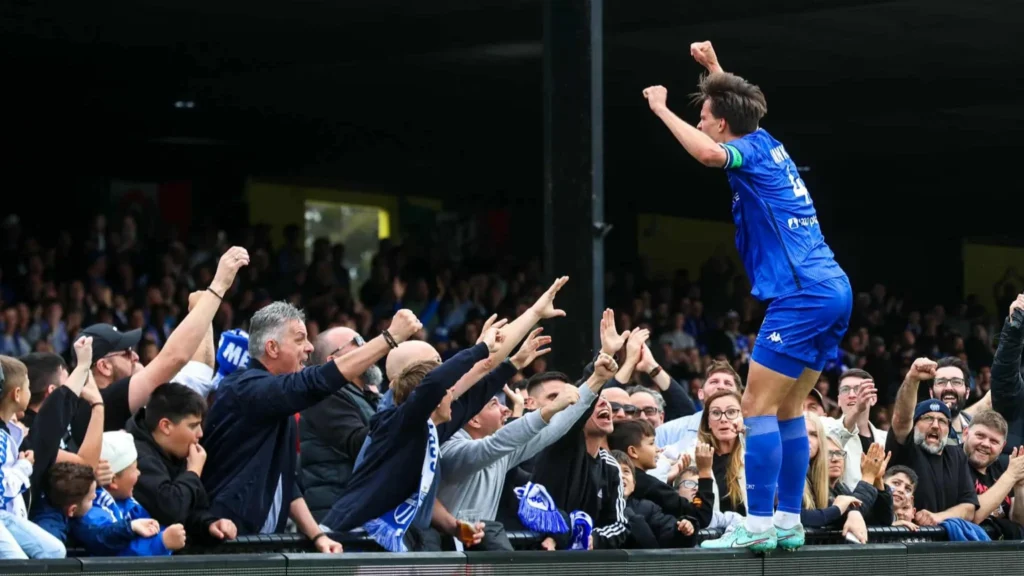
There is plenty to like about South Melbourne’s position. The club is not simply relying on its history. South Melbourne returned to national competition through the inaugural Australian Championship in 2025. It did not merely participate. South Melbourne won it. The club defeated Marconi Stallions 2-0 in the final to become the competition’s first champion.
That achievement matters. The Australian Championship was created to bridge state-based football and the professional game. Whilst it is seen as a second tier, there is no promotion and relegation with the A-League. But it has also continued to perform on the national stage. In the 2026 Australia Cup, which South Melbourne qualified for, they reached the final rounds and then produced one of the biggest results of the tournament.
Adelaide United came to Lakeside Stadium. South Melbourne won 2-1. Adelaide had won the Australia Cup three times. South knocked them out in front of its own supporters. They’re now into the quarter-finals of the 2026 Australia Cup.
South Melbourne celebrating the Australian Championship Image Credits: South Melbourne FC
The club also has a much bigger story to tell than its recent results. Alongside its four NSL victories, the club also won the 1999 Oceania Club Championship and represented Oceania at the 2000 FIFA Club World Championship. The club has a dedicated supporter base and the history to deserve a place.
The club says its Oceania Professional League participation has helped make it Australia’s 13th professional football club. It has more than 150 businesses supporting it in 2026 and a long-term arrangement at Lakeside Stadium, in the heart of South Melbourne.
On paper, it is difficult to argue that South Melbourne is not ready. The problem is that readiness and admission are two different things.
Third time’s the charm?
South Melbourne’s current push is not new. It has been here before. The club was pursuing an A-League return almost immediately after the NSL disappeared. In 2007, South announced its interest in becoming the second Victorian A-League club.
Then came the 2008-09 process. South Melbourne backed the Southern Cross bid for the second Victorian licence. The club proposed a new team based around the redevelopment of Bob Jane Stadium and involvement from the broader Victorian football community.
It lost. The Melbourne Heart bid won the race and eventually became Melbourne City. That was South Melbourne’s first major warning. Its football heritage was not enough. Its second major attempt came almost a decade later.
The 2017-18 expansion process produced the most serious South Melbourne bid yet. South made the shortlist for an expanded A-League licence. It ultimately lost to Western United. Bill Papastergiadis has since explained that he did not genuinely expect South Melbourne to win in 2018, despite believing strongly that the club belonged in the A-League. He also reflected on the barriers facing a traditional club trying to enter the existing Victorian professional football ecosystem.
That is important context for today’s bid. South Melbourne is not entering negotiations without understanding how difficult the politics and economics of the Victorian football market can be. The club has tried the direct route twice. Neither time worked.
The Western United lesson
This is where the current situation becomes complicated. In isolation, adding South Melbourne would be fantastic for the A-League. Imagine South Melbourne against Melbourne Victory. The atmosphere would be enormous.
There is a genuine football rivalry waiting to happen. South itself points to the potential for ready-made derbies and commercial interest. But the argument that Melbourne should simply have three A-League clubs because Melbourne is a huge city ignores what has just happened to Western United.
Western United was supposed to represent Melbourne’s rapidly growing west. Its original vision centred on a major project in Geelong. The club eventually moved into Ironbark Fields in Tarneit in 2024.
Yet the geographic separation never became as clear as the original concept suggested. Western United was not a Geelong club. It was not a regional Victorian club in the traditional sense. It was a western Melbourne club based and that matters.
The A-League already has Melbourne City and Melbourne Victory. Adding South Melbourne would give the competition three clubs operating within the same metropolitan football market. It is not necessarily brilliant for the business model, which has already lost a club operating on the outskirts of Melbourne.
The NSL offers an interesting historical comparison. The Falcons provide an even more striking Victorian example. They became the first and only regional Victorian club to play in the NSL, reaching the finals in 1996. The distinction is important.
A national competition can expand its footprint by adding genuinely new markets. That is different from adding another club inside an existing Melbourne metropolitan market. That was what was envisioned for Western United, and it failed quickly.
Will the APL see South Melbourne as a safe investment? Despite the fact they’re a well-established club, I’d argue the answer is no.
Promotion and relegation is the only realistic route
There is one scenario where South Melbourne could eventually force its way into the A-League, and that’s the great missing piece of Australian football. Promotion and relegation. South Melbourne would not need somebody to decide that Melbourne suddenly has room for another licence. It would simply need to earn it.
They would have done just that in 2025, winning the Australian Championship if the football pyramid was open. Football Australia originally designed the National Second Tier with the possibility of promotion and relegation being considered once the competition matured.
The format connects NPL clubs and established foundation clubs with national competition. It does not provide a sporting pathway into the A-League. South Melbourne can win the Australian Championship, NSL and Australia Cup but none of those achievements automatically produce an A-League licence.
South Melbourne in the Oceania Championship Image Credits: Oceania Championship
Opening the pyramid is far more complicated than simply announcing promotion and relegation. Australia’s football calendar is fragmented. The A-League operates primarily through the summer months. The NPL operates through the winter and early spring. For the 2026-27 season, the A-League Men runs from October to June, while the NPL begins in February and finishes in September.
That creates an enormous structural problem for a fully connected pyramid. The clubs below the A-League would need to operate at a level capable of supporting professional football. If the A-League aligned with the NPL and the lower pyramid, it would compete in a football calendar that already has to coexist with Australia’s other major winter sports. That is a difficult feat against bigger leagues such as the AFL and NRL.
Beyond that, clubs lower down would need travel budgets and to survive commercially would take real sacrifice from all parties to make that work. The A-League’s existing clubs also have something to lose. They have invested heavily in their licences and their businesses.
Historically, A-League licences were extended through to 2034, while those licence arrangements have included provisions allowing promotion and relegation to be introduced. But the existing clubs will do everything in their power to block it. Promotion and relegation removes certainty. An A-League club can finish last in the current system with no threat to their place. Under relegation, its place is no longer guaranteed.
That is a major commercial change for clubs that have invested in securing their position in the competition. It is therefore difficult to imagine the A-League opening the door. The A-League’s licensing system gives the competition enormous control over who enters, and for South Melbourne historically they’ve been left out in the cold.
South Melbourne deserves the conversation.
The frustrating part is South Melbourne has probably never had a stronger argument. It has history, supporters, infrastructure, commercial support and most importantly, ambition. Beating A-League clubs in national competition proves the capability is there.
It deserves to be in the conversation. But being in the conversation is not the same as being selected. The Western United experience should be a warning. If the A-League could not make the Western United project work, it is difficult to see why it would suddenly decide that another Melbourne club is the answer.
South Melbourne may be the better football story. It may even be the better football club. But the A-League is not simply selecting the best football story.
It is selecting a professional competition, and until Australia embraces a genuine promotion and relegation system, South Melbourne’s path back to the top flight will remain dependent on someone handing it a licence.
That is the part of the dream that looks unrealistic. South Melbourne can keep knocking and it should. They always say third time’s the charm. But unless the pyramid is opened, I expect the door to remain closed.