LaLiga launches online store with Amazon

LaLiga fans are now able to purchase merchandise from 13 LaLiga Santander clubs through Amazon, in a new collaboration.

LaLiga fans are now able to purchase merchandise from 13 LaLiga Santander clubs through Amazon, in a new collaboration.

In a rollout that is set to expand throughout other areas throughout 2022, fans in the UK, Italy, France and Germany will be the first countries to have access to a dedicated store – making kits, clothing and other fan items available for purchase.

Teams currently on the LaLiga store with products are Getafe CF, Cádiz CF, Granada CF, Athletic Club, Levante UD, Villareal CF, Real Sociedad, Deportivo Alavés, RCD Espanyol, RCD Mallorca, RC Celta de Vigo, Real Betis Balompié and Club Atlético Osasuna.

“For LaLiga, it’s very important to offer LaLiga Santander and LaLiga SmartBank clubs all possible tools in order to bring our league closer to our fans around the world. Through this exciting collaboration with Amazon, we are continuing to develop our internationalisation strategy and we can boost the growth of the competition and its clubs,” LaLiga Executive Director Óscar Mayo said.

“For now, we have 13 LaLiga Santander clubs participating in this project, with the LaLiga store to launch from December 29th in the United Kingdom, France, Italy and Germany. Our goal is to bring more LaLiga clubs on board and to be present in more regions around the world, with these to be announced during the first quarter of 2022.”

LaLiga has identified Amazon as a company that can help Spain’s top-flight league to thrive in new commercial opportunities that reaches customers all over the world.

“I am thrilled about launching this multi-year collaboration with LaLiga, bringing official products and tailored shopping experience to thousands of LaLiga fans so they can celebrate and share their love for Spanish football. At Amazon, we are proud to help LaLiga in its efforts to expand internationally, bringing fans closer to their passion wherever they are,” Amazon Head of Special Projects Hernando Moncaleano said.

On the LaLiga store with Amazon, fans can find more than 1,600 different products from the participating 13 teams. There will be a great variety of items available, from sportswear to other men’s and women’s clothing. Mugs, toys, household items and much more from these LaLiga Santander clubs will also be on sale via Amazon.

Previous ArticleNext Article

Blacktown District Soccer Football Association Launches Youth League and Poaching Program

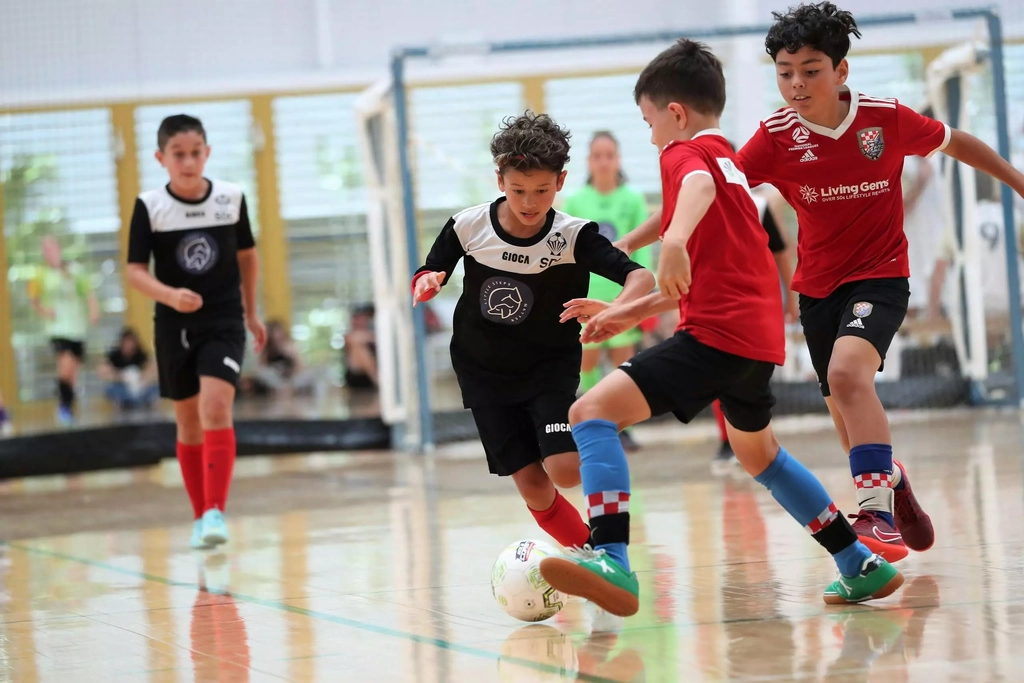
Blacktown District Soccer Football Association has outlined a package of initiatives for the 2026 season centred on youth development, coach education and the celebration of female participation, as the Western Sydney association moves to raise standards across community football and strengthen pathways into state-level competition.

The centrepiece of the association’s development agenda is the Blacktown Youth Development League, a new competition structure spanning all youth Division One competitions in the Under-13 to Under-18 age groups, including Phoenix League female competitions involving both BDSFA and GDSFA clubs. The league applies a benchmarking framework adapted from Football NSW‘s junior competition standards, with clubs encouraged to implement structured training environments including a minimum of two sessions per week where possible.

BDSFA General Manager Owen Liiv said the initiative responded to clear demand from within the football community for more substantive development environments.

“It is pretty clear that people want more and better football experiences,” Liiv said. “The measure for us is high-quality youth football competitions within Blacktown and ultimately, stronger performances in state-wide competitions such as the Football NSW State Cup or Football NSW Champion of Champions.”

The referees branch will support the league by prioritising Division One fixtures and providing three-person match control where available, an operational commitment that acknowledges the role officiating quality plays in the overall development environment.

The Managerial Infrastructure

Running alongside the youth competition is a free coach education program, with Foundation of Football courses delivered across BDSFA’s 24 member clubs by permanent association staff. With more than 1,000 registered coaches across the district, BDSFA has set a target of 85 percent achieving Foundation of Football accreditation within three years. Removing cost as a barrier to accreditation is a deliberate structural choice, reflecting growing recognition across Australian football that coaching quality at community level is inseparable from participation outcomes.

The association also launched Female Football Week with a “Cocktails on the Pitch” event at Blacktown Football Park, attended by close to 100 players, coaches, referees, administrators and volunteers. Former Matilda Leah Blayney addressed the gathering, speaking about her pathway from Wentworth Falls to international football. BDSFA has indicated the event is likely to become an annual fixture on the association calendar.

Taken together, the initiatives reflect an association investing deliberately in the structural conditions that determine whether community football grows sustainably rather than opportunistically.

What does the Federal Budget mean for the Future of Football?

While Canberra spent Budget night arguing about negative gearing, capital gains tax and the politics of broken promises, Australian football was left reading between the lines.

Since ‘Sport’ falls under the jurisdiction of the State level, there was no headline “football package” in Treasurer Jim Chalmers’ 2026–27 Federal Budget, but the Federal budget marks a significant shift in the nation’s economic directive. No billion-dollar infrastructure splash for the world game. No new national facilities program. But for football clubs, players and families, the Budget may still shape the sport more than many realise.

From housing affordability to NDIS reform, fuel prices and women’s participation, football’s ecosystem sits directly in the path of the Government’s economic agenda.

The dominant story of the Budget has been Labor’s overhaul of negative gearing and capital gains tax concessions: reforms that immediately triggered political backlash and dominated national coverage.

Yet beneath the noise, football communities are likely asking a simpler question: what does all this mean for the people who actually play the game?

The answer starts with cost-of-living pressure.

The Budget forecasts inflation hitting five per cent in 2026, largely driven by global fuel shocks linked to conflict in the Middle East. Fuel prices matter enormously to grassroots football, particularly in suburban and regional Australia where families often drive multiple nights a week for training and matches.

The Government’s temporary fuel excise cut which reduced petrol prices by roughly 32 cents per litre may offer short-term relief for clubs travelling long distances and parents already struggling with registration fees.

But the broader economic outlook remains difficult. Slower growth, persistent inflation and rising household pressure could threaten participation rates, especially among lower-income families.

Football Australia and state federations have spent years warning that the game’s biggest barrier is affordability. Boots, rego fees, transport and facility access continue to price players out. A tougher economy only sharpens that problem.

Housing reform may indirectly affect the football workforce too.

The Government argues its negative gearing changes are designed to help younger Australians into home ownership, with Treasury estimating an additional 75,000 first-home buyers over a decade.

That matters in football because the sport’s backbone like coaches, referees, volunteers and young families, is overwhelmingly younger and suburban. If housing affordability improves even marginally, it could stabilise participation in growth corridors where football demand already outstrips infrastructure.

But there are also risks. Critics argue the reforms could reduce investment and tighten rental supply. For many semi-professional players, academy coaches and casual sports workers already locked out of ownership, rising rents would further squeeze disposable income available for sport.

The outlook for differently-abled football

The Budget’s NDIS savings measures may prove even more consequential for football.

The Government says it is “returning the NDIS to its original intent” as part of $63.8 billion in savings and reprioritisations. Disability advocates have already raised concerns about access and participation impacts across community activities.

That includes sport.

Across Australia, football programs have increasingly become entry points for social inclusion and disability participation, from all-abilities leagues to multicultural community initiatives. Any tightening of disability support funding risks flowing directly into reduced participation opportunities for players requiring support workers, transport assistance or specialised programs.

There were, however, some quieter positives for the game.

The Budget continues significant investment into women’s economic participation, childcare and workplace reform. That matters for football at a time when women’s and girls’ participation is booming following the legacy of the 2023 FIFA Women’s World Cup.

Expanded childcare access, stronger paid parental leave and support for women in the workforce may all help sustain female coaching, volunteering and administration pathways that football has historically struggled to retain.

Still, the clearest takeaway for football may be what the Budget did not contain.

Despite football being Australia’s largest participation sport, there was little direct mention of community football infrastructure or long-term sporting investment beyond broader transport and productivity measures.

For a sport preparing for the AFC Women’s Asian Cup 2026 and pushing for future global tournaments, that silence was notable.

Everyone else may be talking about negative gearing. In football circles, the bigger concern is whether families can still afford Saturday mornings at all.

Most Popular Topics

Editor Picks

Send this to a friend