




LaLiga records strong revenue and attendance growth

La Liga has reported its highest revenue since the pandemic, pushing through the €5bn barrier ($8.76bn AUD).

Across the 2023/24 season, La Liga recorded a total standardized revenue of €5.049bn ($8.84bn AUD), a 3.2% increase upon the 2022/23 season. However, the 23/24 season is still shy of the pre-pandemic 2019/20 season record revenue of €5.065bn ($8.87bn AUD).

Of La Liga’s revenue streams, broadcast income was the most influential – totaling $2.64bn AUD. The second largest source of revenue was commercial income, surpassing the organisation’s goal of over one billion euros for the second year in a row – totaling $2.25bn AUD. La Liga contributed its strong commercial growth to flourishing new sponsorships and licensing agreements, as well as the continuing popularity of the league overseas.

However, La Liga has credited the post-pandemic high total revenue due to the increase in matchday income from record attendances.

Throughout the 2023/24 season, 16 million fans lined stadium seats across Spain, contributing to an average stadium occupancy rate of 75.4%. An increase upon the previous season’s 72.5% average occupancy rate.

Due to this, matchday revenue grew 5% year-on-year to $1.25bn AUD in the 2023/24 season, culminating in a 25% increase over the past five seasons.

La Liga signified the effect of affordable ticket prices, stadium expansions and projects which improved facilities and amenities as crucial in inspiring more fans to come to games.

Furthermore, the league predicts that the 2024/25 season will welcome even more spectators, projecting 78% average occupancy across stadiums and nearly 18 million in attendance.

Among the clubs, members reduced their losses by approximately $493m AUD in 2023/24 from 2022/23, recording aggregate losses of $388m in 2023/24 and $881m in the prior season.

La Liga also projected that aggregate losses would fall even further in 2024/25, to $303m.

Interestingly, senior corporate net debt rose in 2023/24 to $2.34bn however, net equity remained healthy at $3.9bn – highlighting the stability of the league’s long-economic model, which continues to abide by Financial Fair Play.

Due to its positive year, continuing upwards revenue trends across matchday and commercial sectors and the successes of the Boost LaLiga strategy , La Liga projects that the organisation is on its way to breaking even under its Financial Fair Play criteria later in the year.

The Spanish competition’s record revenue raising 2023/24 season echoes that of the Bundesliga, announced earlier in the year.

Like LaLiga, the Bundesliga achieved soaring ticket sales, accruing 20.74 million tickets across the top two divisions of German football in 2023/24 – an increase of almost one million tickets from the 2022/23 season. These impressive results contribute to the Bundesliga’s highest average number of tickets sold, averaging 33,885 tickets per game.

Additionally, both clubs’ largest source of revenue was through media rights and broadcasting.

Such results from two of the big five European leagues could signify that football across the continent is in a healthy place after the COVID-19 pandemic and beginning to thrive once more.

However, until the remaining three big five leagues (Serie A, Ligue 1, EPL) and the majority of the continent’s competitions reveal their revenue reports for the 2023/24 season it is too early to determine if the trends are the same across the whole of Europe.


Previous ArticleNext Article

FQ Reinstates WinterFest 2026 at the Sunshine Coast

Football Queensland (FQ) has confirmed WinterFest, the state’s premier junior football carnival, will return to the Sunshine Coast from 1 to 5 July 2026; this time at a new home in the University of the Sunshine Coast (USC).

Delivered in partnership with Sunshine Coast Council and Visit Sunshine Coast, the five-day carnival will span USC and Sunshine Coast Wanderers FC, hosting Under 9 to Under 11 Boys and Under 11 Girls teams from every corner of the state.

WinterFest is not simply a competition. Within FQ’s development framework, the carnival serves a dual function, to expose elite junior players to FQ Technical staff, whilst providing emerging referees with live matchday experience under the guidance of senior officials.

“The carnival plays an important role in nurturing not only our most promising young players, who can showcase their abilities in front of FQ Technical staff who continue to monitor their ongoing development, but also our cohort of emerging referees from across Queensland,” said Ryan Fett, FQ General Manager- Football, Infrastructure & Club Development.

The shift to USC is deliberate. FQ has signalled an intention to elevate the event experience year-on-year, and a university campus venue, with its infrastructure and capacity, reflects that ambition more than a traditional football ground would.

Beyond the Pitch

The tournament’s footprint, however, extends well beyond the pitch. With thousands of visiting families descending on the region across five days, WinterFest functions as a significant economic activation for the Sunshine Coast during what is otherwise a quieter winter period.

“WinterFest brings enormous energy to the region, the USC and Buderim fields will be buzzing and the talent on show outstanding,” said Sunshine Coast Resilient Economy Portfolio Councillor Terry Landsberg.

The language- “Resilient Economy”- is worth noting. Landsberg’s portfolio title alone signals how local government now frames junior sport: not as community goodwill, but as economic infrastructure.

His reference to Brisbane 2032 made that explicit. “As we move closer to the Brisbane 2032 Olympic and Paralympic Games, these experiences are invaluable for aspiring athletes and equally important for boosting local tourism and supporting our businesses during the winter period.”

Whether a regional Under 11 carnival genuinely feeds an Olympic pipeline is debatable. What isn’t is that the political incentive to frame it that way, with 2032 drawing every level of government into the orbit of sport, is very real.

Football NSW partners with Deploy for Association Championships

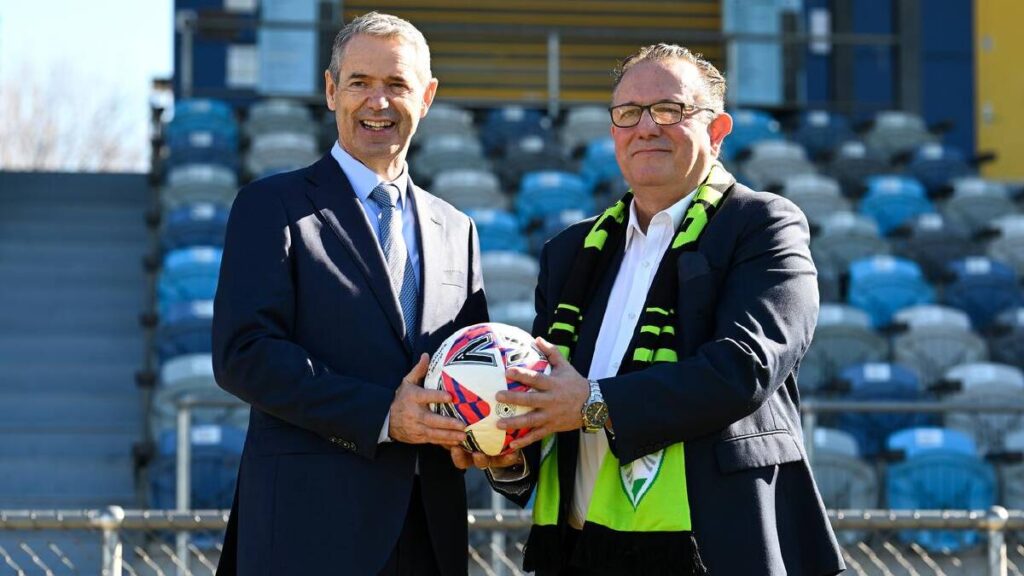
In an announcement released on Thursday this week, Football NSW revealed Deploy as the Naming Rights Partner of the Football NSW Association Championships.

New competition, new talents

The Association Championships, set to take place in July 2026 at Glen Willow Regional Sports Complex in Mudgee, will replace the former Association Youth League.

Although the tournament has changed name, its purpose remains consistent: giving youth players the platform to showcase their talent on the football pitch.

In a display of unity and collective ambition, 18 Associations across New South Wales will enter representative teams, each one featuring gifted grassroots players looking to prove themselves against their peers.

“The Deploy FNSW Association Championships will provide a fantastic platform for our Associations to come together and celebrate the best of elite community football,” said Football NSW CEO, John Tsatsimas via official press release.

“This tournament is all about giving young players, coaches, and referees from every corner of the state a chance to shine and develop in a competitive, supportive environment.”

The partnership between Deploy and Football NSW, therefore, is not merely about a name alteration. It is a collaboration which presents future grassroots talents with a platform and opportunity to compete.


Built on shared values

No partnership can succeed without both parties sharing a common goal or set of values. In this case, the alliance between Football NSW and Deploy is built on a commitment to supporting grassroots football and supplying players with quality resources and experiences to showcase their talent.

“Deploy is proud to partner with Football NSW as the Naming Rights Partner of the Association Championships. Community sport plays a vital role in bringing people together and building future leaders, both on and off the field,” explained Chief Commercial Officer at Deploy, Kurt Johnson.

“As long-time partners with Football NSW, this aligns perfectly with our strategy of creating balls designed for each age and skill level of the game, ranging from junior training balls to professional match balls perfect for the competitive environment like the Association Championships.”

Furthermore, with hundreds of participants including players, referees, coaches and supporters due to attend the tournament, the partnership’s impact will extend right across the state of New South Wales.

Most Popular Topics

Editor Picks

Send this to a friend