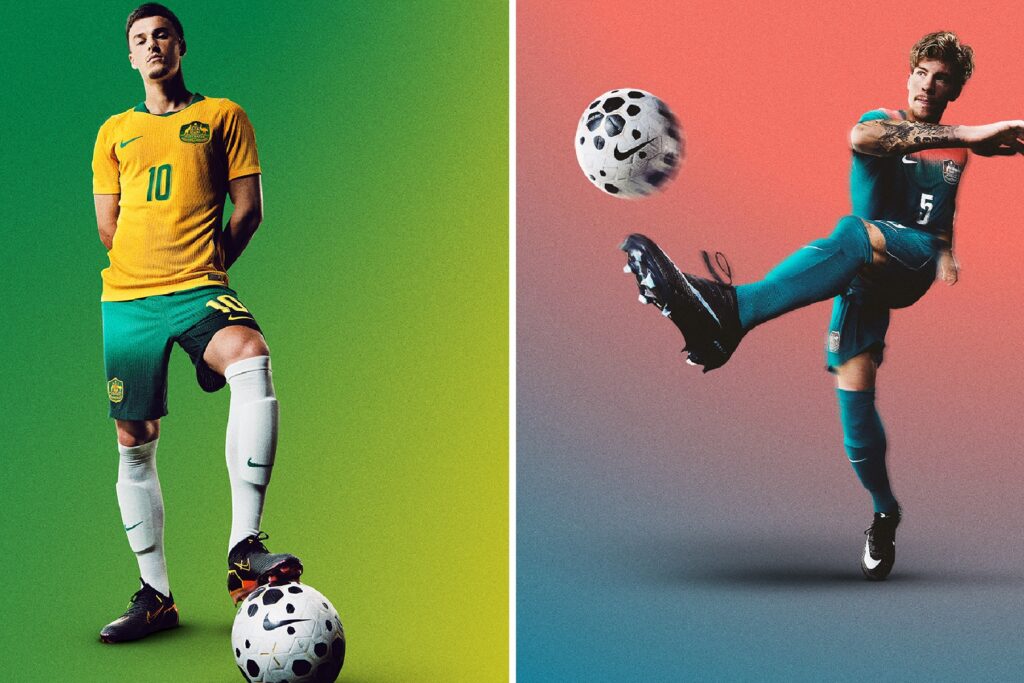
Long before the ‘Golden Generation’ went on to achieve stardom and represent the Australia at the 2006 FIFA World Cup, many modern household names earned their stripes during the 1990s in Australia’s National Soccer League (NSL). The division was unrelenting and highly competitive – factors many successful Socceroos credit with shaping them into the players they became.
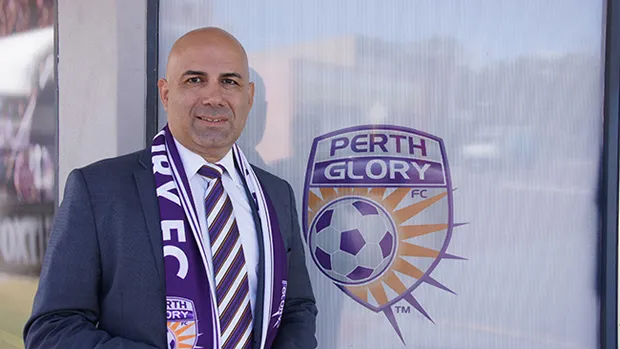
South Melbourne FC president Nick Maikousis believes the introduction of a National Second Division will promote home-grown talent in a similar vein and play a significant role in resurrecting Australia’s youth development pathways.
“The reality is with the number of Visa players in the A-League there isn’t as much opportunity for young Australians compared to what used to exist. The view of South Melbourne and the Australian Association of Football Clubs (AAFC) working group is that the second division will predominately be made up of Australian talent,” Maikousis said.
“Introducing a second tier will mean exposing young Australian talent to regular competitive football. The quality of the game will improve as young boys and girls are given exposure and experience – the results can only be positive.”
Australia has still enjoyed recent periods of success, most notably winning the 2015 AFC Asian Cup, but during the past decade there has been a tangible decline in the number of Socceroos playing in the world’s top leagues.
Experts argue a multitude of reasons for this downturn, but a trend has emerged of young talented players moving overseas early in their careers only to become lost in the cutthroat European system, ultimately stagnating in their development.

“There were obviously inherent issues with the competition in those days, but if you look at our success during the 2006 World Cup campaign, most of the squad was produced locally before they went on to the highest levels of European football,” Maikousis added.
“Ange Postecoglou’s South Melbourne teams that won back-to-back titles in 1998/99 and then went to Rio de Janeiro for the FIFA Club World Championship in 2000 were full of Aussie players. The model that we are to create will also promote home-grown talent in the same way.”
Maikousis and others in the football world are also optimistic that a second division will lead to a mature domestic transfer market through the unification of the game into one linked football pyramid. This would allow FFA to regulate and encourage player movement, paving the way for a model that mimics those in many international environments.
“Clubs would have a financial incentive to develop their young talent as they would be compensated if A-League clubs or rival clubs acquired their players,” Maikousis said.
“Again, going back to the NSL, South Melbourne sold so many players overseas and we believe that would become part of the model in addition to player pathways, the idea that clubs develop players and are remunerated for it.”
Many football administrators would be excited by the prospect of an operation transfer market which rewards youth development, but a potential second tier would also create many additional financial benefits for Australia’s clubs.
From South Melbourne’s point of view, Maikousis believes the club already has the foundations and fanbase to compete at a higher level.
“South Melbourne would grow exponentially. We have done a lot of modelling when we were putting together our official A-League bid. In terms of sponsorships, memberships, gate attendances, and player development we believe the club would generate significant revenue,” Maikousis said.
“In our research we established through our social media channels that we have roughly 100,000 followers. This figure already ranks comparatively with some of the A-League clubs and we’re comfortable we would convert a percentage of these into members.”
“I think the critical thing to understand is the capability of these potential second division clubs. There will be significant long-term benefits because it allows South Melbourne and other clubs to better themselves and also puts pressure on the A-League clubs to continue to better themselves as it will create a competitive environment.”
During recent months there has been considerable speculation about what a potential National Second Division will look like. AAFC has formed a working group of clubs supporting a second tier, dubbing the division ‘The Championship’.
To date, 35 clubs have officially joined the group, including South Melbourne FC. The working group has publicly stated it hopes to see the second division implemented in 2022.

“Progress has been very productive. We’ve had a number of AAFC meetings. The first was an invitation to all NPL clubs across Australia to see who is in a position to play in a potential second division and also to see who is prepared to fund the work that’s required,” Maikousis said.
“There are various working groups this week as well so there is more to come.”
Although the concept is still in its infancy, momentum is growing and The Championship working group is modelling and consulting with game stakeholders to provide recommendations to FFA.
“FFA is very much accepting that this is going to happen. It has been working with all the stakeholders to make sure we create a model that works for everybody. James Johnson and Chris Nikou have a chance to unify the game and I cannot think of a better way to unify football in this country than to build a system which acknowledges everyone and every club,” Maikousis said.
“FFA have asked us to consider a conference system instead of a broader European-style system. I can say from South Melbourne FC’s point of view, our preference is a traditional European-style national second division but the working groups will do the relevant work to provide recommendations based on what is best for the majority.”
While there is still much work to do, the official formation of the National Second Division now appears an achievable prospect. For more information on The Championship, please visit HERE.