
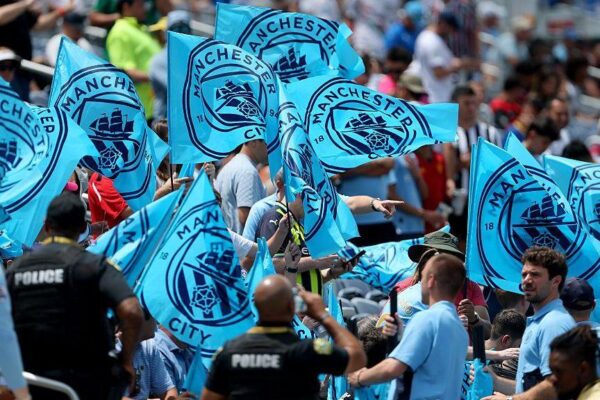


South Melbourne FC and Sydney Olympic FC hosted the highly successful second edition of the Greek Herald Cup at Lakeside Stadium.
Thousands of fans poured through the gates to enjoy a vibrant celebration of heritage, culture, and football. With Greek music and food creating a festive atmosphere, the event showcased the rich traditions of both clubs.
The match itself didn’t disappoint, delivering an entertaining 2-1 victory for South Melbourne, highlighted by memorable goals and moments that capped off a fantastic day.
In this exclusive interview with Soccerscene, South Melbourne President Nick Maikousis shares his thoughts on the Greek Herald Cup, the revival of ethnic clubs in Australian football, and the immense potential of the upcoming National Second Tier (NST).
Maikousis reflects on the club’s heritage, the significance of iconic rivalries, and how South Melbourne is poised to thrive in this new era for Australian football.
Theo Athans
What is the origin of the Greek Herald Cup?
Nick Maikousis
It started last year and that was the first time the competition took place. We flew to Sydney for that game. It’s based on the fact that we started to develop a relationship with Sydney Olympic and in particular their President (Damon Hamlin) and CEO (Lawrie McKinna) over the discussions about the National Second Division.
The second division was announced as a standalone competition and we thought let’s get ahead of the game and lets show what two big clubs from Melbourne and Sydney can do and that’s basically how it all came about.
We spent so much time with Olympic and the other National Second Division clubs so we thought let’s get on the forefront of this and start the competition.
T.A.
In your eyes, how successful was the second edition of the Greek Herald Cup especially for the Melbourne Greek community?
N.M.
Yeah, it was certainly a success and given it’s really just a friendly so we can build it up as much as we like but we’re pretty delighted with the attendance.
It’s a difficult time, it’s a couple of weeks out from the season so whilst we really want to give it a good shot, we also don’t want to incur any injuries and as it turned out we had a couple of minor injuries which might affect us in the short term.
It allows us to go back to our roots, played a lot of Greek music on the day and doing things that we have not really done for decades now in terms of acknowledging our heritage.
Given that Football Australia and the various federations have relaxed their stance on ethnic names, it allows us to reach out to our past again. Both South and Olympic represent the same thing, we have different supporters, but we represent the same community so it’s a great opportunity to showcase our heritage.
T.A.
Thinking back to the NSL days, can the NST and NPL ever get back to the passion we saw back then?
N.M.
I think there’s a couple of stages to the commencement of the competition. Do I think it can get to the heights of the NSL? Look South Melbourne was a powerhouse back then and after the Cup game we had a look at some old footage with the 1984 NSL championship legends as a reunion dinner.
We had a couple of past legends there, including Alan Davidson, who wouldn’t stop talking about the old supporter base, how big and passionate they were and how it lifted them during that time.
So I think during certain fixtures, for example South Melbourne/Preston, will fill Lakeside stadium.
Some of the other games between the Sydney clubs perhaps it won’t be quite as full but I still believe we forecasted around 3,000-4,000 people per game so if we can get to that sort of number I’ll be delighted in the early parts.
It’s a competition that we need to build and we don’t know what it’s going to look like in five years or ten years’ time with the inter relationship between the NST and the A-League. I don’t think anyone quite understands what it is going to look like yet but we all have our own idea on that.
Will it be as big as the old NSL? I doubt it. But certainly there will be some fixtures that will be significant and that’s one of the reasons why I wanted Melbourne Knights to come into the NST. Their history and the original derby in this town would have made it even better.
T.A.
Do you think the South Melbourne and Preston game last year was a showcase into what we could expect out of the NST and its atmosphere?
N.M.
The atmosphere was incredible but not only that, it was a cold Tuesday night out at Reservoir. If you put that fixture on a Friday or Saturday night at Lakeside Stadium, you’d be filling both grandstands easily and you could get up to 10,000 people there so there’s huge potential.
T.A.
Now with the NST, ethnic clubs are back in the mainstream, how important is that for Australian football considering its historical roots?
N.M.
I think what they had done to ban ethnic flags and names was going too far but now that they have relaxed their position in regards to that, it’s a very positive thing.
It allows us to do what we did in the Greek Herald Cup and that is to celebrate our culture proudly from time to time.
Certainly, South Melbourne has evolved over the years as well so let’s not kid ourselves. In my case there’s been four generations following South and two of those generations were born in Australia and we’re all South tragics. So whilst we acknowledge our heritage, we have also moved on past that.
Whilst we have a very big Greek community, its reducing a little bit to how it was and the fact that South is in the NPL, soon the NST, we’ve also got a lot of other clubs have suburban level who are sort of competing with us.
Back when South Melbourne was a powerhouse, you’d find that everyone still had their suburban clubs but I’d say 75% of the Greek suburban clubs also followed South Melbourne.
Unfortunately when South Melbourne dropped divisions outside of the NSL, all of a sudden, we became competitors and that’s never what we wanted. So the NST will help us significantly because people will follow their local clubs and now South Melbourne which is a great opportunity for the community and the club.
If you look at our juniors, the cultural diversity as well is extraordinary, so whilst we respect our heritage, it suggests we have moved on.
T.A.
The NST will bring something fresh because apart from the finals, there isn’t much to play for in NPL so how will that benefit the club?
N.M.
Look the positive thing about this year is that there will be plenty of healthy games like Heidelberg, Oakleigh, Melbourne Victory got promoted and of course Preston is in there as well.
They have replaced teams which didn’t have massive followings so I’m looking forward to quite a few games with great attendances. It’ll be a great season.