There is something depressingly familiar about the latest decision out of Logan.
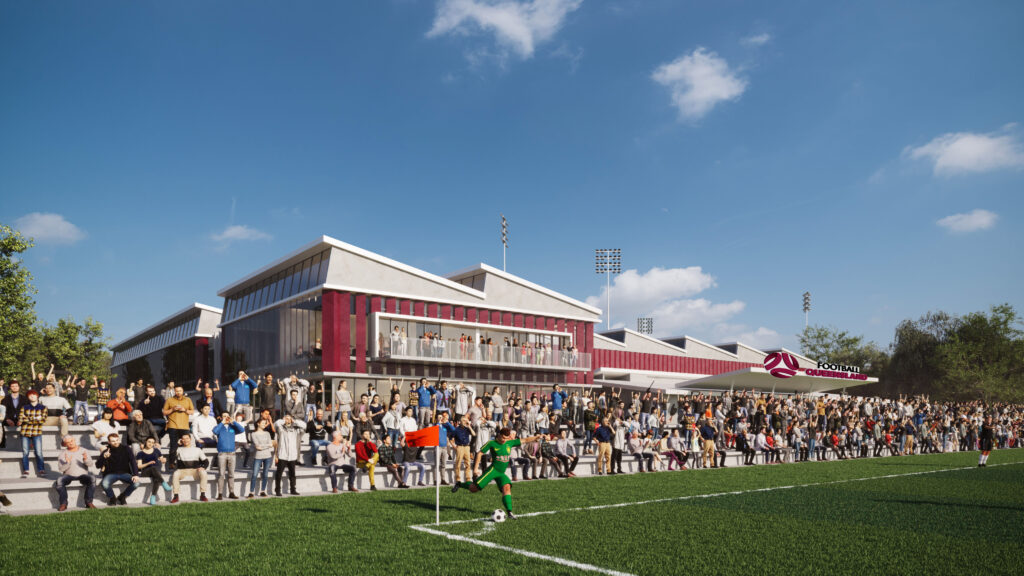
Football Queensland’s proposed $76 million redevelopment of Meakin Park, which would include a new state headquarters, a Women and Girls Academy, sports science and medical facilities, upgraded playing fields and an indoor futsal academy, has been rejected by Logan City Council. The council voted 12–0 against the longer-term tenure arrangement Football Queensland says it needs to progress the project.
Once again, football appears to have been handed the bureaucratic equivalent of the two-finger salute.
And before anyone accuses me of suggesting councils should simply approve every proposal put in front of them, I don’t think that’s the case. Councils have a responsibility to scrutinise major investments, protect public assets, consider existing users and ensure community interests are protected.
The problem is that we seem to have become very good at explaining why something can’t happen and considerably less effective at finding a way to make it happen.
That distinction matters.
The Logan decision isn’t simply about a lease or a football facility. It’s about a much bigger problem in Australian sport: the growing disconnect between the people making decisions about community infrastructure, and those actually use it.
We’ve been talking about this for some time
This is not a new concern for Soccerscene.
Our recent work examining football infrastructure, council planning and government investment has repeatedly highlighted the same issue. Football is growing, participation is increasing, women’s and girls’ football is expanding, clubs are carrying more players and communities are demanding better facilities, yet the planning and funding systems supporting the game often remain stuck in an entirely different era.
In our most recent podcast, we were joined by Paul Klissaris from the City of Monash and Merri-bek Councillor Ozcar Yildiz, with a discussion centred on governance, transparency and the disconnect that can exist between decision-makers and grassroots communities.
What came through strongly was that this isn’t simply a football problem.
It is a governance problem.
It is about who makes decisions, what information those decisions are based on, how transparent the process is and importantly, whether the voices of the people who actually use community infrastructure are being heard.
That conversation reinforced something I have increasingly come to believe: football’s infrastructure problem is not simply a shortage of money.
It is a shortage of alignment.
The people making the decisions don’t always understand the game
There is an uncomfortable truth here.
We have created layers of governance, committees, planning processes and bureaucratic frameworks that can give decision-makers an enormous amount of information while still leaving them disconnected from the reality on the ground.
A community doesn’t experience football through a strategic plan.
A parent doesn’t care that a council has completed a participation assessment when they are driving around looking for somewhere for their children to train.
A club doesn’t experience infrastructure planning through a committee meeting; it experiences it when it has to turn away juniors because there aren’t enough pitches, or when drainage has failed, when lighting is inadequate or when training schedules are pushed deep into the evening because facilities are already at capacity.
This is why the Logan decision matters.
Football Queensland says it needs long-term tenure to unlock government investment. Council has legitimate concerns about the length of that tenure, community access, existing users, financial commitments and the future control of the site.
Fine.
But what happens next?
If the tenure isn’t acceptable to council and that tenure is essential to unlock funding, then simply saying no doesn’t solve the problem.
It just moves the problem elsewhere.
And ultimately, those who pay for that indecision aren’t Football Queensland or the council.
They’re within the community.
We need to stop treating football infrastructure as a cost
One of the biggest failures in the way governments approach football is that infrastructure is too often viewed as an expense rather than an investment.
Football is one of Australia’s major participation sports. It has an enormous volunteer workforce, thousands of clubs, millions of participants and a commercial ecosystem that stretches well beyond the clubs themselves.
A new football facility isn’t just a few fields and a grandstand.
It means construction, engineering, lighting, irrigation, equipment, technology, grounds maintenance, apparel, coaching, sports science, media, hospitality and employment.
It means businesses across the football supply chain receiving work and creating jobs.
This is why I argue when football gets the two-finger salute, the entire football supply chain gets it as well.
The consequences of delayed infrastructure extend well beyond the touchline.
Every project that doesn’t proceed represents construction that doesn’t happen, equipment that isn’t purchased, technology that isn’t deployed, people who aren’t employed and businesses that don’t get the opportunity to grow alongside the sport.
That is an economic impact that rarely appears in a council report.
We’ve asked these questions before
This is also why the Logan situation needs to be considered alongside the broader questions we have raised in previous Soccerscene opinion pieces about council spending and football infrastructure.
We have seen examples where football participation continues to grow while investment decisions appear heavily weighted towards other sporting codes.
The argument isn’t that AFL, cricket, tennis or any other sport shouldn’t receive investment.
Of course they should.
The question is whether public investment is genuinely following community demand.
If football has growing participation, growing female participation, increasing facility pressure and an expanding commercial ecosystem, then surely the investment model should reflect that.
Otherwise governments are effectively asking football to accommodate twenty-first-century participation within twentieth-century infrastructure.
That simply isn’t sustainable.
What Packer understood about public money
There is an old Kerry Packer quote that came to mind while considering this issue.
During a 1991 federal parliamentary committee hearing, Packer famously defended tax minimisation and argued, in typically blunt fashion, that people had little reason to voluntarily give more money to government if they didn’t believe government spent it well.
It was classic Packer – blunt, provocative and designed to make the room uncomfortable.
But there was a broader lesson in it.
People want to see value from the money being collected and spent on their behalf.
Football communities are already contributing enormously.
Parents pay registrations. Volunteers give their time, clubs raise money, businesses sponsor teams. Participants purchase equipment and apparel, councils collect rates, governments collect taxes.
An entire commercial supply chain has developed around the sport.
So when the public is told that infrastructure investment isn’t possible, the obvious question becomes:
Where are the priorities?
This isn’t an argument for reckless spending.
It is an argument for better spending.
Football can demonstrate the ROI
I don’t believe the answer is to attack councils every time they reject a football proposal.
Councils have a responsibility to scrutinise public assets and demand accountability.
But in this case, I would argue that football can easily demonstrate the return on investment.
The $76 million isn’t simply an investment in buildings and playing fields.
It creates participation capacity, supports women’s and girls’ football, generates construction and employment activity, creates opportunities across the football supply chain and provides a long-term community asset in one of Queensland’s fastest-growing regions.
Football Queensland should absolutely be required to demonstrate the financial model, community outcomes and governance arrangements, but the broader ROI case for football infrastructure is becoming increasingly difficult to ignore.
The question shouldn’t simply be what the project costs.
It should be what the community, government and local economy gain from making the investment.
That is the conversation we need to be having.
Not whether football deserves the investment, but how we structure it so the return – social, economic, commercial and sporting – is measurable and delivered.
We need a delivery framework
What football needs now is not another glossy infrastructure strategy that identifies the problem and then sits on a shelf.
It needs a delivery framework.
Football Australia, state federations, state governments, local councils and clubs need to establish a much clearer model for how major football infrastructure is actually delivered.
Who owns the land?
Who funds the construction?
Who operates the facility?
Who carries the maintenance costs?
What level of community access is required?
How are existing grassroots users protected?
How are women’s and girls’ pathways incorporated?
What tenure is required to unlock government investment?
And who is accountable if the project doesn’t happen?
These questions shouldn’t be worked out after a proposal reaches a council chamber.
They should be agreed upon before it gets there.
That is perhaps the biggest lesson from Logan.
If 50 years is too long, negotiate 20 or 25.
If community access needs to be stronger, build those requirements into the agreement.
If council wants greater involvement, create a governance model that provides it.
If government funding is uncertain, bring the state government into the conversation earlier.
There are solutions.
What is missing is a framework that brings all of the parties together early enough to find them.
Because the alternative is the cycle we keep seeing:
Football identifies a need, develops a proposal, seeks government support, enters a lengthy negotiation over land, funding and tenure, and eventually reaches a point where one party says no.
Then everyone walks away.
The project stalls.
The investment disappears.
The community waits.
And football is left to start again.
That is not infrastructure planning.
It is infrastructure attrition.
The cost of saying no
Government is very good at measuring the cost of saying yes.
It is much less effective at measuring the cost of saying no.
What is the cost of another 5,000 players without adequate facilities?
What is the cost to women’s football when pathways can’t expand?
What is the cost to clubs that are forced to cap registrations?
What is the cost to businesses that would have supplied the project?
What is the economic activity that disappears when a major infrastructure project doesn’t proceed?
And what is the long-term cost of continually under-investing in a sport that is growing faster than the infrastructure supporting it?
Those costs don’t necessarily appear on a council balance sheet.
But the community still pays them.
That is why scrutiny cannot be the end of the conversation.
If the proposal isn’t right, fix it.
If the tenure doesn’t work, negotiate it.
If the governance model isn’t acceptable, redesign it.
If the community benefit isn’t sufficiently clear, strengthen it.
If existing users haven’t been adequately consulted, bring them into the process.
That is what leadership looks like.
The role of government should not simply be to decide whether a proposal survives.
It should be to help create the conditions in which good projects can succeed.
Football needs a seat at the table
The bigger issue exposed by Logan is that football still too often enters the infrastructure conversation after the important decisions have already been shaped.
It gets consulted.
It gets asked for submissions.
It gets invited to roundtables.
But consultation is not the same as influence.
Football needs a genuine seat at the table when decisions are being made about the future of community infrastructure.
Because the game is now too big, too commercially significant and too important to communities to be treated as an afterthought.
And that conversation needs to recognise the full football ecosystem.
This isn’t just about players.
It is about clubs, volunteers, coaches, referees, families, businesses, suppliers, technology companies, facility operators, groundskeepers, apparel companies, media organisations and the thousands of people whose livelihoods and businesses are connected to the growth of the game.
That is the football economy.
And when infrastructure doesn’t keep pace with participation, every part of that economy feels the pressure.
The two-finger salute has to stop.
But stopping it doesn’t mean demanding that every football proposal be approved.
It means building a system where legitimate concerns lead to better proposals rather than dead ends.
Where councils can protect public assets without blocking investment.
Where football can demonstrate its social and economic return.
Where governments can see the value of participation growth before facilities reach crisis point.
And where major projects are negotiated as partnerships rather than presented as competing interests.
The Logan test
That is why I don’t think the most important question coming out of Logan is whether Football Queensland’s $76 million proposal should have been approved exactly as presented.
The more important question is what happens next.
Does the rejection simply become another example of football being unable to get major infrastructure projects over the line?
Or does it force football and government to rethink how these projects are developed, negotiated and delivered?
Because if it is the former, nothing changes.
Another proposal will come along. Another council will have legitimate concerns. Another negotiation will become stuck on tenure, funding, governance or community access.
And another generation of players will inherit the same infrastructure problem.
If it is the latter, Logan could become a turning point.
Football can demonstrate the demand.
Government can demonstrate the investment.
Councils can demonstrate accountability.
And together they can create a model that delivers all three.
That is the conversation football should be demanding.
Not simply, “Give us the money.”
Not simply, “Approve our project.”
But:
“Let’s build a system that allows the right projects to happen.”
Because football shouldn’t have to continually ask government for permission to grow.
Government should be planning for the growth that is already happening.
And if bureaucrats genuinely want to know what the community needs, perhaps the first step is to stop assuming they already know.
The Logan decision should not be remembered simply as another football project that failed to get over the line.
It should be remembered as the moment the game decided that saying no was no longer good enough.
Football deserves scrutiny.
It deserves accountability.
But it also deserves a system capable of turning demand into infrastructure.
Because when football gets the two-finger salute, it isn’t just the players and clubs that get it.
The entire football supply chain gets it too.
And ultimately, so does the community.