
Prematch: Revolutionising grassroots European football

Prematch football

Hailing from Germany, Prematch is a groundbreaking all-in-one football platform for grassroots leagues expanding rapidly across Europe.

Prematch is a social data platform designed to connect grassroots football fans, players, clubs and leagues, providing each with an unprecedented level of professional information.

Launched in August 2022 to a purely German market, Prematch has demonstrated significant growth. The Prematch app has attracted users from 98% of all German teams across the football pyramid and has now expanded into the United Kingdom.

The Prematch App

As an app specifically designed for the grassroots and amateur level, Prematch offers a uniquely new experience with its world class features.

Market Value Profiling

Once a user has created an account they will be prompted to create a player profile, from here they can use this to evaluate their market value on Prematch’s internal market evaluator. Mimicking real world transfer markets, Prematch will variably adjust a player’s value depending on how they perform each match. The platform achieves this via a points system, with more points resulting in a higher market value. Players earn points depending on the stats they accrue from a game, incentivizing them to perform the best they can to boost their market value.

Additionally, Prematch users can browse through their league’s or team’s player profiles, allowing them to see which players are deemed the best or those that are on a hot streak.

News and Information Across the Football Pyramid

The driving principle of Prematch’s work is to cater towards the grassroots footballing leagues which are often ignored by other footballing technology companies, thus the Prematch platform provides news and information across each level of the football pyramid.

Working across a number of different categories, Prematch not only delivers simple news about game results but also offers fast coverage of transfers and football events.

To ensure fans never miss out on what they need to know, Prematch has inbuilt customisable push notifications. Users can decide what players, teams or leagues they want to be notified about, and can even alter the style of notification for each preference.

However, where Prematch truly outshines its competitors is through its Prematch Facts. Here, teams receive power ratings measuring their qualities in star rankings across a number of different categories. Through Prematch Facts teams are also profiled on their style of play, granting coaches and players the ability to prepare for upcoming games in a far more extensive manner than ever before.

Conclusion 

It is an understatement to say that Prematch has been a success, with the company flourishing vibrantly in its short lifespan. The German organisation has not only amassed a widespread trusted audience within its home nation but has gained a number of high-profile supporters which will embolden it as it grows internationally.

Chief among these supporters is the beloved ex-Mainz, Dortmund and Liverpool manager Jurgen Klopp, famed for winning titles with his frenetic style at the latter two clubs. Together, Klopp and his family have supported Prematch’s move into the UK with great effect, boosting the app to second place in the Apple App Store’s sport category for apps.

Additionally, Prematch has cemented itself on the footballing market through key partnerships with renowned brands. A major partnership with German sportswear giant Adidas early last year signaled how significant Prematch had become, while another partnership with American sports drink company Gatorade for a brand-new sponsored Gatorade Team of the Month feature on the Prematch platform has boosted engagement, with up to 42,000 nominations within a month.

As Prematch continues to march on, the organisation remains committed to supporting grassroots football across Europe, with the hope of providing services to all of Europe’s 190 million footballers.

For more information on Prematch, visit their website.
Previous ArticleNext Article

The ball is no longer just being improved it is being connected

The humble football is becoming one of the more technologically advanced objects on a football pitch.

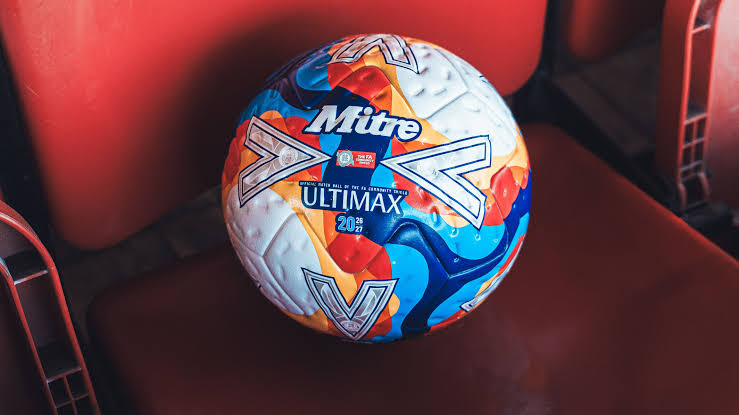
Across the A-Leagues, Mitre’s new Ultimax Pro is focused on improving what happens when the ball is kicked, while LaLiga has taken the next step by turning the ball into a source of live match data.

The contrast shows how football technology is moving in two directions at once, improving the physical performance of equipment while increasingly connecting it to the digital systems surrounding the game.

Refining the Physical Object: Mitre’s Ultimax Pro

The Ultimax Pro, which will be used across the 2026/27 A-League Men and Ninja A-League Women seasons, incorporates Mitre’s HyperFlow, HyperFoam, HyperSeal and Delta Skin technologies.

Its debossed grooves are designed to reduce drag and improve stability in flight, while the cushioning, bonding and surface technologies are aimed at producing consistent rebound, durability and control. The ball carries FIFA Quality Pro certification, reflecting the testing standards required for professional match balls.

The technology is largely invisible to supporters. Its purpose is to make the ball behave more predictably for players, rather than fundamentally changing the football itself.

Connecting the Ball to the Digital Ecosystem: LaLiga’s Sensor-Driven Approach

LaLiga’s approach is different.

The Spanish competition has introduced a radio-frequency sensor developed by KINEXON into its PUMA match ball, with the technology being used across every LaLiga EA Sports fixture this season.

The sensor continuously transmits information about the ball’s position and the precise moment of contact. Around 12 antennas installed in each stadium capture the data and feed it into LaLiga’s wider technology infrastructure.

That gives the ball a role beyond simply being the object of play.

Knowing exactly when the ball is touched can help officials in a variety of situations. Offside, handballs, deflections and other decisions where a difference of milliseconds can affect the outcome could all benefit.

But the more interesting development may sit outside officiating.

LaLiga is using the connected ball to create xBALL, an official data layer that can feed broadcasts, digital products and future second-screen experiences. Data such as shot speed, ball spin and trajectory could all be incorporated into its media and digital products.

The ball is no longer just something that manufacturers compete to make faster, more durable or more responsive. It can also become a source of proprietary data that leagues can use to improve broadcasts, develop digital products and create new ways for supporters to understand the game.

The Ball as Part of Football’s Intelligence Layer

Mitre is refining the physical object. LaLiga is connecting that object to the digital ecosystem of the match.

Together, however, they point to the same direction of travel.

Football equipment is becoming increasingly intelligent.

The evolution is not necessarily about adding technology for its own sake. In the A-Leagues, the objective is consistency: predictable flight, touch and rebound. In LaLiga, the objective is precision and information: knowing exactly where the ball is and when it was touched.

The commercial opportunity comes from what can be built around those capabilities.

As stadiums become more connected, broadcasts become more data-rich and clubs and leagues collect increasingly detailed information about matches, the football itself can become another input into that infrastructure.

It also changes the relationship between equipment manufacturers and competitions.

A match ball used to be primarily a physical product supplied to a league. Connected technology creates the possibility of the ball becoming part of a broader technology stack involving officiating systems, broadcast platforms, analytics and fan-facing digital products.

The A-Leagues are starting with the physical performance of the ball. LaLiga is showing what can happen when that physical object becomes connected.

The next generation of football technology may not be something players wear or referees use.

It may be the ball itself.

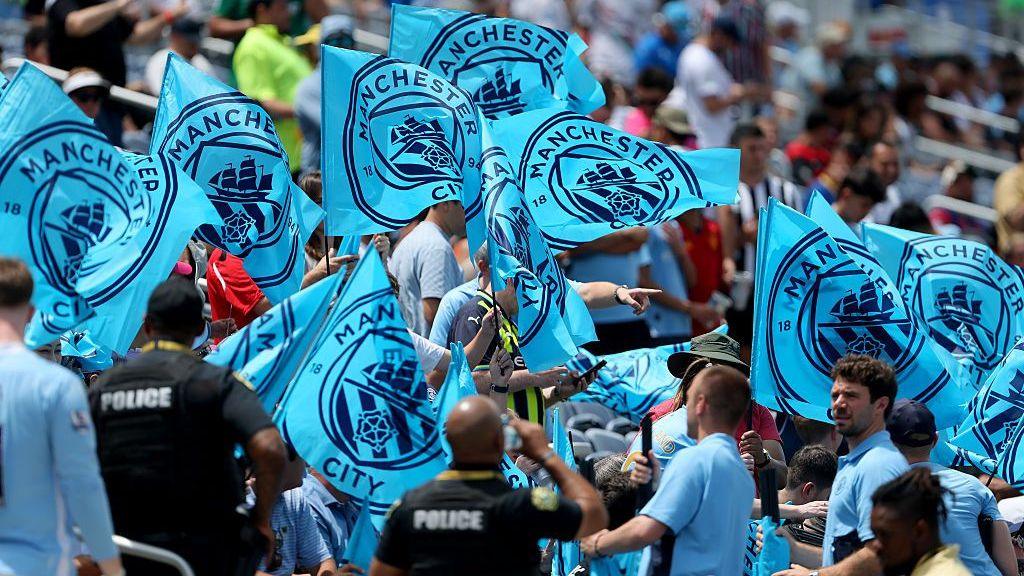
Manchester City must pay the ultimate price for financial cheating

Manchester City’s financial scandal has reached boiling point. On the 29th of September, an independent commission found City guilty of all charges relating to serious breaches of the league’s financial rules across nine seasons, from 2009/10 to 2017/18. The commission also upheld three of four charges concerning the club’s failure to cooperate with the Premier League investigation.

The Premier League says City used sham commercial arrangements and disguised owner funding to inflate revenue and reduce costs by more than $1.7 billion (£900 million). Abu Dhabi United Group funded $1.58 billion (£830.69 million) that appeared in City’s accounts as sponsorship money from Abu Dhabi companies. The commission concluded that City’s accounts concealed the true financial position from auditors and regulators.

The 115 charges cover inaccurate financial information, player and manager payments, financial rules and the investigation itself. City has lodged its appeal against the guilty verdict, but for such a serious sporting scandal, attention has already turned to the potential punishments. In a Premier League era where foreign investment is king and revenues have skyrocketed, we should be asking questions. How did Manchester City get away with this for so long, and how can the punishment act as a deterrent to keep the reputation of football’s biggest league intact?

The hack that exposed the story

The most uncomfortable part of this saga is how the authorities discovered it and how most likely City never would have been exposed. In 2018, German publication Der Spiegel published leaked internal City emails and documents obtained through Football Leaks. Rui Pinto, the Portuguese hacker behind Football Leaks, supplied material that alleged City had disguised owner investment as sponsorship revenue and manipulated arrangements to satisfy financial regulations.

The Premier League investigation began in December 2018. City were formally charged in February 2023, after a four-year investigation, and the hearing finally began in September 2024. That timeline is nothing short of extraordinary; eight years between the leaks being exposed and charges being brought to Manchester City does significant sporting damage.

Man City won eight major titles during the alleged period, including three Premier League titles. Recalling titles in any sport leaves a sour taste in any sports fan’s mouth. The fans of opposing sides given titles feel robbed of the special moment, and Manchester City fans could feel rightfully deceived. But it goes beyond even this as we look at who Manchester City signed during those seasons. Players such as Ilkay Gundogan and Kevin De Bruyne played vital roles in City’s later titles beyond the 2017/2018 season. Would they have joined if this had been uncovered earlier? It’s impossible to say, but it shows how City’s early investment from 2009/10 still contributed to their titles in the 2020’s.

The Premier League’s credibility

That delay is not just embarrassing for City; it damages the Premier League. The league is the most competitive and commercially powerful domestic competition in football. Its rules are supposed to create a framework in which clubs compete on sporting merit while remaining financially sustainable. If a club can allegedly distort its accounts by hundreds of millions of dollars and the process takes years to reach a verdict, despite City’s potential obstruction, every other club has a reason to question whether the system works.

The irony is obvious: if Football Leaks hadn’t shared what they found on Manchester City through its hack, the scheme never would have been uncovered. If financial rules were designed to stop clubs gaining an unfair competitive advantage, then the Premier League may need to change how it investigates how its clubs’ finances are being managed. If anything should be gained from this, it may be that financial regulation needs to be improved as the Premier League and its clubs spend billions.

As for Manchester City, punishment cannot simply be a fine that becomes another operating cost.

Relegation is the only serious answer

If the verdict survives the appeal, Manchester City should be removed from the Premier League and those three aforementioned league titles removed. A fine would be inadequate and, depending on what points deduction City got, would punish the club in one season while leaving the historical record largely intact. Nottingham Forest received a four point deduction for a charge of Profitability and Sustainability rules in 2023-2024. City’s 114 charges will see much greater punishment then that.

Even if City are relegated they would almost be guranteed to be promoted the next season so even that feels like a slap on the wrist. Despite their investment during the nine seasons being questioned their five titles subsequent to that period will be expected to remain in their hands. My solution is to relegate City to the Championship without the potential of promotion for three seasons, one for each title won during that time.

City fans will call that harsh but their is strong reason to come down hard and that’s because this is bigger than Manchester City. Foreign ownership has brought huge investment into English football, but investment cannot mean exemption from the rules. Owners, executives and clubs must know that the Premier League’s financial regulations carry consequences that cannot be negotiated away.

The league has a choice. It can impose a manageable punishment and move on, or it can demonstrate that competitive integrity matters more than the commercial power of its biggest clubs. If City’s appeal fails, the answer should be clear: relegation, a reckoning over the titles and a message to every owner that the Premier League’s rules are not optional.

Most Popular Topics

Editor Picks

Send this to a friend