Soccerscene the only online publication dedicated to the Australian and international football industry. It serves as a practical guide for those involved in the business of running a football club and bringing readers up-to-date research and development across all football matters providing insights, discussion and information related to topics that matter.
Premier League backs grassroots football in Singapore
The NEXTGEN coach programme saw past legends and current coaches unite to deliver an activity intent on supporting grassroots football through high quality and inclusive coaching.
Creating new leaders
To reach the top in elite football requires tactical education, personal guidance and consistent support throughout the development journey.
Coaches therefore take on a great deal of responsibility for players seeking a top-flight dream.
Yet even for those who never make it to the top, there is always one coach who stands out. Not necessarily for the silverware achieved or results on the pitch, but for the way they helped build a person off the pitch to play better on it.
The Premier League’s NEXTGEN Coach programme in Singapore aims to equip coaches with the skills and knowledge to do exactly that: creating welcoming environments which nurture confidence and a love for the game.
“This will hugely benefit local coaches, providing them with expert training and skills that will cascade into the communities they coach in,” said Premier League Director of Community, Nick Perchard, via media release.
“After opening the League’s first international office in Singapore more than seven years ago, we are now building on our commitment to the country with a structured coach development programme.”
What does the programme include?
The programme initially saw Premier League coaches deliver training sessions to coaches from StarHub – the League’s broadcast partner in Singapore who engage with local community football.
Furthermore, the training was consolidated through stakeholder engagement events and talks from 150 students at the Institute of Technical Education about their careers in the game.
In total, the programme saw 30 coaches take part – all from diverse backgrounds selected by the Football Association of Singapore (FAS) to maximise community reach and positively impact as many young individuals as possible.
“Youth development is a key priority for FAS, and it starts at the grassroots level,” explained FAS General Secretary, Badri Ghent via media release.
“Coaches play a central role in shaping not just how young players learn the game, but how they experience it, building confidence, character and a lifelong connection to football.”
Through high quality programmes like NEXTGEN, grassroots football can grow to ensure future coaches and players are confident in themselves and their future roles in the game.
Marlborough Street Reserve. Credit Football Victoria
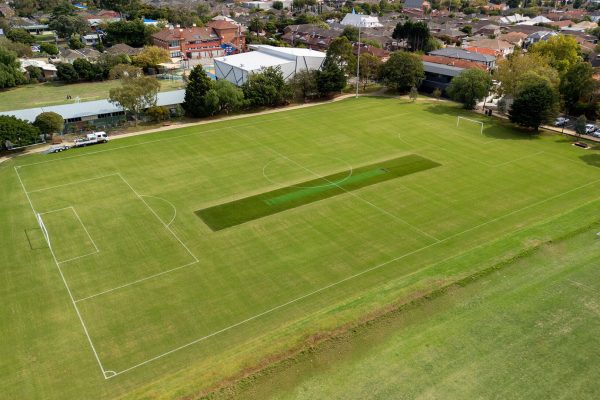
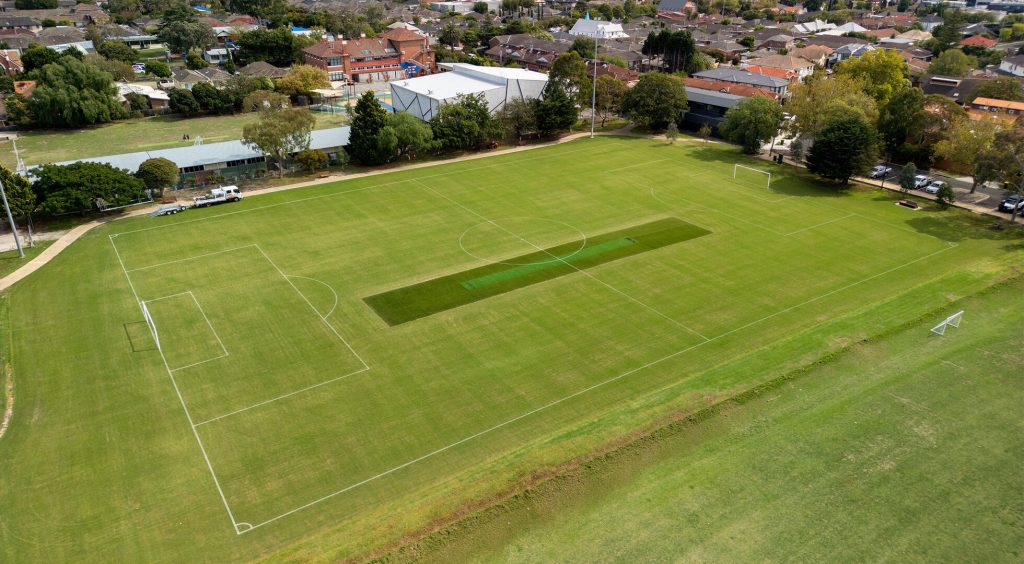
Football Victoria is targeting Victorian Government funding for Glen Eira FC, in order to improve the club’s facilities and accommodate a recent surge in participation.
The interest and demand in football across Melbourne is ever growing, and Glen Eira FC is one such example.
Located in Melbourne’s inner south-east, the club has more than1,100 players with nearly 95% of them aged 18 or under. In the suburb of Bentleigh alone, football participation has increased18% alongside female engagement growing 76% in recent years.
However, at Marlborough Street Reserve, the conditions of the pitch – specifically during winter – can curb accessibility. Wet weather, non-stop usage and limited capacity make it difficult to accommodate all club members. This results in restricted training and playing opportunities.
Lachlan Cole, Football Victoria’s Head of Government Relations & Facilities, said viaFootball Victoria: “The story at Glen Eira FC is one we are seeing right across Victoria and specifically in Metropolitan Melbourne. Participation is growing, particularly among juniors, women and girls, but the infrastructure needed to support that growth is buckling under the weight of demand.”
To tackle this, both Football Victoria and Glen Eira FC want to convert the existing pitch to a synthetic surface and provide improved lighting for the ground. This would create a more reliable environment for players and support the growing demand for football in that community.
Speaking toFootball Victoria, Glen Eira FC President Odilia Wijburg said, “A new sporting precinct with a synthetic pitch would be a game changer, providing year-round access, supporting participation growth and creating a lasting community asset that will benefit local families for generations.”
These issues are not exclusive to just Victoria, but are instead seen nation-wide. Football NSW recently pledged over AUD 200,000 to three amateur clubs to help upgrade their facilities and support the local communities.
Despite the increased interest in the game, the lack of reliable infrastructure, especially in grassroots football, leaves not only local areas without proper facilities, but creates a complicated road for young players hoping to navigate to the top of the game.
Without the support of the Victorian Government, grassroots football could suffer an underwhelming fate. If the game is not supported from the bottom, the top might not reap the rewards of the next generation. And if that happens, alongside local communities, both the domestic leagues and the international team may suffer.
In a statement on their website last Thursday, Melbourne Victory revealed the Arden Campus, situated within Melbourne’s new Arden Central parkland precinct, as the latest stage of its ongoing infrastructure strategy.
The news follows Victory’s February 2025 announcement of it’s first campus in Beveridge, with each seeking to cater to growing demographics within the city’s CBD and inner north-west suburbs.
The latest campus sits within the new cultural precinct centred around Arden Station, as part of a $7 billion redevelopment project helmed by Hamton and HostPlus on behalf of the Victorian Government.
Developers Hamton and HostPlus share a 17-year history of joint venture partnerships, which include a portfolio of large-scale, complex urban projects.
Victory is joined by other major precinct partners Live Nation, North Melbourne (Australian Rules) Football Club and the University of Melbourne’s School of Design, to deliver a new campus whose goals are aligned to the club’s strategic infrastructure plan, with the aim of supporting and nurturing the growth of it’s women’s and youth programs.
Arden Campus’ proposed slate of programs will include a hub for women’s and youth female pathway programs, (for both elite and community football) plus a Community Field and Community Hub, whose shared assets will provide space for future community soccer teams, the university and future local schools, with the capacity to host more than 300 on-site activations annually.
Melbourne Victory has lauded the investment – to be administered by Development Victoria, in collaboration with local Wurundjeri Woi-wurrung Elders and communities – as a ‘once-in-a-generation opportunity‘, allowing the state to build on its network of cultural and parkland zones linked by, and built around, Melbourne’s expanding rail system.
Once complete, the $7 billion transformation of Arden Central is predicted to create a new school, as well as more than 5,400 new homes to cater to more than 10,000 people, located just 1.5kms from the CBD.
John Dovaston, Chairman of Melbourne Victory, is confident Arden Central will ‘cement itself‘ as a critical up-and-coming destination for sport, education and entertainment. Campuses such as this, he said, ‘guarantee a synergy between elite focus and community development,’ which he believes only football – ‘the world game’, can achieve.
Speaking on Victory’s female and youth infrastructure strategy, club Managing Director, Caroline Carnegie, described the plan as a ‘multi-faceted‘ reflection of their vision to lead, unite, connect and inspire.
This update to the club’s infrastructure is an overdue one, but is nonetheless a strategy which she hopes will form part of the ‘micro and macro touch points of Melbournians’ lives at Arden Central’, strengthening Melbourne Victory’s commitment to being ‘a club for all Victorians.’
Carnegie highlighted football’s impact on social cohesion in early 2025, when Victory’s infrastructure strategy was first unveiled. She emphasised the club’s responsibility to establish programs that can positively impact communities, regardless of their members’ gender, background or location.
Benefits of the ‘Campus Model’
In an official Melbourne Victory report on their long-term infrastructure strategy, published early 2025, the club laid out the following goals for the future of the state’s fastest-growing participatory sport: to unlock common opportunities for the game, create greater accessibility for talent and their families across the State (including cutting out travel time for both training and matches) to enhance Victory’s ability to grow soccer’s footprint, and to expand community connection.
The report compares Melbourne’s extensive geographical sprawl to cities such as London, Rome and Madrid – stating their campus model helps break down geographical barriers to success, with the long-term aim of establishing campuses across Melbourne’s North, South, East and West, each within a 1-hour’s drive from their AAMI Park HQ, as well as ttheir existing men’s traning facilities at Gosch’s Paddock.
Melbourne Victory’s long-term plans for their Campus development
As per the project’s FAQs, Victory will run women’s, pre-academy and academy programs from each campus once fully completed, with the club maintaining transparent communications in the meantime with fans, players and key stakeholders as to the full schedule and details of its interim offerings.
The club aims to maintain a cohesive, uniform ‘look and feel’ across each campus, so that people can know what to expect when training, playing or otherwise connecting with the Melbourne Victory brand and broader community.
This approach allows the club a wider reach in terms of attracting, developing and retaining new talent, as well as creating more familiar places for players and their supporters to call home.