


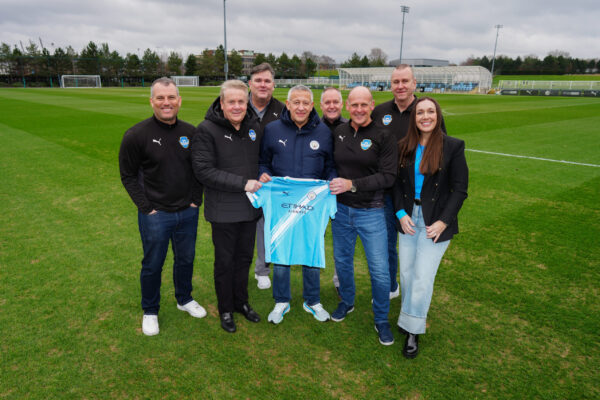

Four coaches nominated for FQPL Coach of the Year award

Football Queensland (FQ) have confirmed the four nominees for the 2019 Football Queensland Premier League (FQPL) Coach of the Year award.

The four men nominated for the award are Paul Arnison, Andrew Ogden, David Booth and Scott MacNicol.

The winner will be announced at the 2019 Football in Queensland Awards Night.

Paul Arnison led the Sunshine Coast Wanderers to the FQPL Premiership this season, steering them to promotion to the NPL Queensland in their second season as a club. The Wanderers had a hot start to the year winning the first five matches they played. They would go on to win 13 of their 18 regular season games. With one of the best attacks in the competition, Sunshine only lost once in their final nine games. Arnison’s side defeated Ipswich Knights in the semi-final, however would fall at the final hurdle against Rochedale in the Grand Final.

Andrew Ogden’s Ipswich Knights had mixed fortunes in the beginning of the 2019 FQPL season. Fortunately, they would find their form heading into the finals series, winning their final five matches. The Knights recorded an unlikely victory against Logan Lightning in the elimination final, producing some of their best football of the season. The run would end shortly after though, losing to Sunshine in the semis.

Capalaba FC were one of the best sides in the FQPL this season, finishing second on the table. David Booth’s side will therefore be playing in the NPL Queensland next season, securing promotion in their last game of the regular season. Capalaba defeated Logan Lightning in the must-win encounter. Booth’s success throughout the season saw him selected as Coach of the Month for May.

Scott MacNicol guided Rochedale Rovers to Grand Final glory in the 2019 FQPL, after finishing the regular season in fourth. The added pressure of the finals series saw the best come out of Rochedale, beating Mitchelton FC and Capalaba FC in consecutive finals. The Rovers would go on to beat premiers Sunshine in the Grand Final. MacNicol was named Coach of the Month in August, thanks to his side’s great finish to the season.

The 2019 Football in Queensland Awards Night takes place next Saturday, November 2.

Previous ArticleNext Article

Football Victoria elevates fan enjoyment with Streets partnership

Football Victoria (FV) revealed last week a new partnership with ice cream giants, Streets. The brand will become an exclusive ice cream partner for the next three years.


An iconic brand for joyful experiences

As a well-known and popular ice cream brand with people all around the nation, Streets will now look to support the fan experience in Victoria through its products.

It reflects FV’s commitment to delivering a family-friendly and memorable experience for spectators. Both on and off the pitch, the organisation is striving to elevate the experience for fans and families alike.

“Football Victoria is always looking for ways to elevate the experience at The Home of The Matildas, and this partnership does exactly that,” explained FV Executive Manager of Commercial and Facilities, Chris Speldewinde.

“It’s a fantastic fit for our community and we’re looking forward to what the next three years will bring.”

Furthermore, Senior Brand Manager at Streets, Ryan Katz, emphasised the brand’s role in community sport and in creating memories beyond the action on the pitch.

“Streets is proud to join Football Victoria as its exclusive ice cream partner,” Katz said.

“There’s nothing better than enjoying a great game with a classic ice cream in-hand, and we’re excited to be part of those moments across the state.”


Understanding community football

Community football is all about these moments. Sunny days, the family together, and a sweet treat in-hand while supporting a local team alongside friends and neighbours.

This is why a partnership between FV and Streets is particularly important.

Not for its commercial value, but for what it tells us about both parties’ understanding of what matters to fans. From young fans to experienced matchday-goers, everyone wants to find enjoyment while watching the game.

And while the 90 minutes of action is the focus, the experience of a local matchday is truly defined by interactions with fellow supporters and smaller – but no less significant – moments of happiness during the day.

How Australian Support for the World Cup Has Changed Since 2022

Sodden, rowdy and 7,000-strong, the crowd that gathered at Federation Square before dawn on Saturday for Australia’s clash with the United States offered a vivid illustration of how much, and how little, has changed in Australian football support since Qatar 2022.

The scenes themselves were familiar: fans queuing from 2am, flares lit during the anthem, a barrier breach as the precinct hit capacity within minutes of opening. But the fact the screening happened at all says something about the shifting institutional weight football now carries in Australia.

Just this May, the Melbourne’s Arts Precinct had decided not to screen Socceroos matches at Fed Square this tournament, citing crowd damage and arrests during a 2022 World Cup screening. Football Australia publicly pushed back, and the Victorian Government ultimately overturned the decision, with security and police presence increased to manage the risk. That a state government intervened to guarantee a public screening reflects how central these gatherings have become to football’s standing in Australia, not just as a peripheral fan event but a piece of cultural infrastructure worth a premier’s political capital.

A Tournament Inherited, Not Just Attended

The scale of public interest now sits on a different foundation than it did in 2022. Football Australia’s most recent National Participation Report recorded an 11% increase in total participation to 1,911,539 people, with women and girls’ participation rising 16% to 221,436. Industry analysis attributes much of that growth to the “Matildas effect” following the home Women’s World Cup in 2023, projecting 407,000 new junior participants by 2027 on the back of that tournament and Football Australia’s broader infrastructure strategy. Whatever happens to the Socceroos in the United States, the crowd at Fed Square this year is drawn from a participation base substantially larger than the one watching from lounge rooms and pubs in Qatar.

That shift shows up in how fans say they’ll engage with this tournament regardless of results. New industry research found 79% of intended Australian viewers plan to keep watching the World Cup even if the Socceroos are eliminated, an 11-point increase on 2022, suggesting interest is becoming less tied to the national team’s results than it once was. The same research found television remains dominant, with 88% of viewers planning to watch on TV, rising above 90 per cent for evening and weekend matches, even as audiences increasingly split their attention across streaming and second screens.

Crowd Behaviour as the Unresolved Question

What hasn’t shifted is the tension over crowd conduct at public screenings, and what it costs football’s civic standing when things go wrong. The Melbourne Arts Precinct’s chief executive was explicit in 2026 that damage and behaviour during 2022 screenings were the basis for initially declining to host watch parties this time, despite trouble-free crowds during the 2023 Women’s World Cup.

Saturday’s flares and barrier breach will likely feed that same debate going into the knockout stages, even as the broader numbers tell a story of a sport with a far deeper public footing than it had four years ago. The Fed Square images from 2022 prompted other Australian cities to scramble together live sites once the Socceroos reached the knockout rounds, reflecting a pattern likely to repeat if Australia progresses from Group D, with Friday’s match against Paraguay now carrying outsized weight for a campaign that began with what fans, by their own description, considered horrible refereeing and a result short of expectations.

Most Popular Topics

Editor Picks

Send this to a friend