Spain’s Liga F receives history-making investment into women’s football

The deal, worth AUD 91 million (€55 million) across four seasons, represents a monumental investment into Liga F and women’s football by Gasol16 Ventures and Fortified Partners.


Setting the pace

The investment comes as a hugely signficant moment in the history of women’s football not just in Spain, but across Europe.

But, given Spain’s commitment to growing the women’s game in recent years (and the world-beating teams it produces as a result), it is hardly a surprise that Liga F is at the centre of this milestone.

In the 2024-25 season, Liga F distributed AUD 28 million to its clubs, as well as doubling television audiences across two years.

The rate of growth is astounding, and shows no signs of slowing down.

“Women’s football in Spain has made a spectacular leap in recent years: audiences have almost doubled in two seasons, and stadiums are incresingly full,” explained Founder and President of Gasol16 Ventures, Pau Gasol.

“Therefore, this is not a sentimental commitment to women’s sport. It is an investment decision based on data, market trends, and the conviction that women’s football represents a growth opportunity with enormous potential for value creation.”

Thus, Gasol’s motivation reveals much about his own reasons for investing, as well as about the current status of women’s football in Spain.

The landscape does not want, or need, sentimental commitment. It is a financial and sporting powerhouse in its own right, and one which can grow to new heights year-on-year.


Securing a successful future

Furthermore, the long-term nature of the deal (set for the next four seasons from the 2026-27 campaign) shows vision and ambition for what the league can become.

“This agreement allows us to look further ahead and equip ourselves with the necessary tools to continue building an increasingly strong, more competitive league with greater capacity to generate value for our clubs,” outlined President of Liga F Beatriz Álvarez Mesa.

“What excites me most about this alliance is not just the investment it brings, but the message it sends: there are people and institutions who believe in the potential of Liga F and want to be part of its growth.”


Final thoughts

This is in stark contrast to the current situation of the A League Women in Australia, which PFA Chief Executive Beua Busch described as at a “tipping point”.

The problems remain the same as they were several years ago. Investment, player satisfaction and attendances are well below other major leagues. The key is creating a product which presents the immense value of clubs, players and commercial opportunities.

Because when intentional investment comes, the question stops being ‘who will invest?’ but ‘who wouldn’t?’ .

Previous ArticleNext Article

Northern NSW Football Launches Female Referee Mentor Program to Strengthen Officiating Pathway

Northern NSW Football has launched a Female Referee Mentor Program, backed by NSW Office of Sport funding, as the federation moves to address one of the game’s most persistent development gaps: retaining and advancing women in officiating.

The program pairs emerging referees with experienced female officials and coaches, and has already been introduced in match conditions during the 2026 Northern NSW Women’s State Cup under the oversight of NNSWF high-performance referee coach and FIFA referee Casey Reibelt.

Northern NSW says the initiative is designed to improve progression into representative appointments and leadership roles while building the support networks often cited as critical to referee retention.

Tournament rollout offers first test of model

NNSWF said 25 female referees officiated during the Women’s State Cup as part of the program’s initial phase.

The federation also released a number of key appointments linked to the rollout. Sophie Whale and Jamie Mills-Cove were appointed assistant referees for the Community Plate final. Lilli Skaines and Kaitlyn Digby were appointed to the under-13 and under-15 Premier Youth League Girls Cup finals, with Indi Charlesworth named assistant referee for both fixtures.

Reibelt said the initiative was intended to support younger and less-experienced referees in a practical environment and to reduce the sense of isolation that can come with early officiating experience. NNSWF general manager participation and women’s football Allana Neeve said the federation viewed refereeing as a critical part of women’s football and described the funded program as a pathway investment aimed at long-term sustainability.

From participation goal to workforce strategy

Over the past years, women’s player participation has boomed, but officiating pathways have not always expanded at the same pace, particularly in regional systems where access to experienced coaching and consistent appointments can be uneven.

That has consequences beyond referee numbers. Match officials are a core workforce input for competition quality, scheduling and player development. If attrition is high in early officiating years, federations are forced into constant replacement cycles rather than building depth.

In that context, mentor programs are increasingly treated as operational infrastructure, not supplementary participation projects. What matters is not only recruitment, but conversion: whether referees remain in the system long enough to progress into advanced appointments and eventually into coaching and leadership roles.

Northern NSW’s decision to embed mentoring in live competition rather than classroom-only delivery is a practical strength. Development feedback linked to real matches is generally more actionable for emerging referees than abstract technical sessions.

The next phase, however, will determine whether the program produces structural change. Initiatives launched around major events often generate strong short-term engagement but weaken across regular-season demands, especially where travel, study and work pressures are high.

Over time, the federation will need to show progress in second- and third-season retention, advancement into higher-grade appointments, and sustained mentor participation beyond flagship tournaments. Consistency across metropolitan and regional cohorts will also be central to any claim of pathway equity.

Public funding raises reporting expectations

Office of Sport support gives the program early stability, but it also raises the bar on transparency. Publicly supported pathway programs are typically expected to report outcomes, not just participation stories.

For this initiative, that means publishing practical indicators: cohort continuity, appointment progression and evidence that mentoring remains active throughout the season cycle. Without that reporting architecture, it is difficult to distinguish between a successful event and a durable reform.

For now, Northern NSW has delivered a credible first step: a defined mentor structure, named participants and immediate implementation inside a representative competition. The next challenge is to convert that start into a repeatable officiating pipeline.

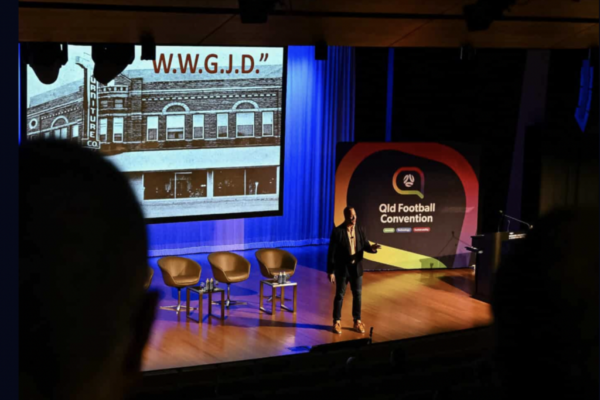
What Football Queensland’s link with Green Room Futures Means as Pathway Strategy Broadens

Football Queensland has signed a multi-year extension and expansion of its partnership with Green Room Futures, formalising the private provider as the state body’s “Official US College & Tour Partner” and adding an annual United States tour for Football Queensland Academy players to the existing college-placement program.

From advisory model to integrated pathway

The agreement marks a substantive evolution in the governing body’s pathway architecture rather than a standalone sponsorship announcement. The two organisations have worked together since at least 2024, when Football Queensland first appointed Green Room Futures as its preferred US college partner and began rolling out athlete information sessions across metropolitan and regional centres. The new arrangement embeds that relationship more deeply into the academy ecosystem by linking advisory services with an international touring product.

In its announcement, Football Queensland said the expanded partnership would offer academy players exposure to US college environments, international competition and broader education-and-sport decision-making support. Chief executive Robert Cavallucci said the relationship had already assisted Queensland athletes to pursue opportunities overseas and that the introduction of an annual tour would strengthen development outcomes for players across the state’s regional footprint. Green Room Futures director Matt Wade said the expansion reflected strong demand for structured US pathways and would provide athletes with more direct insight into student-athlete systems.

A constrained domestic market

For Football Queensland, the strategic rationale means a collegiate model is now an established part of the global football labour market, particularly for players seeking a dual track in education and high-performance sport. In an Australian landscape where professional opportunities remain selective and uneven, college pathways provide a parallel route with different risk settings for families. That logic has been gaining institutional acceptance across the country, and Football Queensland’s move suggests it sees formal international exposure as a competitive differentiator within domestic talent development.

The policy and governance questions are equally clear. The public announcement outlines ambition, but provides limited operational detail on affordability, cohort selection and support settings for regional participants. In practical terms, these details will determine whether the program functions as a broad-based development mechanism or as a premium pathway accessed primarily by households able to absorb compounding costs.

International youth tours involve direct and indirect expenses that typically include flights, insurance, accommodation, tournament costs, travel preparation and time-off-work burdens for families, with regional players often carrying additional domestic travel requirements before departure. Green Room Futures’ publicly available materials also indicate paid service structures within broader college-placement support. None of that is unusual in this market segment; it is, however, central to any serious assessment of access and equity outcomes.

The expanded partnership therefore sits at the intersection of football development strategy and distributional policy. If the tour becomes an informal gatekeeper to college-facing visibility, then financial design features move from administrative detail to core pathway governance. Without those mechanisms, even merit-led programs can produce systematically narrow outcomes because the input conditions are unequal.

For Football Queensland, the outcomes are likely to turn on implementation transparency over the next one to two intake cycles. A cohort profile that is geographically concentrated or socioeconomically narrow would invite predictable criticism, particularly given repeated statewide positioning in Football Queensland’s academy communications. Conversely, early publication of eligibility frameworks, financial assistance settings and regional participation targets would strengthen claims that the program is designed as a genuine statewide pipeline rather than a metropolitan premium add-on.

There is also a broader sector trend at play. Australian sporting bodies increasingly rely on specialist private partners to deliver pathway components once managed internally or left to informal networks. The model can improve expertise and execution speed, but it also shifts part of the development interface into commercial structures. In that context, governing bodies carry a heightened obligation to disclose how partner-delivered opportunities align with public-facing participation commitments, especially where youth athletes and family finances are involved.

What comes next

Well-structured US pathway programs can materially improve athlete decision quality, reduce information asymmetry, and create legitimate post-school options in a constrained professional market. Exposure to college environments can help families evaluate trade-offs around education, migration and sporting progression with greater clarity. For some players, that can be decisive.

The question for Football Queensland is whether the benefits are distributed in a way consistent with its statewide mandate. The announcement establishes intent and strategic direction; the next phase requires publication-grade detail. For a program framed around opportunity, credibility will depend less on partnership language and more on measurable participation design: who is selected, who is supported, and who is priced out.

Most Popular Topics

Editor Picks

Send this to a friend