



FIFA’s ticket gamble delivered record crowds, and now a legal problem it didn’t have in September

Soccerscene reported in September that FIFA’s new pricing system for World Cup 2026 tickets had fans and supporter groups accusing football’s governing body of being out of touch, with group-stage prices said to “start from” around 90 Australian dollars and no ceiling disclosed before the pre-sale lottery closed. Nine months on, the real numbers are in, and the fallout has moved well past fan anger into regulatory territory.

FIFA ultimately used dynamic pricing for World Cup tickets for the first time in the tournament’s history, the same demand-based model used by airlines and ride-share apps, where prices climb as inventory tightens. The cheapest tickets did open at 60 US dollars, as promised. But the top category for the July 19 final in New Jersey opened at 6,730 dollars and had climbed to nearly 11,000 dollars by the tournament’s later sales windows, according to NPR, roughly seven times the cost of the most expensive ticket at the 2022 Qatar tournament.

From backlash to investigation

What has changed since September is that the backlash now carries legal weight. The attorneys general of New York, New Jersey and Texas have opened formal investigations into FIFA’s ticketing practices, alleging the organisation held back cheaper inventory and released more expensive categories later in a way regulators say could mislead buyers. Infantino has defended the strategy publicly, comparing FIFA’s approach to standard practice across the US ticketing industry, arguing that if FIFA is at fault, then, in his words, “everyone selling tickets in North America is doing something wrong”.

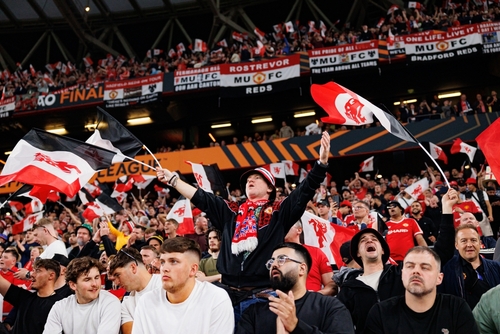
Then, when the tournament began, a second controversy emerged that the September pricing story could not have anticipated. Television broadcasts from several early matches showed clearly empty sections in supposedly near-capacity stadiums. FIFA reported 44,985 fans at a Guadalajara fixture in a venue with roughly 45,664 seats, an official figure barely below capacity, even as visible pockets of empty seating spread across social media within hours. FIFA’s explanation, that attendance is based on scanned tickets and people within the stadium footprint rather than a seat-by-seat visual count, has not fully settled the dispute. Independent analysis by The Athletic found fewer than 1,600 seats unfilled across the tournament’s first six matches, a number difficult to reconcile with what viewers were seeing on screen.

None of this has dented the tournament’s underlying performance. Group-stage attendance sat at roughly 99.4 to 99.7 percent of capacity, and the World Cup has already broken the overall attendance record previously held by the 1994 US-hosted tournament. Fox averaged five million viewers across its 72 group-stage matches, a network record, while fan festivals across the three host nations drew an estimated 5.5 million people separate from ticketed attendance altogether. FIFA has projected the tournament will generate more than 11 billion US dollars in total revenue, largely from broadcast rights. The record numbers support that projection. The investigation, and the empty seats FIFA has struggled to explain, complicate it.

The correction is already underway

The clearest sign that FIFA’s pricing model responds to real demand, not just its own targets, has arrived in the past fortnight. According to ticket data reported by Newsweek, resale prices for the tournament’s remaining matches fell 39 percent in a single week as the knockout rounds opened, with the average cost of the cheapest available seat dropping from a peak of roughly 12,500 dollars in late June to just over 10,300 dollars days later. Seats for the United States’ own knockout fixture against Bosnia and Herzegovina dropped from 2,705 to 1,650 dollars over the same window.

A pricing model built to extract maximum value from peak demand will, by the same logic, correct sharply once brokers who overpaid need to move inventory. The mechanism that produced September’s backlash and July’s headlines is the same one now producing rapid discounts as the tournament enters its final weeks. Whether regulators, and the federations bidding to host the next World Cup, read that as evidence the model works, or as confirmation it needs fixing, is the question this story left unresolved in September and still has not answered.
Previous ArticleNext Article

All Six Female Officials at the 2026 World Cup Come From Concacaf, a Shift From Qatar’s Wider Spread

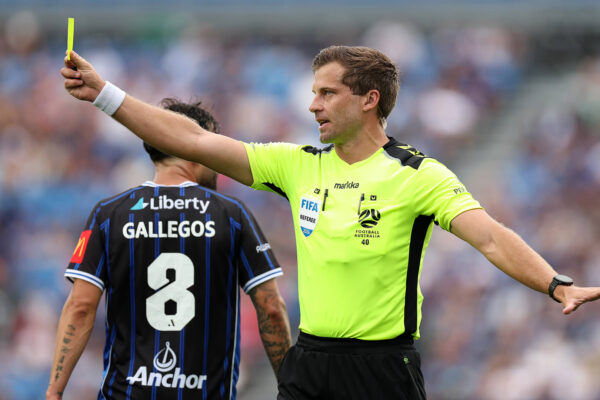
Six women are among the 170 referees, assistant referees and video assistant referees FIFA named to its 2026 World Cup officiating list in April, matching rather than exceeding the number appointed at Qatar in 2022. All six, however, come from countries within Concacaf, a change from four years ago, when the same total was drawn across five separate confederations.

Referees Tori Penso of the United States and Katia Itzel García of Mexico were joined by assistant referees Brooke Mayo and Kathryn Nesbitt, both of the United States, and Mexico’s Sandra Ramírez, along with Nicaragua’s Tatiana Guzmán as video assistant referee.Penso took charge of the Group A match between Czechia and South Africa on 18 June alongside Mayo and Nesbitt, the first all-female on-field trio to officiate a men’s World Cup match, becoming only the second woman to referee at that level, after France’s Stéphanie Frappart at Qatar 2022.García refereed Netherlands against Tunisia in Kansas City on 25 June to become the third woman, and the first Mexican woman, to referee a men’s World Cup match.

By contrast, Qatar’s six women were drawn from UEFA, CAF, AFC, CONMEBOL and Concacaf: Frappart of France, Rwanda’s Salima Mukansanga and Japan’s Yoshimi Yamashita as referees, and Brazil’s Neuza Back, Mexico’s Karen Díaz Medina and the United States’ Kathryn Nesbitt as assistants.

A pathway built through Concacaf’s development system

FIFA Chief Refereeing Officer Pierluigi Collina described the 2026 appointments as drawn from the largest group of World Cup match officials in the tournament’s history, the product of three years of monitoring, seminars and assessment, with selection based, in his words, on officials being “the very best in the world.”

Penso’s own record illustrates how that system has worked for Concacaf officials specifically. She joined the FIFA international panel in 2021, the same year she became the first woman to lead an all-female team in a men’s competition organised by Concacaf, refereeing a World Cup qualifier.She had already become the first woman in two decades to referee a regular-season Major League Soccer match, in 2020, and went on to take charge of the 2023 Women’s World Cup final, the first World Cup final overseen by an American referee.García’s path ran through Liga MX, where she became the first woman in more than 20 years to referee a men’s match in March 2024.

Australia’s own contingent at the tournament, referee Alireza Faghani and assistant referees Andrew Lindsay and George Lakrindis, along with video match official Shaun Evans, does not include a woman among its four officials,positioning the current pipeline into men’s World Cup officiating as one running through a narrower set of confederations than the sport’s broader referee development system overall.

Research on performance shows a mixed but instructive picture

The appointments sit alongside a growing body of research testing assumptions about female officials in men’s football. A study in the Journal of Human Sport and Exercise, examining five seasons of the Maurice Revello Tournament, found female referees were not weaker than their male counterparts in adjudicating men’s matches.Separate research by Atılgan and Tükel, cited in a 2025 study of fan perceptions of referees, found women outperformed men specifically at the decision-making stage, with men showing greater hesitation and avoidance.

Findings on physical output are less uniform. A systematic review of physical demands in high-level matches found male and female referees covered broadly comparable ground, averaging 10.5 and 9.9 kilometres respectively, with similar volumes of high-intensity running.A separate comparison of Spanish first and second division referees found male officials produced higher peak-intensity output than female referees across the shortest, most demanding windows of match play, a gap researchers linked to aerobic capacity and flagged as requiring further study at international level specifically.Academic research published this year estimates women still make up roughly one in ten of the world’s accredited match officials across all levels of the game.

FIFA’s next major appointment cycle for women’s officiating is already under way, with match officials named this year for the 2026 FIFA U-20 and U-17 Women’s World Cups as part of preparations for the 2027 Women’s World Cup in Brazil.

World Cup betting boom presents billion-dollar opportunity, and a growing dilemma, for Australian football

The 2026 FIFA World Cup is expected to become the biggest betting event in sporting history, with more than US$50 billion ($76 billion AUD) expected to be wagered globally across the tournament.

Financial services firm Macquarie estimates around US$500 million will be bet on each match, eclipsing the estimated US$35 billion wagered during the Qatar 2022 World Cup. The jump is driven by the tournament’s expansion from 32 to 48 teams and from 64 to 104 matches, alongside the rapid growth of legal sports betting markets in North America.

While much of the attention has focused on the sheer scale of betting turnover, the figures also underline football’s commercial importance to Australia’s wagering industry.

The World Cup has long been one of the country’s biggest betting events, sitting alongside the Melbourne Cup, AFL Grand Final and State of Origin. With Australia qualifying once again and attracting strong national interest, bookmakers have invested heavily in marketing campaigns designed around football’s month-long global spectacle.

TAB recently launched its nationwide “The Cup at TAB” campaign, positioning venues across Australia as communal destinations to watch World Cup matches, backed by research suggesting 61% of Australians prefer experiencing the tournament with others.

Sportsbet has also rolled out a major World Cup advertising campaign built around football’s global appeal, highlighting just how commercially valuable the tournament has become for Australia’s betting operators.

What about Australian Football?

Unlike Europe’s major leagues, Australian football still relies heavily on sponsorship and broadcast revenue to grow participation, develop professional competitions and improve fan engagement. The increased commercial attention generated during a World Cup inevitably benefits broadcasters, venues, hospitality businesses and wagering companies looking to capitalise on football’s largest audience.

SBS has introduced in-game advertising during FIFA’s mandated hydration breaks for the first time at a World Cup, creating additional commercial inventory during live broadcasts while maintaining uninterrupted match coverage.

Yet football’s commercial success arrives amid mounting political pressure over gambling advertising.

The Albanese Government has proposed significant restrictions on gambling promotions, including banning betting advertisements during most live sport before 8.30pm, prohibiting gambling branding at sporting venues and preventing athletes and celebrities from promoting wagering products. While described as Australia’s biggest gambling advertising reforms to date, critics argue the measures still leave significant loopholes.

What does it mean for football?

As betting companies spend millions attaching themselves to the World Cup, gambling harm advocates argue football’s biggest event also becomes one of the industry’s most effective customer acquisition tools.

Macquarie analysts have warned bookmakers face an additional challenge beyond simply attracting World Cup punters. The industry’s long-term profitability depends on converting casual tournament bettors into year-round customers across football, racing and other sports, as well as higher-margin casino products.

That concern has been repeated by gambling reform organisations, which argue global football tournaments expose younger audiences and first-time bettors to increasingly sophisticated wagering products.

For Australian football administrators, the issue reflects a broader commercial balancing act.

The sport continues to chase greater investment to compete with the AFL and NRL for fans, sponsors and media attention. World Cups generate unprecedented engagement, creating opportunities for broadcasters, pubs, clubs, hospitality operators and betting companies alike.

However, as governments tighten gambling regulations and public scrutiny intensifies, football’s commercial ecosystem may also need to evolve. The 2026 World Cup demonstrates football’s extraordinary economic power beyond ticket sales and broadcasting rights. Billions of dollars will flow through betting markets over the next month, reinforcing football as one of the world’s most commercially valuable sports.

For Australia, the challenge is ensuring that the business generated by football strengthens the game itself, rather than simply enriching industries that surround it.

Most Popular Topics

Editor Picks

Send this to a friend