





Support grows for National Second Division ahead of AAFC meeting

The Australian Association of Football Clubs (AAFC) will take the next step towards its plans to have a national second division in place by 2022, holding a meeting this week with interested member federation clubs.

Over 50 clubs across Australia are set to be a part of the discussion on Tuesday, which will centre around the criteria of the proposed second division, with a working title of ‘The Championship’.

AAFC will provide a public statement on the progress made throughout the meeting the following day.

This is welcome news for football fans who have been pushing for a proper football system, with AAFC also providing possible timelines, something the game has been crying out for.

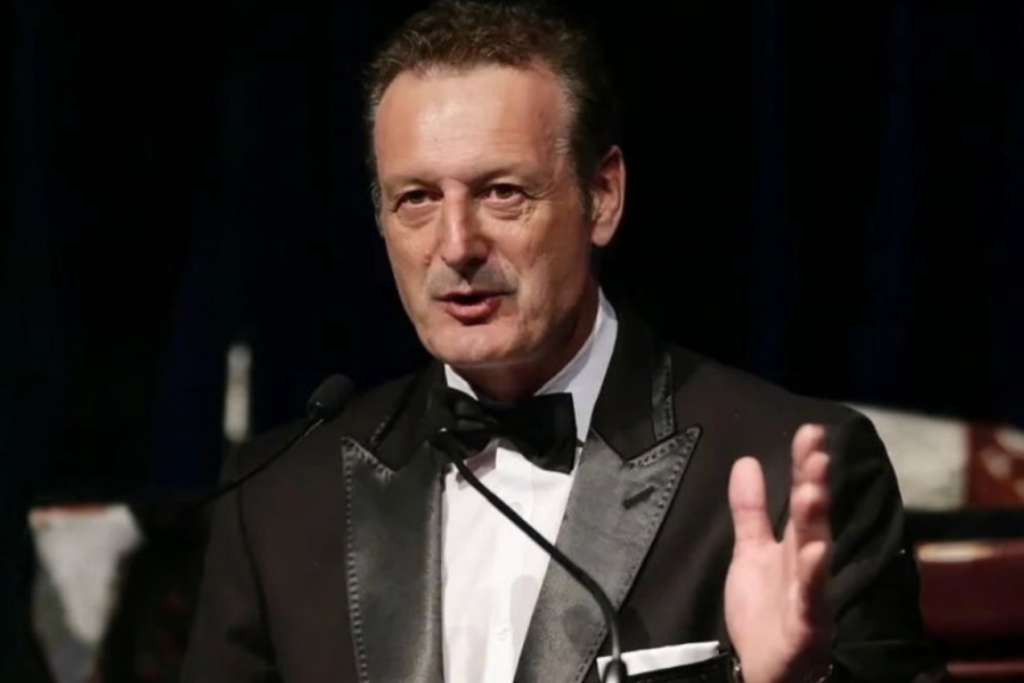
The organisation would have been heartened to hear of Melbourne Victory owner Joe Mirabella’s comments recently, who fully backed the implementation of a national second division.

He told The Age: We need it (a second division) because it is a point of difference to our game and to other sports. We need competition in the A-League. We need our grassroots to eventually play into a B-League and then play towards winning a spot in the A-League.”

“I don’t care if it is Victory, Sydney FC or Melbourne City. It is about merit.”

Mirabella’s comments are not revolutionary, but are significant, because of who he is.

A Melbourne Victory owner publicly admitting the game needs promotion and relegation might go against his own interests, based on the current A-League model, however, he realises it is for the betterment of the sport in this country.

It will provide the game with more opportunities across the board and will embrace what makes football unique.

“I have discussed this with a lot of football people,” he continued.

“When you get journalists, commentators and fans of the game, ex-players who have played for the country and they are all in favour of the second division then you can see there is a groundswell of support going.

“My family is a football family. But when they are saying the A-League has become boring you have to do something.”

Ultimately, the decision to implement a connected football pyramid will come down to the FFA, who continue to be in discussions with AAFC.

The ‘XI Principles’ document which was released at the start of July, highlighted various agenda points in the game that the governing body would look to fix or improve.

Detail on the second division was light, with just one passage of the document stating “consider the development of a second-tier competition”.

In saying this however, the XI Principles is a living document, meaning amendments will be made to it in the future, as the FFA assesses the best way forward for the game in financially difficult times.

Following the results of a survey of the Australian football community based on the XI Principles paper, showing 99% of respondents insist the game undertakes a major overhaul, FFA CEO James Johnson spoke about the possibilities of a national second division.

“Could there be a second-tier competition, with 10 or 12 teams that play 20-odd rounds home and away or do we look at a second-tier competition with conferences based in different states around the country that play half the season at state level and then end up playing at national level in a group stage, similar to how the Brazilian league operates,” he told News Corp.

“There’s two parts to the season that starts at state level, then a qualification process that goes into a national level of competition.

“This is something we could look at because someone of our challenges in Australia are similar to Brazil – where you have competition that are strong at state level and you have a very big country geographically, so their solution was to use this sort of format.”

Whether you believe the Brazilian system is suitable for Australia or not, it is important for football fans to see those in charge of the game continue to debate the merits of various models, led by an administrator who is a football person.

With the greatest respect, what was the likelihood of former FFA CEO David Gallop speaking about the Japanese footballing model as opposed to the Brazilian model in the public eye?

The national second division is coming, in what form we are unsure, but the consensus seems to be when and how, not if.

Previous ArticleNext Article

Pignata’s OAM Signals a New Era for Football Administration

In the Australian sporting landscape, administrative longevity is a rare commodity. The burnout rate for executives in the A-Leagues and state federations is notoriously high. It’s driven by the unique friction between commercial imperatives and grassroots politics. Consequently, the awarding of a Medal of the Order of Australia (OAM) to Football Tasmania CEO Tony Pignata is symbolic of more than individual recognition.

Pignata joins PFA founder Brendan Schwab, former Soccer Australia CEO Ian Holmes, and Alen Stajcic on this year’s Australia Day honour roll. However, Pignata offers a distinct blueprint for the modern sports executive. His trajectory moves from the banking sector to the Football Victoria boardroom, through high-pressure A-League franchises, and finally to the developing frontier of Tasmania.

A “Turnaround” Specialist

To understand Pignata’s executive philosophy, observers must look past the A-League. The mechanics of the Victorian Soccer Federation (VSF) in the mid-2000s tell the real story. Following the sudden departure of Damien Bown in 2004, Pignata inherited an organisation in crisis. Then-Chairman Manny Galanos described the body as being “on our hands and knees financially.”

Pignata leveraged a 17-year background in legacy financial institutions including NAB, AXA Australia, and HSBC. He applied corporate discipline to a chaotic sporting balance sheet. His tenure at the VSF (now Football Victoria) restored solvency and aggressively pursued commercial assets.

Pignata’s transition to the A-League demonstrated that these fundamental business principles could scale. His tenure across three clubs showed adaptability to different market conditions. Yet, his legacy remains inextricably linked to a singular, market-shifting transaction: the signing of Alessandro Del Piero.

In 2012, the A-League faced a relevance crisis. At its helm, Pignata executed a high-risk strategy that fundamentally altered the competition’s valuation. The Del Piero acquisition proved the league’s capacity to attract global brand equity. Pignata demonstrated that commercial viability requires bold capital investment backed by operational stability.

Bridging the “Old Soccer” Divide

Crucially, the OAM citation acknowledges a contribution that bridges the often-toxic divide between the “old soccer” NPL system and the “new football” professional era. Pignata is not a corporate outsider. His journey began as a junior at Salesian College and a player for Westall Inter and Box Hill Inter. He featured in the Reserves as the club ascended to the Premier League.

This “proximal” relationship with the grassroots gave him a unique license to operate. Long before the ubiquity of social media, Pignata engaged directly with stakeholders on public fan forums. He understood the importance of monitoring the digital pulse of its supporters when most administrators relied on press releases.

His unique ability to speak the language of both volunteer committee and corporate board drove organisational reforms in Victoria. He oversaw the rebranding to Football Federation Victoria and streamlined the V-League Academy by recruiting Eric Hollingsworth. His move to admit the Australian Institute of Sport (AIS) into the Premier League ensured elite youth talent had a vehicle for competitive match minutes. He prioritised technical development over short-term club politics.

The Tasmanian Mandate

Now 61, Pignata shows no signs of slowing down. His move to Football Tasmania in September 2023 signals a shift in the state’s ambition. Tasmania currently sits at a critical juncture, aggressively lobbying for A-League expansion and the requisite stadium infrastructure.

By appointing Pignata, Football Tasmania signalled to government partners that they are operationally ready for professionalisation. His presence de-risks the expansion proposition. He knows what a viable A-League licence looks like because he’s ran three of them.

His current focus on “high-performance pathways” addresses the state’s most pressing structural deficit: the talent drain to the mainland. Pignata’s mandate is to build an ecosystem where a Tasmanian junior sees a clear line of sight to professional football without leaving the state.

Ultimately, the OAM recognises a career defined by resilience and ROI. Pignata navigated the transition from the semi-pro era to the corporate demands of the A-League. He consistently delivered commercial growth and organisational stability.

“Football is more than a sport… it is a community, a pathway and a powerful connector,” Pignata said upon receiving the honour.

For the industry, Tony Pignata’s OAM is a benchmark. It rewards the “business of winning” off the pitch just as highly as the results on it. As he steers Football Tasmania toward a potential A-League future, the industry watches with interest. The “Pignata Effect” may yet deliver one final, historic expansion victory.

Updated Announcement: NPL Partnerships revealed last week

Read here for a list of the newly-announced partnerships across NPL clubs last week.


NPL VIC:

George Cross FC: 

Talent Blue – Providing tailored staffing and recruitment solutions across manufacturing, construction, mining and resources, infrastructure, maintenance and shutdowns. 


NPL Queensland:

Gold Coast United:

P3 Recovery – A leading recovery and wellbeing specialist in Australia, P3 Recovery helps its clients stay healthy through treatments such as traditional and infrared saunas, red light therapy and cold plunges. 

Brisbane City:

Suna – Suna Shoes is a family-owned business based in Queensland with over 42 years of experience. They are dedicated to delivering style and innovation through a variety of products.

NPL South Australia:

Campbelltown City:

Macron Adelaide – Adelaide’s exclusive Macron distributor. Macron is a European company operating in technical products, sportswear and accessories for athletes and societies. 

Olympic Industries – Established in 1969, Olympic Industries is a family-run business based in Adelaide. They offer services designing and constructing a variety of buildings, from small sheds to large industrial buildings.

Amadio Wines – Award winning winemakers with a 90-year history. They are located in the northern vineyards of Adelaide, and boast a 320-acre vineyard which helps produce an array of excellent wines. 

Bianco Hire – With over 44 years of experience, Bianco Hire provides an extensive range of portable buildings, toilets, storage containers and temporary fencing options across SA. 

LJ Hooker – One of the largest residential and commercial real estate and sales management services in Australia and New Zealand. Trusted part of the community since 1928.

Solmech – Solmech is a leader in consulting and Utility Infrastructure. They provide services across renewable energy, construction, electrical, water and gas. 

Northpoint Toyota – For several years, Northpoint Toyota has helped the community by providing new vehicle sales, used vehicle sales, finance and servicing help, and genuine parts. 

Rezz Hotel – Established in 1858, Rezz Hotel is a long-trusted part of the community providing excellent stays for customers. It can accommodate entertainment purposes through its gaming lounge, as well as business pods and functions.


Most Popular Topics

Editor Picks

Send this to a friend