


Sydney FC’s vision to expand its influence in Asia through coaching

Sydney FC is currently on a mission to expand its influence across Asia, with a dedicated focus on nurturing young talent and empowering coaches in the region.

Head of Academy Nick Susko and Head of Fan Engagement Howard Fondyke are currently in Singapore running coaching clinics and coach education sessions with the country’s rising stars.

During their visit, Susko and Fondyke engaged with a diverse group of ages and genders, working closely with over 160 boys and girls over the past week.

In addition to their coaching roles, Fondyke also was a guest speaker at SportsPro’s Conference at Marina Bay Sands in Singapore, where he shared the club’s fan engagement strategy to a network of interested local business leaders.

Fondyke also touched on Sydney FC’s innovative strategy to build relationships and connections amongst the football community in Asia by completing these coaching clinics and familiarising people in the continent with the club in the hopes to expand as a brand on top of their view to nurture more talent.

Recently, the club appointed Ferrari Australasian president Dr. Jan Hendrik Voss to the clubs board of directors where he discussed in an interview about the specific vision to expand the club’s brand internationally.

The SportsPro event was one of many that the club will involve themselves in to try and connect with the international business community, so there is good reason to expect some more international partnerships and collaborations in the near future.

Starting in Asia is a good initial plan considering the club will return to Asian football through its AFC Champions League 2 qualification.

On the pitch success at that tournament will go hand in hand with its business ventures and the club seeks to build upon its $450,000 it has earned through qualifying for the group stages.

It’s an initiative that shows the commitment the Sky Blues have with fostering football talent outside of the Australian border but also underscores its role as a global ambassador for the sport.

Sydney FC remain a leader in this space in Australian football, making strides in Asia with a vision to expand further and providing valuable football education to young talent through their elite coaching set up.

Previous ArticleNext Article

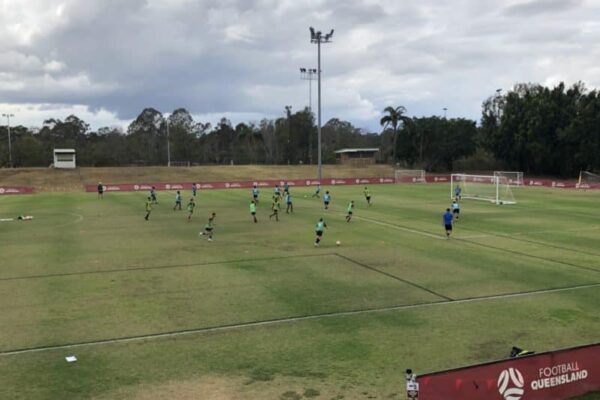
Football Queensland’s Logan hub plan rejected by council

Football Queensland’s plans for a major new football hub at Meakin Park have been rejected by Logan City Council. The proposed $76.1 million redevelopment aimed to create a state home for football in Queensland.

Council unanimously rejected Football Queensland’s request for longer-term leases and additional land at the Slacks Creek site. The decision leaves the organisation’s current leases in place. The proposed development would have delivered new playing fields, elite training facilities and a dedicated home for Football Queensland.

Three-stage development

The first stage of Queensland Football’s development carried an $8.5 million price tag. It would upgrade fields, lighting, drainage and irrigation across Meakin and Mappas parks. The goal was to create a six-field, international-standard training venue.

The second stage represented the largest investment. Football Queensland planned to spend $55.3 million on a new headquarters at the adjoining Queens Park site. The facility would include a Women and Girls Academy, sports science facilities, sports medicine and strength and conditioning services.

A third $12.3 million stage would add an indoor futsal academy and two synthetic fields. Football Queensland said the project could create a major football precinct for the region. It also saw the facility playing a role in Queensland’s preparations for Brisbane 2032 and beyond.

Lease decision creates roadblock

Queensland’s governing body sought a 25-year lease with an option for another 25 years. Chief executive Robert Cavallucci said longer tenure was essential to secure government funding and move the project forward. The organisation has around three years remaining on its existing leases.

Council took a different view. Concerns included community access, funding certainty, future costs and the level of use at the existing facilities. Councillors also questioned whether a long-term arrangement would deliver enough benefit to Logan residents and grassroots clubs. Logan Council has now ordered a review of Football Queensland’s performance under its current lease.

Grassroots football at the centre

The decision highlights a wider issue for football infrastructure. Major facilities can provide elite pathways, sports science and high-performance opportunities, but unless councils can ensure local players and clubs can access the fields, they will be rejected.

Meakin Park already serves several sporting organisations, including football users and community sporting groups. Football Queensland said it had invested almost $2 million at Meakin Park and Mappas fields. It also argued the precinct operates at around 130 per cent capacity. For Queensland football, the challenge now is finding a model that can deliver high-performance facilities while expanding access for the community.

The proposal may have been rejected, but the need for better football infrastructure remains. With participation growing and Brisbane’s 2032 Olympic Games approaching, the debate over where and how Queensland builds its next generation of football facilities is unlikely to disappear.

Premier League clubs record huge losses despite record revenue

A report from Deloitte says Premier League clubs are facing a growing financial challenge after combined pre-tax losses reached $1.8 billion (948 million pounds) in the 2024-25 season.

The figure marks a huge rise from the $258 million (135 million pounds) recorded the previous season. It comes despite clubs generating record revenue of $13 billion (6.8 billion pounds).

Revenue keeps rising

Premier League clubs increased their revenue by 8% during the season. Commercial income and matchday revenue both climbed. Broadcast income also increased. But higher revenue has not translated into stronger profits.

Wage costs rose by $730 million (381 million pounds). Player transfers also played a major role in the rise in losses. Only eight clubs reported an operating profit. That was down from 13 clubs the season before.

Spending drives losses

Transfer spending remains one of the biggest pressures on Premier League finances. Clubs continue to invest heavily to compete for trophies and European places. But those costs can quickly outweigh the extra revenue generated by success.

Net debt also increased. It reached $6.9 billion (3.6 billion pounds) in 2024-25. That was up from the previous season.

The financial pressure is not limited to the Premier League. Only three Championship clubs in the second tier reported a profit.

A warning for English football

The Premier League remains the financial powerhouse of English football. Its clubs generated $13 billion (6.8 billion pounds) in revenue. The Championship generated $1.8 billion (942 million pounds).

But Deloitte warned that football cannot rely on simply adding more matches to create future growth.

European competitions have expanded. The international calendar has also become more crowded. Yet there are concerns that the market could become saturated.

Clubs face tougher choices

The figures highlight a difficult balance for Premier League clubs. They need to spend to remain competitive. But rising wages, transfer fees and debt are putting greater pressure on their finances.

New regulations will also change how clubs manage their spending from 2026 onwards. The focus is now shifting towards sustainable growth and stronger commercial income.

The Premier League remains the richest domestic league in Europe. But these figures show that wealth does not guarantee profit.

For clubs across England’s top flight, financial discipline is becoming just as important as success on the pitch.

Most Popular Topics

Editor Picks

Send this to a friend