


The Footballing Figures Recognised in January 26 Honours List

In an announcement made on Monday, four individuals were celebrated in the January 26 Honours List for their respective services to the football industry in Australia. 

The cohort included Football Tasmania CEO, Tony Pignata, PFA Founder and former CEO, Brendan Schwab, former Football Australia CEO, Ian Holmes and former player and Matildas’ manager, Alen Stajcic. 


Leaders of Australia’s football landscape

Tony Pignata

Recipient of the Medal of the Order of Australia (OAM) is Football Tasmania CEO, Tony Pignata. 

From beginnings as a player for Box Hill Inter, to several leadership roles with clubs like Wellington Phoenix, Sydney FC and Perth Glory, Pignata has dedicated his life to the game. Since 2023, he has led Football Tasmania and helped to develop high-performance pathways and expand participation to ensure football has a long-term future in the region. 

Brendan Schwab

PFA Founder and former CEO, Brendan Schwab, was recognised with the Member of the Order of Australia (AM). 

Schwab’s contributions to football are undeniable, not only as a key figure in the creation of the PFA in 1993 and the A-League, but as an accomplished lawyer who advocated for Australian footballers on the global stage. As a Football Australia Hall of Fame Inductee and PFA Champion, Schwab has undoubtedly woven his name into the fabric of Australia’s football industry. 

Ian Holmes

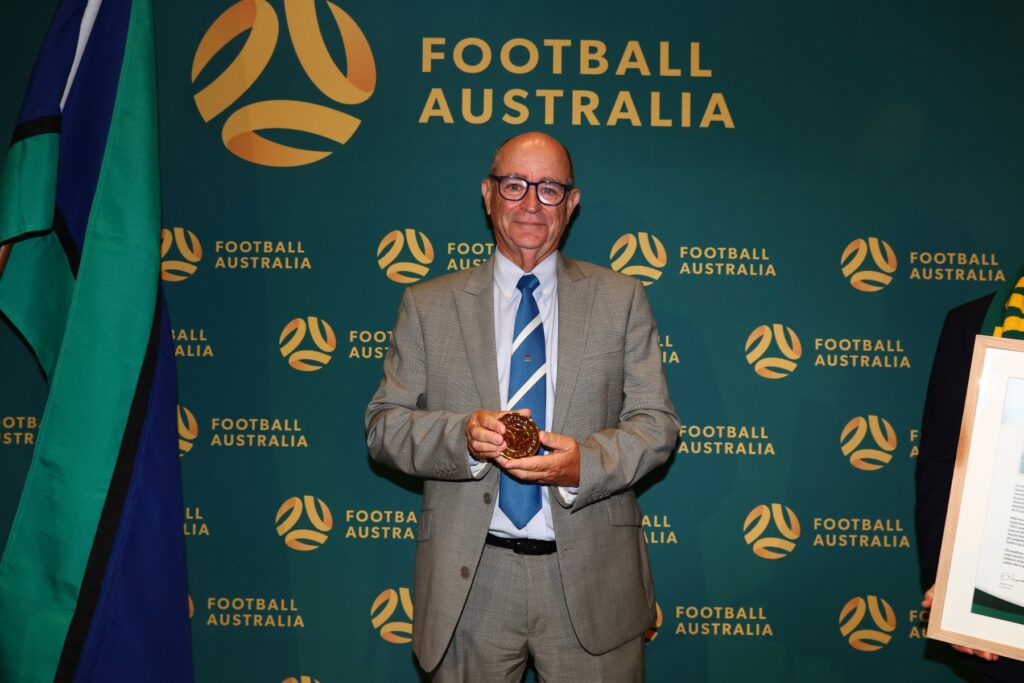
Former Football Australia CEO, Ian Holmes, was another recipient of the Medal of the Order of Australia (OAM). 

With contributions to football in Australia spanning five decades, Holmes stands as an essential figure in the industry. His work has covered various levels of the game, including as President of New South Wales Amateur Soccer Federation, Football Australia CEO, and Director of Football New South Wales. His leadership and commitment has been pivotal to the growth of football at state and national levels. 

Alen Stajcic

Former player and football manager, Alen Stajcic, was awarded the Medal of the Order of Australia (OAM) for his services as a coach. 

In both the men’s and women’s game, Stajcic has forged a successful record on the international stage for the Matildas and the Philippine Women’s National team, as well as at club level for Sydney FC, Central Coast Mariners, Perth Glory and Western Sydney Wanderers. As Head Coach from 2014-2019, Stajcic helped the Matildas reach new heights on the pitch and thus pave the way for the development of the women’s game across the nation. 


Acknowledging dedication and commitment 

Whether in Australia or beyond, the football industry can be an unforgiving and ruthless sphere in which to work. This is why recognising the people who have made valuable contributions to the nation’s footballing landscape is so important. Through consistent hard work and commitment, they collectively helped to bring the football industry in Australia to where it is today. 

While development is constant and improvements can always be made, it is reassuring to know that the foundations were built with the help of four dedicated individuals deservedly recognised in this year’s January 26 Honours List.


See the full 26 January Honours List here.
Previous ArticleNext Article

Build a home, create a culture: How do we secure the Socceroos as global competitors?

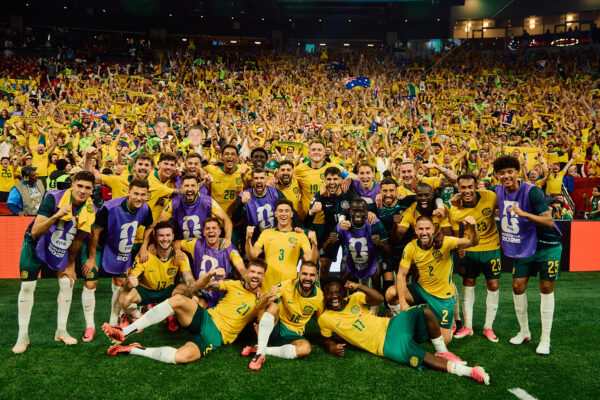
The Socceroos kicked off their World Cup campaign with a convincing 2-0 win over Turkey. It was an important win for their tournament ambitions, but also a statement about their quality on the world stage. It is time that we built a facility to ensure this quality is nurtured, not stifled.

Otherwise, we risk falling behind.


One of four…

Australia’s Men’s National Team currently sits as the 23rd-ranked team in the world in the official FIFA rankings. The Matildas, meanwhile, are the 15th highest-ranked women’s team.

This year is also the sixth consecutive FIFA Men’s World Cup featuring the Socceroos, confirming their position as a regular competitor in the most prestigious tournament in world football.

So why is it, despite these undeniably positive reflections of Australia’s growth in international football, that the Socceroos are still homeless?

At the 2022 FIFA Men’s World Cup in Qatar, Australia was one of four competing teams (a list featuring Denmark, Poland and Senegal) without a national base. In 2024, former Socceroos coach Graham Arnold described the team as “homeless” ahead of the World Cup qualifiers.

But four years on from the tournament’s last edition, the situations remains the same. And the world is taking notice.


A letter to the PM

In April this year, FIFA reportedly wrote to Australian Prime Minister, Anthony Albanese, encouraging the construction of a permanent home for football in the country.

The letter reflects concerns within the governing body that Australia, despite being so present in international football throughout the past 25 years, may fall behind the rest of the pack.

When we look at the talent in the current squad, Australia is by no means an emerging football economy. But commercial and infrastructural limitations in the landscape mean this talent is under-appreciated.

Nevertheless, it is a nation which regularly proves it can compete – and win – on the biggest stage. This we saw only a few days ago.

Which is why the players, coaches and staff representing the nation deserve a permanent facility which reflects, nurtures and inspires talent and competition. The survival of the landscape depends on it.


The investment question

Investment into football – from grassroots to professional levels – continues to be at the crux of national debate on how to secure football’s future in Australia.

In a conversation between Soccerscene and Melbourne-based community club, Sunbury United FC, infrastructure and facility-sharing challenges emphasised common grievances for many grassroots clubs.

The issue, therefore, is spread across the nation’s football pyramid. And prompts an uncomfortable question about future investments:

If even the Socceroos continue to share their current base, Leichhardt Oval, with various teams across rugby league and soccer, how can we ever expect clubs further down the pyramid to avoid similar fates?

The past few years, however, have fortunately seen improved investment into the women’s game in Australia – particularly embodied by the ‘Home of the Matildas’.

The result of a $101.1 million investment by the Victorian Government in collaboration with La Trobe University and the Federal Government, the facility boasts elite training features including premium FIFA-standard pitches, multiple changing rooms, a high-performance gym, a sports science lab and more.

This was a welcome and vital boost ahead of the 2023 FIFA Women’s World Cup which took place in Australia. Now, ever-increasing participation and pride are synonymous with women’s football, and the numbers confirm it.

In 2023, women and girls represented 190,746 participants across social, outdoor, fustal and registered football. In 2025, this increased to 231,435. It proves that, with the arrival of purposeful investment at the top, comes the spread of a football culture across the nation.


Aligning practical and cultural benefits

But what would a potential facility for the Socceroos actually look like? And what are the benefits?

When considering similar projects, we can look to both Japan and England as distinct examples of how a national base for football can unite practical, social and cultural benefits.

St George’s Park – England

Built in 2012, England’s base at St George’s Park is a masterclass in using facilities to establish a centre for industry cohesion and community impact.

As a centre of excellence, St George’s Park holds 14 outdoor pitches, a fustal arena, and hosts coaching and medical courses. It welcomes 28 teams across men’s, women’s, youth and para football, representing a place of unity and alignment for the entire football community.

Furthermore, the ‘Play Like the Pride’ program offers grassroots participants and school students the chance to experience the elite facilities for a day, showing how facilities can serve to connect young players to the world of their professional idols and foster real passion for the game.

JFA J-Village – Japan

The J-Village – beyond being a state-of-the-art football training centre – shows why a home for football can positively impact the community.

After being used as a support base for the nuclear power plant accident following the 2011 Great East Japan Earthquake, the venue now holds a deeply important place in the memory of Fukishima. As a result, upon resuming full operations in 2019, the facility – and the football development within it – represented a sense of perseverance, reconstruction and unity.

And through hotels and public transportation links, the J-Village also welcomes tourists and business travellers, encouraging more people to step into the world of football in Japan.

One venue, therefore, can give rise to an essential part of a thriving football landscape: culture. A culture for participation, community outreach, and elite development.


Final thoughts

The focus of the summer will no doubt be how the Socceroos perform on the pitch. And with homes, offices, and public spaces brimming with enthusiastic support, the sense of national pride is irresistible.

But for all the positive sentiment currently taking hold of the nation, there will come a time when Australia’s World Cup run is over, at which point an all-important question must be asked:

How do we move forward?

We move forward by transforming buzz into an aligned vision, commitment to nurturing talent, and a desire to establish a real footballing culture across the nation.

The first step to building this culture? Building a home from which it can thrive.

Kick Like a World Cup Star: Monopoly Launches $50,000 FIFA Challenge for Aussie Fans

As excitement builds for the FIFA World Cup 2026™, Hasbro Games is bringing the tournament home to fans across Australia and New Zealand with a new range of officially licensed FIFA World Cup games- and the chance to kick for $50,000.

Leading the lineup is Monopoly Panini Prizm FIFA World Cup 2026™ Core Edition, where players build their dream team using Panini Prizm trading cards featuring current stars and FIFA World Cup legends, competing to take control of iconic matches and score points.

Fans can also boost their squad with Monopoly Panini Prizm FIFA World Cup 2026™ Booster Boxes, which include 24 additional collectible FIFA cards, with the chance to uncover rare and ultra-rare finds.

The FIFA lineup also includes Monopoly Deal FIFA World Cup 2026™ Edition and Connect 4 Shots FIFA World Cup 2026™ Edition, where players use football cleat launchers to “kick” the ball into the net.

To celebrate the launch, Hasbro is giving fans the chance to turn their football skills into a $50,000 payday with the Monopoly “Kick to Win” promotion.

One lucky winner will be flown to Sydney to attempt three kicks for $50,000, while 1,000 instant $50 digital cash cards are also up for grabs.

How to Enter

  • Open to residents of Australia and New Zealand
    •Spend $25 or more on any Monopoly Board or Card Game, or Connect4 Shots FIFA Game
    • Submit your entry online

Promotion ends 10th July, for more information:
 https://www.monopolywin.com.au/fifa/

Most Popular Topics

Editor Picks

Send this to a friend