

Zaparas Lawyers rejoins the Melbourne Victory family

The club announced on Wednesday last week that it would be partnering once again with Zaparas Lawyers, reestablishing connections between two entities with strong ties to the Melbourne community.

Reuniting old partners

The connection between Melbourne Victory and Zaparas Lawyers, although recently announced, is far from new. They previously enjoyed a partnership spanning three seasons between 2017 and 2020, a period which saw the club finish as runners-up in the A-League Men’s Championship in 2017 and as champions in 2018.

Melbourne Victory Managing Director, Caroline Carnegie, revealed her excitement ahead of another season partnered with the Victoria-based law firm.

“We are excited to have reignited our partnership with Zaparas Lawyers, who have provided vital legal support to families across Victoria and been long-time supporters of football at all levels,” Carnegie said via press release.

“As the newest partners of the Victory Academy, we are grateful for the support Zaparas Lawyers will help us continue to provide for the next generation of talent coming through the Club and we look forward to continuing our relationship into the future.”

For Melbourne Victory, partnering with a dedicated and community-focussed team in Zaparas Lawyers gives plenty of reason to be optimistic. Zaparas has long-been committed to supporting Victorian clubs both on and off the field, proving to be a valuable source of support for youth development and long-term community growth.

A history of support

News of a reforged alliance between Zaparas Lawyers and Melbourne Victory comes as no surprise when considering the law firm’s commitment to supporting the football landscape in Victoria.

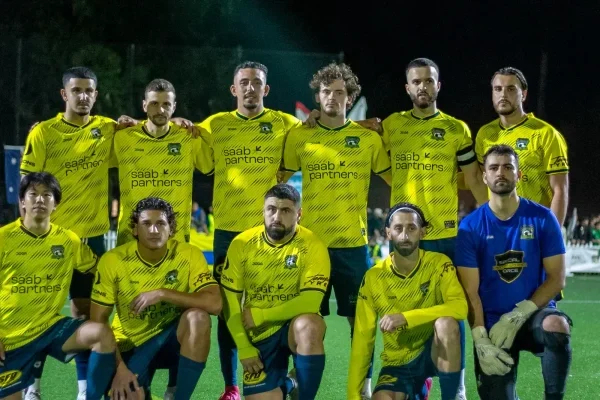
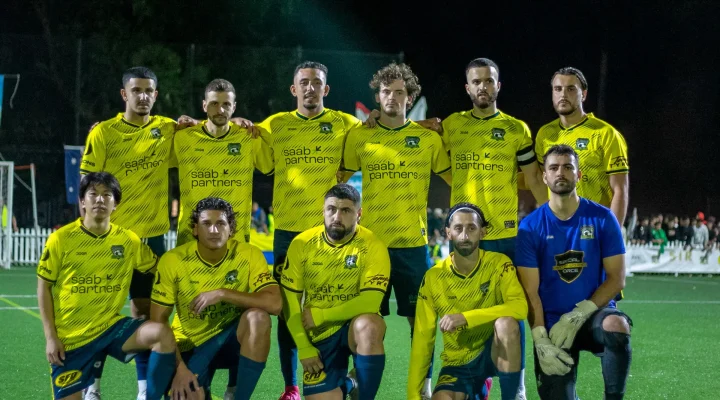
In December 2025, NPL VIC outfit, The Oakleigh Cannons, announced Zaparas Lawyers as their official grandstand sponsor of Jack Edwards Reserve. With connections to two clubs in the Victoria community, it is clear that Zaparas Lawyers remains as committed as ever to giving back to the community.

The mission going forward will be to continue making a positive, meaningful impact on the fans, players and future talents associated with football in Victoria.


About Zaparas Lawyers

Founded in 1981 as a family business, the firm has grown into a larger organisation of over 200 members. Their team of  dedicated professionals specialises in personal injury and compensation law, as well as addressing WorkCover, TAC (road accident), superannuation, public liability, occupational diseases and hearing loss.

For over 40 years, Zaparas Lawyers has developed into a law firm renowned for balancing compassion, expertise and a desire to truly help their clients get their lives back on track.
 

Previous ArticleNext Article

Why the A-League’s collective bargaining negotiations matter

The Australian Professional Leagues (APL) and Professional Footballers Australia (PFA) remain at odds over a new collective bargaining agreement (CBA), with players recently rejecting the league’s latest proposal ahead of the new A-League season.

The APL has made financial sustainability its priority in CBA negotiations. After several challenging years, the league is looking to keep club costs under control while still offering a slight increase to salary caps and minimum wages. It’s a cautious approach designed to give clubs greater financial certainty.

The PFA believes caution alone won’t grow the game.

The PFA has rejected the proposal, arguing it does not go far enough to support the long-term growth of the game. The players’ union says greater investment is needed if the A-Leagues are to remain competitive, retain talent and increase their commercial value.

These negotiations are taking place at an important time for Australian football.

Australian football has become increasingly successful at producing players for Europe and Asia, but that success comes with a trade-off. Clubs often lose their best talent, with the A-Leagues providing an ideal platform for players to showcase their ability. However, rather than being the final destination, it has increasingly become a stepping stone to bigger opportunities abroad.

While this pathway has produced a large share of the next generation of Socceroos and Matildas, it has also left A-League clubs in a constant cycle of rebuilding, with success on the pitch often followed by the departure of their brightest stars. As a result, player recruitment and retention have become central issues in discussions about the long-term growth of the domestic game.

The issue of player retention was also highlighted this week by Matildas captain Sam Kerr.

Kerr said many Australian players would consider returning to the A-League Women if the league offered stronger professional conditions and salaries. While her comments weren’t directly about the CBA, they highlighted the same issue confronting the men’s and women’s competitions alike.

With negotiations stalling, the outcome of the CBA is likely to shape not only player conditions, but also the financial framework and competitive direction of the A-Leagues for years to come.

Football West runs Indigenous pilot program during NAIDOC Week’s 50th anniversary

Football West ran a pilot program for Indigenous children at the Sam Kerr Football Centre during NAIDOC Week’s 50th anniversary. Former Socceroo David Williams delivered the session.

This year’s national NAIDOC theme, “50 Years of Deadly,” marks five decades since the movement began. It honours the Elders, artists and communities who built it.

“Having these young indigenous kids here at the Sam Kerr Football Centre was great to see,” Williams said. “The feeling they got running around the same pitch the Socceroos and Matildas have trained on was special for them and me.”

A player turned administrator

Williams retired from professional football in November 2025 after a career-ending ACL injury. As a teenager he trained with Club Brugge and Liverpool, and coach Miron Bleiberg once described him as the “best Australian prospect since Harry Kewell.”

He went on to become the first Indigenous player to represent Melbourne City, scored in the UEFA Cup against Eintracht Frankfurt, and won the Indian Super League with ATK.

Since retiring, Williams has moved into administration at Football West. He also sits on the Indigenous Football Australia Council, which oversees the grassroots initiative John Moriarty Football.

A name with its own history

Football Australia named Williams head coach of the Charles Perkins XI last year, the governing body’s national Indigenous youth team. Football Australia renamed the side in 2025 in honour of Dr Charles Perkins AO, following endorsement from the Perkins family and the National Indigenous Advisory Group.

Perkins, an Arrernte and Kalkadoon man, played for Adelaide Croatia and Pan Hellenic in the 1950s. He went on to become the first Aboriginal Australian to graduate from university and a leader of the 1965 Freedom Rides.

Football Australia has described the renamed team as reflecting a commitment to embedding cultural identity and leadership within its high-performance pathway for Aboriginal and Torres Strait Islander youth.

What happens next

“After living out my dream as a professional player, to now being able to offer experiences like this and hopefully inspire the next generation of young Indigenous footballers is very rewarding,” Williams said. “There is also a lot of talent that we can tap into.”

He said running the session during NAIDOC Week let Football West mark two things at once. “Creating a fun session for these kids during NAIDOC Week meant we could celebrate culture and sport in one go,” he said.

Williams wants the session to become a regular fixture rather than a single event. “Going forward, I would love to put on more of these programs throughout the year and get more indigenous youngsters playing football,” he said.

Football West has not yet confirmed funding or a schedule for further sessions.

Most Popular Topics

Editor Picks

Send this to a friend