Image Credit: Australian Professional Leagues
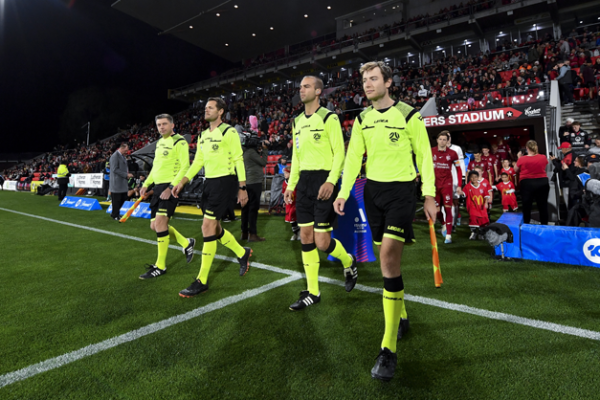
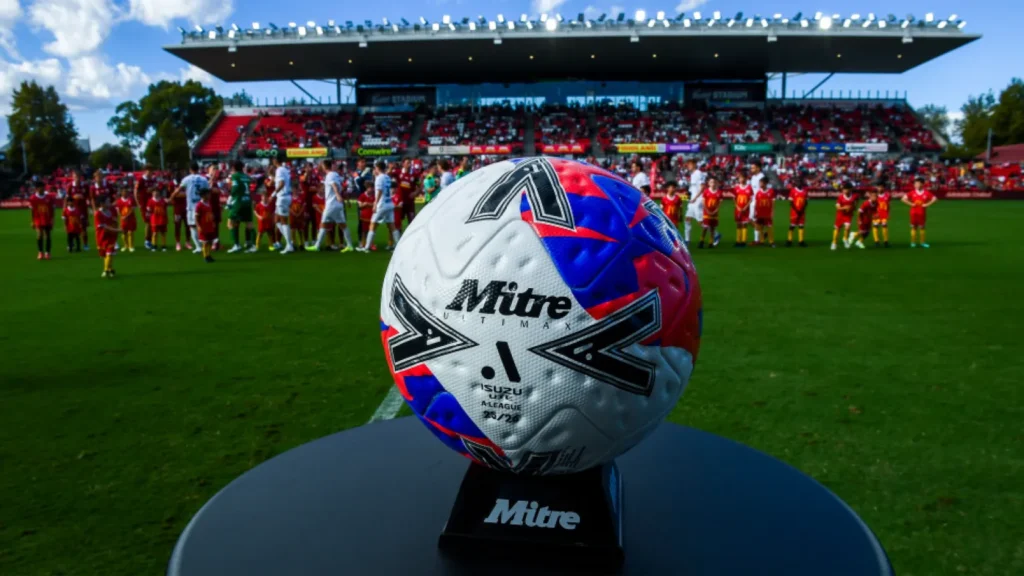
The A-Leagues are just over a month away and with the final stages of the Australia Cup in progress, attention should be firmly turning towards Australian football. Instead, there is a familiar problem. The domestic game once again is struggling to cut through.
The A-Leagues recently secured a three-year extension with Paramount+ and Network 10. The agreement keeps every A-League Men’s and Women’s match on Paramount+, while the free-to-air broadcaster will show one men’s match each week. Following on from their initial five-year deal signed in 202, it’s great that the partnership appears in it for the long haul.
But the big question remains: why is the product not being sold to audiences loudly on the eve of the season? Where is the noise?
Stan Sport and the Nine Network’s Premier League has shown what can happen when a broadcaster actively promotes its football product. The A-League has good numbers in places – one in seven Australians claim to support an A-League team – but the product lacks the exposure it deserves with less than 7% of Australians actively watching the league. It rarely feels like a major sporting product.
The A-Leagues’ current deal
Network 10 and Paramount+ have invested heavily in Australian football. The previous deal before the three-year extension (signed 2021) cost the broadcasters $40 million per year. A-League viewing on Paramount+ reached record levels in 2025/26 – viewing was up 55 per cent compared with 2021/22. The 2025/26 season reached 4.1 million live viewers.
Those numbers should be celebrated. But those successes are dependent on viewers signing up and tuning into the streaming service of Paramount+. The competition does not receive continual exposure across the Network 10 ecosystem. One men’s match is shown free-to-air each week. That is the contractual commitment. Many of those matches are pushed onto secondary channels rather than the main network.
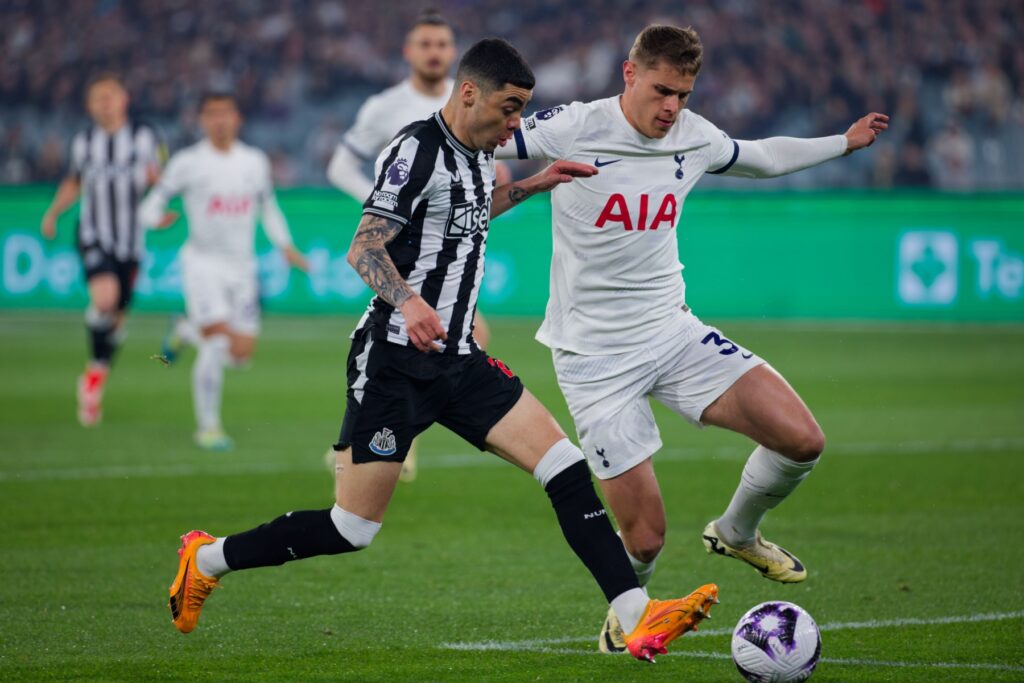
The Premier League, whilst being a very different product, is receiving much more attention from its Australian broadcasters. Despite being hosted as late as 2:30am, it still receives a massive marketing boost. Stan Sports’ newest campaign boasts flashy billboards in major cities with stars such as Erling Haaland and Bruno Fernandes. Meanwhile, the A-League sits in the corner.
Nine is reportedly prepared to spend up to $860 million over six years to retain the Premier League beyond its current deal, which expires at the end of the 2027/28 season. That would be roughly $145 million per year. There is a reason Nine is willing to make that investment.
Since taking over the Premier League, Stan Sport subscriptions have increased by 40 per cent. Nine very rarely puts the Premier League on free-to-air; marquee matches such as Manchester City against Tottenham Hotspur in 2025 saw a total reach of 1.1 million. That’s nearly 14% of the A-League’s total yearly viewership.
I understand the talent discrepancy, but the lack of broadcast investment to make people aware of the local competitions, and the everyday fan’s ability to access them, is significant in contrast to the Premier League.
Competition is getting smarter
The A-Leagues are not operating in a vacuum. Australian sport is becoming increasingly aggressive about broadcast exposure. The AFL’s current seven-year broadcast agreement is worth $4.5 billion.
These top-end agreements are not realistic for the A-League, but perhaps more relevant comparisons are Australian basketball’s NBL and cricket’s Big Bash.
Basketball has a similar challenge to football, competing for attention in summer. Its clubs are concentrated in major Australian cities, and also rely on younger audiences and digital engagement to drive growth. During the 2025/26 season, average audiences on Network 10’s primary channel increased by 18 per cent and the NBL’s 2026 finals coverage increased viewership by 36 per cent.
Importantly, all NBL finals coverage was shown on the main 10 channel as opposed to regular season games on 10 Bold and 10 Peach. Then came a major strategic move. Having been with Network 10 since 2021, the NBL chose not to renew its contract and went to market.
While the NBL’s streaming rights have remained with ESPN (primarily owned by Walt Disney Co.), Channel Nine swooped to buy the free-to-air NBL rights for the upcoming 2026/27 season. They’ll show two matches each week, with marquee games to appear on Channel 9.
The deal also includes a weekly studio program, a dedicated 9Now hub and broader promotion through Wide World of Sports. This is in direct competition with the A-League. Not only will both have free-to-air matches on Saturday nights, but access to more content from beyond the sport will be available for free.
The BBL provides another useful comparison. Under Cricket Australia’s current agreement, Seven and 7plus show 33 of the 43 BBL matches, including three finals. On average, that is at least three-to-four free games a week.
The point is not that every A-League match needs to be on a major free-to-air channel. It cannot realistically achieve that. But despite the A-League’s broadcasters investing big in Australian football, they’ve still been drowned out when compared to Stan and the Premier League. Meanwhile, the average Australian does not have the same access to the A-League as established competitions such as the AFL.
The BBL has four games a week free, the AFL has three, the NBL two. The A-League languishes behind with a single game. Not only does it hurt diehards, but it stunts any growth from the casual fan.
What the A-Leagues need to do
The A-Leagues are now tied to Paramount+ and Network 10 for another three years. That makes the next step obvious. The league needs to make the most of the partnership. Simply, the broadcasters have to be doing more.
Accessibility is the key. Network 10 has to be actively promoting the A-League with free-to-air shows that have analysis. 10’s free app and Paramount+ must make the A-League the first thing you see.
Football Australia has done great things with the Australia Cup. Select matches are available free through Football Australia’s YouTube channel alongside coverage on Network 10 and Paramount+. That is smart and will attract casual audiences, without asking them to invest financially.
But the pressure also has to fall on Network 10. If they’ve invested in Australian football for the long term, they need to support the investment properly. Promote games days prior to kick-off; cover the game’s stories even during the off-season. If Network 10 and Paramount want a return on their investment it is in their best interest to have the sport be a consistent and routine presence.
The A-League does not necessarily need another broadcast deal. It needs a broadcaster that invests and believes in the product it spent so much to secure. The football is there, and audiences are growing. Now the promotion needs to match the ambition.