


Weekly update: NPL teams reveal additional partnerships for 2026

Read here for this week’s update on all the recent partnership agreements across the NPL leagues.

NPL VIC:

Preston Lions FC

P3 Recovery Richmond – P3 Recovery specialise in helping clients maximise their recovery through ice baths, contrast therapy, infrared saunas and more.

Boss Designer Gardens Landscaping (recommitted partner) – Led by Preston supporter, Steve Spasevski, Boss Designer Gardens offers a full range of services including decking, turf, paving, concreting and more to tailor garden designs to their customers’ vision.

McDonald’s – With local restaurants across Preston, Thomastown, Kingsbury, Heidelberg, Northland and Epping, McDonald’s will join Preston Lions’ vast support network.

Mijak Constructions – With over 20 years of experience and specialising in an extensive variety of construction services, Mijak Constructions provides help with commercial carpentry, plastering and cladding to clients.

Novi Homes – Providing high-quality services in residential and commercial property developments, the team at Novi Homes consistently strives for perfection when creating exceptional properties.

Notion – A full-service agency which specialises in naming, brand identity and language, design, digital and merchandising. For over 20 years, the team has combined strategy, creativity and a client-focused model.

IGA Thomastown – Offering a wide range of produce, deli items and everyday essentials, IGA Thomastown are an essential part of the community known for quality products and customer service.

Wattyl – Providers of high-quality paints and coatings for over a century. They help customers by offering advice and helping them select the right shade for their projects.

Heidelberg United

Chemist Warehouse – As one of Australia’s largest health and wellbeing retail stores, Chemist Warehouse has grown from a single store in the western suburbs of Melbourne to over 500 nationwide.

Trailer Trash – Run by a proudly Victorian family, Trailer Trash offer services in waste solutions. They provide reliable, timely service and help businesses, worksites and homes ensure spaces are clear and de-cluttered.

Dandenong Thunder

JVS Group – As industrial packaging solutions experts, JVS Group have built a reputation as a trusted and reliable organisation.

BIOV8 Human Optimisation – With science-based assessments and personalised medical care, BIOV8 aims to help clients, whatever their needs are, across weight loss, injury prevention, cognitive performance and more.


Bentleigh Greens

Intralot Australia – Founded in 1992 in Athens, Greece, Intralot has since expanded into a leading global tech company, specialising in secure transaction processing and system monitoring. Intralot will join Bentleigh Greens as a sponsor

NPL NSW:

Marconi Stallions

Buonissimo Bakery – Led by award-winning Italian bakers, Buonissimo Bakery teams up with Marconi Stallions as another institution with proud Italian heritage. Their quality patisserie baked goods can be found in Australia’s biggest supermarkets.

Boncrete (recommitted partner) – Industry leaders in concrete construction, high-quality formwork and reinforcement for large scale commercial concrete projects in NSW.

Exclusive Bus Hire (recommitted partner) – Provider of reliable and professional bus services for a range of clients, including sports teams, schools, corporate groups and private events.

Mega Metals Australia (recommitted partner) – As a leading supplier of fencing, gates and hardware, Mega Metals Australia pride themselves on balancing quality products and competitive prices.


SD Raiders

Madden Landscapes – A strong supporter of SD Raiders Girls Youth League Two Ladies 15, Madden Landscapes provides excellent services in lawn care and landscape maintenance.

NPL QLD:

Brisbane City FC

uTenant – An Australian-owned platform which helps businesses locate warehousing, logistics providers and indystrial property. The team provides fast, transparent and reliable solutions to its clients.

B&D Insulation (recommitted partner) – A trusted provider of high-quality insulation for residential and commercial projects. Since 1990, they have delivered an extensive range of services across Queensland and northern New South Wales.


NPL TAS:

Launceston City

Vergola TAS (recommitted partner) – A reliable and trusted Vergola installer, providing outstanding service and products to clients seeking all-year-round solutions to using outdoor spaces.

Progress Switchboards – Ownded by Launceston City Life Member, Austin Fagan, Progress Switchboards design and manufacture custom switchboards for commercial, industrial and infrastructure projects.

Little Rivers Brewing Co. – Based in North East Tasmania, Little Rivers Brewing Co. strives to forge community connections with every beer poured and woodfired pizza cooked.

NPL SA:

West Adelaide SC

Mega Rewards –  Australia’s latest rewards platform offering deals, exclusive experiences and prize draws to its members.
Previous ArticleNext Article

Arncliffe Aurora’s Riverine Park investment creates a platform for growth

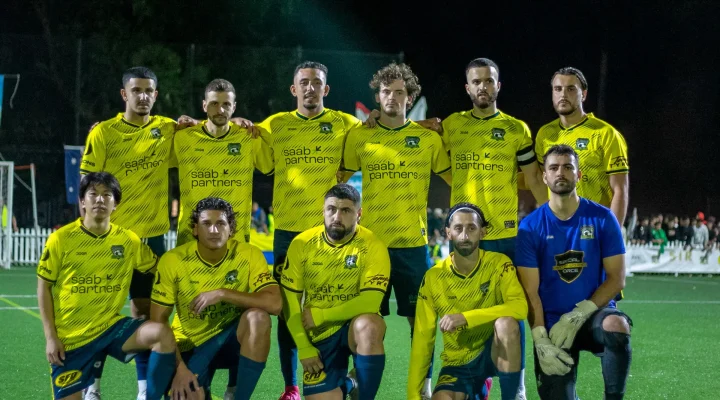
Arncliffe Aurora Football Club has started a new chapter with the launch of Riverine Park, creating a larger platform for football, community engagement and long-term growth in Sydney’s St George region. More than 2,500 people attended the community opening on 8 August, marking the club’s first matches at its new home and showcasing a significant upgrade in its operating capacity.

Riverine Park provides two full-size natural turf football fields, modern player and community amenities, and a new clubhouse. The additional capacity responds to strong growth in Arncliffe Aurora’s football programs, particularly at junior level. The club has also highlighted a $2.5 million investment in facility upgrades. Together with its existing Arncliffe Park base, Riverine Park gives Aurora two homes and a stronger physical platform for its football operations.

More capacity allows the club to accommodate more teams, players and programs, while updated facilities can support stronger member retention and recruitment. They create more opportunities for coaching, development programs, events and community activities. The new site can also strengthen the club’s commercial proposition; a modern facility gives sponsors greater visibility and provides more opportunities to activate partnerships around football and community events. It can also help the club build relationships with schools, community organisations and football bodies. That matters as grassroots clubs increasingly operate as community hubs rather than simply sporting organisations.

Riverine Park also creates opportunities for the wider football ecosystem. Football St George has identified the facility as a platform to grow participation and provide opportunities for players of different ages, abilities and backgrounds. Bayside Council’s project includes upgraded change rooms, toilets, canteen facilities, lighting, seating and solar panels, adding further functionality to the precinct.

For Arncliffe Aurora, the investment is therefore about more than adding fields. It creates infrastructure that can support participation, player development, community programs and commercial activity over the long term. The challenge now shifts from construction to utilisation. The club must maximise the new capacity, maintain the assets and convert greater participation into a sustainable operating model to benefit the community long-term.

The Young Socceroos exposed one of Australian football’s biggest problems

Australian football has spent years trying to create a clearer structure for the game.

But one question keeps resurfacing: who is actually responsible when the interests of Australian football collide?

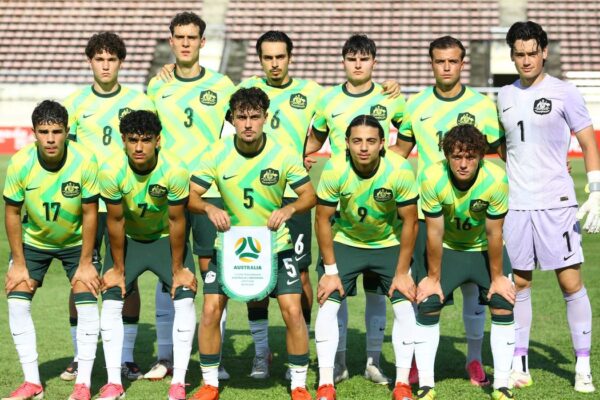
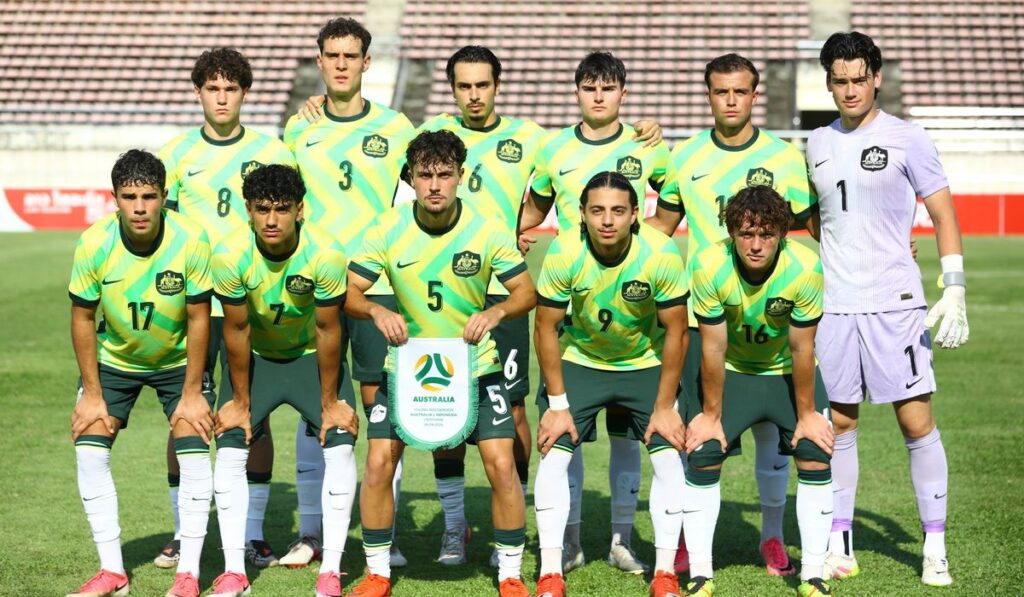
The Young Socceroos failing to qualify for the 2027 AFC U20 Asian Cup is the latest example.

Australia finished third in its qualification group after a 2-0 defeat to Indonesia, failing to qualify for a tournament it won in 2025.

The result itself was disappointing. But the circumstances around the squad selection were arguably more so.

Several A-League players were unavailable because their clubs did not release them for the qualification campaign. Melbourne City’s Lawrence Wong and Medin Memeti and Adelaide United’s Amlani Tatu were among those affected.

The reason is straightforward. The U20 qualification tournament fell outside a FIFA international window, meaning clubs were not obliged to release players. A previous agreement between Football Australia and A-League clubs had allowed national teams to select domestic players outside those windows, but that arrangement expired.

That leaves a much bigger question than whether three players should have been available.

Why was there not a structure in place that could resolve this conflict before it became a problem?

One game, multiple priorities

The answer is partly structural.

Football Australia is responsible for the national teams and the broader national framework. The APL operates and commercialises the A-Leagues. State federations oversee their own competitions and development structures, while clubs have their own commercial, sporting and player-development priorities. Meanwhile, the PFA represents the players.

Football Australia’s own governance outline acknowledges the unbundling of Football Australia and the APL was completed at the end of 2020, while noting the two organisations still need to collaborate across areas including pathways, community football and national teams.

On paper, that separation makes sense.

In practice, difficulties emerge when the model is tested and conflicts of interest emerge.

A club has an obligation to its competition and its squad. Football Australia has an obligation to its national teams. Players have career considerations, while the APL has commercial and scheduling interests. State bodies have their own competitions and pathways.

None of those interests in isolation are necessarily unreasonable.

The problem comes when they point in different directions.

The cost of fragmentation

This is not the first time the club-versus-country question has reared its head.

The same issue has affected Australia’s youth pathways before. In 2012, then-national technical director Han Berger acknowledged the particular difficulty Australia faces because many young players are overseas and youth international tournaments are often held outside FIFA windows, meaning clubs are not obligated to release their players.

And there is a broader irony here.

Australian football is producing young players good enough to attract serious international interest. A-League clubs are increasingly important development environments, with 15 A-League players included in Australia’s 2025 U20 World Cup squad.

Yet the system seems to struggle coordinating those same players when the national team needs them.

That is not necessarily a club problem.

It is a system problem.

Who gets the final say?

The answer cannot simply be that Football Australia should have more power.

Nor should clubs be expected to sacrifice their own interests whenever national teams come calling.

The real issue is whether Australian football has clearly defined the points at which the interests of the national team, professional clubs and players intersect and importantly, where they take priority.

If it has, those rules need to be understood and consistently applied.

If it hasn’t, this should be the catalyst to fix them.

Because the consequences extend beyond one U20 tournament.

Australia’s youth national teams are part of the country’s player-development pathway. International tournaments provide players with experience, exposure and opportunities to progress. The U20 Asian Cup also serves as a pathway towards the FIFA U20 World Cup.

Missing that pathway matters.

At the same time, A-League clubs are investing in academies, recruiting young players and trying to build sustainable professional businesses. They cannot simply operate as talent suppliers for national teams without considering their own competitive and commercial interests.

That tension is natural, and not going away.

Australian football needs alignment, not another power struggle

The answer may therefore be less about deciding who is in charge and more about establishing who is responsible for what.

Football Australia, the APL, clubs, state federations and the PFA do not need identical objectives.

But they do need a common framework for the moments when those objectives collide.

That could mean clearer player-release agreements, longer-term scheduling coordination and defined mechanisms for resolving disputes before squads are announced.

The alternative is a cycle of arguments.

Clubs blame national team scheduling. National teams point to player availability. Players find themselves caught between employers and country. Fans are left wondering why a supposedly connected football system cannot agree on something as fundamental as making Australia’s best young players available for an international tournament.

That is why the Young Socceroos’ failure to qualify should prompt a bigger conversation than whether three A-League players were released.

Australian football has spent years building separate professional, national and community structures.

The next challenge is making those structures work as one.

Because when nobody has the authority or responsibility to resolve the competing interests, everyone can have a legitimate position and Australian football can still lose.

Most Popular Topics

Editor Picks

Send this to a friend