



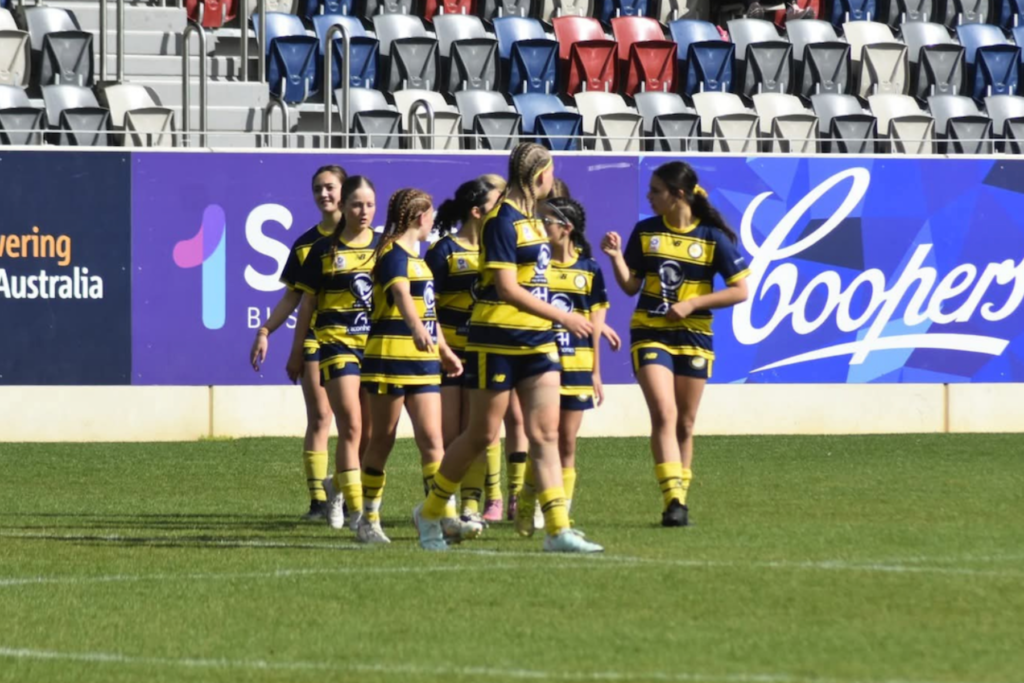
Western Strikers SC has been nominated for Club of the Month after a period of deliberate structural investment in its female program that is already producing measurable outcomes, and offering a model for how community clubs can drive participation growth through equity-focused planning rather than passive goodwill.
The nomination recognises a program that has moved beyond surface-level commitment to women’s football and into the kind of structural change that determines whether female players actually stay. Improved lighting across training and match pitches, equitable scheduling, extended training hours and dedicated pitch allocation have addressed the practical barriers that clubs often overlook. It’s conditions that tell players, implicitly or otherwise, whether the game was built for them.
Leadership as Infrastructure
Central to Western Strikers’ approach is a leadership structure that takes female football seriously as a technical and administrative priority. Women’s Coordinator Michelle Loprete and Technical Director Georgia Iannella, a former Matilda, provide the program with both organisational direction and the kind of visible role modelling that shapes whether younger players can picture themselves progressing through the game.
The presence of a former international player in a technical leadership role at a community level isn’t incidental. It signals to junior players that the pathway from their Friday night training session to elite football is real and navigable, and it gives the club’s coaching staff access to experience and credibility that most community programs cannot offer.
That pipeline is already functioning. Western Strikers’ Under-13 to Under-16 girls teams all qualified for finals in the Youth Premier League this season. Under-15 goalkeeper Sian Schopfer made her debut in the Women’s State League team which is a direct product of a club environment designed to move players upward.
The Friday-night model
One of the more quietly significant initiatives at Western Strikers is the scheduling of Friday night women’s matches, with junior girls training beforehand encouraged to stay and watch senior football. The structure is straightforward but its implications are meaningful. Aspiration in sport is not abstract. It’s built through proximity, through watching players a few years older doing what you want to do, in the same kit, at the same club.
The absence of that experience is one of the more consistent reasons girls disengage from football in their mid-teens. When junior female players cannot see where the game goes after their age group, the logical conclusion is that it goes nowhere. Western Strikers’ scheduling decision addresses that directly, at minimal cost, and whose effects are starting to manifest.
The Club Changer framework
The club’s participation in Football South Australia’s Club Changer Program has provided a structured framework for identifying and addressing barriers that might otherwise go unexamined. Pitch allocation, training structures and safety conditions are the kinds of issues that accumulate quietly in club environments; not because of deliberate exclusion but because the default systems were built around male participation and have never been comprehensively reviewed.
The Club Changer Program creates accountability for that review. Western Strikers’ ability to project an additional 146 female players over the next three years is a product of planning rather than optimism.
Industry implications
Western Strikers’ model matters beyond its own membership. At a time when women’s football in Australia is navigating the challenge of converting a participation surge into sustainable long-term growth, the question of what community clubs actually do with increased interest is among the most consequential in the sport.
Record crowds at the AFC Women’s Asian Cup and sustained national visibility have opened the door. Whether players walk through it and stay depends on whether the club on the other side looks anything like Western Strikers