




$500,000 dedicated to the improvement of safety across NSW

A list of successful applicants across Football New South Wales are now entitled to a grant courtesy of $500,000 to Local Sport Defibrillator Grant (LSDG).

The sole purpose of LSDG is to provide Automated External Defibrillators (AEDs) to sports clubs across the state in order to combat the growing correlation between sport participation and cardiac arrests incurred by participants.

These devices have the potential to save participants lives within these crucial emergency situations.

Situations in where time is of the essence, the use of a defibrillator can be the difference in saving someone’s life.

Although the situation of a cardiac arrest occurring to be highly unlikely, due to the increased frequency of the medical episode taking place primarily within sport.

The safety of a broader community requires an approach in which it can allow for an equalizer within these tremulous situations.

Impact on Football Across NSW

14 clubs across the state of NSW where listed upon the successful applications, entitling those clubs to receive 3 defibrillators each.

Southern District Soccer Football Association have had quite the substantial contribution targeted towards their region.

4 out of the possible 14 AEDs were provided to a region where football has experienced expansion in growth and participation.

Heartbeat of Football

Heartbeat of Football (HOF) have worked in conjunction with Football NSW, acting as their primary community heart partner since 2022.

Boasting the motto “No one should die playing the sport they love,” HOF are dedicated within the company’s objective of having zero related hearth deaths on a sporting ground.

The efforts of HOF are in unison with the LSDG.

Football NSW Manager Government Relations, Funding, and Infrastructure, Daniel Ristic, said via press release.

“The Local Sport Defibrillator Grant has been a fantastic grant initiate allowing football clubs across NSW to equip themselves with life saving devices that are making a difference at the community level.”

The LSDG grant will continue to provide the required needs necessary in which can ultimately be lifesaving to a new branch of football entities across NSW.

Previous ArticleNext Article

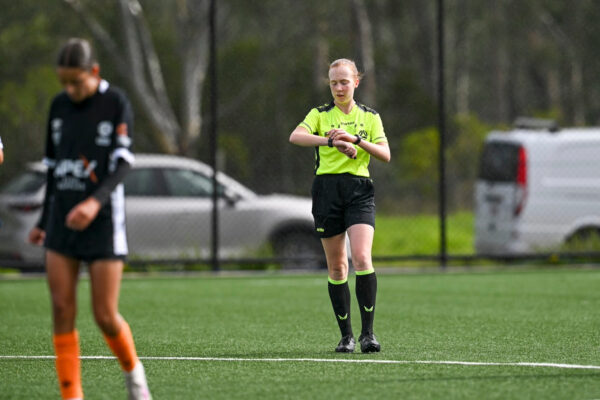
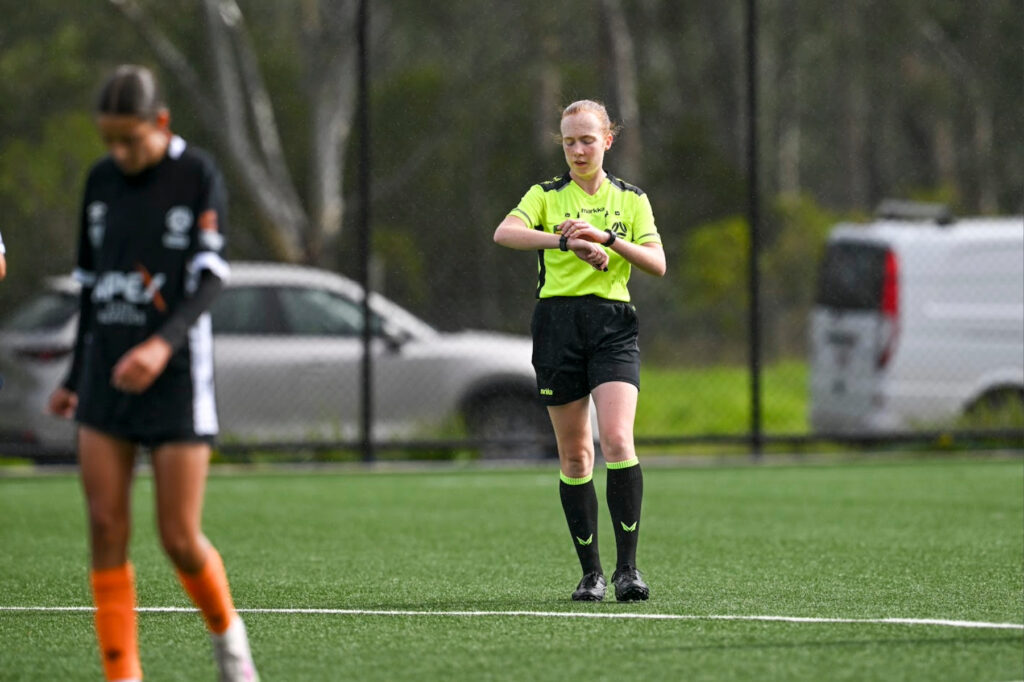
Capital Football Introduces Pink Armband to Protect Junior Referees

Capital Football has launched a visible identification program for referees under 18, requiring them to wear a pink armband during matches. It’s intended to build awareness surrounding the concern across Australian football about the abuse driving young officials out of the game.

The Pink Armband Initiative, effective immediately across Capital Football’s competitions in the ACT and surrounding region, makes junior referees identifiable to players, coaches and spectators. The federation says the marker is designed to set clear behavioural expectations and signal that many match officials are minors still developing their skills.

Capital Football acknowledged a referee crisis as far back as 2022, at which point it restructured its entire referee department in partnership with Football Australia. The pink armband program is the latest layer of that response; this time by targeting the cultural conditions on match day rather than systems of recruitment and pay.

A problem that spans codes and states

Research has consistently linked referee abuse to declining retention rates, with officials quitting in growing numbers due to sustained mistreatment, a trend researchers warn will reduce the pool of skilled match officials available at all levels of the game. Studies also show that young, less experienced referees are disproportionately likely to be subject to abuse.

Capital Football is not alone in reaching for a visible solution. Similar programs operate across Football Queensland, Football South Australia, Football South Coast and several other federations, while Basketball Victoria and Basketball South Australia have adopted comparable measures through the Green Whistle initiative. The spread of these programs across codes and states reflects a shared administrative problem: many grassroots referees are teenagers and volunteers who do not officiate for money but because they love the game, and abuse is eroding that foundation.

For a federation overseeing nearly 29,000 registered players, fewer referees means fewer matches. Fewer matches means reduced participation. The pink armband is a low-cost intervention with structural consequences if it works.

Football Victoria Backs Campaign to Shield Junior Players from Gambling Harm

More than 600 sporting clubs across Victoria have enrolled in a state government program designed to limit young players’ exposure to gambling, with Football Victoria now urging its community clubs to join before a late-July registration deadline.

The Love the Game initiative asks clubs to formally commit to a set of principles: refusing sports betting sponsorships, developing internal harm prevention policies, and building environments where coaches, parents and players are equipped to discuss gambling risks with children.

The program’s public health rationale has a sharper statistical edge than its community-facing materials suggest. A 2025 study of Victorian secondary school students aged 12 to 17 found that nearly 30% had gambled at some point, and among those who had gambled in the past year, 7.5% met the criteria for problem-gambling and a further 26.8% were classified as ‘at-risk’. The research, commissioned by the state government and published earlier this year, also found that students exposed to gambling venues and advertising were more likely to gamble or to do so in a risky manner.

The most recent Victorian Population Gambling Study found that Victorians aged 18 to 24 are the group least likely to gamble overall, yet carry the highest rates of harmful gambling across all age groups. Young people aged 18 to 34 are around five times more likely to bet on sports than older cohorts.

When the data lands at the clubhouse door

Football Victoria’s support for the program reflects a broader recognition within community sport that participation rates and club culture are connected. The environments clubs create shape whether young people stay in sport and what norms they carry with them into adulthood. For football specifically, which draws participants across a wide range of socioeconomic backgrounds, that responsibility is not evenly distributed. Approximately 440,000 Victorians, or 8.5 per cent of the state’s population, are classified as being at some risk of experiencing problem gambling.

The Victorian Government’s program gives clubs more than symbolic membership. Registered clubs receive practical tools to develop governance frameworks around gambling harm, resources for coaching staff and volunteers, and standing as part of a growing network of clubs taking a formal position on the issue.

Researchers have described the current framing of gambling harm as a matter of personal responsibility as inadequate, arguing it is a public health issue requiring a systemic response. Community football clubs, with their reach into households across the state, are one of the institutional levers available to make that response visible.

Most Popular Topics

Editor Picks

Send this to a friend