


ESPN reach historic rights agreement with LaLiga

US sports broadcaster ESPN have announced an expansive, long-term agreement that will make ESPN+ the new English and Spanish language home for LaLiga Santander and LaLiga SmartBank in the United States for the next eight seasons (through to season 2028-29).

The deal begins in August and will see coverage of hundreds of live matches across both leagues, available each year exclusively on ESPN+. ESPN is currently the home of the Spanish Copa del Rey, Copa de la Reina and Supercopa de España, along with the Bundesliga, MLS, England’s FA Cup, EFL & Carabao Cup, Dutch Eredivisie, Scottish Premiership, UEFA National Team Football, USL and much more.

The significance of the partnership means it will strengthen the link between American football fans and LaLiga, which houses many exceptional players of the modern era.

Burke Magnus, Executive Vice President, Programming & Original Content, ESPN:

“This agreement will bring the excitement, passion, iconic clubs and global superstars of LaLiga to U.S. sports fans with unprecedented access and coverage.”

“As the sport of soccer continues its ascendance in the U.S. market, we are incredibly excited to work with LaLiga to establish a deeper connection to American fans through our company’s industry-leading streaming platforms, television networks, and digital and social media assets.”

LaLiga President Javier Tebas:

“We are absolutely thrilled to bring LaLiga to ESPN in the U.S.”

“This is an historic eight-season agreement in U.S. soccer broadcasting that speaks to the power of LaLiga and its clubs in the largest media market in the world and will bring the world’s best soccer league to American screens in a more comprehensive and modern way than ever before.”

Executive Vice President and GM at ESPN+, Russell Wolff:

“This agreement creates a true home for LaLiga in the U.S. for years to come and cements ESPN+ as the premier platform for soccer. We’re excited to showcase the brilliance of LaLiga in our English and Spanish coverage for the growing legion of soccer fans and ESPN+ subscribers.”

CEO of North America, LaLiga, Boris Gartner:

“Partnering with ESPN will allow us to have unique LaLiga programming across ESPN+ and ESPN’s network and digital platforms, super-serving existing fans and introducing new consumers to the drama and passion of LaLiga.”

“The league, clubs, and players will be as close to the American fans as they’ve ever been at a time where soccer is growing leaps and bounds in the U.S.”

The deal also includes rights for Canada. TSN and RDS, Canada’s leading sports networks, will deliver comprehensive coverage of LaLiga matches, highlights, and news to Canadian viewers through multiple platforms.
Previous ArticleNext Article

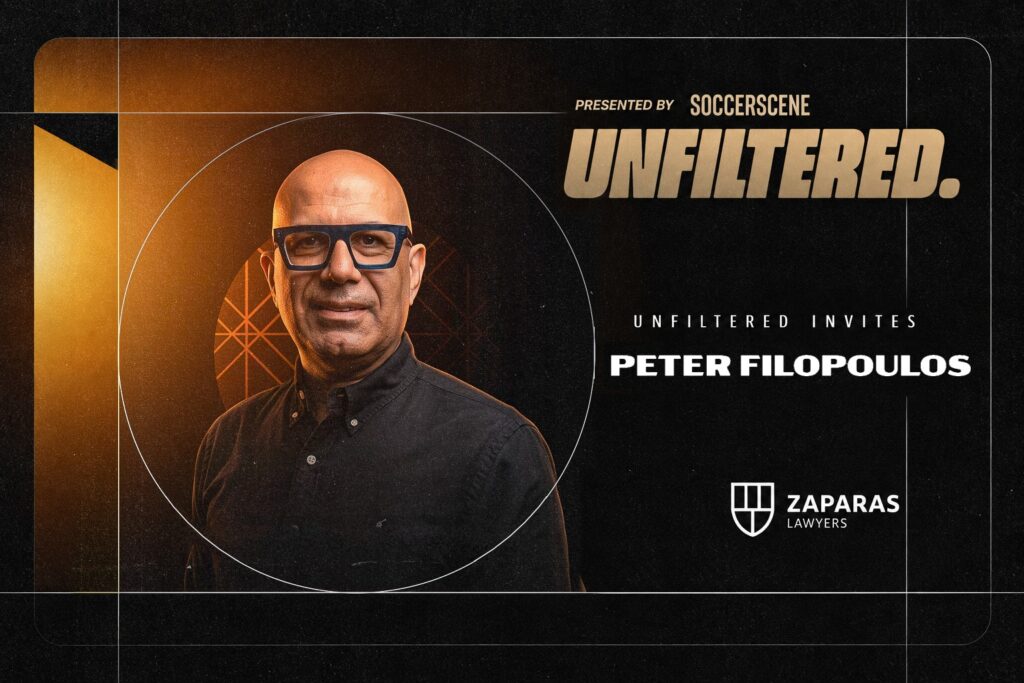
Episode 4: “You could have sold it out twice”: Peter Filopoulos on why unification is the way forward

PETER FILOPOULOS sees Saturday’s Australia Cup final between Melbourne Victory and South Melbourne Hellas as a ‘unification event’ that must be harnessed as a window to the future – rather than a means of stirring up old division – if Australian football is to progress.

“This game sold out organically, and having run marketing, corporate affairs and communications at Football Australia previously, I don’t think they would have needed to spend one single dollar on marketing,” Filopoulos told Soccerscene Unfiltered.

“You could have probably sold it out twice! This tells me it’s the sort of product the fans want; it’s authentic and taps into the new and the old, and demonstrates culture as a real asset. You couldn’t have scripted it better.

“If I was in a decision-making position at the A-League, I’d be looking very closely at why fans have responded in such an emphatic way.”

Filopoulos has seen it all across his near-35 year career in sports administration, which by his calculation has been split evenly inside the Australian football tent and outside it – but when outside, always with at least one eye glancing back.

Fifteen years across AFL clubs Hawthorn & North Melbourne as that code moved from a financially traumatic 1990s into a wealthier new millennium; five years at Football Australia: ‘easily the most transformative period for Australian football in its history’; stints with Etihad Stadium and even a period ‘completely out of my comfort zone’ at Swimming Australia.

There’s been crisis management, stepping in as Perth Glory CEO after the 2015 salary cap scandal; he’s seen the A-League’s boom times under the Lowys & Fox Sports’ 2018 broadcast deal; he’s enjoyed the euphoria of the 2023 Women’s World Cup in Australia and New Zealand.

But all stems back to the National Soccer League and South Melbourne Hellas, and his bold decision to take on the Club’s inaugural general manager position in December 1993, aged just 25.

“I wasn’t ready… but what it taught me is when an opportunity is presented to you, just say ‘yes’ and work out how to do it later. I’ve used this throughout my career, and that was one of those instances where I threw myself in the deep end.

“I had my career mapped out, and was working quite happily in accounting. But I was a passionate fan and having grown up at the old Middle Park, it was a natural ‘yes’ – and I was young enough to take a risk.”

With today’s A-League financially ailing and great clubs of yesteryear enjoying what Filopoulos terms a ‘renaissance’ – and agitating as vociferously for a return to the top flight as at any point since the demise of the NSL – he feels it is again time for bold leadership, and a little risk.

“You can have all the ambition in the world, and in being part of a club, you’re a custodian. But as I’ve always seen it, you need a sustainable commercial model: sound ownership, sound facilities, revenue, etc…

‘But you also need to understand how to tap into that asset of culture. What we’re seeing with the Australia Cup final is a result of culture, right? You need to create it amongst your fans, and know who your fans are, and tell them what you’re striving for. Bring them along on the journey!”

Catch the full chat with Peter Filoupolos on Soccerscene Unfiltered: from ‘eyeballing’ Frank Arok and backing Ange Postecoglou, overcoming resource challenges at Football Victoria, to the rise of the Matildas, and plenty more…

The ball is no longer just being improved it is being connected

The humble football is becoming one of the more technologically advanced objects on a football pitch.

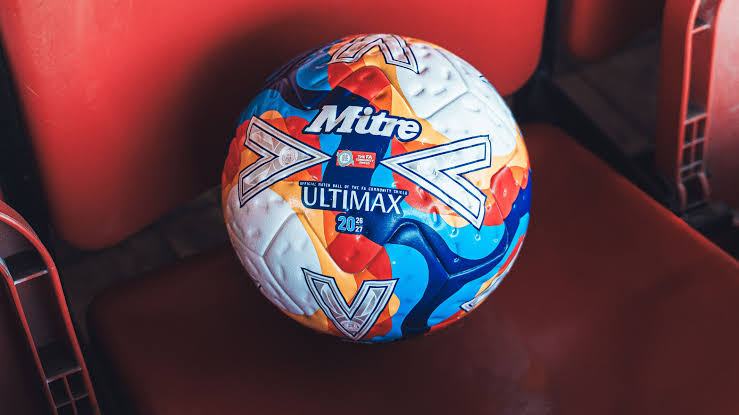
Across the A-Leagues, Mitre’s new Ultimax Pro is focused on improving what happens when the ball is kicked, while LaLiga has taken the next step by turning the ball into a source of live match data.

The contrast shows how football technology is moving in two directions at once, improving the physical performance of equipment while increasingly connecting it to the digital systems surrounding the game.

Refining the Physical Object: Mitre’s Ultimax Pro

The Ultimax Pro, which will be used across the 2026/27 A-League Men and Ninja A-League Women seasons, incorporates Mitre’s HyperFlow, HyperFoam, HyperSeal and Delta Skin technologies.

Its debossed grooves are designed to reduce drag and improve stability in flight, while the cushioning, bonding and surface technologies are aimed at producing consistent rebound, durability and control. The ball carries FIFA Quality Pro certification, reflecting the testing standards required for professional match balls.

The technology is largely invisible to supporters. Its purpose is to make the ball behave more predictably for players, rather than fundamentally changing the football itself.

Connecting the Ball to the Digital Ecosystem: LaLiga’s Sensor-Driven Approach

LaLiga’s approach is different.

The Spanish competition has introduced a radio-frequency sensor developed by KINEXON into its PUMA match ball, with the technology being used across every LaLiga EA Sports fixture this season.

The sensor continuously transmits information about the ball’s position and the precise moment of contact. Around 12 antennas installed in each stadium capture the data and feed it into LaLiga’s wider technology infrastructure.

That gives the ball a role beyond simply being the object of play.

Knowing exactly when the ball is touched can help officials in a variety of situations. Offside, handballs, deflections and other decisions where a difference of milliseconds can affect the outcome could all benefit.

But the more interesting development may sit outside officiating.

LaLiga is using the connected ball to create xBALL, an official data layer that can feed broadcasts, digital products and future second-screen experiences. Data such as shot speed, ball spin and trajectory could all be incorporated into its media and digital products.

The ball is no longer just something that manufacturers compete to make faster, more durable or more responsive. It can also become a source of proprietary data that leagues can use to improve broadcasts, develop digital products and create new ways for supporters to understand the game.

The Ball as Part of Football’s Intelligence Layer

Mitre is refining the physical object. LaLiga is connecting that object to the digital ecosystem of the match.

Together, however, they point to the same direction of travel.

Football equipment is becoming increasingly intelligent.

The evolution is not necessarily about adding technology for its own sake. In the A-Leagues, the objective is consistency: predictable flight, touch and rebound. In LaLiga, the objective is precision and information: knowing exactly where the ball is and when it was touched.

The commercial opportunity comes from what can be built around those capabilities.

As stadiums become more connected, broadcasts become more data-rich and clubs and leagues collect increasingly detailed information about matches, the football itself can become another input into that infrastructure.

It also changes the relationship between equipment manufacturers and competitions.

A match ball used to be primarily a physical product supplied to a league. Connected technology creates the possibility of the ball becoming part of a broader technology stack involving officiating systems, broadcast platforms, analytics and fan-facing digital products.

The A-Leagues are starting with the physical performance of the ball. LaLiga is showing what can happen when that physical object becomes connected.

The next generation of football technology may not be something players wear or referees use.

It may be the ball itself.

Most Popular Topics

Editor Picks

Send this to a friend