
Christie Park set for major transformation

Christie Park is set to be transformed into one of the best football complexes in North-West Sydney, following the City of Ryde’s authorisation of the development of a new amenities building and extra training facilities at the Macquarie Park site.

The new facilities, funded by the City of Ryde and the NSW Government’s Greater Sydney Sports Facility Fund, will include office space and a function area for groups, as well as female-friendly locker rooms and improved accessibility for people with disabilities.

It will maintain the two FIFA-accredited synthetic fields that were recently built, ensuring Christie Park’s ability to hold state-level events in the future.

Cr Jerome Laxale, Mayor of the City of Ryde, sees the new investment as part of Council’s plan to turn Christie Park into a regional football centre that serves all levels of the game.

“The popularity of football is booming in the City of Ryde at all levels of participation and the improvements that we are undertaking at Christie Park will not only ensure that the venue will be able to meet the growing needs of the local community, but also the North-West Sydney region,” he said.

“Most importantly these works focus on providing elite facilities for local female clubs. With the Women’s FIFA World Cup being played in Australia in 2023, it’s crucial that councils invest in elite facilities for females who have historically struggled for access to such facilities.

“Building these facilities will offer a pathway programme from junior teams through to elite senior representative teams for women and girls in the Ryde local government area and beyond.

“This is a win for the community and a win for football.”

According to Football NSW Chief Executive Officer Stuart Hodge, Christie Park, as the home of North West Sydney Football, will gain tremendously from this improvement.

“City of Ryde and all the football users of Christie Park have partnered together to achieve so much in the last few years. This Christie Park masterplan compliments the NSW Football Infrastructure Strategy, and the importance of developing Homes of Football,” Hodge said.

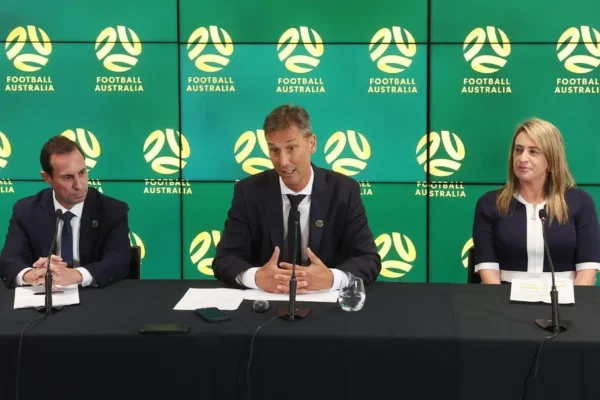
Football Australia Chief Executive Officer James Johnson expressed his support for the development and praised the City of Ryde for committing to the development of this football facility.

“As the number one team based and most multi-cultural, diverse and inclusive participation sport in Australia which is confronting a chronic facilities shortage throughout the nation as a direct consequence of football’s continued and strong participation,” he said.

Previous ArticleNext Article

Pushing for First Nations representation in the game with Football Queensland’s Murri Cup

Football Queensland has announced the inaugural FQ Murri Cup, a two-day tournament celebrating First Nations cultures and showcasing Indigenous football talent from across Queensland, to be held at Nudgee Recreation Reserve on November 28 and 29.

The competition, developed in close consultation with Football Australia’s National Indigenous Advisory Group and Football Australia’s General Manager of First Nations Courtney Fewquandie, will feature a Coles MiniRoos activation, a Charles Perkins XI Talent ID session and a community stallholder zone alongside the on-field competition. Expressions of interest are open now for individuals and teams across the state.

More than a tournament

The launch arrives at a moment when the structural underrepresentation of First Nations Australians in organised sport, at the administrative, coaching, and pathway levels, is under sustained scrutiny. Football, like most codes, has historically failed to build the kind of community-embedded structures that make sustained Indigenous participation possible rather than incidental.

The FQ Murri Cup is a direct response to that gap. By centering First Nations culture within the competition itself, rather than treating it as supplementary to a standard football event, the tournament signals a shift in how the game positions Indigenous participation as a community with its own relationship to the sport that deserves its own platform.

The inclusion of a Talent ID session carries specific weight. Structured pathways into elite football have not always been accessible to players from regional and remote Indigenous communities, where geography, cost and cultural barriers compound one another. Embedding that opportunity within a culturally safe environment lowers the threshold at the point where it most frequently closes.

“The FQ Murri Cup will bring together First Nations players, families and communities for a two-day celebration, providing a wonderful opportunity to acknowledge the contributions of First Nations participants within our game,” said Football Queensland CEO Robert Cavallucci.Mu

PlayHER Tournament returns as Football Victoria Doubles Down on Women’s Participation

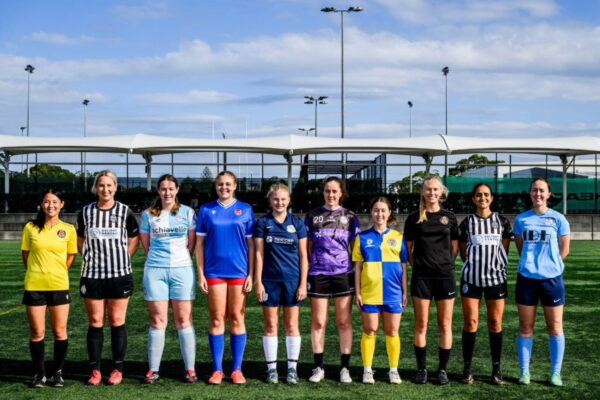
Football Victoria‘s PlayHER Tournament returns to the Knox Regional Football Centre in Wantirna South this May, offering women across Victoria the chance to play football in a structured, social and welcoming environment.

Now in its fifth year, the tournament has grown considerably from its origins as the GO Soccer Mums Cup, which was recognised as Community Sporting Event of the Year at the 2023 Victorian Sport Awards. The rebranding to PlayHER reflects a deliberate broadening of the event’s ambition, from a competition aimed at a specific demographic to one designed to lower the barriers to entry for any woman who wants to play.

That ambition is visible in the structure of the day itself. Matches are played in a five-a-side format with short halves, keeping the format accessible for players who may not have competed in years, or those who are stepping onto the pitch for the first time. New for 2026, participants will compete across two categories: an Open and 35 years and over. It’s an addition that acknowledges the different pathways women take into sport, and the importance of ensuring the game remains available at every stage of life.

More than a matchday

The tournament comes at a strategically critical time. Women’s football in Australia is in the middle of a period of unprecedented growth, with record crowds at the AFC Women’s Asian Cup and a growing pipeline of players coming through at club level. Translating that momentum into lasting participation growth depends on events like PlayHER- low-cost, community-driven, and explicitly designed for women who might not see themselves reflected in elite competition.

At $20 per participant, the tournament remains one of the most accessible organised football experiences available in Victoria. The message is straightforward: the game is for everyone, and the door is open.

Most Popular Topics

Editor Picks

Send this to a friend