



Football Queensland’s Girls United to encourage female participation

FQ Girls United

Football Queensland have announced the establishment of Girls United programs to inspire greater female participation in the world game across the state.

Girls United will involve a series of targeted programs aiming to encourage women and girls’ participation in football throughout Queensland.

The range of programs will include Development Holiday Programs, social football programs and sessions designed specifically for older women and multicultural communities.

The Girls United Social Program has already been launched in Wide Bay and focuses on providing a social and relaxed setting to play football in.

Girls United Kick On for Women is a low-impact program that provides physical and mental health benefits for women returning to physical activity.

Girls United Celebrating Diversity is an inclusive program designed to eliminate the barriers faced by culturally and linguistically diverse communities in sport.

Kate Lawson, Football Queensland Women and Girls Participation Manager, encouraged women and girls of all ages and cultural backgrounds to get involved in a Girls United program, regardless of their experience in the game.

“Girls United involves a variety of programs to encourage new participants in a fun, low key, inclusive environment,” she said.

“The Girls United Development Holiday Programs will launch across the state in September, with sessions already locked in at Tarragindi Tigers in the Metro South zone, The Gap FC in the Metro North zone, Caloundra FC on the Sunshine Coast, and Endeavor Park in Cairns.

“The free programs are designed to upskill female participants and will include a MiniRoos coaching course, a Level 4 referee course, social games and a BBQ.

“Both events are open to women and girls aged 13 and over, whether they are newcomers to football or experienced players.

“We have already seen great success with this program at Bethania Rams FC in the Metro South zone and Football Queensland will continue to work closely with clubs throughout the state to ensure we have the appropriate structures in place to recruit new participants to the game.”

Football Queensland Chief Executive Officer Robert Cavallucci stated the launch of Girls United was an ongoing demonstration that FQ is delivering on the objectives outlined in the Women and Girls Strategy.

“Football Queensland is committed to creating new products for women and girls and developing female players, coaches and referees,” Cavallucci said.

“September will be a huge month for Football Queensland as we host the Kappa Women’s Super Cup Final and the celebration of 100 years of women’s football.

“As we look ahead to the FIFA Women’s World Cup in 2023, Football Queensland is determined to increase participation opportunities for women and girls throughout the state.”
Previous ArticleNext Article

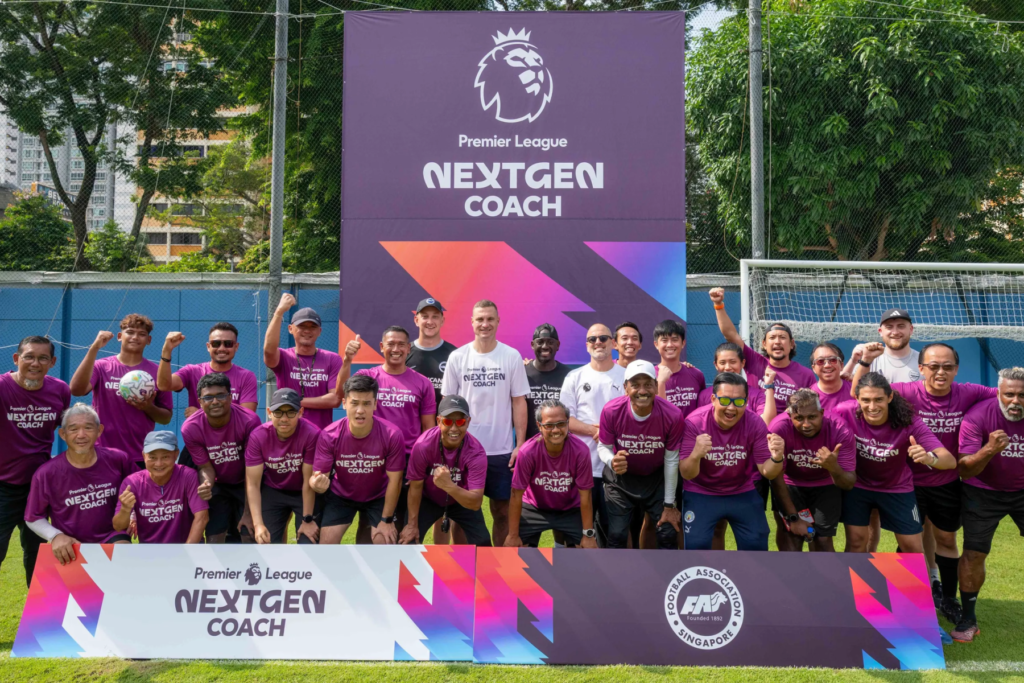
Premier League backs grassroots football in Singapore

The NEXTGEN coach programme saw past legends and current coaches unite to deliver an activity intent on supporting grassroots football through high quality and inclusive coaching.


Creating new leaders

To reach the top in elite football requires tactical education, personal guidance and consistent support throughout the development journey.

Coaches therefore take on a great deal of responsibility for players seeking a top-flight dream.

Yet even for those who never make it to the top, there is always one coach who stands out. Not necessarily for the silverware achieved or results on the pitch, but for the way they helped build a person off the pitch to play better on it.

The Premier League’s NEXTGEN Coach programme in Singapore aims to equip coaches with the skills and knowledge to do exactly that: creating welcoming environments which nurture confidence and a love for the game.

“This will hugely benefit local coaches, providing them with expert training and skills that will cascade into the communities they coach in,” said Premier League Director of Community, Nick Perchard, via media release.

“After opening the League’s first international office in Singapore more than seven years ago, we are now building on our commitment to the country with a structured coach development programme.”


What does the programme include?

The programme initially saw Premier League coaches deliver training sessions to coaches from StarHub – the League’s broadcast partner in Singapore who engage with local community football.

Furthermore, the training was consolidated through stakeholder engagement events and talks from 150 students at the Institute of Technical Education about their careers in the game.

In total, the programme saw 30 coaches take part – all from diverse backgrounds selected by the Football Association of Singapore (FAS) to maximise community reach and positively impact as many young individuals as possible.

“Youth development is a key priority for FAS, and it starts at the grassroots level,” explained FAS General Secretary, Badri Ghent via media release.

“Coaches play a central role in shaping not just how young players learn the game, but how they experience it, building confidence, character and a lifelong connection to football.”

Through high quality programmes like NEXTGEN, grassroots football can grow to ensure future coaches and players are confident in themselves and their future roles in the game.

A Structural Fix or Stoppage? Will FQ’s New Referee Pipeline Solve its Shortage?

Football Queensland‘s newly launched club referee framework is being presented as a game-changing solution to one of the most persistent operational problems in grassroots football: the chronic shortage of match officials. Will democratising and lowering the bar for entry saturate the gap, or exacerbate a skills shortage?

What the framework actually does

The core of the announcement is a free, 30-minute online module that certifies players or club members as club referees, creating a new category of match official below the formal FQ referee pathway. The stated goal is a 1 referee per team ratio within clubs, with these club-level officials intended to fill the gap at the grassroots end while the formal pathway continues operating above them.

Referee shortages at community level are not primarily caused by a lack of interest in officiating at the elite end. They are caused by the structural reality that organising and staffing fixtures for hundreds of junior and community matches each weekend requires a volume of officials that a centralised recruitment and accreditation model simply cannot generate fast enough. A club-embedded approach that lowers the barrier to entry addresses that supply problem at the point where it actually exists.

The framework’s strongest element is its acknowledgment that referee development is not a single pipeline but a layered ecosystem. By creating a supported entry point within clubs, the program recognises that people are more likely to begin something when the initial ask is modest and the environment is familiar.

The 30-minute online module removes cost and time as barriers, which are consistently among the most cited reasons people do not take up officiating. The integration with FQ’s broader resources and the explicit framing of club officiating as a stepping stone into the formal pathway is also structurally intelligent. A club referee who develops confidence and competence at the grassroots level is a more likely candidate for formal accreditation than someone approached cold by a recruiting drive.

Where the questions remain

The framework’s weaknesses are largely the weaknesses of any supply-side solution to what is partly a demand-side problem. Referee shortages exist not only because there are not enough officials but because the experience of refereeing is sufficiently unpleasant that retention rates are poor. Verbal abuse, sideline behaviour from parents and coaches, and the lack of adequate support structures mean that many referees who enter the system do not stay in it.

A 30-minute module and a club-based support structure does not directly address those conditions. If a newly certified club referee’s first experiences on the pitch involve the same patterns of behaviour that drive experienced officials out of the game, the framework risks building a pipeline that feeds into an environment that consumes referees rather than retaining them. Football Queensland’s existing Protect Our Game initiative and Three Strike Policy are relevant here, but the announcement makes no explicit connection between the new referee framework and the behavioural standards clubs will be expected to maintain around their own officials.

There is also a question of quality consistency. A 30-minute online certification, by design, provides a basic level of preparation. At the youngest junior levels, where match outcomes are secondary to development, that may be entirely adequate. But the framework’s success will depend on clubs implementing the structured learning and support it promises in practice, not just in principle. Clubs vary enormously in their administrative capacity, volunteer bandwidth and culture. A framework that works well in a well-resourced metropolitan club may deliver inconsistent results in a smaller regional association operating with a single administrator.

The broader structural implication

Perhaps the most significant question the framework raises is whether it represents a genuine investment in the referee pathway or a pressure valve designed to relieve immediate operational strain without addressing underlying conditions.

If the club referee model is understood as the entry ramp to a properly resourced and well-supported development pathway, it is genuinely valuable. Football Queensland’s 10-point referee plan, of which this forms one element, suggests the intent is systemic rather than cosmetic. The investment in Alex King as Head of Advanced Match Officials, the all-female referee courses and the appointment of Casey Reibelt as Australia’s first full-time female referee all point to an organisation that is thinking seriously about the full arc of official development.

But frameworks announced with language like “game-changing” and “record investment” carry an expectation of accountability that should be tracked. The meaningful measure of this initiative is not how many club referees are certified in its first season but how many are still officiating two and three seasons from now, and how many progress into the formal FQ pathway.

A referee pipeline is only as useful as its retention rate. That number will tell the real story.

Most Popular Topics

Editor Picks

Send this to a friend