



City of Canada Bay Council waive field hire costs

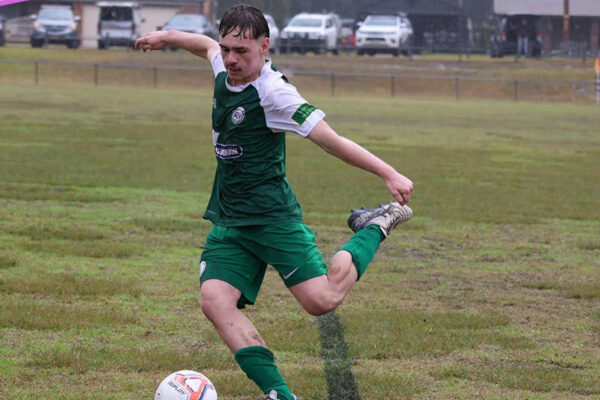
Canterbury District Soccer Football Association (CDSFA) clubs have been given relief following the decision by the City of Canada Bay Council to waive ground hire costs.

The move was made in an effort to lessen the financial burden on CDSFA clubs who have been heavily affected by the impact of COVID-19 enforced lockdowns.

The substantial support from the Canada Bay Council comes at a critical time for community football during this difficult period, in the lead up to the 2022 season following yet another interrupted year due to the pandemic.

“Our local football clubs have done it tough over the past 18 months and I’m thrilled that we are able to provide fee relief to ensure that, when these current lockdowns lift, local football clubs are ready to get back on the field,” City of Canada Bay Council Mayor Angelo Tsirekas said.

“I can’t wait to see football back in action in the City of Canada Bay – seeing friends and families throughout our community back on our fields.

“I hope that this support from the City of Canada Bay will help local clubs bounce back from the impacts of COVID-19.”

Football NSW CEO Stuart Hodge highlighted his support for the action, delivered by the City of Canada Bay Council.

“Well done to the City of Canada Bay Council for showing its support behind our code in what have been tough times due to the pandemic,” he said.

“It’s announcements such as this from the City of Canada Bay Council that go a very long way in assuring our football community are aided in their push towards kicking off the 2022 season on the right foot.”

Canterbury District Soccer Football Association CEO Ian Holmes was appreciative with the ongoing support of the Mayor in his efforts to assist each club.

“The CDSFA wants to thank Mayor Angelo Tsirekas for steering this through Council,” he said.

“The City of Canada Bay Council remains an LGA focussed on the local community and recognises the vital role of community sport.

“Mayor Angelo and Council have always respected our five clubs and the club volunteers. The financial relief provided is greatly appreciated.”

Previous ArticleNext Article

South Melbourne’s Australia Cup triumph reignites promotion and relegation debate

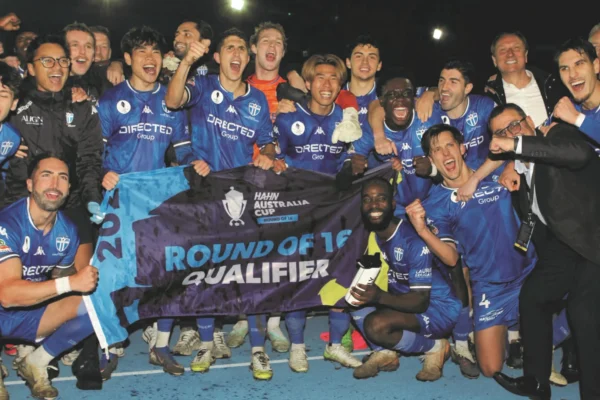
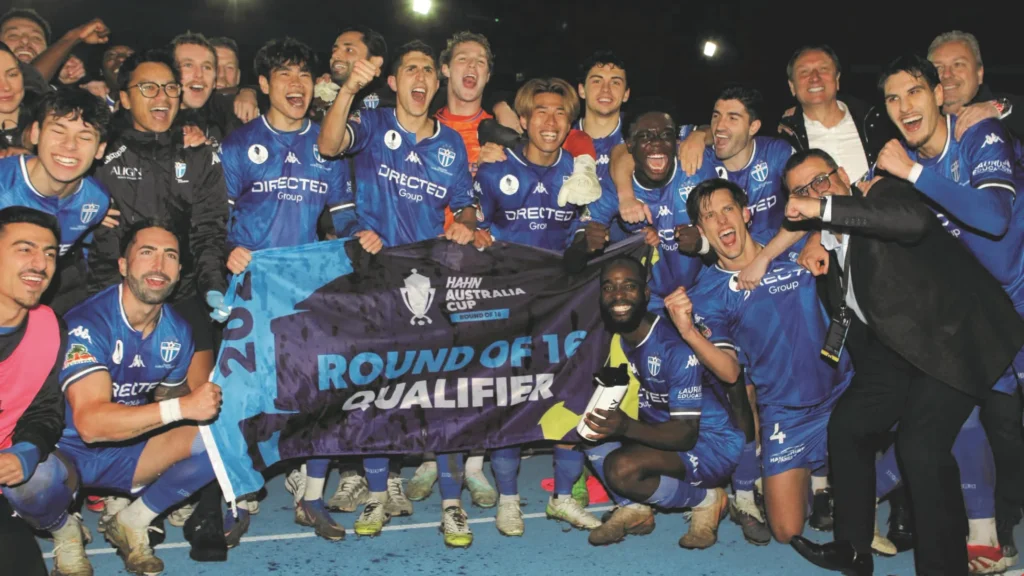
South Melbourne FC’s dramatic 2-1 victory over Adelaide United in the Hahn Australia Cup Round of 32 has reignited debate around promotion and relegation in Australian football, with Co-President Bill Papastergiadis stating the result is further proof that ambitious National Premier Leagues clubs deserve a pathway to the top tier.

The Victorian powerhouse produced one of the competition’s biggest upsets at Lakeside Stadium, overturning an early deficit to eliminate the Isuzu UTE A-League side and secure a place in the Round of 16.

While the result was celebrated as another example of the magic of the Australia Cup, Papastergiadis believes the victory carries a much broader message about the strength that exists outside Australia’s professional league.

Speaking following the win, Papastergiadis said South Melbourne’s performance demonstrated why the Australian football landscape should move towards a connected pyramid featuring promotion and relegation.

“The result was South Melbourne FC’s revenge 22 years in the making,” Papastergiadis said.

“It also demonstrates that clubs in the National Premier Leagues have the quality, professionalism and ambition to compete with A-League opposition when given the opportunity.”

For years, South Melbourne has been one of the strongest advocates for structural reform within Australian football, consistently calling for an open pyramid that rewards sporting merit rather than maintaining a closed league system.

Papastergiadis argued that Australia Cup fixtures continue to showcase the depth of talent throughout the domestic game, with NPL clubs regularly proving they can challenge and defeat professional opponents despite operating with significantly fewer resources.

He believes these performances should not simply be viewed as isolated “cupsets”, but as evidence that Australia’s football ecosystem is ready to embrace a promotion and relegation model that provides ambitious clubs with a genuine pathway to the top flight.

The result against Adelaide United adds another significant chapter to South Melbourne’s storied history. One of Australia’s most successful clubs, South Melbourne has long maintained aspirations of returning to the national stage, backed by a passionate supporter base, strong infrastructure and a proud footballing tradition.

For Papastergiadis, victories such as Thursday night’s reinforce the argument that clubs should earn opportunities through performances on the pitch.

“The Australia Cup continues to show what’s possible when clubs from different levels of the football pyramid compete against one another,” he said.

“Our football should be built on opportunity and merit. Clubs that perform consistently and invest in their communities should have the chance to progress to the highest level.”

South Melbourne will now turn its attention to the Round of 16, where it will look to continue its impressive cup run.

Beyond the result itself, however, the victory has once again fuelled discussion around the future of Australia’s football structure and whether the growing strength of clubs outside the A-League should accelerate the push towards a fully connected national competition.

Tottenham Hotspur deliver player development workshop for Football NSW

The workshop focused on sharing knowledge and insights regarding player development, bringing together more than 120 coaches from across NSW with those from Tottenham Hotspur.


Experience, insight and education

Valentine Sports Park hosted the Continuing Professional Development (CPD) workshop, uniting Football NSW coaches and members of Tottenham Hotspur’s coaching staff to encourage discussion and learning opportunities about player development.

Tottenham’s player development pathway – from the academy to the first team – has produced some of the most respected names in Premier League history, including Harry Kane and Ledley King.

Under the leadership and guidance of Tottenham Hotspur Player & Coach Pathway Co-ordinator (and UEFA A Licence Coach), Jimmy Martin, as well as members of Tottenham’s coaching staff, Shannon Maloney, Kevin Moffatt and Tyler Blackwood, the workshop was a unique opportunity to learn from some of the most experienced coaches in the game.

“Coach education is a vital part of developing football across NSW, and having more than 120 coaches attend this workshop highlights the appetite within our football community to continue learning and improving,” explained Football NSW Head of Football, Edward Ferguson.

Ferguson continued to outline the value of learning from an organisation like Tottenham Hotspur, a team who have helped grow some of the game’s most exceptional talents. The lessons taken will consequently help to inform future approaches to coaching in NSW.

“The focus remains on creating better learning environments for players, encouraging decision-making, creativity and long-term development.”

What the workshop involved

The workshop encouraged coaches to dive into all aspects of player development: the technical, tactical, physical and mental aspects which contribute to the English academy setup.

Furthermore, Maloney, Moffatt and Blackwood – all of whom helped deliver a practical session for attendees – showed how a club’s playing identity can work alongside challenging training environments for players.

Game understanding, creative problem-solving and technical proficiency underpinned the main themes driving the workshop. In an age where individual expression on the pitch appears a dying art, Tottenham Hotspur coaches remain committed to encouraging players to feel confident adapating to a range of in-game scenarios.

Football NSW coaches were also able to attend a Q&A session with King, who spoke about his playing experiences for both club and country.


Final thoughts

As Australia continues to nurture the current and upcming generations of talented footballers, workshops such as this are a vital, fundamental part of the journey.

The fastest way to be among the best is to learn from them. The aim now is for Football NSW coaches to take the lessons learned, and apply them to football development in their own academies and teams across the state.

Most Popular Topics

Editor Picks

Send this to a friend