Liberty announced as major sponsor for A-League Women

The A-Leagues have announced non-bank lender Liberty as the first ever naming rights partner of the newly rebranded A-League Women’s competition for the 2021-22 season.

Commencing today, the multi-year deal includes naming rights partnership of the A-League Women’s competition, Final Series, and the Official Lending Partner of the A-Leagues. Liberty will also be an official Partner of the Isuzu UTE A League, A-League Youth and A-League eSports.

With the season beginning on Friday December 3, this partnership signifies a new dawn for elite football in Australia, as men’s and women’s competitions become partners at the top of the A-Leagues game – furthering football’s position as the country’s most inclusive sport to grow the game for everyone.

The investment also marks a milestone in women’s professional football, with interest in the game increasing in the lead up to the FIFA Women’s World Cup 2023 to be held in Australia and New Zealand.

Announcing the partnership, A-Leagues Managing Director Danny Townsend stated:

“The A-Leagues is proud and excited to welcome Liberty as a new naming rights partner. The team shares our passion for football, for diversity and for empowering women to pursue their dreams.

“We have seen a significantly expanding interest in women’s football – from grassroots through to the Matildas. By investing in women’s professional football through Liberty A-League, we offer more pathways for emerging players, ensuring our world-class competition is truly sustainable”.

Liberty CEO James Boyle was delighted to further the company’s support and involvement in Australian sport.

“Through the Liberty A-League we reaffirm our support for women in professional sport. We are passionate about helping to provide the platform that women’s football deserves.

“As a pioneer of financial inclusion, we support those who forge their own path, both on and off the field. The athletes currently playing in the Liberty A-League embody this spirit – they are the trailblazers at the top of their game.”

In another milestone, from Friday December 3, the A-Leagues will unify its Facebook and Instagram channels, reinforcing its commitment to providing the best football fan experience across all Leagues.

Previous ArticleNext Article

South Canberra FC Breaks the Mold: Equity-Driven Model Earns ‘Club Changer’ Honour

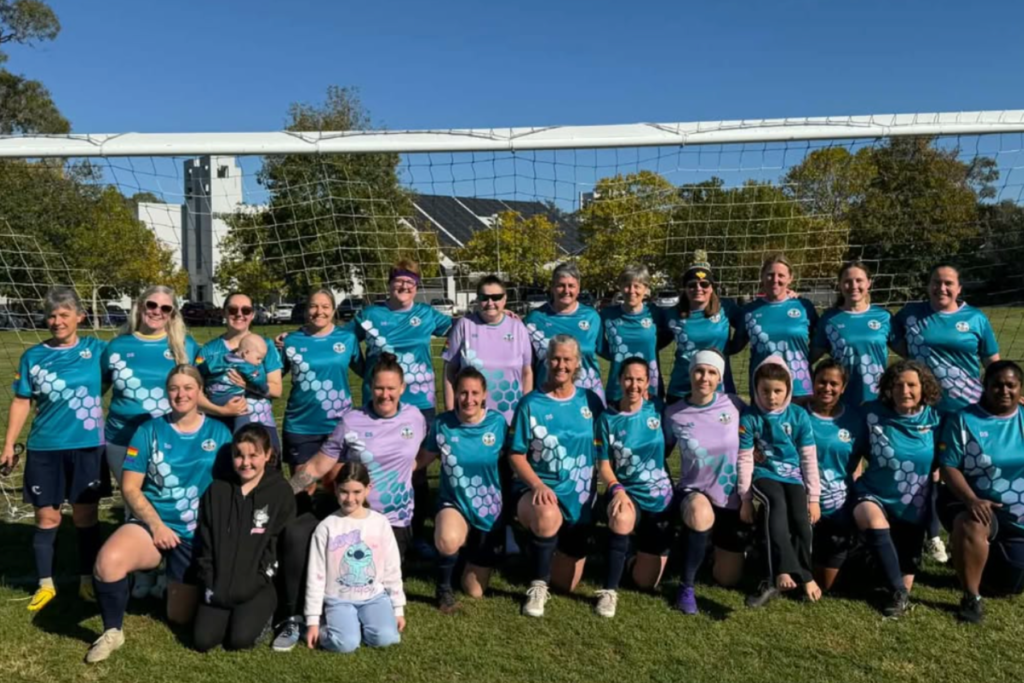
South Canberra Football Club has been named Club Changer of the Month for April, in a recognition that reflects a broader shift across Australian football toward rewarding clubs that are actively dismantling the structural barriers limiting women’s access to the game.

The AFC Women’s Asian Cup has just delivered record crowds and unprecedented visibility for women’s football in Australia, and the Club Changer program is now asking what comes next. Its decision to name South Canberra Football Club as Club Changer of the Month for April signals a clear shift in how the program defines contribution: away from participation numbers alone, and toward the equity frameworks that determine whether women stay in the game once they arrive.

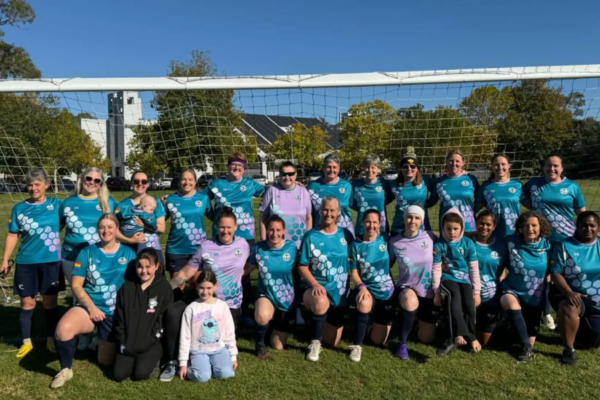
South Canberra FC built that framework from the ground up. Established in 2021, the club set out to give women and female-identifying players a safe, inclusive environment to play football at any level. It runs entirely on volunteers, operates as a not-for-profit, and is governed by an all-female committee with 13 of its 14 coaches identifying as female.


Building the infrastructure of inclusion

In 2026, the club secured grant funding and put it to work immediately. Two coaches are completing their C Licence qualification, and ten coaches, players and community members have undertaken the Foundations of Football course, which directly tackles the cost and accessibility barriers that exclude women out of coaching pathways.

The club also commissioned a female-specific strength and conditioning program with sports physiotherapists ahead of the 2026 season, targeting injury prevention and explicitly supporting players returning after childbirth.

SCFC’s leadership team draws from LGBTIQ+ individuals, First Nations people and veterans, strengthening the club’s connection to the communities it was built to represent.

The Club Changer program is backing clubs that do this work- clubs that treat equity as infrastructure rather than aspiration. At a moment when Australian football is under pressure to turn its biggest-ever surge of women’s interest into something lasting, SCFC’s model offers a clear answer to the question of how.

Football NSW Targets Female Coaching Gap with Twin Programs

Football NSW has announced two new initiatives targeting the development of female coaches and coach education tutors, backed by federal and state government funding, as the governing body moves to address the longstanding structural absence of women across all levels of coaching in the sport.

The Future Female Coaches Mentoring Program, funded through the NSW Office of Sport’s Empower Her program, will select six female coaches holding a minimum AFC B Diploma for a structured mentoring program beginning mid-year. Participants will be paired with experienced mentors and receive three in-person visits including real-time observation and feedback, alongside regular online development sessions throughout the season.

Separately, Football NSW has opened expressions of interest for its 2026/27 Female Coach Education Tutor (CET) Program, supported by the Australian Federal Government’s Play Our Way investment, targeting C Diploma holders who want to move into coach education delivery.

Together, the programs address two distinct but connected gaps in the women’s football coaching pipeline- the progression from active coach to elite-level practitioner, and the transition from practitioner to the tutors who shape how coaching is taught.

The Pipeline Problem

The structural underrepresentation of women in football coaching isn’t a new observation. It is a documented and persistent feature of the game at every level, from community clubs to national team environments. Female coaches remain a minority in pathway competitions, and female coach education tutors are even more so.

One current tutor in the program described the environment she encountered when she came through the system. “My experience coming through as a coach, there was no females on the courses as participants and there was no females running the courses either,” she said. “That kind of inspires me to be someone that can hopefully make other females feel comfortable and confident to want to become coaches.”

“It is really important to have female role models because it shows that there is an opportunity or pathway for females,” said one program participant. “Traditionally it has been a male-dominated area and to know that yes, you can do it as a passion or a side thing, or you can actually make a career of it if you want.”

Removing barriers at the point of entry

The mentoring program’s design reflects an understanding that formal accreditation alone is insufficient to retain and develop female coaches in high-performance environments. Access to experienced mentors, observation in live coaching contexts and ongoing reflective practice address the informal development gaps that credentials cannot fill.

“Learning happens through coaching in real environments, and we recognise our role in providing both stretch and support to high-potential coaches,” said Edward Ferguson, Football NSW Head of Football Development. “This program offers tailored mentoring that complements formal coach education and enhances effectiveness in practice.”

Hayley Todd, Football NSW Head of Womens and Schools Football, framed the initiative in terms of long-term system building rather than individual development. “Creating sustainable pathways for female coaches is a key priority,” she said. “This program supports their development while also providing valuable insight into what is required to progress from state competitions into national and international environments.”

The barriers the programs are designed to remove are clear. The cost of accreditation, lack of access to mentoring networks, the absence of welcoming environments in coaching courses and the scarcity of female role models at senior levels all compound one another in ways that make progression difficult regardless of ability or commitment.

“You want to try and remove as many barriers as possible,” said one tutor involved in the program. “If you can start to remove those barriers, you actually get to engage with the females more consistently and build their confidence and competence in that space.”

A system investing in itself

The timing of both announcements sits within a broader national moment for women’s football. The AFC Women’s Asian Cup, currently underway in Australia, has delivered record crowds and sustained visibility for the female game at the elite level. The programs announced this week operate at the other end of the pipeline – building the coaching infrastructure that will determine whether the players inspired by that visibility have qualified, experienced and representative coaches to develop them.

Most Popular Topics

Editor Picks

Send this to a friend