


Player agent Carlos Ribeiro: “Top A-League academy players should be looking abroad”

Carlos Ribeiro is a name that may be unfamiliar to Australian footballing circles, but the former player turned agent has a significant ambition to help young Australian talents achieve their dreams of playing overseas.

Having opted to end his playing career at 22, Ribeiro (now 23), co-founded the Joga Bonito Football Agency alongside his father in an effort to offer an authentic career consultation for players who are looking to take the step to playing in the highest tiers of Europe.

Ribeiro chatted with Soccerscene about why having a recent playing career has allowed him to better mentor young players, the mistakes young players make when attempting to solidify themselves in Europe, and the stigma surrounding player agents.

What does your agency specialise in?

Carlos Ribeiro: We’re providing opportunities for the professional development of mainly Australian-based junior footballers. We have a lot of requests for professional players in the Asian and European market, but we’ve started to bring in a lot of A-League youth talents to Portugal-based clubs.

We’re providing a lot of the young NPL and young A-League youth academy players a chance in Europe, instead of going through the system here and trying to crack the A-League. Over the last four months, I’ve placed 16 Aussie boys in Europe.

What did you take from your playing career into your work as an agent?

Carlos Ribeiro: I played professionally in Europe, having left Australia when I was 15. I played until I was 21 in Europe and came back here at 22. I spent a year in the NPL and decided to call it quits. My father’s always been involved with football in management and coaching, so he got me involved. We started to build a new company, which became Joga Bonito Football Agency and our linking company 352 Futebol Management. 352 is designed more for when we’re going to be sorting out professional contracts, especially with those players who are set to reach that level.

Joga Bonito is a bit of everything. We have coaches providing extra training on the side, personal trainers, nutritionists – everything like that. We have everything going for the players in that sense. My dad and I then started to look at the Australian market for players, because it’s a good market and there’s not many people who can do what we’re doing here. Especially for the players who haven’t built that high profile outside of Australia.

Did your experiences with agents as a player overseas motivate you to kickstart this agency?

Carlos Ribeiro: I went through a lot of different agents as a player, and I had good ones and bad ones. I had a few good reference points in terms of how to conduct yourself as an agent, and I still work with and interact with these agents to this day.

I’m only 23, my father is obviously 50 and the other people we work with are in their 30s and 40s. I think because I played the game not so long ago, I can reflect through the players and interact with them in a way that allows them to open up. And then I can give them my lived experience.

My experiences playing in youth sides with players like Ruben Vinagre (now at Sporting CP) and Rafael Leão (now at AC Milan) gives me good insight into what it takes to reach the top tier. And by contrast, I have myself as an example of a player who didn’t quite reach the level they were expected to. So in that sense, I know the process that the players need to follow.

The biggest thing for players to realise is that if you’ve got a manager and a mentor, and you’re employing someone to be that, you should listen to what they say. Myself and my colleagues know the market well, and for the players who choose patience and following the process we believe they’ll get there.

Obviously with agents it’s hard to find a lot of honest ones. And they’ll tell you: ‘You’re going to achieve this, and you’re going to get there’, but there’s no guarantee. All of the players we manage have good qualities, a couple of them are at an elite level, but they need to follow the process and understand that they’re arriving in a country where they’re unknown. They’re just another number. It’s up to the athlete to then prove themselves. We can only do so much.

What are the issues you see with players when they go overseas?

Carlos Ribeiro: There’s a couple of different things – some think because they’ve signed something that they’ve made it, but they haven’t. Some worry too much about the living conditions. Being comfortable, sharing a living space or little things where players don’t realise they haven’t reached that height where they can live in a big house on their own. They need to realise that they’re players that are going to have shared rooms for a few years, and they won’t have the luxury of parents driving them to training all the time.

They need to adapt – that’s what these players in Europe and South America have done for a long time. They use everything that’s made it hard for them to succeed as fighting power to actually succeed. And I stress to the players that I was on my own without my parents for pretty much the entire time in Europe. These are the little things in player’s mentalities that need to change.

It’s interesting because Australian football is in a place where it’s trying to figure out how to get our players to compete successfully and to reach the heights of the most successful players in Europe. From an agent’s perspective, what are the key things that will help Australian footballers reach these levels?

Carlos Ribeiro: In Australia we have a system where if you’re in an A-League academy side between the age of 16 and 19 and you’re progressing, you are potentially going to receive a scholarship contract. But realistically, that’s a small amount of the players in these academies receiving these contracts. There’s only a certain amount of scholarship spots available and then once they hit 21, they’re kicked out if they haven’t hit the level required.

If you’re a top NPL or A-League academy player, you should be looking abroad especially when you’re 16 or 17. That’s where your future is going to be, because there’s multiple divisions and multiple clubs. Here we only have 12 clubs at the professional level.

Australian football – with a second division, more teams and promotion & relegation – realistically makes people like myself who are ambitious ready to go overseas. All of these clubs overseas are going to produce players at a higher level because the training is different. There’s more players, more competition and most importantly, there’s more games.

All of these boys that I’m sending overseas are good enough for the A-League and in a few years can be potential Socceroos. If they stayed here, they may have never gotten the chance to test themselves overseas where the elite level (depending on the division) is better or on par with the A-League. We’re going to have more players playing at a high level with more game time.

What is your advice for players who have aspirations for heading overseas?

Carlos Ribeiro: I’m a young guy, ex-player and agent in a company with other people who have access to a good pool of in a lot of countries with a good database to get players. We work with multiple players and other agencies in Colombia, Brazil and across Europe.

As an agent, I want to say to players who are looking for an opportunity, especially those who can’t see that happening here, to get moving sooner rather than later. Because with every year you waste, the gap becomes bigger and bigger and the chances become smaller.

Previous ArticleNext Article

The A-Leagues Final Series important status also a secret hinderance

The Isuzu A-League finals series is a huge event in the footballing calendar, though its contribution to stagnant attendance numbers in the league is something to be said.

If the 2025/26 finals series follows similar patterns to those before it, it will gather huge traction and strong ticket sales.

It is the largest event for the domestic league, bringing in massive amounts of viewership through media and gate receipts.

Finals series from years past have shown this, with the 2024/25 final, a Melbourne derby, being sold out within 48 hours and gathering significant viewership online.

The idea of a finals series lies within the Australian sporting ethos; the other sporting codes have had this tradition for most of their existence, especially in recent history.

Football, though, is different from the rest of the sporting codes in Australia, unique even. This has historically contributed to its inability to integrate into the same supported status as other codes.

Many in the Australian footballing community, supporter groups, players, coaches, and even the new Director of Football Australia, have voiced concerns over fan numbers in the league competition.

It wouldn’t be absurd to say that maybe, though profitable now, the finals series is actually taking away from the league itself.

Consider the media image: the league winner is called the “minor premiership,” and ticket sales and viewership figures reveal a huge disparity between the two parts of the A-League.

It must be said that an alternative that could work in unison with the league and possibly increase viewership of the league itself would be a great advantage.

It would allow the league to gain more jeopardy and drama, which could build greater interest in attending league games.

One alternative is already here.

No other sporting code in Australia has both a league competition and a cup competition. Football in Australia does.

The Hahn’s Australia Cup is our equivalent to the FA Cup in England or the Copa del Rey in Spain.

These are competitions that offer a finals option in a different competition entirely. They generate huge traction while never diminishing the importance of the league and, therefore, its popularity.

These cup competitions cannot be discussed without acknowledging some obvious differences.

They don’t face the same popularity issues that football does in Australia. It’s obvious the Hahn’s Australia Cup doesn’t yet gain the traction that the finals series does.

However, for a healthy footballing environment with increasing fan numbers, it should.

The idea of elevating the Hahn’s Australia Cup and scaling back the finals series is a complex question, one that is treated like a “no-go zone” by many in the Australian footballing community, and that is understandable.

Though big changes like this might, in the end, be credible options for the future of the sport in this country.

Larger plans must be set in motion, strategies that can be worked towards and refined along the way. It is the process by which all large organisations, business models and even national governments build their strategies.

Such a shift will be scrutinised and pushed back against.

Though with further fine-tuning and smart investment in development, not to mention the introduction of promotion and relegation and the possibility of changing the footballing calendar.

It could replicate the success that these two-competition models already enjoy in other leagues.

The added importance that the premiership would gain, the reality that every game matters, could alongside other strategies entice fans to more games, increase viewership and ticket sales, and create more dedicated fan bases. It works in other nations, very well in fact.

The possibility of two teams lifting a trophy, rather than one single event defining it all, sounds like a strategy that could deliver more engagement over longer periods of time.

Maybe Australian football doesn’t need to answer this question just yet. It is complex, difficult and it would require a great deal of work, including significant investment into the game, which is another issue entirely.

Yet as low attendance numbers persist in the A-League, even alongside increased media viewership, something needs to change for football in Australia.

The rise in popularity of this game and its dedicated community deserves bold ideas and forward thinking.

Ideas like this could eventually begin to change the landscape of the beautiful game in Australia for the better.

Football NSW Targets Female Coaching Gap with Twin Programs

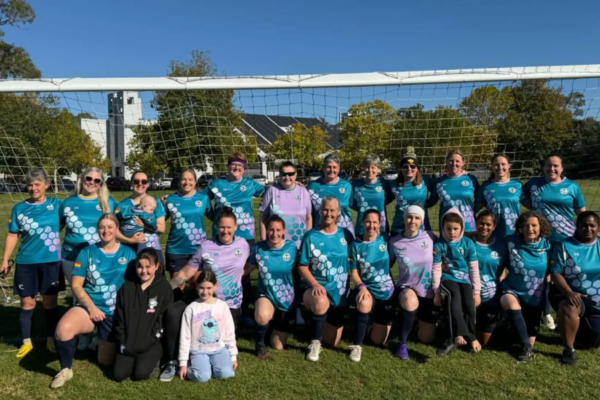
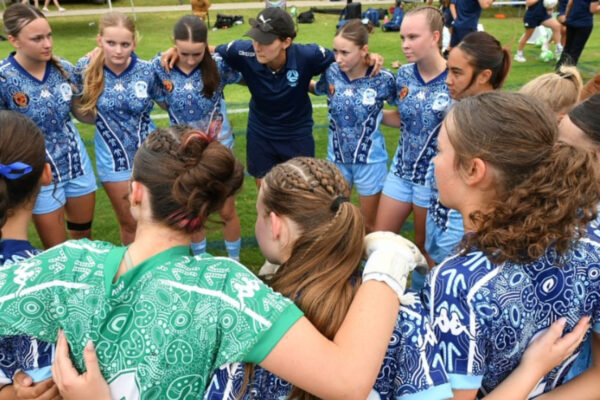
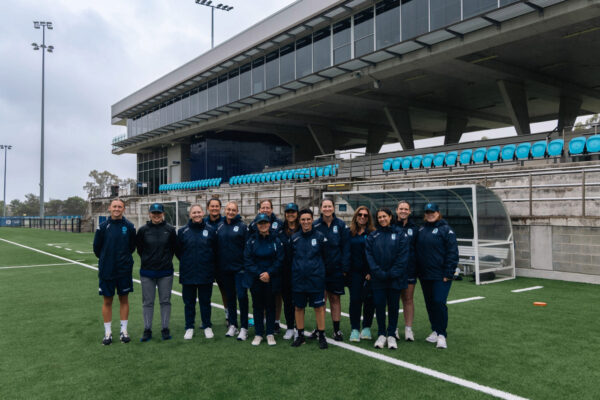
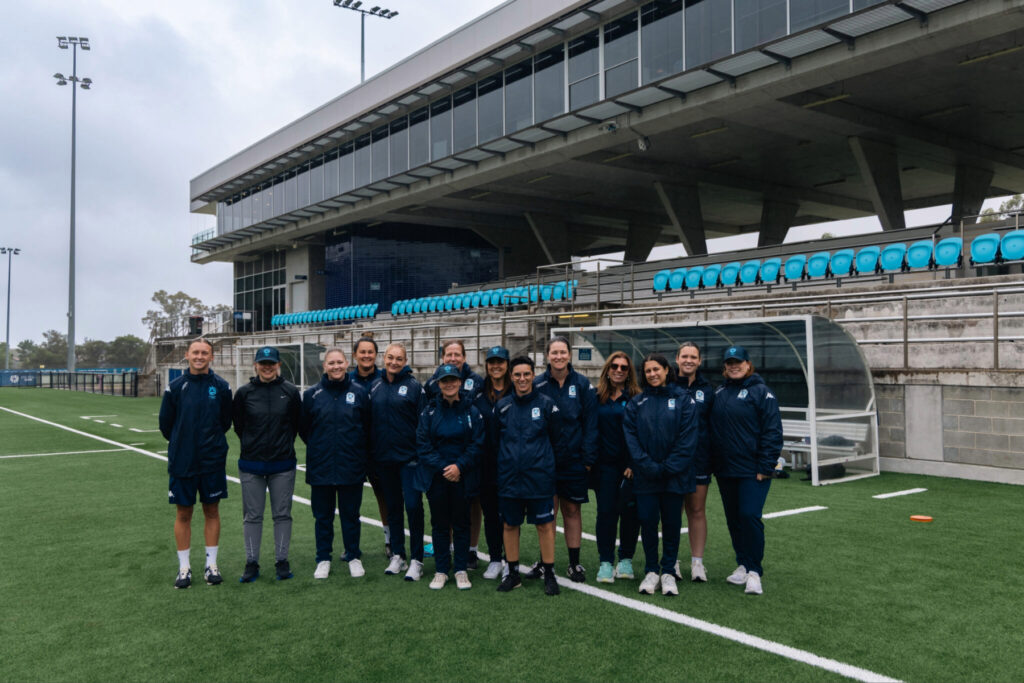
Football NSW has announced two new initiatives targeting the development of female coaches and coach education tutors, backed by federal and state government funding, as the governing body moves to address the longstanding structural absence of women across all levels of coaching in the sport.

The Future Female Coaches Mentoring Program, funded through the NSW Office of Sport’s Empower Her program, will select six female coaches holding a minimum AFC B Diploma for a structured mentoring program beginning mid-year. Participants will be paired with experienced mentors and receive three in-person visits including real-time observation and feedback, alongside regular online development sessions throughout the season.

Separately, Football NSW has opened expressions of interest for its 2026/27 Female Coach Education Tutor (CET) Program, supported by the Australian Federal Government’s Play Our Way investment, targeting C Diploma holders who want to move into coach education delivery.

Together, the programs address two distinct but connected gaps in the women’s football coaching pipeline- the progression from active coach to elite-level practitioner, and the transition from practitioner to the tutors who shape how coaching is taught.

The Pipeline Problem

The structural underrepresentation of women in football coaching isn’t a new observation. It is a documented and persistent feature of the game at every level, from community clubs to national team environments. Female coaches remain a minority in pathway competitions, and female coach education tutors are even more so.

One current tutor in the program described the environment she encountered when she came through the system. “My experience coming through as a coach, there was no females on the courses as participants and there was no females running the courses either,” she said. “That kind of inspires me to be someone that can hopefully make other females feel comfortable and confident to want to become coaches.”

“It is really important to have female role models because it shows that there is an opportunity or pathway for females,” said one program participant. “Traditionally it has been a male-dominated area and to know that yes, you can do it as a passion or a side thing, or you can actually make a career of it if you want.”

Removing barriers at the point of entry

The mentoring program’s design reflects an understanding that formal accreditation alone is insufficient to retain and develop female coaches in high-performance environments. Access to experienced mentors, observation in live coaching contexts and ongoing reflective practice address the informal development gaps that credentials cannot fill.

“Learning happens through coaching in real environments, and we recognise our role in providing both stretch and support to high-potential coaches,” said Edward Ferguson, Football NSW Head of Football Development. “This program offers tailored mentoring that complements formal coach education and enhances effectiveness in practice.”

Hayley Todd, Football NSW Head of Womens and Schools Football, framed the initiative in terms of long-term system building rather than individual development. “Creating sustainable pathways for female coaches is a key priority,” she said. “This program supports their development while also providing valuable insight into what is required to progress from state competitions into national and international environments.”

The barriers the programs are designed to remove are clear. The cost of accreditation, lack of access to mentoring networks, the absence of welcoming environments in coaching courses and the scarcity of female role models at senior levels all compound one another in ways that make progression difficult regardless of ability or commitment.

“You want to try and remove as many barriers as possible,” said one tutor involved in the program. “If you can start to remove those barriers, you actually get to engage with the females more consistently and build their confidence and competence in that space.”

A system investing in itself

The timing of both announcements sits within a broader national moment for women’s football. The AFC Women’s Asian Cup, currently underway in Australia, has delivered record crowds and sustained visibility for the female game at the elite level. The programs announced this week operate at the other end of the pipeline – building the coaching infrastructure that will determine whether the players inspired by that visibility have qualified, experienced and representative coaches to develop them.

Most Popular Topics

Editor Picks

Send this to a friend