

How Postecoglou’s overseas success can propel more Australian coaches forward

He’s one of the biggest names in Australian football right now. Ange Postecoglou is continuing to put the land down under on the footballing map internationally.

Fresh off guiding Celtic to the Scottish Premiership title, there are now recent talks of where Australia’s coaching darling will be headed next. Some are suggesting he should set his sights to the English Premier League.

This includes former Celtic striker Chris Sutton, who spoke on Optus Sport’s GegenPod Football Podcast.

“I don’t get the argument that he can’t manage in the Premier League,” he said.

“Look at his track record, it speaks for itself. I think people would have sat up and noticed the job he’s done at Celtic.”

Postecoglou has won over Scottish fans just as he did in Australia at club level, with South Melbourne and Brisbane Roar.

Closer to home, it’s not just fans he’s won over though. Very few involved in football have anything bad to say about the newly-crowned Celtic champion manager.

But much like the initial reception that Postecoglou found in Scotland, it wasn’t always this way, as outlined by Football Coaches Australia President, Phil Moss.

“I had a few friends, particularly Rangers fans, who were let’s just say encouraging me to reach out to Ange and warn him against taking the job, it was that strong a feeling from certain sections,” he told Soccerscene.

“I just smiled and waved really. As anyone who knows Ange – and I’m not professing to know him very closely – but I’ve had some dealings with him over the years, and it was always going to be successful.

“Ange eats that sort of pressure for breakfast, lunch and dinner. If he decided that was the job for him, then you knew he was going to turn into a success.”

Hail, hail Ange Postecoglou - the anti-Howe who transformed Celtic in a season

Moss is optimistic that Postecoglou is paving the way for Australian coaches overseas. Having previously coached at the J-League’s Yokohama F. Marinos, the Celtic move was one of the biggest in the history of Australian coaching.

But alongside the likes of Kevin Muscat (Sint-Truiden and Yokohama), Harry Kewell in England, and Alen Stajcic (Philippines women’s national team), he’s overcoming the obstacles that get in the way of Australian coaches.

“The main obstacle is our lack of profile down here when it comes to European circles and competitions,” Moss continued.

“If you look at a Steven Gerrard for instance, Ange’s CV leaves his in coaching terms a long way behind. But Ange obviously doesn’t have the profile from his playing career.

“He’s formally in the A-League and NSL as well, but let’s not forget the success he had with South Melbourne in the National Soccer League.

“What its done is a couple of things. Initially when players first started going overseas from Australia it opens doors, and it sparks interest of people in positions of power over in Europe that Aussies know how to play.

“This will now certainly let people understand that we know how to coach.

“It opens doors and gives coaches in Australia the confidence to know that they can aspire to rise to a higher level, despite maybe not having a high profile European playing career.”

Despite Postecoglou and other international coaches’ successes, the FCA still faces challenges at home when it comes to their own coaches.

“Our role at FCA is to go on the journey with the coaches,” Moss said.

“A key part of our work at the moment is working towards aligning our AFC/FA coaching badges with UEFA. At the moment, if you go through the AFC/FA coaching licenses, that doesn’t align to Europe.

“For coaches like Ange and Kevin Muscat, they’ve all had to go through or are going through a process of aligning their qualifications.

“It’s a big issue because it basically means any coach going through the AFC coaching pathway at the moment is reassessing if that’s the right pathway for them at the moment.”
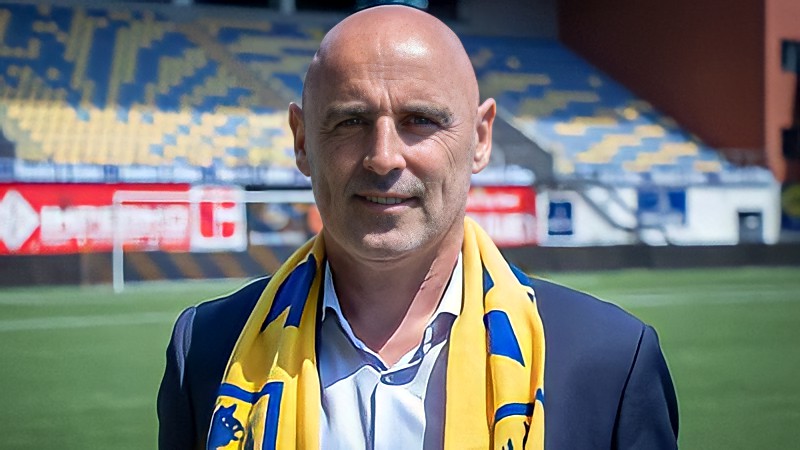
Kevin Muscat Joins Yokohama F Marinos After Missing Out On A Move To ISL | IFTWC - Indian Football Team For World Cup

And although many Australian coaches are still facing issues reaching their potential in a position in a European league, Postecoglou is well and truly a trailblazer.

“We’ve got to put this into context, he took over what local pundits were saying was the worst Celtic squad in 30 years where they lost the last league title by 25 points,” Moss said.

“That is a massive turnaround, just to get even with Rangers, let alone beat them to the title this season. As Ange said the other night, to fit two seasons into one – with a rebuilding season and a season for the title – is a phenomenal effort.”


Previous ArticleNext Article

Ernie Merrick: ‘There are many clubs that would be fantastic additions to the A-League’

Ernie Merrick will be forever recognised as a key figure through the A-League’s golden early years. Appointed Melbourne Victory’s foundation manager in 2004 he led the club to not just silverware, but legitimacy and respect in a serious sport city.

A Scottish migrant and PE teacher by trade, Merrick was the youngest of the NSL’s managerial crop when he started with Preston in 1987 in the era of Thomson, Arok & Matic; when he finished with Newcastle in 2020 he was the elder statesman in the A-League age of Postecoglou, Popovic and Arnold.

For the places the game took him and all he achieved – including time as national team manager of Hong Kong – Victory supporters can comfort themselves in the fact that for whatever they feel towards Merrick and his iconic group of players, that feeling is mutual.

‘Yes, definitely,’ Merrick told Soccerscene Unfiltered when asked if managing Victory was the highlight of his career.

‘I think success is [fans] having identification with players, especially. We had Victorian boys playing for Victory.

‘That second year I was determined to have a complete pre-season. Archie Thompson bought me a birthday cake with 200 candles and said “Ernie, we’ve had 200 training sessions. We should celebrate this” – so he was looking forward to a big year, and we won the Grand Final 6-0.’

Nearing 20 years on, Victory and the A-League in general haven’t managed to drive forward as would have been hoped. Unsurprisingly that comes as painful to Merrick, as does the change in landscape regarding his other great passion and contribution in player development. 

‘I’m disappointed, as would most people be, that it’s struggled so badly. To me, there’s something missing,’ said Merrick of the current state of the A-League.

‘Those players we produced at the AIS and VIS went on to be the golden generation. Unless the league is fixed, there’s going to be ongoing problems with the financial status of things.

‘You just cannot earn enough money from selling a youngster, who you might get a million for, who then becomes worth several million in a few years if he does well. Maybe there’s a bit too much of selling players early.’

As someone who gave enduring service across Australia’s two domestic leagues, his voice holds weight in the consideration as to whether it’s time to now blend the, in today’s hyper-corporate landscape.

‘South Melbourne and Preston are two clubs that are perfect for the A-League, I think, down the track. They’ve set up, they’ve endured, they’ve been resilient, they’re playing good football and they’ve got a home base with a home crowd, which is far better than starting a club up from scratch.

‘All those players coming through those squads and the number of supporters they’ve got would be a huge addition. In Sydney too, there’s Marconi – there are so many good clubs around that I think would make a great addition to the A-League.’ 

Merrick also spent thirteen years as head coach at the Victorian Institute of Sport. He feels modern player development is an equation we still haven’t got right, post the closure of the AIS’ football program in 2017.

While many argue the move to club-based academy structures has seen Australia fall more in line with global practice while still producing players of quality, Merrick still feels there is merit in a national high performance program, in addition to club academies.

He was in the process of setting up state academies through the Member Federations during his time as Football Australia’s chief football officer from 2022-25. While the Victoria project was short-lived, academies in Tasmania, Western Australia and South Australia continue to run, but it appears the broader expansion of the concept has been abandoned.

‘I think both systems should work [together] equally well. When I started with the FA program clubs thought they would lose players to us, but I didn’t take any of their players. We offered the opportunity of a high-performance program to other youngsters.

‘We could develop players completely; we weren’t restricted to playing 4-3-3 to combine with the way the first team were playing. We provided more of a rounded education, and good players can play in any system.

‘We managed to affect the coaches involved so they were up to date with the latest information on methods of coaching, etc.’

Catch the full chat with Ernie Merrick on Soccerscene Unfiltered: from being two-footed by a 15-year old Kevin Muscat to his enthusiasm for the future of the Socceroos, his memories of Wellington and Newcastle, and plenty more…

Former Socceroos captain set to headline coaching conference

Mark Milligan – former Socceroos captain and Newcastle Jets Premiership-winning manager – is set to be the guest of honour at the 2026 Football NSW Coaching Conference, held at Valentine Sports Park from November 21st–22nd.

The annual conference represents Australia’s largest gathering of football coaches, and is set to include expert insight into coaching, practical sessions and development plans for attendees. Milligan will partake in a Q&A session with MC Stephanie Brantz on November 21, adding significant gravitas to the conference.

Chris Gallo, Football NSW Coach Education Manager spoke highly of Milligan via Football NSW.

‘Opportunities to hear from people who have experienced the game at the highest level are incredibly valuable for our coaches. Mark brings a unique perspective on leadership, performance and the demands of elite football, and we want our coaches to be able to take those insights back into their own environments,’ he said.

Milligan traversed the globe across a near-twenty year professional career that started in the old National Soccer League, concluded in the A-League, and took in time across Europe, the UK and Asia.

He represented the Socceroos with distinction across 80 appearances, selected by four seperate managers in World Cup squads, and was captain of the Olympic team in 2008. His nascent managerial career has already seen two trophies at Newcastle, where he is presently leading them in the Asian Champions League.

But it all began on the local pitches of Bankstown. Milligan is an authentic, home-grown product of Football NSW, and emblamatic of the rewards that can be reaped from investing in the beginning of a player’s journey.

With the conference already selling out, attendees can now expect to learn plemty from one of Australia’s most exciting, up-and-coming coaches.

The opportunity Football NSW are providing showcases their commitment in helping coaches develop, and their continued pledge of giving back to the game at its foundation.

Most Popular Topics

Editor Picks

Send this to a friend