



UEFA Women’s EURO 2022 expected to deliver $95 million in revenue to host cities

The Football Association England and UEFA have announced that the UEFA Women’s EURO 2022 tournament is set to be the biggest women’s European sporting event in history.

The Pre-tournament Impact Report, produced by EY, projected that the tournament is expected to deliver £54 million (just over $95 million AUD) in economic activity to the nine Host Cities of Brighton & Hove, London, Manchester, Milton Keynes, Rotherham, Sheffield, Southampton, Trafford and Wigan & Leigh.

The Host Cities are expecting 96,000 international visitors from 95 territories and there will be engagement from fans from all over the world as the international broadcast audience could reach over 250 million across more than 195 territories. Host cities will also see a positive socio-economic impact thanks to over 5,500 people taking part in the volunteer programme.

The report reveals ticket sales for the tournament are on track to double the attendance of the UEFA Women’s EURO 2017 in the Netherlands that welcomed just over 240,000 fans. 51% of football fans plan to attend or watch the games that will take place up and down the country across nine English cities in 10 stadiums.

Providing a platform for greater participation in the game and community engagement, the tournament also represents a huge opportunity to drive a further step change in women’s football in England.

The UEFA Women’s EURO 2022 aims to leave a lasting legacy by inspiring the next generation of players and fans, providing opportunities for more than 500,000 women and girls to participate and engage with football through focused efforts of legacy groups within each of the Host Cities, with many more additional opportunities nationally.

Baroness Sue Campbell, EURO 2022 Board Member and Director of Women’s Football at The FA, said:

“With less than 50 days to go until the Tournament gets underway, this report highlights what we can achieve with a continued focus on capitalising on the opportunities offered by UEFA Women’s EURO England 2022 and importantly how we can measure our success.

“Our aim is twofold: to deliver a record-breaking tournament and to leave a tangible legacy to grow the women’s game. By inspiring fans at home and abroad, and by committing to provide playing opportunities to girls in every school and club across the country, I am confident we can deliver on both aims.”

Previous ArticleNext Article

South Canberra FC Breaks the Mold: Equity-Driven Model Earns ‘Club Changer’ Honour

South Canberra Football Club has been named Club Changer of the Month for April, in a recognition that reflects a broader shift across Australian football toward rewarding clubs that are actively dismantling the structural barriers limiting women’s access to the game.

The AFC Women’s Asian Cup has just delivered record crowds and unprecedented visibility for women’s football in Australia, and the Club Changer program is now asking what comes next. Its decision to name South Canberra Football Club as Club Changer of the Month for April signals a clear shift in how the program defines contribution: away from participation numbers alone, and toward the equity frameworks that determine whether women stay in the game once they arrive.

South Canberra FC built that framework from the ground up. Established in 2021, the club set out to give women and female-identifying players a safe, inclusive environment to play football at any level. It runs entirely on volunteers, operates as a not-for-profit, and is governed by an all-female committee with 13 of its 14 coaches identifying as female.


Building the infrastructure of inclusion

In 2026, the club secured grant funding and put it to work immediately. Two coaches are completing their C Licence qualification, and ten coaches, players and community members have undertaken the Foundations of Football course, which directly tackles the cost and accessibility barriers that exclude women out of coaching pathways.

The club also commissioned a female-specific strength and conditioning program with sports physiotherapists ahead of the 2026 season, targeting injury prevention and explicitly supporting players returning after childbirth.

SCFC’s leadership team draws from LGBTIQ+ individuals, First Nations people and veterans, strengthening the club’s connection to the communities it was built to represent.

The Club Changer program is backing clubs that do this work- clubs that treat equity as infrastructure rather than aspiration. At a moment when Australian football is under pressure to turn its biggest-ever surge of women’s interest into something lasting, SCFC’s model offers a clear answer to the question of how.

Football NSW Targets Female Coaching Gap with Twin Programs

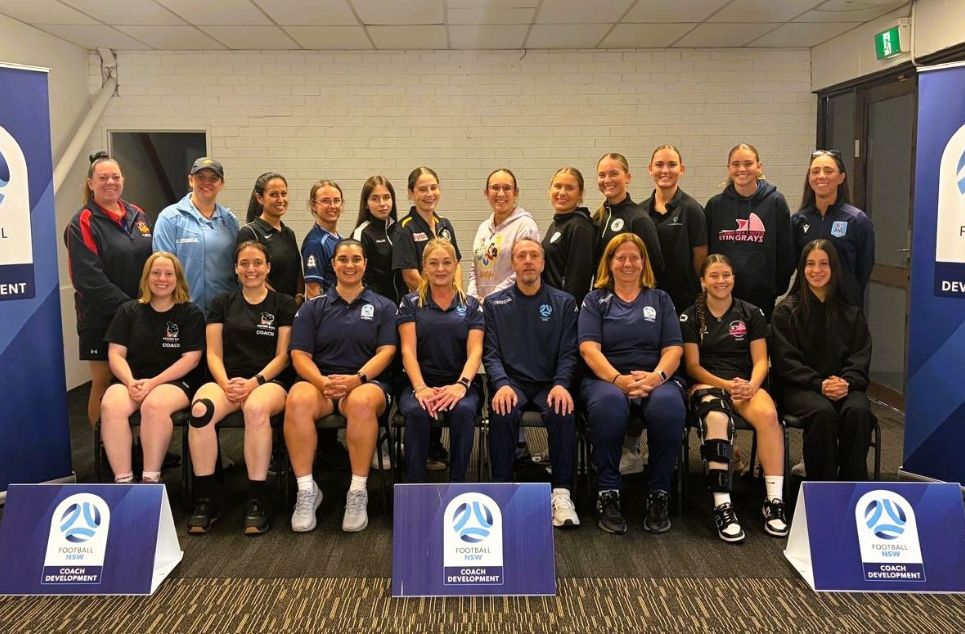
Football NSW has announced two new initiatives targeting the development of female coaches and coach education tutors, backed by federal and state government funding, as the governing body moves to address the longstanding structural absence of women across all levels of coaching in the sport.

The Future Female Coaches Mentoring Program, funded through the NSW Office of Sport’s Empower Her program, will select six female coaches holding a minimum AFC B Diploma for a structured mentoring program beginning mid-year. Participants will be paired with experienced mentors and receive three in-person visits including real-time observation and feedback, alongside regular online development sessions throughout the season.

Separately, Football NSW has opened expressions of interest for its 2026/27 Female Coach Education Tutor (CET) Program, supported by the Australian Federal Government’s Play Our Way investment, targeting C Diploma holders who want to move into coach education delivery.

Together, the programs address two distinct but connected gaps in the women’s football coaching pipeline- the progression from active coach to elite-level practitioner, and the transition from practitioner to the tutors who shape how coaching is taught.

The Pipeline Problem

The structural underrepresentation of women in football coaching isn’t a new observation. It is a documented and persistent feature of the game at every level, from community clubs to national team environments. Female coaches remain a minority in pathway competitions, and female coach education tutors are even more so.

One current tutor in the program described the environment she encountered when she came through the system. “My experience coming through as a coach, there was no females on the courses as participants and there was no females running the courses either,” she said. “That kind of inspires me to be someone that can hopefully make other females feel comfortable and confident to want to become coaches.”

“It is really important to have female role models because it shows that there is an opportunity or pathway for females,” said one program participant. “Traditionally it has been a male-dominated area and to know that yes, you can do it as a passion or a side thing, or you can actually make a career of it if you want.”

Removing barriers at the point of entry

The mentoring program’s design reflects an understanding that formal accreditation alone is insufficient to retain and develop female coaches in high-performance environments. Access to experienced mentors, observation in live coaching contexts and ongoing reflective practice address the informal development gaps that credentials cannot fill.

“Learning happens through coaching in real environments, and we recognise our role in providing both stretch and support to high-potential coaches,” said Edward Ferguson, Football NSW Head of Football Development. “This program offers tailored mentoring that complements formal coach education and enhances effectiveness in practice.”

Hayley Todd, Football NSW Head of Womens and Schools Football, framed the initiative in terms of long-term system building rather than individual development. “Creating sustainable pathways for female coaches is a key priority,” she said. “This program supports their development while also providing valuable insight into what is required to progress from state competitions into national and international environments.”

The barriers the programs are designed to remove are clear. The cost of accreditation, lack of access to mentoring networks, the absence of welcoming environments in coaching courses and the scarcity of female role models at senior levels all compound one another in ways that make progression difficult regardless of ability or commitment.

“You want to try and remove as many barriers as possible,” said one tutor involved in the program. “If you can start to remove those barriers, you actually get to engage with the females more consistently and build their confidence and competence in that space.”

A system investing in itself

The timing of both announcements sits within a broader national moment for women’s football. The AFC Women’s Asian Cup, currently underway in Australia, has delivered record crowds and sustained visibility for the female game at the elite level. The programs announced this week operate at the other end of the pipeline – building the coaching infrastructure that will determine whether the players inspired by that visibility have qualified, experienced and representative coaches to develop them.

Most Popular Topics

Editor Picks

Send this to a friend