


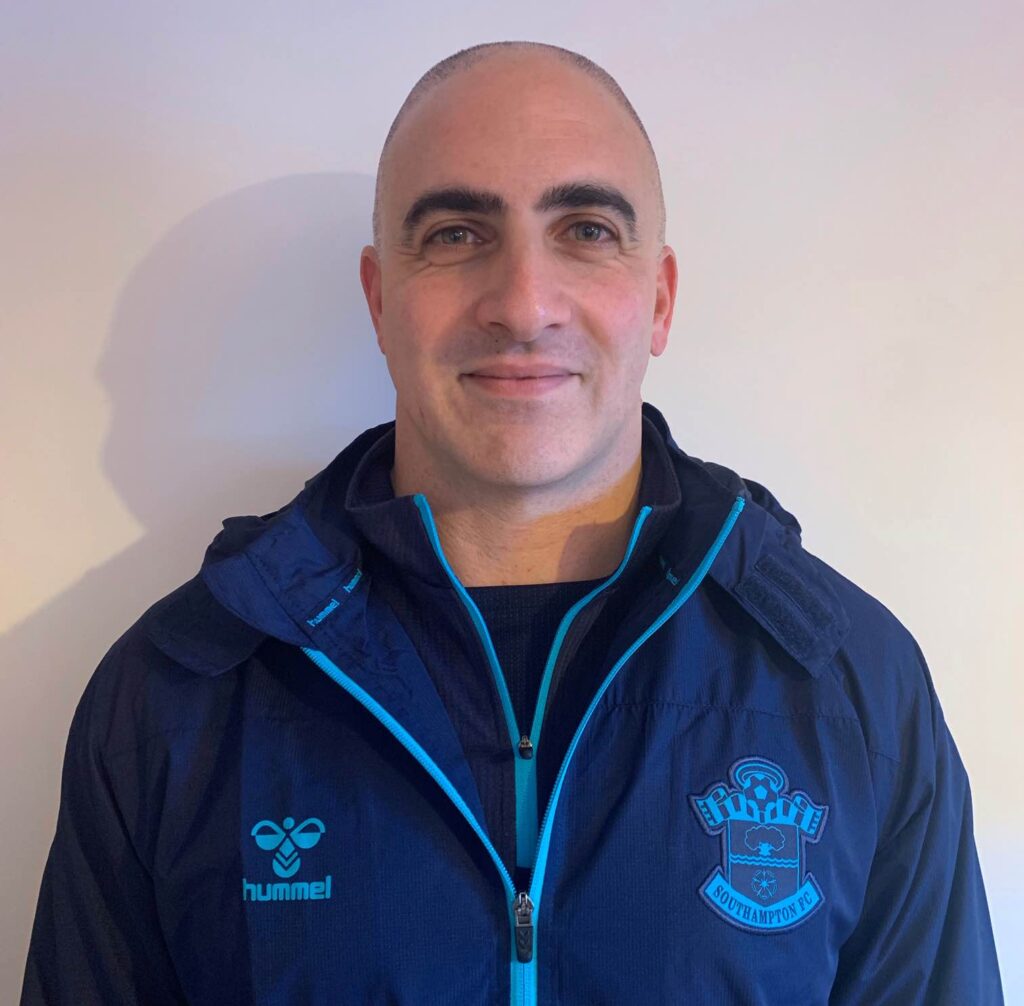
Southampton FC Academy Physiotherapist Tass Amiridis: “Our reputation is world-renowned”

Tass Amiridis

Making the decision to move countries in order to chase your dreams is one that befalls plenty of Australian footballers. However, such a contemplation also ensues for coaches, physiotherapists and sports scientists wishing to be challenged at the highest level of the game.

For Tass Amiridis, it was this exact decision to head overseas in pursuit of a fresh challenge that led him to first taking on a role at historic English side Crewe Alexandra FC, and now as a PDP Academy Physiotherapist for Southampton FC’s B Team.

Having honed his skills as a physiotherapist in the Victorian NPL with the likes of Heidelberg United and Pascoe Vale – and in the A-League with Western United – Tass is part of the impressive legion of Australian physios and sports scientists who are based in football clubs around the world.

Tass sat down with Soccerscene to chat through his experiences in England with Crewe and Southampton, his self-belief in acquiring his dream job overseas, the differences in sports science between Australia and the UK, and what life is like at a Premier League club.

You’ve had an extensive career as a physiotherapist in the Victorian NPL, A-League and now as the Academy Physiotherapist at Southampton FC. Can you tell us a bit about your journey to this point?

Tass Amiridis: My background is also as a chiropractor, so I had worked for NPL teams with that. And then I embarked on becoming a physiotherapist because I wanted to work full-time in football in the Premier League – and this is something that I’ve always wanted to do.

When I went through university initially, I thought I’d maybe be able to do it as a chiropractor but as time went on, I realised that wasn’t the case especially when teams advertise for a physiotherapist. They’re looking for a physio as opposed to a chiro, even though the two fields are similar.

I then went and studied physiotherapy as a mature age graduate, and while I was doing that, I was also working at NPL. I graduated in December of 2019 and started in January with Western United’s first team as one of the physios there. I worked up with them until August when I left in 2020 and came over to England.

In that January to August period, I also worked with Heidelberg United and Pascoe Vale in the NPL, and did some consultancy work for North Sunshine Eagles as well, so I was quite busy during that eight-month period. But I was doing what I wanted to do so it was great.

I also worked in a clinic and had that as a back-up. But because I hadn’t worked in sports with a club for a period of time when I started – even though I was seeing a lot of athletes in the clinic – I just wanted to get my hands on as many players and get across as many things as possible in a short space of time. I felt like I wanted to make up for lost time.

When an opportunity arose, I felt like I could do it and was able to. It also gave me the ability to help other students and physios wanting to come through in similar roles, and give them opportunities to work, and assist, and cover for when I physically couldn’t be there. I felt like I was able to give back to people wanting to come through, and having been where they were, I knew how hard it would be to get a foot in the door, even at the NPL level.
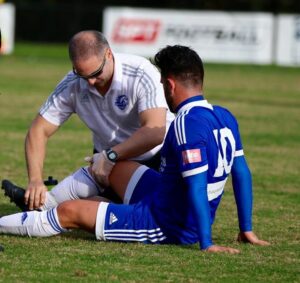
Amiridis

Why was it always an aspiration of yours to conduct your work at a high level in football?

Tass Amiridis: It was wanting to work with sportspeople, having played football myself up until first team level from the academy system, and wanting to work in a full-time environment – you look at the Premier League and it’s the best league in the world. ‘Challenge yourself, strive for your best and see how far you go’ is the way that I’ve always looked at things.

Wanting to work at that top level is not so much for the status of it, but about challenging yourself against the best. Networking with other practitioners, connecting with people and helping athletes at the top level it where I always wanted to be.

I suppose that’s how I carried myself even when I worked in the NPL. My motto has always been whether I’m seeing a nine-year-old in the academy or a first team player, they get the same level of care. All too often I did see, that because they were nine or 10, they were thought about with the mentality of ‘they’re kids, they’ll get back, they’ll be fine, they don’t need anything’. But that’s not the way I see things. That’s why I always had the mentality of treating them like they’re elite players and that’s the standard you set for yourself, and for them as an athlete and as a person.

What was the transition like from the Victorian NPL to the A-League and then to English football?

Tass Amiridis: It was harder than I thought to get work as there’s a few things that you need to do to get qualified over here. Not only registered as a physiotherapist but then also advanced medical training that you need to do to work in the academies and football clubs over here. That process takes time, and I came over in the year of COVID. I didn’t have a job lined up but I knew that I would find work. I was never worried about that in that sense – I was prepared to do anything even if it wasn’t physio work.

I started applying for jobs literally when I was still working in Australia once I had formalised everything and booked flights. I applied for about 40 jobs and got three interviews. I had two of those interviews via zoom when in Cyprus on holiday before heading to the UK and did a second interview face-to-face with Crewe. It all happened relatively quickly once I got the interview but just getting it was tough.

Crewe

What was it like transitioning from Crewe Alexandra to Southampton? How did that come about?

Tass Amiridis: Southampton advertised the role and I applied for it – I know that sounds pretty daft and pretty simple but sometimes roles do get advertised but they’re filled already because they’ve selected someone that they know. It was a three-stage interview process, with a zoom interview, and then a practical interview, and finally a HR zoom interview to finish. I felt good after each interview and felt like I was going to progress. I felt I was what they were looking for and that they were what I was looking for – I was very impressed with the whole process.

The big differences going from one to the other were obviously the facilities. You’ve gone from a category 2 club to a category 1 and obviously Premier League, so the step up was massive. And it’s essentially what I thought it would be. It’s like when you tour other clubs’ facilities and you see that it’s exactly what you thought it would be.

Obviously, the biggest changes were also resources and staff, but the ability to be accountable and be challenged was the big thing. I felt like at Crewe I had lost that towards the end, like I wasn’t getting challenged enough and that the environment wasn’t challenging enough for me. It was just time to move on.

I’m forever indebted to Crewe and they’re a great club and great people to work for, and I’ve still got a lot of close friends and people that I speak to from over there. They’ve had a tough year being relegated but they’ll get back for sure.

At Southampton, what does your day-to-day involve?

Tass Amiridis: Day-to-day we start with a morning meeting and that’s usually with the first team, and we relay our information and updates to them.  We then have our B Team meeting to plan the day and see if any players need any modifications or changes. You have your breakfast and then you’re getting players ready for training and rehab.

When the training session starts, we also have players in the background who are undergoing rehab starting their day. From there your day just bounces around – you could be with your rehab players, running a pitch session and we’re always on radio in case something happens on pitch. It can vary because there’s lots of different moving parts, particularly with the B Team. But the days go super quick and you feel like you’ve done what you need to, but it’s always like ‘wow that flew fast’.

After lunch sometimes the guys will have a second session or a gym session. Typically rehabs will go all day depending on how you’ve periodised it for the week. At the end of the day, you’re planning for the next day and reviewing how things went.

Southampton Academy

How modern are football’s physiotherapy standards when compared to other sports? Do you feel football is a leader in this space?

Tass Amiridis: I think in some instances we are leading and in some instances we’re not. I think sports that are field sports have similar injury profiles of players – hamstring, groin and knee injuries. But it seems to almost go in waves where you have more hamstring injuries and then you might have more groin injuries, or more knee injuries. So it does vary over time.

There’s a lot of good people doing good things in football and they’re world leaders in their field. I think collectively as a group of practitioners and professionals there’s good collaboration between sports, so you’ll often see people from football going over to the States to study and learn from them and vice-versa. I know they do it with AFL sometimes as well.

As physiotherapists from Australia our reputation is world-renowned, and so are sports scientists from Australia. I feel in football generally you probably find your strength and conditioning and your sports science isn’t as big as your other codes, but they do play a significant and important part in the game – especially with the speed of the game, tactics and data measurement changing. I wouldn’t say that we are leaders in everything, but we all learn off each other.

What do you think are the key differences in approaches to physiotherapy and sports science between the Premier League and the A-League?

Tass Amiridis: I was lucky at Western United as I had a fantastic team around me – my line manager Shane Carr was phenomenal as a boss and a person. Daniel Hanna and the sports science guys were all great and we had really good collaboration as a team.

Facilities wise is probably one thing, Western United had not bad facilities considering they were sharing space with Caroline Springs. You had everything you needed essentially and they made use of a gym locally which worked quite well.

The biggest thing I would say – and I wasn’t there long enough to know if things had changed – but during my time there you often didn’t get other companies wanting to give you some CPD around particular products and technology that they might have. Obviously being Premier League, companies want to be affiliated with that, so the exposure to various bits of technology and rehab equipment that you’ve never seen before – because it’s only over here and it’s not a massive market in Australia – is a big difference I’ve noticed.

Sometimes they’re the things that give you that 1-2% difference, because we’re all doing the same thing. Everyone’s squatting and everyone’s deadlifting effectively in the gym but other technologies to improve your hand-eye coordination and your reactive speed is where the cutting-edge stuff comes in. And that’s probably the Premier League level where they just have that in abundance.

Previous ArticleNext Article

Beyond the Pitch: Miyuki Kobayashi on the Real Challenges Facing Japan’s Women’s Game

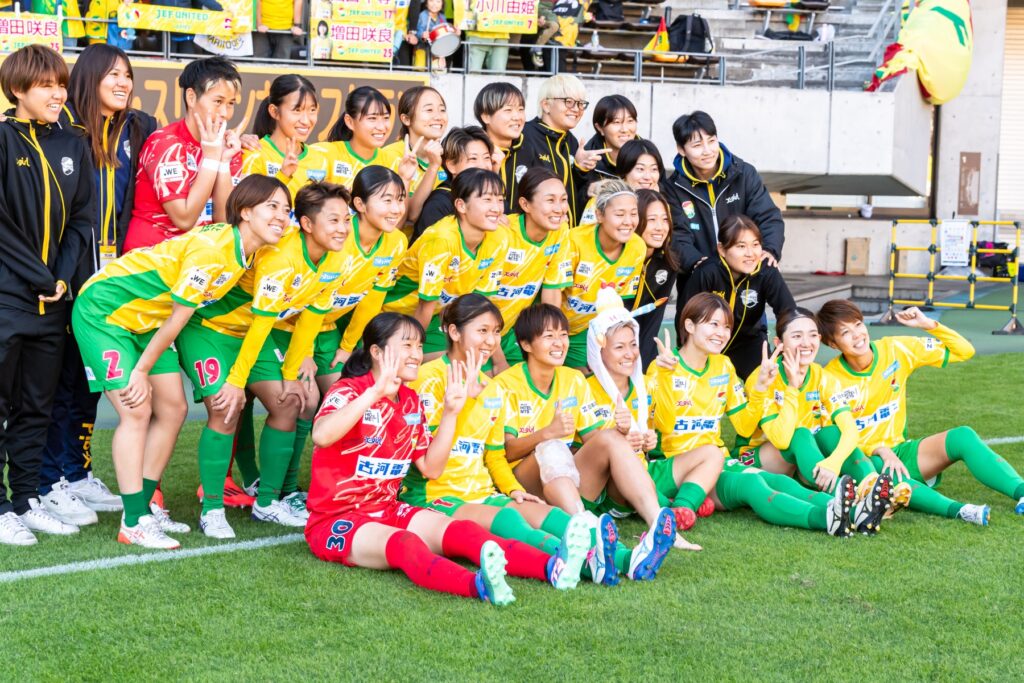
Last week, Soccerscene spoke to pioneer of women’s football in Japan, Miyuki Kobayashi, about the game’s development in Japan and the intersection between sporting and social change in the country.


Talent, quality and recent silverware

After Japan’s recent AFC Women’s Asian Cup victory in the final against Australia, the women’s national team solidified its standing as the No.1 team in Asia.

Throughout the last 15 years, Japan’s women’s national team has grown into a formidable opponent, boasting a World Cup trophy, an Olympic silver medal, as well as three AFC Women’s Asian Cups.

The talent is undeniable. The quality is unwavering. And the team shows no signs of slowing down.

But these victories and trophies on the world stage wouldn’t be possible without the leaders behind the scenes – none more so than Miyuki Kobayashi, former WE League Board Member and current JEF United Ladies Scout and Academy Chief.


Laying the foundations

Kobayashi has led the charge for women’s football in Japan, promoting not only a sport which values success, but one which empowers female footballers across the nation.

“At university, not many girls were playing and we didn’t have an official team. I went to the US and the environment was so different,” Kobayashi explained.

“That opened my eyes – women can play. That’s how I started the women’s soccer league when I came back: to make an environment for girls to play.”

Thus, accessibility and opportunity became driving factors behind Kobayashi’s work, not only for those on the pitch, but for those in the dugout.

“I got involved at the JFA (Japanese Football Association) to promote women’s football. We wanted to create the opportunity for women to be coaches.”

“They are coached by men all the time, so even when the top players leave the football world, they never think to be involved.”

Furthermore, as a former coach of JEF United Ladies Youth and General Manager, Kobayashi was intent on employing as many female coaches as possible. It was not merely a personnel change, but a challenge to widespread social attitudes.

“When I started to employ female coaches, the girls’ parents asked why the coach wasn’t a man. But gradually, we started to make it equal – they didn’t talk about the gender, but about the quality of the coach.”


The mission to empower

In 2011, the same year Japan’s women won the World Cup, the domestic league was yet to become professional. Known as the Nadeshiko League, players would work during the day and train in the evenings.

The transition from an amateur to the current professional league required time, resilience and a change in perspective.

“The sports world in Japan is more traditional – it is dominated by men,” said Kobayashi.

“If you want to make the environment even, or (want) more women to come into the (football) world, you can change the mind of the players.”

Since 2021, the WE League has embodied a sense of growth and positive change for the women’s game. In name and nature, it looks to empower players, coaches and all involved in the industry.

“I was in charge of mission achievement for women’s empowerment. We wanted to educate the players, to inspire girls and women who watch the game.”

However, the drive to empower women in football was not without backlash and challenges.

“Some people don’t like that word: ’empowerment’. It’s too strong for them. Some women really appreciate it, but it’s not easy to change the mind of society through football,” Kobayashi admitted.


Growing and attracting talent

Although WE League clubs are accelerating youth development and expanding pathways across U15, U18 and first team football, Kobayashi acknowledged that the overall product must improve to bring foreign players to Japan and entice homegrown talent to stay.

“Most of the national team players go to Europe or North America. I don’t say it’s a problem, but from a young age, girls who can play in the WE League want to go abroad,” Kobayashi outlined.

Indeed, when looking at the starting XI in last month’s AFC Women’s Asian Cup final, only one player – Hana Takahashi – plays in the WE League.

But the key to attracting domestic and international players to the WE League, is aligning financial investment and industry attitudes.

“The reason why women’s football has developed in European countries is the social thinking – you have to be equal and have the same opportunities as men in football. The Japanese way of thinking, especially in the football world, is not that at all,” Kobayashi continued.

“When I speak to people at Spanish clubs, women’s football is not a charity, but an investment.”

“We have assets. We have good, young players, but we’re exporting them, so we need to import too.”

Indeed, Spain is a perfect example of what can happen when investment becomes intentional, not optional. Back-to-back UEFA Women’s Nations League titles, 90% television viewership increase since 2016, and record-breaking crowd numbers reflect what can happen when the industry aligns in vision and commitment.

Japan has the players to compete against any nation in the world. Purposeful investment, combined with its overall quality of players and style, could transform the WE League into a true, global powerhouse.


The vision for the future

Moving forward, Kobayashi hopes that girls progressing through JEF United’s academies develop confidence and resilience, whether as players or people.

“We want to make the girls – even if they aren’t in JEF United – continue playing football and continue to be leaders,” Kobayashi said.

“Some of them have a dream to be a coach or a leader off the field too, so that’s one of the attributes we want to develop.”

This resilience, reflected by the club’s ‘never give up’ philosophy, is testament to the vision of empowerment championed by Kobayashi across the women’s game.

Even in the face of social obstacles and a lack of financial investment, perseverance and hard work is at the bedrock of women’s football in Japan. It is not just that these values exist, but that they are consistently manifested on and off the pitch, which can show future generations that football is a sport for all – men and women alike.


Final thoughts

There is no limit to what the WE League and the national team can achieve if given the resources it deserves. All the ingredients are there: individual quality, a distinct playing style, football philosophy and ambitions to grow.

By following the example of industry leaders like Kobayashi, women’s football in Japan can hopefully continue to make waves of impact – in the sporting landscape and society as a whole.

How Sunbury United Is Defying the Odds to Keep Grassroots Football Alive

Sunbury United stands as a cornerstone of the local community in Melbourne’s outer northwest. But for all the hard work given by local families and volunteers, the lack of funding continues to prohibit a level of growth which matches both ambition and potential.


Consolidating growth across the club

Soccerscene recently spoke to Club President, Sherridan Long, about the club’s ambitions going forward, the family-oriented culture, and the challenges of operating at grassroots level in Australia.

“It’s gone really well in retention of players from 2025, [and] recruiting some players who have been really keen to come to the club and are really contending over just a small handful of spots,” explained Long.

“That’s been really rewarding to see the popularity of our programme and what the team is trying to develop in terms of culture and performance, to be somewhere that people want to go to.”

Furthermore, Sunbury United’s reputation in the community continues to inspire waves of prospective junior players, who are lining up for squad vacancies.

“We’ve got waitlists for almost every age group,” Long continued.

“We’ve seen a growth in interest coming into the club and girls wanting to play football, but also lots of families wanting to move to Sunbury and join our club, or move from other clubs.”

Sunbury United is ensuring that its culture and matchday atmosphere remains a safe, welcoming place for those who matter most in grassroots football: families, players and volunteers who sustain it every week.

Planning for success on and off the pitch

Despite solidifying a successful culture off the pitch, Sunbury United are refusing to slow down. From the senior men’s team to junior age groups, high-performance remains a key objective.

“Everyone is trying to win leagues – this is something we’ve been working towards for a few years,” said Long.

“Each little milestone across the year means we’re getting closer to a senior men’s promotion or championship – it’s been over ten years since a promotion or championship at the club.”

Although several years have passed since Sunbury United saw success in the form of silverware, the club’s progress in recent seasons may yet lead to a trophy in the very near future.

But reaching this goal requires not only a cohesive effort from players and coaches, but from all stakeholders and participants within the club space. To this end, Sunbury United underwent a strategic plan set-up to align their operations with the ambitions and thoughts of everyone involved.

“We undertook some survey and stakeholder analysis through our members to understand what it is they love about Sunbury United, why they participate, where they see the club going and how they can be a part of that.”

“It was nice to hear exactly what they wanted, what they thought of and what they felt by being part of United. So that shaped our strategic plan in terms of performance, community and working together as a team.”

Ultimately, it is this balance of performance, teamwork and trust in the community which can set clubs up for success. Whether at grassroots or professional level, if everyone involved operates under shared values and vision, the silverware becomes a question of when, not if.


Challenges of the grassroots game

As with any club or organisation in sport, progress inevitably encounters barriers, hiccups and challenges along the way. Facility access, infrastructure quality and investment are common issues not just for Sunbury, but for all in the grassroots space.

“Most places share winter and summer sports so you can only use your space a certain amount of months a year before it turns to the summer sport,” Long outlined.

“It means that there’s no space for juniors to conduct a proper pre-season, so they’re doing it at other reserves in Hume Council and not actually at our home.”

Indeed, we have seen already the lack of investment directed towards the football community. Soccerscene recently looked into The City of Hume’s current budget, which revealed a 10:1 funding imbalance between AFL and the beautiful game. For Sunbury United, and many other clubs, the impact is undeniable.

“We can’t fill the second or third women’s team because there’s no infrastructure to facilitate changing between boys and girls changing room on the flick of a dime. You’re not only balancing access between two squads and gendered safe spaces, but also junior and senior spaces,” Long explained.

“We’re limited by aspirations being within the lines and being within the physical building that we have. Investment in football infrastructure would be a game-changer.”

It’s a common theme in Australia’s grassroots landscape. Clubs with loyal supporters, interested players and a desire to develop, continue to be restricted by the boundaries of their facilities.

It is not about demand. It’s about necessity. If clubs like Sunbury United are to continue working towards player development and squad expansion, external investment is a must-have.


Fighting for the future

As Sunbury United continues to strengthen bonds with the surrounding community and within the club, the foundations are ready for the seasons to come. From youth teams to seniors, the club continues to emphasise connection as a fundamental principle.

“We sit under one umbrella. We’re not two separate committees or two clubs,” Long revealed, expressing the idea behind a connected senior’s and junior’s set-up.

“It’s important to the long-term sustainability and longevity of our club, not just to the performance side, that everyone’s invested and feels a part of something, and that they can be involved.”

One club, one philosophy and one family. Grassroots football will continue to throw its challenges for years to come, but Sunbury are, and will be, more united than ever.

Most Popular Topics

Editor Picks

Send this to a friend