


Central Coast Mariners announce partnership with Star 104.5

Star 104.5

Central Coast Mariners have announced Star 104.5 as their official media partner for the 2022/23 A-League Men’s season.

The commercial radio station, which broadcasts in the Central Coast region, has teamed up with the Mariners in an effort to reach new audiences and to build a deeper brand connection, whilst continuing to make the Mariners an integral part of the Central Coast community.

Throughout the A-League men’s season, Star 104.5 have numerous promotions prepared for the Central Coast community including ‘Rabbit and Gina’s Mini Mariners reporter’ which will see a local fan go behind the scenes and gain unparalleled access to Mariners players and game day experiences.

Central Coast Mariners will also be working hand in hand with Star 104.5 to bring to life extensive community engagement and school projects throughout the year.

Star 104.5’s Commercial Director and Market Lead Paul Moltzen sees this opportunity as the perfect match between two great brands.

“Star 104.5 is proud to be the official media partner with the Central Coast Mariners. The passion, commitment, skills, and desire from the players, coaches, staff and sponsors to ensure that our Central Coast Community is delivered an experience which is family friendly and world class, aligns perfectly with the values of our team,” he said in a statement.

“The season ahead promises to be one where our community will benefit, and we couldn’t be more thrilled with the opportunity to assist in bringing this vision to life.”

Central Coast Mariners CEO Shaun Mielekamp noted his excitement at welcoming Star 104.5 into the Mariners family.

“It is brilliant to be working with Star 104.5. They are really committed to helping us with plenty of activations and engaging with the community base,” he said via press release.

“They have been great friends the whole time so to take it to the next level is really exciting. So, to join our family we are really excited to have them on board.”

The Mariners kick-off their Isuzu Ute A-League Men’s season against local rivals Newcastle Jets in an F3 Derby home opener at Central Coast Stadium next Saturday, October 8.

Previous ArticleNext Article

We should be celebrating Australia’s football exports

When Nestory Irankunda, Lucas Herrington and Alessandro Circati all completed high-profile moves, the headlines understandably focused on the massive transfer fees

Record deals, European giants, Australian talent making noise overseas.

But beneath the excitement lies a much bigger story.

For years, Australian football measured success by the players it could retain and attract. Today, success is increasingly being measured by the players it develops and sells.

That shouldn’t be looked at as a weakness of the domestic game.

It’s one of the A-League’s greatest strengths.

Changing landscape

The reality is, Australian clubs will continue to struggle to compete financially with Europe’s elite.

Trying to retain every emerging star was always going to be an impossible task.

Instead, clubs are embracing a model that has proven to be successful in countries across Europe and in leagues like the MLS in the United States.

Develop talented young players, provide them with first-team opportunities and a platform to showcase their talent.

Last year the A-League ranked in the top five for percentage of minutes by players aged 21 or younger across 55 leagues around the world.

These three recent transfers are not an isolated story, they are part of a broader trend.

European clubs are watching Australian football as closely as they ever have. The talent is there.

The World Cup effect

The Socceroos’ performance on the international stage have played a significant role in changing perceptions.

Australia is no longer viewed simply as a physical football nation. Increasingly, Australia is producing technically capable players who can adapt to the demands of Europe’s top leagues.

This exposure has provided players with a stronger opportunity to impress and demonstrate their ability.

The result is a transfer market where Australian players are genuine investments and viewed as integral pieces to a club’s future.

More than transfer fees

The financial benefit of player sales is obvious.

Transfer revenue provides clubs with opportunities to reinvest in academies, facilities, coaching and football operations.

But the impact extends much further.

Every Australian success story abroad raises the profile and trust of the domestic development system.

It encourages and gives European clubs greater confidence to scout Australian football more regularly and more intently.

It creates stronger relationships between local clubs and overseas markets and perhaps most importantly, it gives the next generation a clear pathway to elite football.

The next challenge

Evidently, producing talented players is not Australia’s most pressing challenge

Producing them consistently will be the real measure of how Australian football has progressed.

That requires continued investment in academies, coaching, facilities and national competitions.

Nestory Irankunda’s transfer to Sporting CP will reportedly fetch his junior club Adelaide Croatia Raiders approximately $220,000 under Fifa’s solidarity mechanism.

Fees like this are a reminder of the importance of well-developed pathways and a clear indication of how valuable strong investment in grassroots football can be.

Opportunity, not loss

Whenever another young Australian leaves for Europe, there is often discussion about what the A-League has lost.

Perhaps the better question is what Australian football has gained.

Every major transfer signals growing confidence in the country’s development pathway.

Every overseas success makes it easier for the next player to follow.

While it would be incredible to watch Nestory Irankunda play in the A-League every week, we should feel proud watching him play in the UEFA Champions League this year.

His journey is a reflection of the A-League’s success in giving young Australian footballers the opportunity and platform to reach that level.

Australia is unlikely to ever compete with Europe’s biggest leagues for salaries and prestige.

But it doesn’t need to.

If the game continues investing in youth development and embraces its position as one of the region’s leading producers of football talent, exporting player’s won’t be an indication of decline.

It will be a platform for fans to watch the next generation of world-class Socceroos playing right here on our own shores.


Beyond Old Trafford: How Manchester United’s new stadium could reshape an entire district

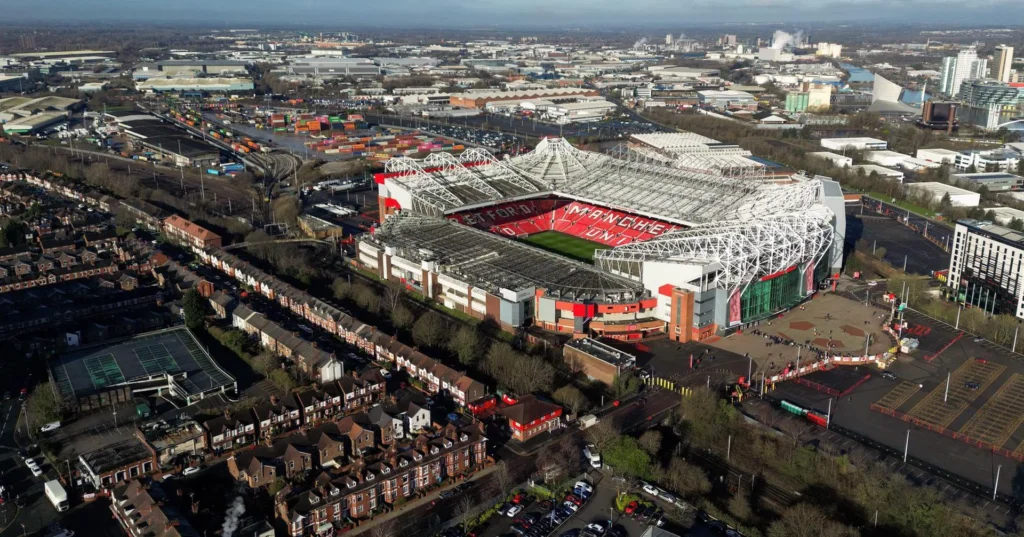
Manchester United’s proposed new 100,000-seat stadium is more than a replacement for Old Trafford.

It’s the centrepiece of one of the most ambitious urban regeneration projects ever planned by a football club.

Unveiled in March by architects Foster + Partners, the concept would see a new stadium built adjacent to Old Trafford, just 350 metres from the existing ground.

Supported by Trafford Council, the Greater Manchester Combined Authority and Old Trafford Regeneration Mayoral Development Corporation the proposed development aims to transform the area surrounding the stadium into a thriving mixed-use precinct featuring housing, commercial space, public transport improvements and new public amenities.

While the stadium dominated headlines, the broader vision is about much more than just football.

Once complete, the new venue would become the largest club football stadium in the UK, increasing capacity from around 74,000 to 100,000 spectators.


More than just a stadium

However, the stadium is only one piece of a much larger plan.

Foster + Partners vision includes new homes, offices, hotels, retail and hospitality spaces, green public areas and improved pedestrian links.

They believe this “mixed-use” destination will attract visitors throughout the year and create a “vibrant destination” for tourists and visitors from across the world.

The proposal also places a strong emphasis on sustainability, with plans for a walkable precinct supported by public transport, rainwater harvesting and renewable energy technologies integrated into the stadium’s distinctive canopy design.


A major economic opportunity

The broader regeneration has been positioned as a major economic opportunity for Greater Manchester.

An independent study conducted by Oxford Economics found that the stadium and regeneration project could contribute approximately $15 billion to the UK economy.

In addition, the project would also support around 92,000 jobs while creating more than 17,000 new homes and attracting an additional 1.8 million visitors yearly.

Those figures remain projections rather than guaranteed outcomes, but they have become central to the club’s case for the redevelopment.


Connecting United to a Wider European Trend

A key component of the proposal is improving transport connections around Old Trafford

The British Prime Minister Andy Burnham described the project as significant opportunity for the region, with investment in rail, Metrolink and surrounding infrastructure viewed as essential to unlocking the wider regeneration potential.

The plan also includes greater pedestrian accessibility, to integrate the stadium district with surrounding communities.

Manchester United’s proposal reflects a broader trend across Europe football.

Stadium developments are increasingly viewed as catalysts for urban renewal and economic development, rather than standalone sporting venues.

Projects such as Tottenham Hotspur Stadium, Everton’s new waterfront home and Real Madrid’s redevelopment of the Bernabeu have demonstrated how modern stadiums can generate revenue through hospitality, entertainment and commercial activity beyond football.


Transforming Old Trafford

Despite support for the proposal, significant hurdles remain before construction can begin.

Funding arrangements, planning approvals and major infrastructure upgrades will all need to be finalised before construction can begin.

If delivered, the project would represent one of the largest football-led regeneration projects ever undertaken in the UK.

The project would transform not only where Manchester United plays, but how the wider Old Trafford district lives, works and grows.

Most Popular Topics

Editor Picks

Send this to a friend