

Following the return of the A-League Men’s season, the Australian Professional Leagues – the sporting body which represents and administers the A-Leagues – announced a seismic partnership with Destination NSW (DNSW) which will see Sydney become a hub for the A-League Men’s and Women’s Grand Finals.
Beginning in this campaign, the Isuzu UTE A-League and Liberty A-League Grand Finals across the next three seasons will be held in Sydney as part of a lucrative partnership with Destination NSW.
The decision – which has been labelled a ‘bold move’ by APL CEO Danny Townsend – has confounded Australian football fans, leaving supporters, players, coaches, and administrators alike apoplectic at the move. A-Leagues Socceroos and Matildas stars Craig Goodwin and Remy Siemsen – both of whom appeared in the APL’s promotional video release accompanying the announcement – have distanced themselves from their appearance in the video, inferring their words were taken out of context without prior notice.
Understandably, the partnership has been a catalyst for league-wide immediate backlash, with Channel 10 and Paramount+ commentator Simon Hill calling it a ‘misreading of the room’ via Twitter. Club owners and administrators were similarly left perplexed as they were seemingly left out of the final decision to announce the partnership, with Perth Glory owner Tony Sage confirming that clubs were meant to vote on the Grand Final decision this Thursday at a shareholder’s meeting via 6PR Perth and Brisbane Roar Executive Chairman Christopher Fong stating: “We were not happy with the recommendation, voiced this position, and were surprised by today’s announcement and had no representatives present in Sydney,” in an email response to a fan.

The message and stance being amplified by the APL across its announcements and media arm KEEPUP has been made clear, with Danny Townsend relaying the necessity to “increase tradition into our game” and to bring the spotlight directly onto football to catch the much-needed attention of the mainstream media and casual sporting fans.
Speaking with Soccerscene following the joint announcement between the APL and Destination NSW, Townsend identified what APL believes to be the holistic benefits of the partnership for football.
“Anytime you can put your event on the national calendar and have the rest of the country stand up and watch is an important moment. It’s challenging for us to do that when we have a limited run-in through the existing model, so by really focusing in on that first week in June for the Men and in April for the Women’s competition we’re really able to drive a lot of the commercial outcomes that will entice fan over and put on a proper event. When you don’t know where it’s going to be six days out it’s hard to plan anything, let alone just try to get people into the stadium itself,” Towsend explained.
“I think you can probably read between the lines in terms of what’s happened before in Grand Final week that we’re working on at the moment. And like I said, we want to make sure that if you’re a football fan of any club you want to be in Sydney for that weekend, and if your team’s in it, it’s a bonus. But I think certainly when we announce those other events during the week of the Grand Finals I think people will start to get a picture for why are we doing this and really get behind. Because I hope that, as that dust settles, football fans are able to really get behind it because we want to show the rest of the Australian sporting landscape that we’re real.”
The partnership, which Townsend confirmed stems from the NSW Government’s willingness to host the Grand Final between Sydney FC and Melbourne City during the COVID-19 affected 2019-2020 season, is said to have been developed over a 12-month process. The importance of fixture clarity, which was undeniably detrimental to the A-Leagues across three COVID-19 affected seasons, has become a priority for the APL after seeing their plans forcibly amended time and time again by the pandemic.
Minister for Sport Alister Henskens, who was present at the APL’s announcement at CommBank Stadium, identified the projected flow-on effects of tourism in Sydney due to the Grand Final hosting with DNSW estimating the arrival of $26 million in visitor expenditure over the next 3 years of Grand Final weeks in Sydney.
And with the Men’s Grand Final week set to take place in early June just ahead of the start of the 2023 Women’s World Cup in Australia, the APL’s rationale is that, for at least for 2023, it organically builds a festival of football atmosphere in Sydney to bring attention to the sport. However, what about beyond 2023?

Making NSW the central hub for Australian football’s showpiece event may bring in a new wave of supporters in 2023, but in doing so it will force out football adherents who have endured enough alienation and broken promises. Attracting away fans, let alone neutrals with no impetus to support either side, is an unlikelihood even in the hypothetical where football is at its healthiest here.
Admittedly it is a ‘bold move’, but it is not the bold move anyone was asking for. Rather, it is steeped in an innumerable number of ill-purposed intentions that are contradictory to football’s current needs. It begs the question: why make such a negatory decision at a time when football is rebuilding?
The partnership has sparked greater questioning and confusion than it has euphoria and satisfaction as the APL have attempted to justify it with promises of building football culture and tradition. The reality is however that the APL are in dire need of a cash injection for football here. And as much as it may assist the clubs on and off the pitch, it leaves fans – the soul of the league – forced into a decision they should not have to make.
Accommodation offers have been secured through the league’s Official Hotel Partner, IHG, and will serve to incentivise fans looking to travel to support their team – except these will be offered well in advance when the two Grand Final teams are not known. To add to this, the price of travel and accommodation (regardless of any discount) will be steep for fans. And for the average working-class family, this is unfeasible. Domestic flights are currently exorbitant and aren’t likely to change for some time as airlines look to recoup their losses from the impact of the COVID-19 pandemic. Plus, cost of living prices makes the proposition unrealistic and almost unfathomable for many fans who want to support their club.
Furthermore, the damage this does to the A-League Women’s competition – where travelling fans are less commonplace than in the Men’s competition – is potentially enormous. There are greater challenges at hand that need solving in the A-League Women’s competition before this, with a clear absence of strategic thinking going into the promotion of the Women’s top flight here proving the priority for the APL is a short-term cash injection over what is in the best interests of fans, players, and coaches.
And contrary to aforementioned statements from the likes of Perth Glory and Brisbane Roar, Townsend reiterated that the game’s stakeholders – namely club owners and fan groups – were consulted as part of a 12-month process to coordinate this deal.
“We did of course. APL is owned by the clubs so of course we were consulting with the clubs along the way. A lot of the backlash we’re hearing is very much consistent with that feedback and we knew that was coming. But again, it’s about having the conviction to make that decision, stand by it, and really make the most of it,” he said.
“We hope that once the emotion fades away that people realise that this is going to be an amazing festival and that all eyes across Australia are going to be on Sydney city. And we want as many people from around the country, whether their teams are playing in the Grand Final or not – to want to be in Sydney because of the events that are around it which are there to celebrate football.”
Despite fan reaction lending heavily to the exact opposite, Townsend claims that fans were also not shut out of the consultation process.
“There was – we had some focus groups setup along the way to check-in and the feedback we got was consistent with the feedback we got today. But I think what they enabled us to do is spend more time with them and get them to better understand the rationale. And I think in the fullness of time, the emotion of it all I think fades away and I’d really hope that fans can get behind it and show the rest of the sporting landscape that there’s enough people in Australia who love football and want to travel and support the game.”
The reaction across the league says otherwise. And the inherent problem with the APL digging its own contradictory hole is that we are invariably pulled into it with them as fans wanting the league to thrive. Even if fans and club owners were consulted, they certainly were not heard.
APL’s decisions thus far as a governing body unbundling from previous administrators Football Federation Australia (now Football Australia) have largely been in the A-Leagues’ best interests. The challenges they have faced were almost insurmountable at times. Reeling from the effects of COVID-19, dwindling crowd numbers, and limited funding, all the while operating at the whirlwind pace of a start-up where every hand on deck is dedicated to steadying the ship in the day-to-day chaos of transitioning from the FFA era to new horizons. It’s understandable then why they have made certain decisions in the interest of raising capital and expanding the potential for investment opportunities – namely partnering with American private equity firm Silver Lake to receive a substantial cash injection which has helped launch the indeterminately successful social media strategy.
This however, is the type of risk that feels significantly out-of-touch with the APL’s surroundings.
The argument is often thrown football’s way that the A-Leagues’ finals series feels more aligned with the NRL and AFL than with football’s traditional method of crowning the league champion (points accumulated). Football’s point of difference in this regard has always been that the A-Leagues Premiers earn the right to host the Grand Final, and now this has been destroyed. Even if we’re uncertain as football fans about the place of a finals series within our identity as a game, we cannot deny the scenes we have been afforded by Grand Finals.
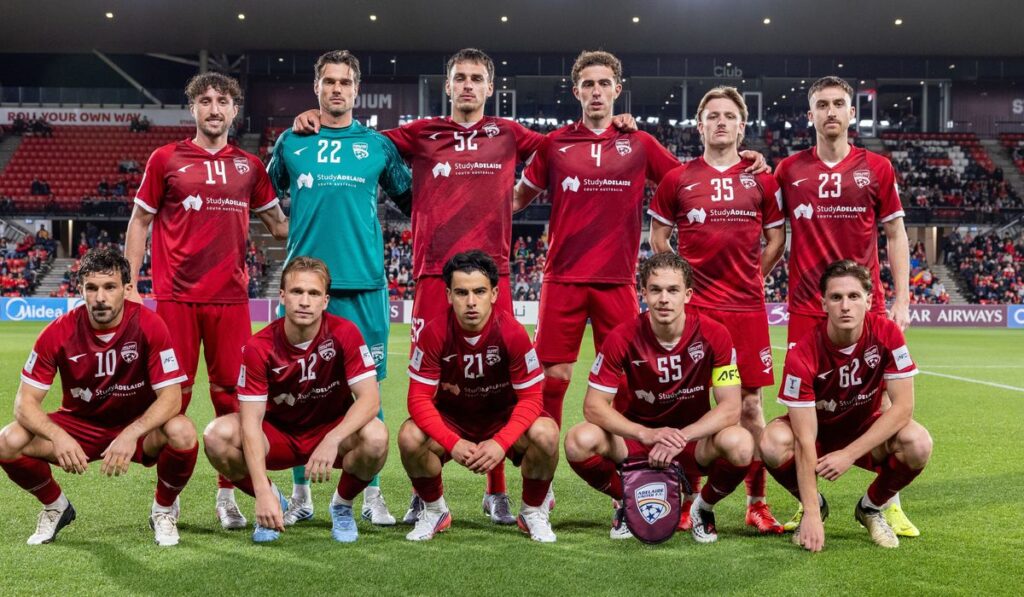
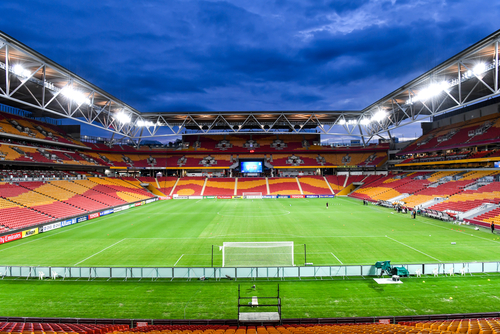
Adelaide United fans will always be able to regale future supporters with stories of their side’s inimitable last place to Championship-winning 2015-16 season and the sea of red accompanying it at Adelaide Oval. Loyal Roar fans will always have their back-to-back triumphs at Suncorp Stadium.
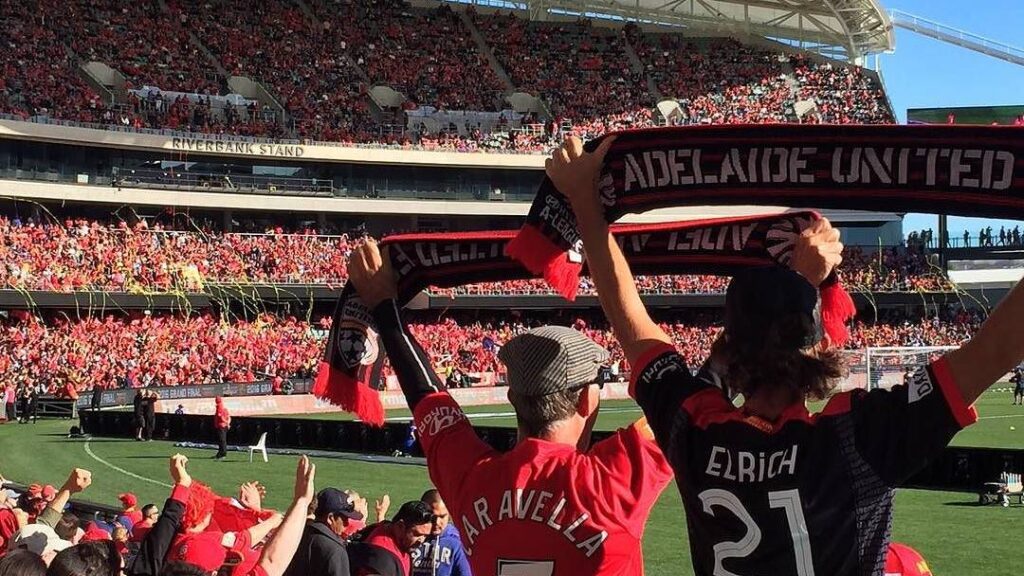
The passion of fans is what drives this league, and the tremendous, inescapable highs and lows of football fandom are what translate to lifelong fandom. Fans in Australia will forever be able to pass down memories of their experiences in a grand final atmosphere, thus allowing new generations of fans to forge a love for and an identity around the very same club. To deprive them of this is devastating, especially when it is spun with a tone of misguided optimism.
How does one develop football culture without the fans? In the very possible scenario where two non-NSW teams earn their spot in the Grand Final (and therefore the right to host it) and are forced to travel to Sydney, how can we expect to see Allianz, Accor or CommBank sell out? The reality is that we are currently not at a stage where rusted-on and casual fans alike will willingly travel to support their teams. Building football culture stems from embracing our uniqueness as a game, not from attempting to replicate what the NRL and AFL do.
Melbourne Victory’s Original Style Melbourne (OSM) and Melbourne City’s City Terrace active support groups have committed to departing this Saturday’s Melbourne Derby from the 20th minute onward and have encouraged supporters at AAMI Park to do the same. The fact that the APL would potentially be willing to see a showpiece event exhibiting the overwhelming strengths, points of difference, and unique identifiers within the A-Leagues become a platform for protest against their own decision instead of an opportunity for celebration is insulting to fans, players, coaches, and anyone with a vested interest in the A-Leagues.
It’s difficult not to get caught up in our faults as a game here, but the reality is football in Australia feels perennially destined to repeat the mistakes of the past. The United States’ Major League Soccer (MLS) similarly implemented the same concept from 1996 to 2012 which saw their equivalent Grand Final match-up MLS Cup hosted at a predetermined neutral venue for several years. However, this idea was shifted to allow the team who finishes highest in the regular season to earn the right to host a Grand Final. And whilst at-home viewership numbers have remained steady, MLS Cup has broken records for attendances in the league and has served as a dispay of the massive financial investment into football in America.
Whether the APL looks to backtrack or stay true to their word, the damage done will take time to mend, and for many fans this will be the final straw.