
Northern NSW Football locks in new CEO and Board Chair for 2023

Northern NSW AGM

Northern NSW Football confirmed two changes to their organisation, with a new Chief Executive Officer (CEO) and Chair of their Board to kick-start 2023.

The first of their announcements came when they named Mike Parsons as the Chair of the Northern NSW Football Board, as part of their Annual General Meeting in December.

Parsons arrives with plenty of experience, having spent 15 years at Football Mid North Coast as Chairman of their Board before joining Northern NSW Football.

Joining Parsons is Mark Trenter (Deputy Chair), Lisa Evans, Lauren Edwards, Paul Sandilands and David Willoughby.

“We wish to thank the members of Northern NSW Football for their vote of confidence,” Parsons said via press release.

The new-look Northern NSW Football Board will come together to commence planning for season 2023, future structure and direction of football within northern NSW.

“At this stage it is business as usual, we have excellent staff within Northern NSW Football and much of the planning for 2023 is complete,” Parsons added in his statement.

Towards the end of last month, Northern NSW Football revealed Peter Haynes as their interim CEO.

Following the departure of former CEO David Eland, Haynes has filled the shoes of leading the state federation.

Haynes is well qualified having served as NNSWF’s Head of Football Development for the last four years following a 10-year stint as NNSWF’s Community Football Manager.

Haynes has directed NNSWF’s Community Football and Player Development functions towards achieving the governing body’s strategic goals and priorities.

“NNSWF has obviously gone through a period of change so it is now about steadying the ship until a permanent appointment is made,” he said via press release.

“I am extremely proud to lead the organisation while adhering to its values and delivering what is best for football. There are huge opportunities on the horizon so it is about maximising that time between now and the new season.”

Among their priorities for the new year, Northern NSW will plan and deliver solutions for grassroots, premier football and development pathways.

A dynamic NPL structure and emphasis on junior development programs will be key for the region to grow further.


Previous ArticleNext Article

Project ACL: The initiative leading the way on injury research

Launched in 2024, the research project recently welcomed two US-based organisations: the National Women’s Soccer League Players Association (NWSLPA) and National Women’s Soccer League (NWSL).


About Project ACL

Led by FIFPRO, PFA England, Nike and Leeds Beckett University, Project ACL aims to research ACL injuries and understand more about multifactorial risk factors.

After piloting in England’s Women’s Super League (WSL), Project ACL will expand to the NWSL in the US, reflecting the global importance of the project’s research and outcome.

“We are incredibly excited to bring the NWSLPA and NWSL to Project ACL,” said Director of Women’s Football at FIFPRO, Dr. Alex Culvin, via official press release.

“Overall, we believe that player-centricity and collaboration with key stakeholders are central to establishing meaningful change in the soccer ecosystem and that players, competition organisers and stakeholdersaround the world will benefit from Project ACL’s outputs and outcomes.”

Interviews with over 30 players and team surveys across all 12 WSL clubs provided the project’s research team with valuable information about current prevention strategies and available resources.

Furthermore, the project tracks player workload and busy schedule periods during the season through the FIFPRO Player Workload Monitoring tool, therefore gaining insights into the link between scheduling and injury risks.


Looking to the data

Project ACL’s partnerships with the WSL – and now the NWSL – are immensely valuable for the future of player welfare in women’s football.

Although ACL injuries affect both male and female athletes, they are twice as likely to occur in women than men. However, according to the NWSL, as little as 8% of sports science research focuses on female athletes.

In Australia, several CommBank Matildas suffered ACL injuries in recent years: Sam Kerr was sidelined from January 2024 to September 2025, Ellie Carpenter for 8 months after suffering the injury while playing for Olympique Lyonnais, and Holly McNamara came back from three ACL’s aged 15, 18 and 20.

And this is just the tip of the iceberg. The 2025/26 ALW season saw several ACL incidents, including four in just two weeks.


Research, prevent, protect

Injury prevention and research are vital to sport – whether professional or amateur.

But when the numbers are so shocking – and incidents are so common – governing bodies must remember that player welfare comes above all else. Research can inform prevention strategies. Prevention means players can enjoy the game they love.

The work of Project ACL, continuing until 2027, will hopefully protect countless players across women’s football from suffering long-term or recurring injuries.

South Canberra FC Breaks the Mold: Equity-Driven Model Earns ‘Club Changer’ Honour

South Canberra Football Club has been named Club Changer of the Month for April, in a recognition that reflects a broader shift across Australian football toward rewarding clubs that are actively dismantling the structural barriers limiting women’s access to the game.

The AFC Women’s Asian Cup has just delivered record crowds and unprecedented visibility for women’s football in Australia, and the Club Changer program is now asking what comes next. Its decision to name South Canberra Football Club as Club Changer of the Month for April signals a clear shift in how the program defines contribution: away from participation numbers alone, and toward the equity frameworks that determine whether women stay in the game once they arrive.

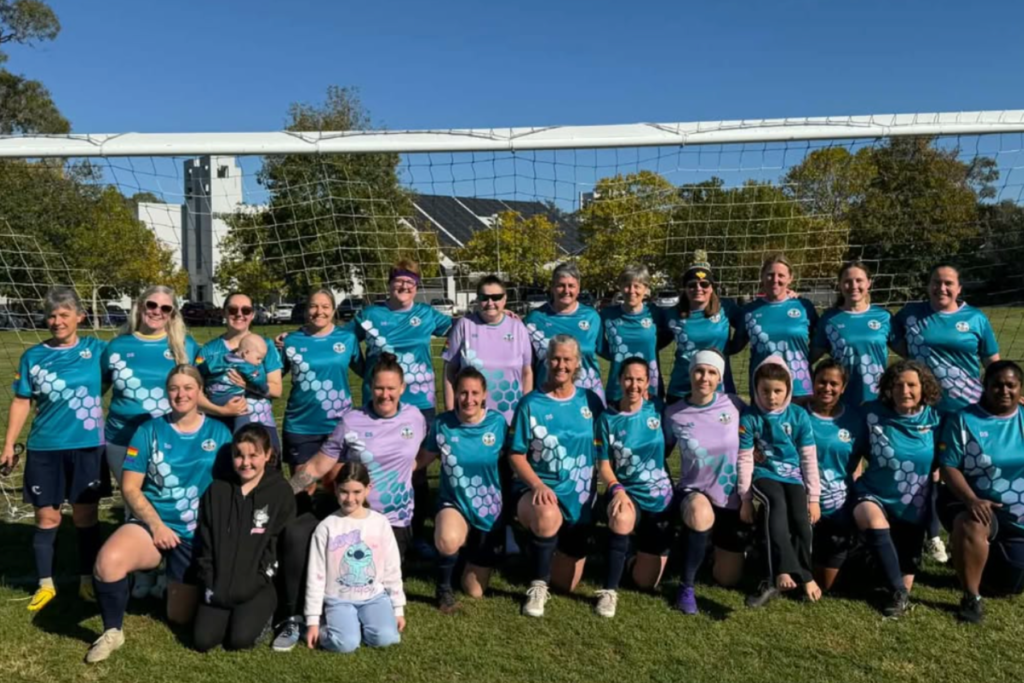
South Canberra FC built that framework from the ground up. Established in 2021, the club set out to give women and female-identifying players a safe, inclusive environment to play football at any level. It runs entirely on volunteers, operates as a not-for-profit, and is governed by an all-female committee with 13 of its 14 coaches identifying as female.


Building the infrastructure of inclusion

In 2026, the club secured grant funding and put it to work immediately. Two coaches are completing their C Licence qualification, and ten coaches, players and community members have undertaken the Foundations of Football course, which directly tackles the cost and accessibility barriers that exclude women out of coaching pathways.

The club also commissioned a female-specific strength and conditioning program with sports physiotherapists ahead of the 2026 season, targeting injury prevention and explicitly supporting players returning after childbirth.

SCFC’s leadership team draws from LGBTIQ+ individuals, First Nations people and veterans, strengthening the club’s connection to the communities it was built to represent.

The Club Changer program is backing clubs that do this work- clubs that treat equity as infrastructure rather than aspiration. At a moment when Australian football is under pressure to turn its biggest-ever surge of women’s interest into something lasting, SCFC’s model offers a clear answer to the question of how.

Most Popular Topics

Editor Picks

Send this to a friend