Soccerscene the only online publication dedicated to the Australian and international football industry. It serves as a practical guide for those involved in the business of running a football club and bringing readers up-to-date research and development across all football matters providing insights, discussion and information related to topics that matter.
How grass roots clubs can better manage their sporting apparel, and it works.
Appearance is everything for sporting clubs, and managing your kit goes a long way to how you present yourself as a team.
Not only that, but saving money on energy consumption is something that they should consider.
Munters are a global leader in climate control, and its technology allows clubs to dry their kit in a more efficient manner.
Typically, it can be costly to use heating and tumble drying because only a few items can be put in a single load and if done incorrectly, could damage clothing.
Munters aim to increases a kit’s durability by not wearing out as quickly, by using proven desiccant dehumidification to dry them in fast time.
The Munters technology can be easily placed in a room to protect buildings from moisture damage and keeps the kit in tact.
This is a solution that has been used around the world in sporting precincts, with energy savings of up to 75 per cent.
South Melbourne versus Melbourne Victory is more than a long-awaited rivalry. It is an opportunity to unite Australian football around its history – and its future.
On 10 October, South Melbourne FC and Melbourne Victory will walk onto AAMI Park for an Australia Cup Final that represents far more than a trophy.
It brings together two proud clubs from different chapters of Australian football’s history.
One is among the most successful clubs of the former National Soccer League era. The other has become one of the defining clubs of the A-League era.
The atmosphere will be extraordinary. The rivalry will be genuine. The football will be fiercely contested.
Such is the anticipation surrounding the match that it also has genuine potential to break the modern Australia Cup Final attendance record of 18,751, set at the same venue in 2016.
That would represent much more than a number on a crowd sheet. A record attendance would send a powerful message about the public appetite for meaningful fixtures, authentic rivalries and competitions that connect every level of Australian football.
But this final can – and should – mean even more.
It presents Australian football with an opportunity to bring its past, present and future together.
It is an opportunity to dismantle the tired and damaging distinction between “old soccer” and “new football”.
Most importantly, it can demonstrate what becomes possible when the entire game is connected.
We Cannot Build the Future by Discarding the Past
Australian football needed reform at the beginning of this century.
The game required stronger governance, greater professionalism, better commercial structures and a national competition capable of reaching new audiences.
The establishment of the A-League in 2005 opened an important new chapter. It created clubs, rivalries and major occasions that have contributed enormously to the development of the professional game.
But somewhere during that transformation, the idea took hold that Australian football could only move forward by separating itself from much of what had come before it.
The labels “old soccer” and “new football” became a fault line.
Too many clubs, supporters, volunteers and communities that had carried the game for decades were made to feel that their history was no longer welcome at the top table.
In creating something new, the game sometimes appeared determined to dispense with everything associated with its past.
That included the clubs and development pathways that identified, nurtured and produced many members of Australia’s Golden Generation.
Australian football should never be embarrassed by that history.
It is one of our game’s greatest competitive advantages.
Traditional clubs were built by migrant communities that brought their passion, culture and football knowledge to Australia.
They established clubs, built grounds, developed players, created lifelong supporters and sustained the game when it received little mainstream attention or investment.
These communities did not merely support Australian football.
They built it.
Recognising that contribution does not require us to reject the progress made during the A-League era. Both can be true.
The game needed to evolve, but it did not need to marginalise its foundations to do so.
This Is Not “Old” Against “New”
It would be easy to promote South Melbourne against Melbourne Victory as “old soccer” meeting “new football”.
It might create a convenient headline, but it would miss the greater significance of the occasion – and perpetuate a division the game must leave behind.
South Melbourne is not a relic from Australian football’s past.
It is a living and ambitious club with generations of supporters, a distinguished record of national success and an enduring role in developing players and representing its community.
Melbourne Victory is not separate from Australian football’s history.
It is another important chapter in it – a club that has built an enormous following, delivered some of the country’s most memorable sporting occasions and demonstrated the scale that professional football can achieve in Australia.
These clubs were created in different eras, but they belong to the same game.
The future of Australian football is neither “old” nor “new”.
It is one football.
Supporters Want a Connected Game
This final arrives at a time when the appetite for a properly connected football pyramid is becoming impossible to ignore.
Supporters want clubs to have something meaningful to aspire to.
They want success on the field to create opportunity.
They want to see a genuine connection between grassroots football, state competitions, traditional clubs, national competitions and the professional game.
A connected pyramid is about more than promotion and relegation.
It is about unlocking aspiration, investment, relevance and growth throughout the sport.
When clubs can see a pathway forward, they invest in facilities, coaching, academies, commercial capability and community engagement.
When supporters believe their club’s journey can lead somewhere, they become more deeply invested.
When local rivalries carry national consequences, new audiences, media attention and commercial partners follow.
That energy already exists throughout Australian football.
Our opportunity is to harness it.
The Platforms Are Demonstrating What Is Possible
The Australia Cup has repeatedly shown what can happen when clubs from every level are given the opportunity to compete on a national stage.
It connects the grassroots and professional game. It creates genuine jeopardy. It brings national attention to clubs, grounds and communities that rarely receive that level of exposure.
It also produces compelling stories that cannot be manufactured through marketing alone.
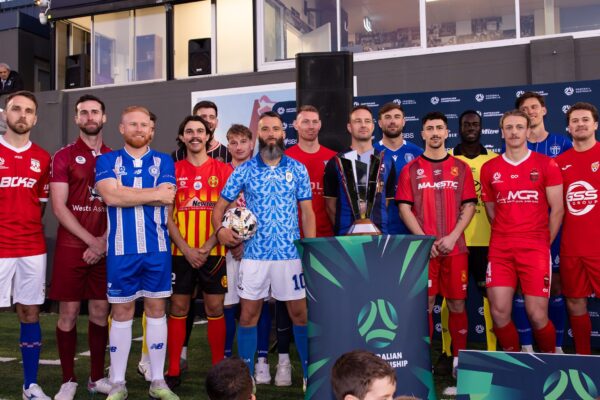
The Australian Championship represents another important step. It gives some of the country’s most historic and ambitious clubs a new national platform and creates a stronger bridge between state-based football and the professional game.
Neither competition should be viewed in isolation.
Together, the Australia Cup and Australian Championship can help reconnect the game, restore national relevance to important clubs and build momentum towards a more integrated competition structure.
They also demonstrate something commercially significant.
These communities are not simply part of football’s history. They are active audiences with passion, identity, purchasing power and an enduring commitment to their clubs.
When those communities are respected and properly engaged, they respond.
That creates value for broadcasters, commercial partners, governments and the wider professional game.
A Perspective Spanning Different Eras
My perspective has been shaped by experiencing Australian football across different clubs, competitions and eras.
I served as CEO of South Melbourne Soccer Club during one of the most successful periods in its history.
After leaving in 1997, I returned 12 months later for the 1998/99 season, when South secured its second consecutive national championship under Ange Postecoglou.
Nearly two decades later, in 2015, I returned to the professional game as CEO of Perth Glory in the A-League.
I subsequently joined Football Australia as a senior executive, where I played a key role in strengthening the Australia Cup as a national platform and developing the Australian Championship.
That journey has reinforced my belief that Australian football’s future will not be secured by choosing one part of its history over another. It will be secured by bringing the best of every era together.
The game will fulfil its potential when it connects its professional clubs, traditional clubs, grassroots participants, diverse communities and national teams within a coherent and ambitious system.
This is not about returning to the past.
It is about carrying the best of our history into a stronger future.
South Melbourne Soccer Club newsletter, 1997. After stepping down as CEO, Peter Filopoulos returned 12 months later for the club’s 1998/99 national championship season.
More Than a Final
On 10 October, AAMI Park – the spiritual home of football in Melbourne—should become the stage for more than an Australia Cup Final.
It should be a celebration of the people and communities that built the game, the progress achieved during the professional era and the possibilities presented by a connected future.
South Melbourne supporters should be proud of what their club has contributed to Australian football and excited about what may lie ahead.
Melbourne Victory supporters should celebrate what their club has built and the role it continues to play in growing the professional game.
Every Australian football supporter should be able to look at this occasion and see something bigger than a contest between two clubs or two eras.
This final is not “old soccer” against “new football”.
It is Australian football – proud of its entire history, united around its future and ready to unlock its true potential.
There is something undeniably exciting about Brazil coming to Australia. The five-time World Cup winners will face the Socceroos twice in Queensland from Friday, with Townsville and Brisbane set to host the blockbuster fixtures.
For Australian football, these are the kind of games that should be anticipated, celebrated and capture the public’s attention. But they also raise questions: how much should Australian football pay to bring the world’s biggest nations here, and when does the bill become too big?
The cost of bringing the big names
Australia has always paid up to bring big names down under. Last week’s NFL game in Melbourne, at a cost of between $10 and 15 million dollars to the Victorian Government, is just the latest example. It could cost the same amount to bring Brazil to Queensland. A report in The Sydney Morning Herald last year revealed Brazil was reportedly seeking around$7.5 million per match to play in Australia. The fee is in line with other major international events; Western Australia reportedly faced a bill of around$12 million in taxpayer funding for the recent Perth Italian Football Festival. I’m worried Football Australia won’t get return on investment to make this particular event worthwhile. The enormous fee to bring Brazil to Australia can’t immediately be justified as an investment in our footballing future. Instead, Football Queensland and the state government could have put these funds into grassroots facilities. Part of Football Queensland’s scrapped state headquarters investment plan was to spend $8.5 million to refurbish fields, lights, drains and irrigation at Mappas and Meakin parks. Instead of these plans to invest in the state’s youth players and academies, money has been spent on two international friendlies.
So ahead of the fixtures, the question remains: will these games inspire the future generation, and will participation grow? The NFL match was impossible to ignore: a sold-out MCG and a live audience of2.1 million on free-to-air, not even including those watching on ESPN and Netflix. Football Australia is not simply buying 90 minutes of football; it is buying the attention that comes with Brazil. So let’s see if they can maximize returns.
Ticketing Tells a Story
Ticket sales provide insight into the interest in the fixture. Brisbane has sold much quicker than Townsville, but neither have sold out as yet. The fact these games didn’t immediately sell out may be considered surprising as there is a genuine appetite in Australia for elite international football at the moment, evidenced by SBS’ World Cup viewership numbers of 17.1 million.
Brazil is bringing some of its brightest stars: Vinicius Junior, Raphinha, Bruno Guimaraes, Marquinhos and Endrick are among the headline names in their squad. The star power is there. So why haven’t these matches sold out? There’s a chance it comes down to the competition and the visibility of the event.
The viewing problem
The timing of this fixture could raise eyebrows amongst fans. As much as Australia and Brazil will draw huge crowds, both games fall on either side of the AFL Grand Final. The 2024 AFL Grand Final, which involved Queensland’s Brisbane Lions, drewover 4 million viewers on free-to-air. Brisbane, who have won the last two premierships, will feature once again on Grand Final day. Therefore, fans who could’ve attended may instead be making the trip to Melbourne.
Then comes the strangest part: one of the fixtures Australia will play will not even be available on free-to-air television. The Townsville match will be shown free on Network 10 and 10 Streaming, as well as Paramount+. The Brisbane match, however, will be available exclusively on Paramount+. That creates a disconnect. If governments and football administrators are spending millions to bring a global sporting brand to Australia, why should a large section of the Australian public need a subscription to watch the second match?
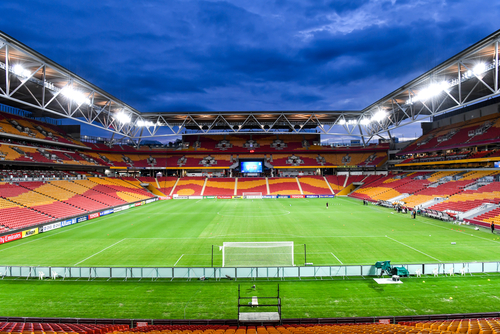
The Brisbane game is behind a paywall, limiting the national reach of the event. Reach is surely part of the justification for spending big on Brazil, it’s not just that 50,000 people get to sit inside Suncorp Stadium. It is that millions of Australians get exposed to the spectacle and if that audience is restricted, the value of this fixture is limited.
A solution could be to spend the money on advertising the match to the public to try to generate interest across streaming and free-to-air. With less than a week until the first game I don’t believe the advertising has done enough to generate enough interest to justify a $15 million price tag for the two game series.
The Brazil friendlies will be spectacular. They should attract big crowds, create memories and give the Socceroos an excellent test against one of football’s most recognisable nations. But for the appropriate return, attention must be measured. Does this fixture carry on the Socceroos hype and keep the eyeballs of the general public on our sport? I’m not convinced. However, if these matches bring new fans to football, strengthen the national team and create lasting investment in the sport, the enormous price tag could still be justified. But if they simply produce two nights of football before the attention disappears, then Australian football has paid a premium for a very expensive show.