
Hybrid Pitch Brings New Life To Sporting Field

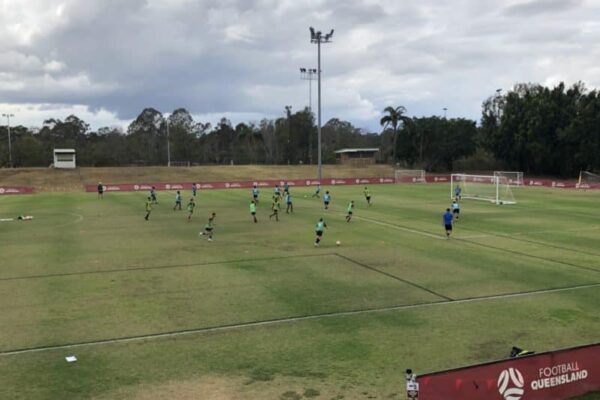
In a first for Sutherland Shire, Harrie Dening Football Centre at Kareela is trialling a new hybrid turf that will provide a consistent playing surface all year round.

The hybrid surface consists of synthetic grass that is stitched into natural turf and has proven to increase stability and deliver considerably more playing hours than traditional grass fields. This is especially important for high-traffic areas like goal mouths and cricket pitches.

Sutherland Shire Council is collaborating with Sutherland Shire Football Association to trial the hybrid grass system on one of the lower field goal areas.

Hybrid grass playing fields not only stay healthier for longer, they also hold less heat than full synthetic pitches. This means greater availability to the community, especially during the hot summer months. As an added bonus, maintenance costs of the hybrid fields are also significantly lower than full synthetic facilities.

Sutherland Shire Council Mayor, Councillor Carmelo Pesce said this new hybrid grass system would mean that more games could be played on the field, increasing the field use capacity without as much damage to the grass.

“Sport is such a strong part of our local identity and with increasing demand placed on our playing fields, Council is committed to supporting the continued use of our parks and reserves to meet the needs of our growing population,” Mayor Pesce said.

“We have already been working hard to help our playing fields stand up to the pressure by planting stronger types of grass, utilising better maintenance practices and installing irrigation systems and this new hybrid system should be incredibly beneficial.

“By bringing together synthetic and natural turf, sporting fields will be able to withstand considerably more playing hours each year and recovery time for the grass will be much faster,” Mayor Pesce added.

Sutherland Shire Football Association (SSFA) General Manager, Jeff Stewart said that the SSFA was extremely happy to work collaboratively with Council to trial this initiative.
“As the largest grassroots sporting association, with the highest per capita usage rate per field of any sport in the nation we know all too well how much time and effort is required to maintain the fields at an acceptable standard,” Mr Stewart said.

“We are thankful that Council has looked at viable alternatives to help manage and maintain the existing available green space and Harrie Dening Centre is an ideal location for this product to be trialled.”

Stephen Mallyon, General Manager of G5 Sports Turf, who installed the hybrid turf system, said it has been used across Europe on FIFA and World Rugby approved pitches and he was excited to bring the technology to the Sutherland Shire.

“We have installed SISGrass hybrid cricket pitches on wickets in Brisbane at the Bupa National Cricket Centre for Cricket Australia and QLD Cricket and Adelaide again for Cricket Australia and the South Australian Cricket Association, and also on playing fields at the Sydney Cricket Ground and Sydney University with great success,” Mr Mallyon said.

“SIS Grass has recently been endorsed by ICC, Cricket Australia and the International Hockey Federation and we congratulate Sutherland Shire Council for being the first Council in Australia to trial the system.”

Sutherland Shire Council will monitor the hours of usage and wear on the field with the vision of using hybrid grass systems on other playing fields in the future.


Previous ArticleNext Article

FMDB Pro aims to streamline football recruitment through data-driven insights

Football recruitment platform FMDB Pro is positioning itself as a tool to help clubs, federations and recruiters make more informed decisions by bringing greater structure and context to the early informal stages of talent identification.

The platform has been developed by Sports Interactive, the same developers who make the Football Manager game.

Supporting, not replacing, traditional scouting

FMDB Pro is designed to support traditional recruiting departments by narrowing the pool of potential signings before traditional scouting processes commence.

Rather than replacing existing channels and scouts, FMDB Pro is intended to complement existing recruitment workflows by allowing clubs to filter players.

Using hundreds of data points, it will help clubs identify prospects that meet specific technical, physical and regulatory requirement.

Powered by Football Manager’s global database

The platform draws on Football Manager’s extensive global database, covering more than 310,000 players across over 200 nations and thousands of competitions.

Users can search by a wide range of criteria, including playing attributes, positional profiles, contract status, injury history, international eligibility and governing body endorsement requirements.

FMDB Pro Business Development Director Michael Fleming said modern recruitment departments often face the challenge of assessing thousands of players across multiple competitions before deciding where to invest valuable scouting resources.

Introducing FMDB Pro | The Starting Point for Smarter Recruitment
FMDB Pro draws on Football Manager’s extensive global database. Image Credit: FMDB Pro

Streamlining the recruitment process

The platform aims to reduce that workload by providing recruiting teams with a stronger information base on each player.

This enables more specific scouting and reducing the time spent evaluating unsuitable candidates.

In addition to player data, FMDB Pro incorporates benchmarking tools, market valuations and recruitment reports to help clubs compare players across leagues and identify prospects who best fit their recruitment strategy.

According to Sports Interactive, the objective is not to replace human decision-making, but to improve the efficiency of the recruitment process.

By giving clubs better information earlier in the talent identification cycle, the process can be streamlined and make human decision-making easier.

Growing role of technology in football

As clubs continue to embrace analytics and technology across football operations, platforms such as FMDB Pro reflect the growing role of data in modern recruitment, where combining traditional scouting with advanced analysis has become an increasingly important part of identifying and securing talent.

FMDB Pro has already partnered with a number of clubs across Europe, including Newcastle United, AS Monaco and Dinamo Zagreb.

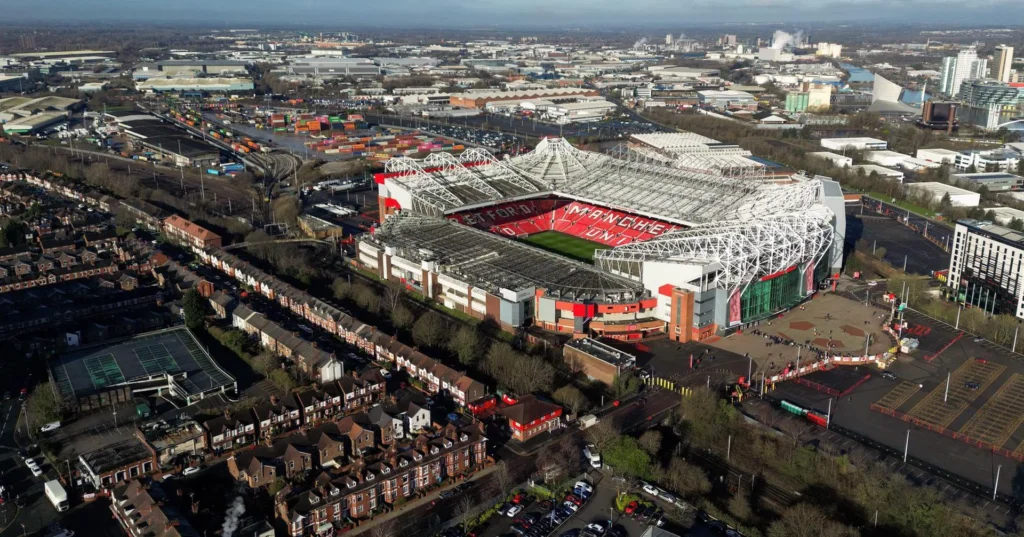
Beyond Old Trafford: How Manchester United’s new stadium could reshape an entire district

Manchester United’s proposed new 100,000-seat stadium is more than a replacement for Old Trafford.

It’s the centrepiece of one of the most ambitious urban regeneration projects ever planned by a football club.

Unveiled in March by architects Foster + Partners, the concept would see a new stadium built adjacent to Old Trafford, just 350 metres from the existing ground.

Supported by Trafford Council, the Greater Manchester Combined Authority and Old Trafford Regeneration Mayoral Development Corporation the proposed development aims to transform the area surrounding the stadium into a thriving mixed-use precinct featuring housing, commercial space, public transport improvements and new public amenities.

While the stadium dominated headlines, the broader vision is about much more than just football.

Once complete, the new venue would become the largest club football stadium in the UK, increasing capacity from around 74,000 to 100,000 spectators.


More than just a stadium

However, the stadium is only one piece of a much larger plan.

Foster + Partners vision includes new homes, offices, hotels, retail and hospitality spaces, green public areas and improved pedestrian links.

They believe this “mixed-use” destination will attract visitors throughout the year and create a “vibrant destination” for tourists and visitors from across the world.

The proposal also places a strong emphasis on sustainability, with plans for a walkable precinct supported by public transport, rainwater harvesting and renewable energy technologies integrated into the stadium’s distinctive canopy design.


A major economic opportunity

The broader regeneration has been positioned as a major economic opportunity for Greater Manchester.

An independent study conducted by Oxford Economics found that the stadium and regeneration project could contribute approximately $15 billion to the UK economy.

In addition, the project would also support around 92,000 jobs while creating more than 17,000 new homes and attracting an additional 1.8 million visitors yearly.

Those figures remain projections rather than guaranteed outcomes, but they have become central to the club’s case for the redevelopment.


Connecting United to a Wider European Trend

A key component of the proposal is improving transport connections around Old Trafford

The British Prime Minister Andy Burnham described the project as significant opportunity for the region, with investment in rail, Metrolink and surrounding infrastructure viewed as essential to unlocking the wider regeneration potential.

The plan also includes greater pedestrian accessibility, to integrate the stadium district with surrounding communities.

Manchester United’s proposal reflects a broader trend across Europe football.

Stadium developments are increasingly viewed as catalysts for urban renewal and economic development, rather than standalone sporting venues.

Projects such as Tottenham Hotspur Stadium, Everton’s new waterfront home and Real Madrid’s redevelopment of the Bernabeu have demonstrated how modern stadiums can generate revenue through hospitality, entertainment and commercial activity beyond football.


Transforming Old Trafford

Despite support for the proposal, significant hurdles remain before construction can begin.

Funding arrangements, planning approvals and major infrastructure upgrades will all need to be finalised before construction can begin.

If delivered, the project would represent one of the largest football-led regeneration projects ever undertaken in the UK.

The project would transform not only where Manchester United plays, but how the wider Old Trafford district lives, works and grows.

Most Popular Topics

Editor Picks

Send this to a friend