

PSV launch partner programme through Eleven Sports Media

PSV and Eleven Sports Media

UK sports technology and marketing company Eleven Sports Media has made its first move into mainland Europe by agreeing to a partnership with Dutch Eredivisie football club PSV Eindhoven.

This collaboration  has helped PSV launch an all-inclusive partner programme dedicated to the local business community of Eindhoven. Eleven’s partnership model will grant small to medium business’ in the Eindhoven region a big opportunity to align themselves with their local sports teams, using Eleven’s activation services.

PSV will benefit hugely from Eleven’s StadiumTV and StatTV fan engagement platforms which will be implemented in Philips Stadium, with the objective to enhance the matchday experience for the fans. This will include a variety of match and player statistics shown at the ground in Dutch.

Eleven Sports Media, founded in 2009 in north-west England, are a company that has re-imagined end-to-end brand partnerships in the sporting landscape. Their goal is to connect sporting clubs from across the world to their local communities, a key part of each clubs’ foundation.

Eleven are firmly established in football across the Premier League, EFL, SPFL and MLS, as well as recently arriving in the American National Football League. This has allowed them to prove themselves to be reliable with their technology at some of the world’s most iconic sporting venues.

Frans Janssen, PSV Commercial Director, commented on the exciting partnership for their wider community via media release.

“We’re incredibly excited to be the first mainland European club to partner with Eleven, and to see their passion come alive in the Netherlands, connecting the people of the region to the club that we are so proud of,” he said.

“The entertainment that Eleven will bring to the fan areas will be something new and innovative for our ticket holders. We’re excited to be the first to bring this to mainland Europe.”

Matt Cairns, Founder and CEO of Eleven Sports Media, added to Janssen’s excitement for the partnership via press release.

“We are thrilled to bring Eleven’s localised partnership model to PSV, our first step into mainland Europe. Our solution has proven successful in leagues around the world, and we know that it can deliver true value to local businesses in Eindhoven. PSV is the perfect fit for us, both Eleven and PSV share many of the same values, and like Eindhoven, Eleven is a pioneer in innovation,” he said.

“When entering a new market, it is vital that our technology is accessible to all fans. Recent system upgrades mean that we can now deliver our fan engagement platforms in multiple languages, providing fans around the world with the best possible matchday experience.”

In addition to the Local Business Partner Programme and Eleven’s fan engagement technology, Eleven will play a leading role in supporting Jong PSV, as the official U23 Training Wear Partner.

This is a fantastic partnership by PSV to show that they are integrating the Eindhoven grassroots football community a lot more with world-class technology. It improves the connection between the club and its community whilst also benefiting the fans through an improved matchday experience, all while becoming the inaugural mainland European club to do so.

Previous ArticleNext Article

Project ACL: The initiative leading the way on injury research

Launched in 2024, the research project recently welcomed two US-based organisations: the National Women’s Soccer League Players Association (NWSLPA) and National Women’s Soccer League (NWSL).


About Project ACL

Led by FIFPRO, PFA England, Nike and Leeds Beckett University, Project ACL aims to research ACL injuries and understand more about multifactorial risk factors.

After piloting in England’s Women’s Super League (WSL), Project ACL will expand to the NWSL in the US, reflecting the global importance of the project’s research and outcome.

“We are incredibly excited to bring the NWSLPA and NWSL to Project ACL,” said Director of Women’s Football at FIFPRO, Dr. Alex Culvin, via official press release.

“Overall, we believe that player-centricity and collaboration with key stakeholders are central to establishing meaningful change in the soccer ecosystem and that players, competition organisers and stakeholdersaround the world will benefit from Project ACL’s outputs and outcomes.”

Interviews with over 30 players and team surveys across all 12 WSL clubs provided the project’s research team with valuable information about current prevention strategies and available resources.

Furthermore, the project tracks player workload and busy schedule periods during the season through the FIFPRO Player Workload Monitoring tool, therefore gaining insights into the link between scheduling and injury risks.


Looking to the data

Project ACL’s partnerships with the WSL – and now the NWSL – are immensely valuable for the future of player welfare in women’s football.

Although ACL injuries affect both male and female athletes, they are twice as likely to occur in women than men. However, according to the NWSL, as little as 8% of sports science research focuses on female athletes.

In Australia, several CommBank Matildas suffered ACL injuries in recent years: Sam Kerr was sidelined from January 2024 to September 2025, Ellie Carpenter for 8 months after suffering the injury while playing for Olympique Lyonnais, and Holly McNamara came back from three ACL’s aged 15, 18 and 20.

And this is just the tip of the iceberg. The 2025/26 ALW season saw several ACL incidents, including four in just two weeks.


Research, prevent, protect

Injury prevention and research are vital to sport – whether professional or amateur.

But when the numbers are so shocking – and incidents are so common – governing bodies must remember that player welfare comes above all else. Research can inform prevention strategies. Prevention means players can enjoy the game they love.

The work of Project ACL, continuing until 2027, will hopefully protect countless players across women’s football from suffering long-term or recurring injuries.

The A-Leagues Final Series important status also a secret hinderance

The Isuzu A-League finals series is a huge event in the footballing calendar, though its contribution to stagnant attendance numbers in the league is something to be said.

If the 2025/26 finals series follows similar patterns to those before it, it will gather huge traction and strong ticket sales.

It is the largest event for the domestic league, bringing in massive amounts of viewership through media and gate receipts.

Finals series from years past have shown this, with the 2024/25 final, a Melbourne derby, being sold out within 48 hours and gathering significant viewership online.

The idea of a finals series lies within the Australian sporting ethos; the other sporting codes have had this tradition for most of their existence, especially in recent history.

Football, though, is different from the rest of the sporting codes in Australia, unique even. This has historically contributed to its inability to integrate into the same supported status as other codes.

Many in the Australian footballing community, supporter groups, players, coaches, and even the new Director of Football Australia, have voiced concerns over fan numbers in the league competition.

It wouldn’t be absurd to say that maybe, though profitable now, the finals series is actually taking away from the league itself.

Consider the media image: the league winner is called the “minor premiership,” and ticket sales and viewership figures reveal a huge disparity between the two parts of the A-League.

It must be said that an alternative that could work in unison with the league and possibly increase viewership of the league itself would be a great advantage.

It would allow the league to gain more jeopardy and drama, which could build greater interest in attending league games.

One alternative is already here.

No other sporting code in Australia has both a league competition and a cup competition. Football in Australia does.

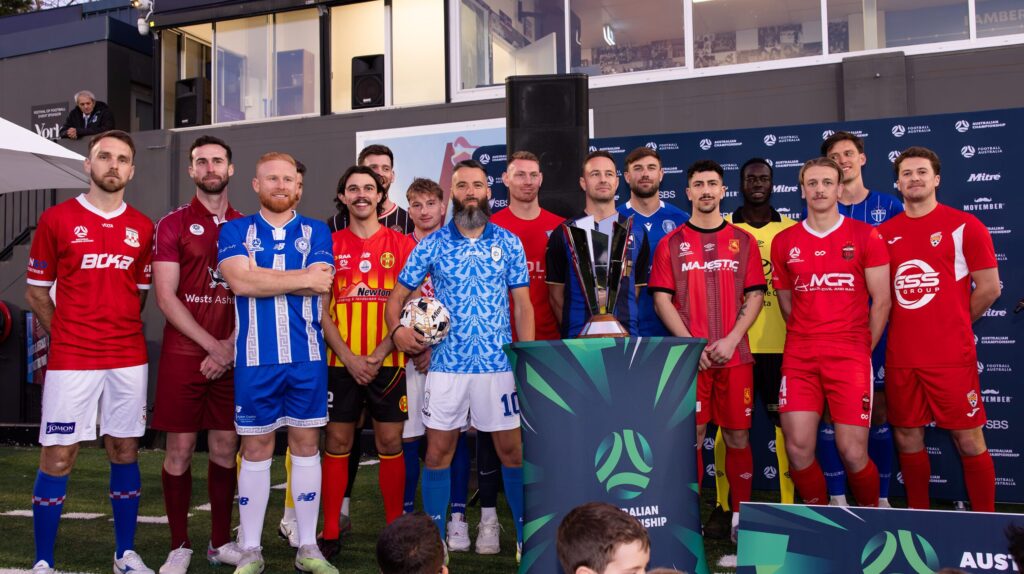
The Hahn’s Australia Cup is our equivalent to the FA Cup in England or the Copa del Rey in Spain.

These are competitions that offer a finals option in a different competition entirely. They generate huge traction while never diminishing the importance of the league and, therefore, its popularity.

These cup competitions cannot be discussed without acknowledging some obvious differences.

They don’t face the same popularity issues that football does in Australia. It’s obvious the Hahn’s Australia Cup doesn’t yet gain the traction that the finals series does.

However, for a healthy footballing environment with increasing fan numbers, it should.

The idea of elevating the Hahn’s Australia Cup and scaling back the finals series is a complex question, one that is treated like a “no-go zone” by many in the Australian footballing community, and that is understandable.

Though big changes like this might, in the end, be credible options for the future of the sport in this country.

Larger plans must be set in motion, strategies that can be worked towards and refined along the way. It is the process by which all large organisations, business models and even national governments build their strategies.

Such a shift will be scrutinised and pushed back against.

Though with further fine-tuning and smart investment in development, not to mention the introduction of promotion and relegation and the possibility of changing the footballing calendar.

It could replicate the success that these two-competition models already enjoy in other leagues.

The added importance that the premiership would gain, the reality that every game matters, could alongside other strategies entice fans to more games, increase viewership and ticket sales, and create more dedicated fan bases. It works in other nations, very well in fact.

The possibility of two teams lifting a trophy, rather than one single event defining it all, sounds like a strategy that could deliver more engagement over longer periods of time.

Maybe Australian football doesn’t need to answer this question just yet. It is complex, difficult and it would require a great deal of work, including significant investment into the game, which is another issue entirely.

Yet as low attendance numbers persist in the A-League, even alongside increased media viewership, something needs to change for football in Australia.

The rise in popularity of this game and its dedicated community deserves bold ideas and forward thinking.

Ideas like this could eventually begin to change the landscape of the beautiful game in Australia for the better.

Most Popular Topics

Editor Picks

Send this to a friend