


Central Coast Mariners on the move with Budget Car & Truck Rentals

Budget Car & Truck Rentals

Central Coast Mariners have announced a club-wide partnership with global rental service Budget.

The partnership will cover both the Mariners men’s and women’s sides in their upcoming A-League seasons.

As a senior partner, Budget’s logo will feature on all of the clubs’ sleeves, providing a huge marketing opportunity for the rental service during the summer and this will then coincide with one its busiest periods.

The deal is being marketed aa a huge win for not only the regional club but also for the Central Coast Community.

The Mariners are excited for the opportunity that partnering with a rental service will have for their fans to access other entertainment in the region.

Likewise, Budget is also excited to further entrench itself in the Central Coast community helping to support the regions sporting culture and the local families who utilise their vital service.

Central Coast Mariners CEO Shaun Mielekamp expressed the clubs delight in being able to announce such a huge partnership in the lead up to the hotly anticipated upcoming A-Leagues season.

“We are delighted to be joining forces with an organisation that has the same fundamental belief in the Central Coast community that we do. To have Budget Car & Truck Rentals supporting both our men’s and women’s teams is incredible and is super important for us as a club,” he said via press release.

“We encourage all of our fans to support Budget Car & Truck Rentals in the same way that they are supporting us ahead of this upcoming A-League season. We are pleased to be able to welcome them into the Mariners Family.”

Reflecting on their regional focus, Budget Car & Truck Rentals Central Coast’s General Manager Phil Kingett spoke to the companies interest in the Mariners men’s side.

“When it comes to Australian sports teams, the Central Coast men are one of the best,” he added via press release.

“They demonstrate determination, teamwork and high performance, many of the beliefs and values that also drive us. We look forward to bringing fun and excitement to their fans and sports lovers alike.”

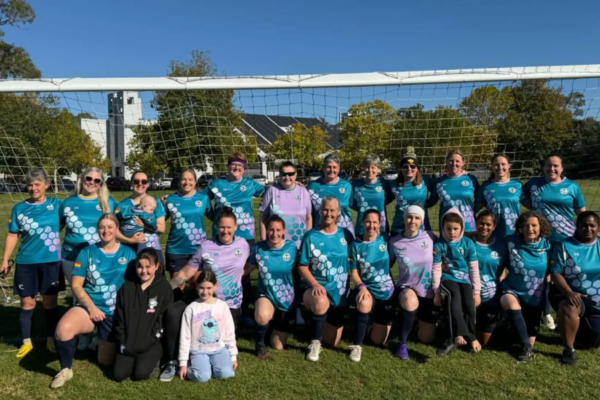
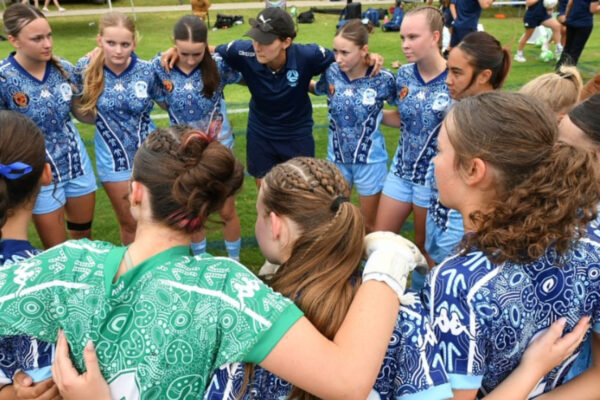
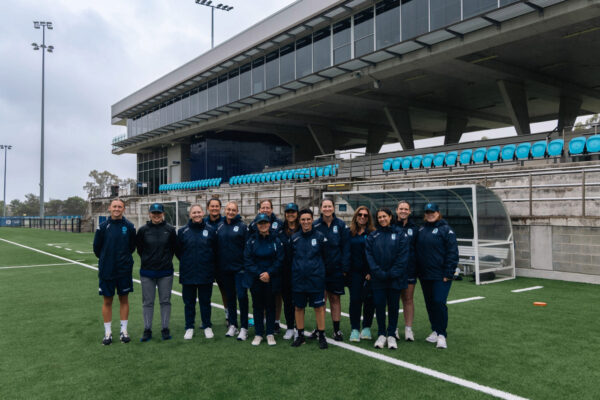
Joining with his sentiments, Budget Car & Truck Rentals Central Coast Sales and Marketing Manager Alicia Cunningham expressed Budget’s pride and excitement in being an inaugural sponsor of the Mariners Women’s side as they come into the A-League.

“We are delighted to join forces with the Central Coast Mariners in the Women’s A-League space,” she said via press release.

“It is an exciting time as we embark on this new journey together, championing women’s football and fostering a future of growth and success.”

This is an exciting deal for both parties – as a club based regionally the Mariners will be relishing the opportunity that this deal will have in helping more people come and enjoy their games from outside the Central Coast region.

The deal will also allow more Mariners fans to travel for away days, something sure to help the club in their upcoming campaigns.

Deals that prioritise community outreach and community businesses are a great way for clubs to engrain themselves in communities, hence this is a great opportunity for both clubs to build greater connections and customer/fan loyalty.

Previous ArticleNext Article

Project ACL: The initiative leading the way on injury research

Launched in 2024, the research project recently welcomed two US-based organisations: the National Women’s Soccer League Players Association (NWSLPA) and National Women’s Soccer League (NWSL).


About Project ACL

Led by FIFPRO, PFA England, Nike and Leeds Beckett University, Project ACL aims to research ACL injuries and understand more about multifactorial risk factors.

After piloting in England’s Women’s Super League (WSL), Project ACL will expand to the NWSL in the US, reflecting the global importance of the project’s research and outcome.

“We are incredibly excited to bring the NWSLPA and NWSL to Project ACL,” said Director of Women’s Football at FIFPRO, Dr. Alex Culvin, via official press release.

“Overall, we believe that player-centricity and collaboration with key stakeholders are central to establishing meaningful change in the soccer ecosystem and that players, competition organisers and stakeholdersaround the world will benefit from Project ACL’s outputs and outcomes.”

Interviews with over 30 players and team surveys across all 12 WSL clubs provided the project’s research team with valuable information about current prevention strategies and available resources.

Furthermore, the project tracks player workload and busy schedule periods during the season through the FIFPRO Player Workload Monitoring tool, therefore gaining insights into the link between scheduling and injury risks.


Looking to the data

Project ACL’s partnerships with the WSL – and now the NWSL – are immensely valuable for the future of player welfare in women’s football.

Although ACL injuries affect both male and female athletes, they are twice as likely to occur in women than men. However, according to the NWSL, as little as 8% of sports science research focuses on female athletes.

In Australia, several CommBank Matildas suffered ACL injuries in recent years: Sam Kerr was sidelined from January 2024 to September 2025, Ellie Carpenter for 8 months after suffering the injury while playing for Olympique Lyonnais, and Holly McNamara came back from three ACL’s aged 15, 18 and 20.

And this is just the tip of the iceberg. The 2025/26 ALW season saw several ACL incidents, including four in just two weeks.


Research, prevent, protect

Injury prevention and research are vital to sport – whether professional or amateur.

But when the numbers are so shocking – and incidents are so common – governing bodies must remember that player welfare comes above all else. Research can inform prevention strategies. Prevention means players can enjoy the game they love.

The work of Project ACL, continuing until 2027, will hopefully protect countless players across women’s football from suffering long-term or recurring injuries.

The A-Leagues Final Series important status also a secret hinderance

The Isuzu A-League finals series is a huge event in the footballing calendar, though its contribution to stagnant attendance numbers in the league is something to be said.

If the 2025/26 finals series follows similar patterns to those before it, it will gather huge traction and strong ticket sales.

It is the largest event for the domestic league, bringing in massive amounts of viewership through media and gate receipts.

Finals series from years past have shown this, with the 2024/25 final, a Melbourne derby, being sold out within 48 hours and gathering significant viewership online.

The idea of a finals series lies within the Australian sporting ethos; the other sporting codes have had this tradition for most of their existence, especially in recent history.

Football, though, is different from the rest of the sporting codes in Australia, unique even. This has historically contributed to its inability to integrate into the same supported status as other codes.

Many in the Australian footballing community, supporter groups, players, coaches, and even the new Director of Football Australia, have voiced concerns over fan numbers in the league competition.

It wouldn’t be absurd to say that maybe, though profitable now, the finals series is actually taking away from the league itself.

Consider the media image: the league winner is called the “minor premiership,” and ticket sales and viewership figures reveal a huge disparity between the two parts of the A-League.

It must be said that an alternative that could work in unison with the league and possibly increase viewership of the league itself would be a great advantage.

It would allow the league to gain more jeopardy and drama, which could build greater interest in attending league games.

One alternative is already here.

No other sporting code in Australia has both a league competition and a cup competition. Football in Australia does.

The Hahn’s Australia Cup is our equivalent to the FA Cup in England or the Copa del Rey in Spain.

These are competitions that offer a finals option in a different competition entirely. They generate huge traction while never diminishing the importance of the league and, therefore, its popularity.

These cup competitions cannot be discussed without acknowledging some obvious differences.

They don’t face the same popularity issues that football does in Australia. It’s obvious the Hahn’s Australia Cup doesn’t yet gain the traction that the finals series does.

However, for a healthy footballing environment with increasing fan numbers, it should.

The idea of elevating the Hahn’s Australia Cup and scaling back the finals series is a complex question, one that is treated like a “no-go zone” by many in the Australian footballing community, and that is understandable.

Though big changes like this might, in the end, be credible options for the future of the sport in this country.

Larger plans must be set in motion, strategies that can be worked towards and refined along the way. It is the process by which all large organisations, business models and even national governments build their strategies.

Such a shift will be scrutinised and pushed back against.

Though with further fine-tuning and smart investment in development, not to mention the introduction of promotion and relegation and the possibility of changing the footballing calendar.

It could replicate the success that these two-competition models already enjoy in other leagues.

The added importance that the premiership would gain, the reality that every game matters, could alongside other strategies entice fans to more games, increase viewership and ticket sales, and create more dedicated fan bases. It works in other nations, very well in fact.

The possibility of two teams lifting a trophy, rather than one single event defining it all, sounds like a strategy that could deliver more engagement over longer periods of time.

Maybe Australian football doesn’t need to answer this question just yet. It is complex, difficult and it would require a great deal of work, including significant investment into the game, which is another issue entirely.

Yet as low attendance numbers persist in the A-League, even alongside increased media viewership, something needs to change for football in Australia.

The rise in popularity of this game and its dedicated community deserves bold ideas and forward thinking.

Ideas like this could eventually begin to change the landscape of the beautiful game in Australia for the better.

Most Popular Topics

Editor Picks

Send this to a friend