

HERO Hybrid Grass: Transforming stadiums for elite football events

HERO Hybrid Grass

In the world of sports, where passion and precision collide, the playing field holds a special significance.

When it comes to hosting elite, high-profile football events, one challenge has always stood out; Maintaining the highest-quality natural grass throughout the entirety of the tournament. This challenge led Hamish Sutherland and his team at HG Turf Group on a remarkable journey of innovation, resulting in the creation of the revolutionary HERO Hybrid Grass.

HERO Hybrid Grass is the result of a ground-breaking partnership between HG Turf Group, Sport Group, Polytan (a member of Sport Group), and GST Global. This consortium of expertise seamlessly blends German synthetic fibre technology, South Korean manufacturing proficiency, and Australian natural grass know-how. The outcome? A technological marvel that is transforming the game of football from the ground up.

Sport Group Fibre: The key ingredient

Central to this innovation is the Sport Group fibre, a pinnacle of German engineering. With a legacy of excellence in developing synthetic grass fibre, Sport Group’s contribution to HERO Hybrid Grass is pivotal. This partnership not only enriches the product’s performance but also propels the industry forward by delving into eco-friendly solutions. Sport Group’s venture into petroleum-free and CO₂ neutral fibres showcases a commitment to sustainability, aligning seamlessly with the changing environmental consciousness.

The hybrid advantage

Hybrid grass, the harmonious marriage of natural grass (95%) and synthetic grass (5%), has revolutionised elite football tournaments. The addition of synthetic fibres augments stability, durability, and consistency to the playing surface. As a result, players experience enhanced ball bounce, ball roll, and secure footing, redefining the dynamics of the game. Notably, this technical edge does not compromise the authentic feel of natural grass—a testament to the meticulous engineering behind HERO Hybrid Grass.

Making the beautiful game even more beautiful

Hybrid grass technology has opened new doors for football enthusiasts. Stadiums have become arenas of unparalleled performance, where players and teams can truly shine. The consistent playing surface ensures breath-taking plays, showcasing the sport at its pinnacle. Moreover, this innovation transcends players and teams, captivating spectators with an unmatched football experience. With HERO Hybrid Grass, fans are treated to impeccable playability, translating into unforgettable moments on the field.

Strong environmental performance

In an era where sustainability takes centre stage, HERO Hybrid Grass stands as a testament to responsible innovation. The partnership between HG Turf Group, Sport Group, GST Global, and Polytan underscores their collective commitment to environmental stewardship. At the end of its useful life, HERO Hybrid Grass is 100% recyclable, contributing to a circular economy. This dedication to reducing the environmental footprint aligns with the partners’ shared values, leaving a lasting legacy both on and off the field.

Pitches made better: By science and nature

The synergy between cutting-edge engineering and the beauty of natural grass is embodied in HERO Hybrid Grass. This remarkable collaboration redefines the playing field and sets new standards for football pitch technology. With installations at prestigious stadiums hosting the Women’s World Cup at venues – such as Stadium Australia, Melbourne Rectangular Stadium, Perth Rectangular Stadium, Eden Park, and Wellington Regional Stadium – the impact of this partnership reverberates across the globe.

In an ever-evolving world where innovation is paramount, the HERO Hybrid Grass story is a testament to what can be achieved when expertise from around the world converges with a shared vision. As the football world looks forward to more elite events, it’s clear that the hero of the field isn’t just the player – it’s the ground they stand on.
Previous ArticleNext Article

Two NPL VIC clubs receive funding boost from State Budget

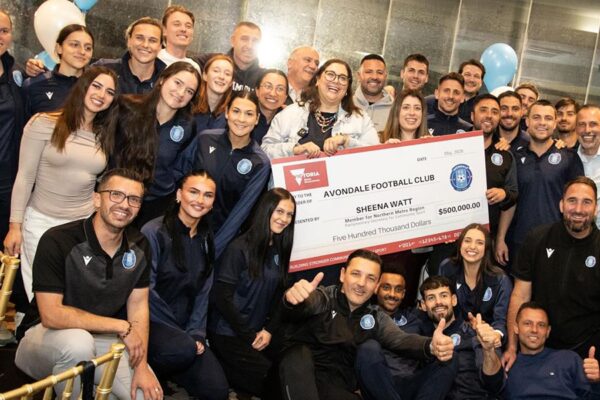
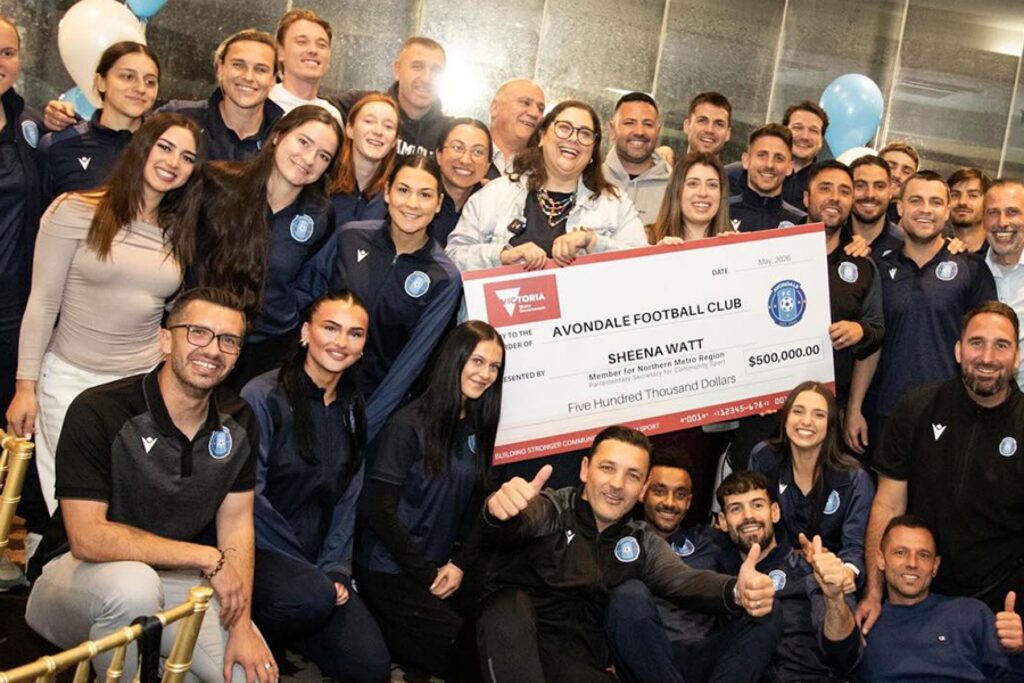
Following the announcement of the 2026 Victoria State Budget, Avondale FC and Hume City FC will both receive major backing for facility upgrades.


Valuable support for future projects

Avondale and Hume City now have immensely valuable financial support for infrastructure and facility upgrade projects.

Avondale will see an injection of $500,000 for lighting developments at its home ground, Avenger Park. Meanwhile, Hume City FC, will receive $250,000 to further improve its home ground, Nasiol Stadium, which opened in 2009.

Both clubs expressed their delight at the funding from the State Labor Government, and what the backing may bring to club facilities and overall development going forward.

“We are incredibly grateful to the Victorian Government and Sheena Watt for their support through this $500,000 lighting upgrade investment, which will have a lasting impact on our players, families and the wider Avondale community,” said Avondale Club President, Stephen Strano.

“We have hundreds of players across all age groups utilising these facilities each week, and these improvements will help create an even strong environment for excellence, participation, and community engagement,” outlined Hume City President, Ersan Gülüm.

As a result of these respective investments, both NPL VIC outfits appear set for incredibly opportunities to modernise, develop and strengthen their club infrastructure.


Lighting the path to a brighter future

The investments will see features such as lighting upgrades improve facility access for men’s and women’s teams, and LED scoreboards become part of a more modern matchday experiences going forward.

For both clubs, however, lighting upgrades are about more than keeping a pitch open late at night. Improved lighting is a means to a more accessible and supportive future in which both the men’s and women’s teams can utliise local facilities, and matchdays can take place in the excitement of playing ‘under the lights’.

And as Football Victoria CEO, Dan Birrell, highlighted, the improvements made to club facilities are benchmarks for the wider Victorian football community.

“Both Avondale and Hume City are pillars in the Victorian football landscape,” Birrell stated via press release.

“Professional level facilities like Avenger Park and Nasiol Stadium are critical for the development of Victorian football and Football Victoria welcomes the news that they will continue to improve thanks to the support of the Victorian State Government.”


More must follow

While the investments from the State Government come as welcome updates for these two clubs, there is still plenty more to be done to evenly develop facilities and infrastructure across Victoria’s football landscape.

Indeed, Avondale FC and Hume City FC are two fantastic community clubs who will no doubt put the funding towards impactful improvements.

But there are plenty more who still need external backing to build infrastructure not just for now, but for future seasons to come.

GIS Masterclass: Fan Engagement and Marketing with Terry Lynam and Karen Grega

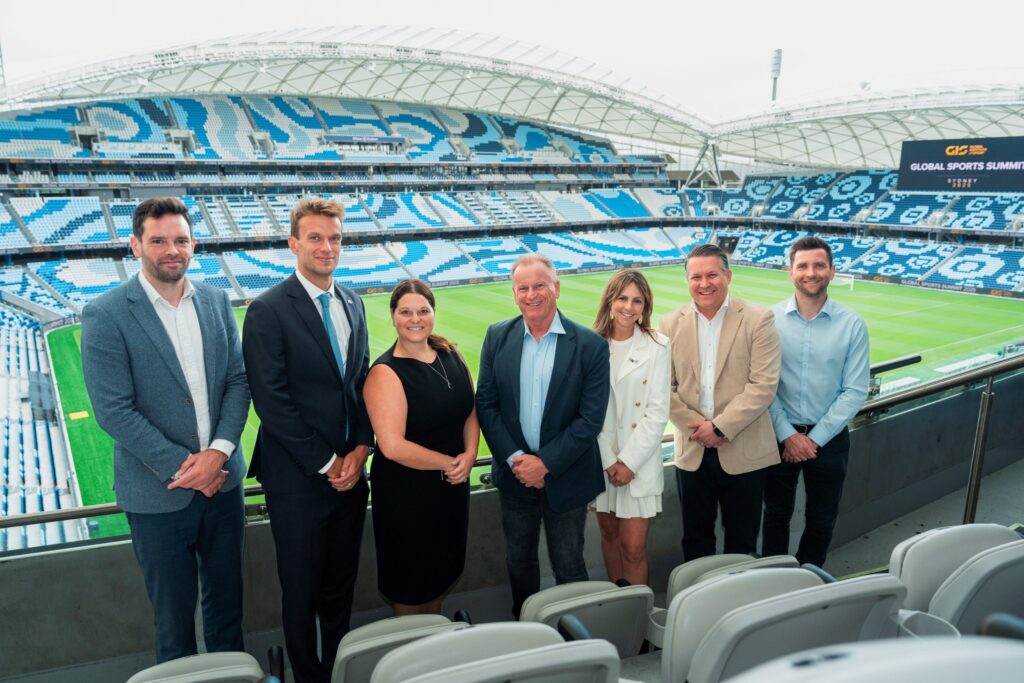
The Global Institute of Sport recently hosted a masterclass on Fan Engagement and Marketing, bringing together two industry leaders to tackle the field’s most pressing issues.

The Global Institute of Sport (GIS), which offers a Master’s in Sports Business and Sports Analytics through the University of Newcastle, regularly holds masterclasses with industry leaders as part of its curriculum.

The latest focused on fan engagement and marketing, covering two key themes: the growing tension between live sport and online streaming, and the role of data in shaping the fan experience.

The panelists 

Terry Lynam recently concluded her role as General Manager of Fan Experience and Events at Football Australia, overseeing the AFC Women’s Asian Cup on home soil.

Karen Grega is an experienced sports management consultant with a multi-code background. She currently represents Football Coaches Australia (FCA) and Heartbeat of Football, and has previously worked with Sydney Cricket Ground, Venues NSW and Sydney FC.

Live Sport and social media.

Terry Lynam opened with a pointed statement — one she acknowledged would be controversial. She argued that the sense of community unique to live sport is being eroded by social media and ‘snippet’ consumption.

Central to her concern is how marketing teams are failing to segment their audiences, treating casual online viewers the same as matchday fans.

“If they aren’t spending money on the sport we shouldn’t count them as spectators to the same level as match going fans.”

“What we want to consider as marketeers is how much we want to give away and how much we want our live sport element to remain,” Lynam said.

Grega echoed the sentiment, arguing fan engagement ultimately comes down to human connection. “It’s not rocket science.”

She suggested the industry revisit the concept of sport as a family outing to recapture that communal experience.

Data Driving Decisions

Both panelists highlighted data and analytics as central to modern fan engagement.

Grega recalled the introduction of computerised turnstiles as a turning point, enabling teams to track crowd movements and optimise staffing and entry times.

She also noted the continued value of fan surveys in informing marketing decisions.

Lynam pointed to ticketing technology as a significant data frontier.

Modern platforms like Ticketmaster’s ticket-transfer system now provide detailed customer insights.

“It allows us to have a better understanding of who’s getting the ticket and how they transport themselves there or when they arrive,”

“We can personalise their journey and sell content to them,” Lynam commented. 

The discussion also touched on data sourced from social media and on-field player tracking, as well as interactive stadium technology gaining traction in the US.

This included holographic assistants and player headset interactions that bring a broadcast-style experience to live events.

Activations That Educate

Activations rounded out the masterclass, with Lynam detailing how she created a fan zone on a modest budget for the Women’s Asian Cup.

The activation featured charitable partnerships focused on women’s health, including Heartbeat of Football, Endometriosis Australia and Share the Dignity.

“I’m very hopeful that that type of idea gets pushed through on other sporting events,” Lynam said.

Grega elaborated on the Heartbeat of Football activation, highlighting how a competitive element built around CPR and heart health kept fans engaged while also educating them.

“The whole health hub ticked all the boxes — it was immersive, it was interactive, it was there for all ages, both sexes.”

“That sort of blueprint is one that should be replicated as much as possible,” Explained Karen Grega

The masterclass offered students and industry professionals a valuable window into contemporary sports marketing.

As the competition for fan attention intensifies, the blend of live experience, smart data use, and purposeful activations can help define the next chapters of fan engagement.

Most Popular Topics

Editor Picks

Send this to a friend