

Adelaide United remains with Kite Property for Liberty A-League

Adelaide United and Kite Property

Adelaide United have announced a season long deal extension with leading property development and sales company, Kite Property.

Kite Property have been a partner of Adelaide United since 2018 and have shown a strong interest and passion in growing the women’s football side. The company can benefit greatly from the logo on the front of the club’s kits as it gives them a chance to showcase the brand to a large audience for the first time.

This partnership agreement will mean that the Kite Property logo will proudly appear at the front of both the home and away jersey for this season’s Liberty A-League campaign.

Kite Property is a proud South Australian and family-owned property development, sales and management company, Kite Property has a focus on supporting locals and promoting diversity.

Over the last 17 years, Kite Property have leveraged their knowledge and experience to quickly become Adelaide’s largest apartment developer, and now a developer of master-planned communities, townhouses and hotels.

Adelaide United’s Head of Commercial, Fabrizio Petrone mentioned the congruity between the goals of the two parties.

“We’re delighted to continue our partnership with Kite Property, with a clear focus on growing the momentum behind women’s football, especially off the back of the most recent FIFA Women’s World Cup successes,” he said via club press release.

“Kite Property has always been a strong supporter of the Club and women’s football in general, and this extension is exciting for the Club and aligns with our values, to better support local communities.”

Kite Property Managing Director Damon Nagel is pleased by the continuation of this partnership.

“We could not be more pleased to extend our partnership in support of Adelaide United and women’s football,” Nagel added via press release.

“We’re extremely passionate about equal opportunity and diversity, so being able to continue our partnership with the women’s team was an obvious choice for us.

“Having our logo on the front of the home jersey is an excellent way to showcase our brand and engage with our customers and the 300-plus people that work on Kites’ projects.

“Kite Property is here to support local and our partnership with United is a key pillar in this strategy.”

Both parties have a lot of shared values about benefitting the Adelaide community and growing the women’s game which will propel the goals they are trying to achieve in this long-term partnership. Adelaide United have mentioned in their overall strategy that these are key pillars of the club and are of high importance.
Previous ArticleNext Article

Beyond Old Trafford: How Manchester United’s new stadium could reshape an entire district

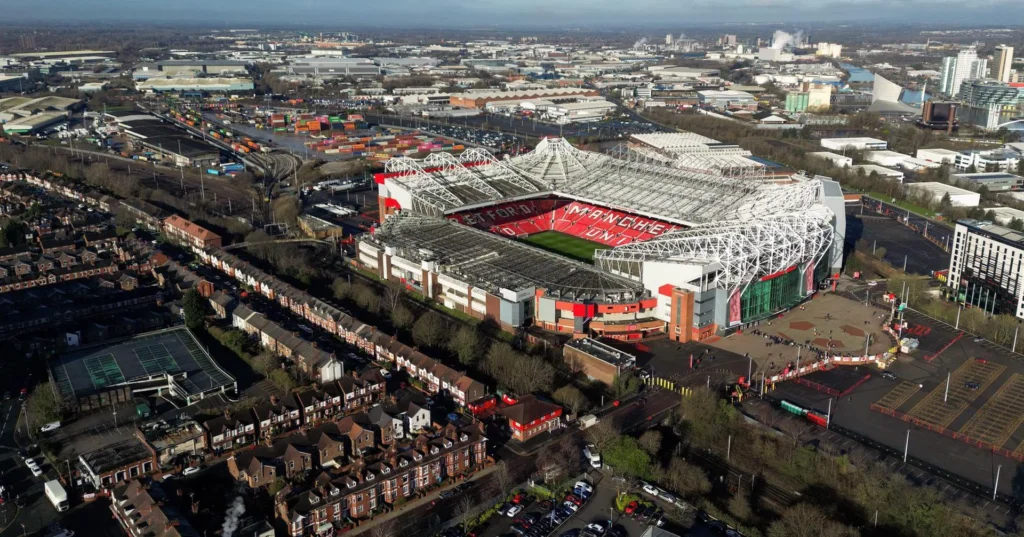
Manchester United’s proposed new 100,000-seat stadium is more than a replacement for Old Trafford.

It’s the centrepiece of one of the most ambitious urban regeneration projects ever planned by a football club.

Unveiled in March by architects Foster + Partners, the concept would see a new stadium built adjacent to Old Trafford, just 350 metres from the existing ground.

Supported by Trafford Council, the Greater Manchester Combined Authority and Old Trafford Regeneration Mayoral Development Corporation the proposed development aims to transform the area surrounding the stadium into a thriving mixed-use precinct featuring housing, commercial space, public transport improvements and new public amenities.

While the stadium dominated headlines, the broader vision is about much more than just football.

Once complete, the new venue would become the largest club football stadium in the UK, increasing capacity from around 74,000 to 100,000 spectators.


More than just a stadium

However, the stadium is only one piece of a much larger plan.

Foster + Partners vision includes new homes, offices, hotels, retail and hospitality spaces, green public areas and improved pedestrian links.

They believe this “mixed-use” destination will attract visitors throughout the year and create a “vibrant destination” for tourists and visitors from across the world.

The proposal also places a strong emphasis on sustainability, with plans for a walkable precinct supported by public transport, rainwater harvesting and renewable energy technologies integrated into the stadium’s distinctive canopy design.


A major economic opportunity

The broader regeneration has been positioned as a major economic opportunity for Greater Manchester.

An independent study conducted by Oxford Economics found that the stadium and regeneration project could contribute approximately $15 billion to the UK economy.

In addition, the project would also support around 92,000 jobs while creating more than 17,000 new homes and attracting an additional 1.8 million visitors yearly.

Those figures remain projections rather than guaranteed outcomes, but they have become central to the club’s case for the redevelopment.


Connecting United to a Wider European Trend

A key component of the proposal is improving transport connections around Old Trafford

The British Prime Minister Andy Burnham described the project as significant opportunity for the region, with investment in rail, Metrolink and surrounding infrastructure viewed as essential to unlocking the wider regeneration potential.

The plan also includes greater pedestrian accessibility, to integrate the stadium district with surrounding communities.

Manchester United’s proposal reflects a broader trend across Europe football.

Stadium developments are increasingly viewed as catalysts for urban renewal and economic development, rather than standalone sporting venues.

Projects such as Tottenham Hotspur Stadium, Everton’s new waterfront home and Real Madrid’s redevelopment of the Bernabeu have demonstrated how modern stadiums can generate revenue through hospitality, entertainment and commercial activity beyond football.


Transforming Old Trafford

Despite support for the proposal, significant hurdles remain before construction can begin.

Funding arrangements, planning approvals and major infrastructure upgrades will all need to be finalised before construction can begin.

If delivered, the project would represent one of the largest football-led regeneration projects ever undertaken in the UK.

The project would transform not only where Manchester United plays, but how the wider Old Trafford district lives, works and grows.

Football Has the Audience. Does It Have the Commercial Strategy?

Soccerscene has launched Survey 4: Commercial Confidence in Football, calling on clubs, sponsors, governing bodies, commercial leaders and football industry professionals to assess whether the game is making the most of its enormous commercial potential.

Football has the audience, participation base and community reach to be one of Australia’s most powerful commercial platforms. But does the industry have the commercial strategy, professionalism and infrastructure required to turn that potential into sustainable growth?

That is the question at the centre of Soccerscene’s latest industry research.

The survey examines how attractive grassroots football is to potential commercial partners, what industry professionals believe is limiting football’s commercial potential, and whether clubs are presenting themselves professionally enough to sponsors.

It also explores what sponsors value most when engaging with football – from community reach and participation scale to brand alignment, values and purpose – as well as whether improved facilities could directly contribute to stronger sponsorship outcomes.

Is football fully capitalising on its commercial opportunity?

Football continues to provide brands with access to highly engaged communities across grassroots, community and elite environments. Yet the commercial landscape remains fragmented, with clubs operating with vastly different levels of resources, capability, governance, media infrastructure and commercial expertise.

Soccerscene’s survey is designed to capture the industry’s perspective on where the opportunities exist – and where football may be leaving commercial value on the table.

The research will look specifically at four key areas:

  • Commercial attractiveness – How attractive is grassroots football as a commercial partnership?
  • Commercial barriers – What is holding football back from reaching its full commercial potential?
  • Club professionalism – Are clubs presenting themselves effectively and professionally to sponsors?
  • Sponsor value – What are sponsors really looking for when they invest in football?

The survey also asks whether better facilities would have a direct impact on sponsorship outcomes, highlighting the potential relationship between infrastructure, commercial presentation and investment.

Have your say

Soccerscene is encouraging football clubs, sponsors, commercial professionals, governing bodies, administrators, media professionals and industry stakeholders to participate.

The findings will contribute to Soccerscene’s ongoing program of industry research, designed to provide a clearer picture of the challenges and opportunities facing football and the organisations operating within it.

Take the Survey: Commercial Confidence in Football

Complete the Commercial Confidence in Football Survey here

The survey will close on 30 August 2026 at midnight, with responses received before the deadline included in the final analysis.

Football has the audience. The question is whether it has the commercial strategy to match.

Most Popular Topics

Editor Picks

Send this to a friend