Milan clubs investigate new stadium proposal

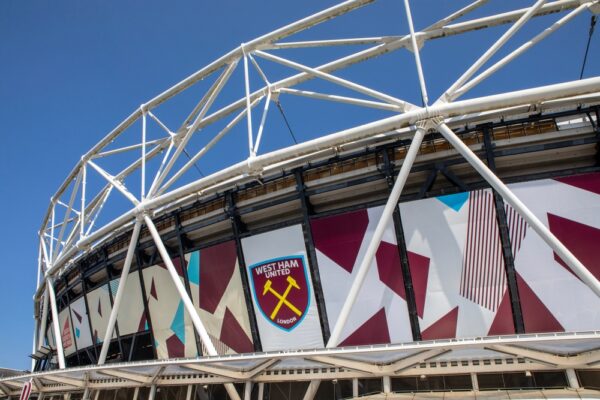
The city of Milan is seemingly ready to offer a $498.5m AUD proposal to reconstruct the Stadio Giuseppe Meazza, in what is being considered as a last attempt to persuade AC Milan and Inter Milan that their futures will rest at their current home.

Arco Associati, an architectural firm, is claimed to be behind the concept, which would see a new-look Meazza with a capacity of 75,000 – 5,000 more than the two stadia Milan and Inter are presently working on and around 800 less than the San Siro.

The city’s appeal is set to be heard on March 14, and any future attempts to reconstruct the Meazza would also need to persuade the two clubs. Both Milan and Inter have always been dubious of such a proposal, citing worries about how a restoration would fit in with the requirement to organise games, as well as whether a new-look Meazza would meet their goal of having a stadium capable of competing with the finest in Europe.

Inter started a fan feedback campaign last month in preparation for their anticipated transfer to a new 70,000-seat stadium in the town of Rozzano. In October, Inter provided a preview of life beyond the San Siro by showing preliminary concept renderings from Populous of a new stadium that it hopes will open ahead of the 2028-29 season.

In an address to shareholders as Inter disclosed record matchday revenues, CEO Alessandro Antonello said the delivery of a new stadium owned by Inter is “crucial” in accomplishing the club’s larger mid-to-long-term aims.

Inter has already won the exclusive right to conduct a feasibility study on the prospective building of a stadium on the property. The club has until the end of April 2024 to investigate the concept. In September, first proposals were submitted to the Mayors of Rozzano and Assago.

Inter and its local rival had previously collaborated on a combined Nuovo Stadio Milan project on the site of the Meazza, but continuous delays forced both to reconsider their plans.

Milan declared its first profit in over two decades in October, with record sales of over $670 million, as the club revealed that its owners had already committed $66.27 million in pushing plans to build a new stadium in San Donato.

Previous ArticleNext Article

Governance, guidelines and game integrity: Did the 2026 FIFA World Cup uphold all three?

The FIFA World Cup 2026 is now over. Aside from the action and drama on the pitch, it is how FIFA performed off it which will dictate its lasting legacy.


Money talks

Projections for this year’s tournament placed total revenue at an eye-watering figure of AUD 16 billion (USD 11 billion); in the end, the number reached AUD 21 billion (USD 15 billion).

The newly-introduced hydration breaks – much bemoaned by fans accustomed to a more traditional 45 minute half – generated further income. Fox Sports was expected to earn more than AUD 356 million (USD 250 million) from these breaks alone, taking global revenue upwards of AUD 1.4 billion (USD 1 billion).

Four minutes and 20 seconds per match, worth more than 1 billion dollars. For FIFA, therefore, time truly is money.

As the most profitable World Cup in history, it also raises further questions (and potential ideas) for how to continue the success. FIFA President, Gianni Infantino, is already considering ways to “unleash the commercial potential and opportunity that FIFA has” going forward.

“I think I can say that this FIFA World Cup here in particular has opened a lot of doors, a lot of opportunities, a lot of possibilities,” Infantino said.

“This will have an impact on what we can do all over the world, but the revenues and the financial economic success come only if the sporting side is right.”

Expanded participation – marking the first time a World Cup features 48 teams compared to the previous 32 – was a major factor in increasing revenue. More teams, more games, more sponsorship and advertising opportunities.

“There are discussions about whether we should increase more (from 48) to 64 (teams), but this will be debated and this will be discussed,” Infantino affirmed.

More revenue for FIFA should also mean its 211 Member Associations also benefit from further investment, although details regarding this remain unknown.

Record-breaking attendance

Going into the tournament, the issue surrounding ticket prices was widespread. Many fans accused the governing body of pricing fans out of the game they love – and the numbers justified it.

While tickets opened at AUD 85 (USD 60), the dynamic pricing led to resales worth tens of thousands of dollars. For the final between Spain and Argentina, fans seeking last-minute tickets needed closer to AUD 3 million (USD 2 million).

But despite the criticism aimed at the dynamic pricing system, FIFA’s resolve paid off. Attendances smashed previous records, with total attendance double the figure seen in Qatar 2022.

FIFA reported that 6,810,966 fans packed into stadiums across the 104 matches, reaching an average crowd of 65,490. With higher attendances also comes more revenue generated from hospitality within the stadium itself.

Clearly, the price of a ticket to the world’s biggest sporting tournament does not affect demand. If FIFA sets the price, people will pay.

Or rather, people who can afford these prices will.


Red card, rescinded

As USA and Bosnia & Herzegovina went toe-to-toe in their round-of-32 clash, few could have known the drama would continue far beyond the referee’s whistle after 90 minutes.

A red card for star-striker, Folarin Balogun, in the 64th minute prompted concerns among US fans not only for the remaining half-an-hour of play, but for the following round of the tournament: as per FIFA rules, a player who receives a red card automatically misses the subsequent match.

This was the case for Balogun, until external pressure entered the field. And for football’s global governing body, external pressure arrived in the form of the President of the United States of America.

The legality over the rescinded red card is irrelevant to the wider issue. People will dispute the various articles outlined in the FIFA Disciplinary Code, but the incident itself sets a problematic precedent for football’s global governing body: if FIFA compromises its rules and political neutrality for one nation, where does it draw the line in future tournaments?

The tournament’s integrity had already come under pressure before a match had kicked-off, following the first ever FIFA Peace Prize awarded to President Trump in December 2025. The rescinded red card ultimately added fuel to the fire.


A game of two halves

The FIFA World Cup 2026 was as entertaining on the pitch as it was controversial off it.

It featured some incredible individual performances from stars like Mbappe and Kane, as well as Cabo Verde’s Vozinha – the 40 year-old overnight sensation who became a tournament icon.

308 goals were scored, surpassing with flying colours the previous record of 172 in 2022. A goal-per-game ratio fo 2.96 was the highest in recorded history since 1970.

Celebrations like Norway’s ‘Viking Row’ took the world by storm, and several brands including Levi’s, Gillette and Under Armour (the latter being the tournament-winning boot sponsorship) enjoyed huge public attention online for their unique marketing approaches.

These are the stories which represent the World Cup at its very best and the side of football fans want to see: action-packed matches, world-class talent, inspirational underdog stories and moments which generate discussions between fans from all over the world.

Beyond the pitch, however, memories of this year’s tournament will be comprised of financial success marred by a failure to govern and uphold the game’s integrity throughout.

It is a disappointing contradiction, that the cost of the most entertaining and economically successful World Cup in history, is the growing concern whether we can believe in those delivering the game to us at all.

Murray United calls Football Victoria review following wave of State League forfeits

Murray United has called on Football Victoria to undertake a comprehensive review of State League football after a series of fixture forfeits left the regional club questioning the integrity of the competition and the long-term sustainability of its senior pathway.

In correspondence sent to Football Victoria, Murray United outlined concerns following what it says has been an unprecedented number of forfeited fixtures during the 2026 State League season. According to the club, its senior men’s program has been impacted by five forfeited rounds, equating to 10 matches. This includes the club’s last two fixtures, significantly disrupting competition across both senior and reserve grades.

The club and its chairman Pedro Afonso, argue the consequences extend far beyond missed fixtures, affecting player development, community engagement and confidence in the State League system.

“This is extraordinary, unacceptable, and completely inconsistent with the integrity and intent of Football Victoria’s State League competition,” Afonso said to Football Victoria.

“This impact extends well beyond lost fixtures. It has damaged player morale, member engagement, volunteer morale, sponsorship and club revenue, and the reputation of the sport and competition itself.”

Located at the club’s $20 million facility in Wodonga, Murray United has invested heavily in creating a regional football pathway. However, repeated forfeits have limited opportunities for players, coaches and supporters to participate in home State League fixtures.

The club has hosted just three home rounds this season despite the significant investment made into facilities and matchday operations.

“Our players, coaches, members, supporters, sponsors and the sport expect a legitimate State League competition, not one regularly disrupted by forfeits,” Afonso said.

“Our confidence must be restored by Football Victoria.”

While the immediate concern centres on this season, Murray United believes the issue reflects broader structural challenges facing regional football within Victoria’s State League system. Between the north-west and south-east competitions, there are 14 divisions of State League football in Victoria.

Among its recommendations, the club has called for Football Victoria and its Football Development Committee to undertake a formal review of the State League Seven North West competition, including club compliance and the frequency of forfeits.

Murray United also questioned whether the current competition structure provides an appropriate development environment for ambitious regional clubs. The club could be promoted to division six due to a large proportion of fixture forfeits. But fearing further cancellations, the club is requesting a review to be placed in an even higher division where clubs are willing to travel to Wodonga.

“We believe we should be sensibly placed in a competition that reflects our playing standard, facilities, player and coach pathways and our ambitions,” Afonso said.

The club has requested that Football Victoria assess its senior program using grading principles similar to those recently applied within senior women’s competitions, with consideration given to placement in a competition more suited to its football program and long-term objectives.

Alongside competition grading, Murray United has proposed stronger penalties for clubs that repeatedly forfeit fixtures. Recommendations include increased financial sanctions to $2,100 for senior teams alongside a three-point deduction per forfeit and compensation for host clubs to offset matchday operating costs.

The submission also encourages Football Victoria to review minimum participation standards across State League clubs, strengthen accountability measures and examine whether the existing league structure adequately supports regional football.

Afonso believes reform is necessary to ensure regional clubs are not disadvantaged within a statewide competition.

“We remain fully committed to providing quality football opportunities for our regional members and community and have heavily invested in facilities, player and coach development and volunteers,” he said.

The club has requested that Football Victoria provide clarity on the actions it intends to take before the commencement of the 2027 season, arguing that restoring confidence in competition integrity will be critical for the continued growth of regional football.


Most Popular Topics

Editor Picks

Send this to a friend