

Football streaming versus the national second division – where to next?

Online streaming continues to be a popular choice for football fans around the country, but have we been better off since these services have changed the landscape?

The EPL is exclusively on Optus Sport to stream for $15 a month whilst other Major European leagues, as well as the A-League, W-League and FFA Cup, is on Kayo Sports for $25 a month.

Telstra also offers a service for streaming Socceroos and Matildas games on the My Football Live App, as well as giving fans of the A-League, W-League and FFA Cup another alternative streaming option.

At a local NPL level, significant progress has also been made in this area.

A recent initiative was introduced this past season by NPL Victoria and other NPL associations around the country, with all senior NPL games live streamed on Facebook and YouTube. This in turn has increased the visibility of the local game and given fans the chance to stream games on familiar online platforms.

Football Victoria recently posted record audience numbers on their YouTube and Facebook streams for their Grand Final Triple Header broadcast on September 15. Some of these figures were up 32% on last year’s spectacle, highlighting the appetite for the local streaming coverage.

While the implementation has been successful, there are infinite possibilities for growth through these digital platforms.

I’m sure those who are in charge of the creation of the proposed national second division will be looking at various options to find viable streaming options which will grow the game.

Could that body invest heavily in producing a streaming service that will charge a subscription fee to fans?

Or is it more suitable to keep costs lower, give out the service for free and expand digital advertising across the board, with the associated revenue making it a viable solution?

It certainly is an interesting debate, without knowing the finer details.

Maybe NPL clubs such as South Melbourne or Heidelberg United can put the onus on themselves to find a partner to stream their games (or do it themselves), when the second division is up and running.

They may try to strike a deal similar to that of Los Angeles Football Club in the MLS. LAFC secured an agreement with YouTube TV in 2018, as not only a sponsor of the team but a streaming partner. 30 of LAFC’s 34 games are streamed on the paid subscription service in 2019, available to those in the Los Angeles area. Pre-existing media deals that have been secured by the MLS are not affected by LAFC’s deal with YouTube TV. The streaming partner does not produce the coverage of the game by itself, instead partnering with the MLS and LAFC. Content produced for the service includes pre and post-game shows and other LAFC related content.

Traditional NPL clubs could package archival footage in a similar type of setup, giving fans of the team more value for their dollar. Advertising revenue could then be generated for themselves or split with the streaming partner.

These are all possible alternatives, as it becomes increasingly hard for traditional media companies (such as FOX Sports) to shell out money for sports broadcasting rights.

If FOX Sports’ current attitude towards the A-League is any indicator, the chances of them investing in a national second division are not very high.

Sports such as Basketball have taken the hint and are seeking out other viable options.

Last week the NBL announced they are in a partnership with Facebook to live stream 52 NBL games into America. This was a significant announcement for the NBL as Facebook will pay a fee to stream the games, something that they have struggled to garner domestically from traditional media outlets.

The NBL will broadcast a number of games on ESPN and SBS VICELAND this season in Australia, sharing the advertising revenue with both of these partners.

Games will also be available to stream on SBS ON DEMAND, as well as the NBL TV streaming service which is a model the national second division will be considering.

The NBL TV model gives fans access to all games live streamed for $5 a month, with full game replays and NBL Classics on demand.

It’s time for those in charge of the national second division to find the right balance for football. The streaming waters have been tested this season with NPL associations around Australia, but the decision makers will have to do their due diligence and find the right model for the future of the game.

Previous ArticleNext Article

The A-Leagues Final Series important status also a secret hinderance

The Isuzu A-League finals series is a huge event in the footballing calendar, though its contribution to stagnant attendance numbers in the league is something to be said.

If the 2025/26 finals series follows similar patterns to those before it, it will gather huge traction and strong ticket sales.

It is the largest event for the domestic league, bringing in massive amounts of viewership through media and gate receipts.

Finals series from years past have shown this, with the 2024/25 final, a Melbourne derby, being sold out within 48 hours and gathering significant viewership online.

The idea of a finals series lies within the Australian sporting ethos; the other sporting codes have had this tradition for most of their existence, especially in recent history.

Football, though, is different from the rest of the sporting codes in Australia, unique even. This has historically contributed to its inability to integrate into the same supported status as other codes.

Many in the Australian footballing community, supporter groups, players, coaches, and even the new Director of Football Australia, have voiced concerns over fan numbers in the league competition.

It wouldn’t be absurd to say that maybe, though profitable now, the finals series is actually taking away from the league itself.

Consider the media image: the league winner is called the “minor premiership,” and ticket sales and viewership figures reveal a huge disparity between the two parts of the A-League.

It must be said that an alternative that could work in unison with the league and possibly increase viewership of the league itself would be a great advantage.

It would allow the league to gain more jeopardy and drama, which could build greater interest in attending league games.

One alternative is already here.

No other sporting code in Australia has both a league competition and a cup competition. Football in Australia does.

The Hahn’s Australia Cup is our equivalent to the FA Cup in England or the Copa del Rey in Spain.

These are competitions that offer a finals option in a different competition entirely. They generate huge traction while never diminishing the importance of the league and, therefore, its popularity.

These cup competitions cannot be discussed without acknowledging some obvious differences.

They don’t face the same popularity issues that football does in Australia. It’s obvious the Hahn’s Australia Cup doesn’t yet gain the traction that the finals series does.

However, for a healthy footballing environment with increasing fan numbers, it should.

The idea of elevating the Hahn’s Australia Cup and scaling back the finals series is a complex question, one that is treated like a “no-go zone” by many in the Australian footballing community, and that is understandable.

Though big changes like this might, in the end, be credible options for the future of the sport in this country.

Larger plans must be set in motion, strategies that can be worked towards and refined along the way. It is the process by which all large organisations, business models and even national governments build their strategies.

Such a shift will be scrutinised and pushed back against.

Though with further fine-tuning and smart investment in development, not to mention the introduction of promotion and relegation and the possibility of changing the footballing calendar.

It could replicate the success that these two-competition models already enjoy in other leagues.

The added importance that the premiership would gain, the reality that every game matters, could alongside other strategies entice fans to more games, increase viewership and ticket sales, and create more dedicated fan bases. It works in other nations, very well in fact.

The possibility of two teams lifting a trophy, rather than one single event defining it all, sounds like a strategy that could deliver more engagement over longer periods of time.

Maybe Australian football doesn’t need to answer this question just yet. It is complex, difficult and it would require a great deal of work, including significant investment into the game, which is another issue entirely.

Yet as low attendance numbers persist in the A-League, even alongside increased media viewership, something needs to change for football in Australia.

The rise in popularity of this game and its dedicated community deserves bold ideas and forward thinking.

Ideas like this could eventually begin to change the landscape of the beautiful game in Australia for the better.

Football NSW announces 2026 First Nations Scholarships as pathway access program enters new phase

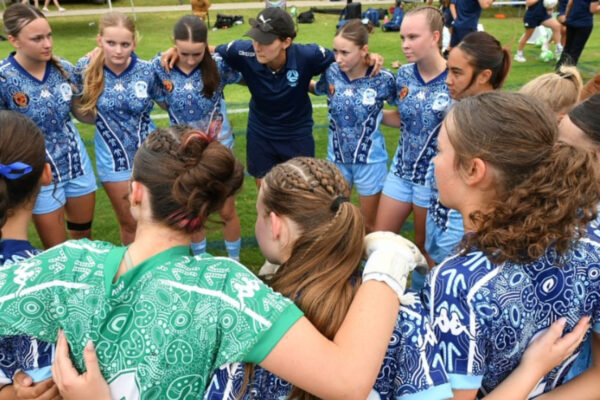
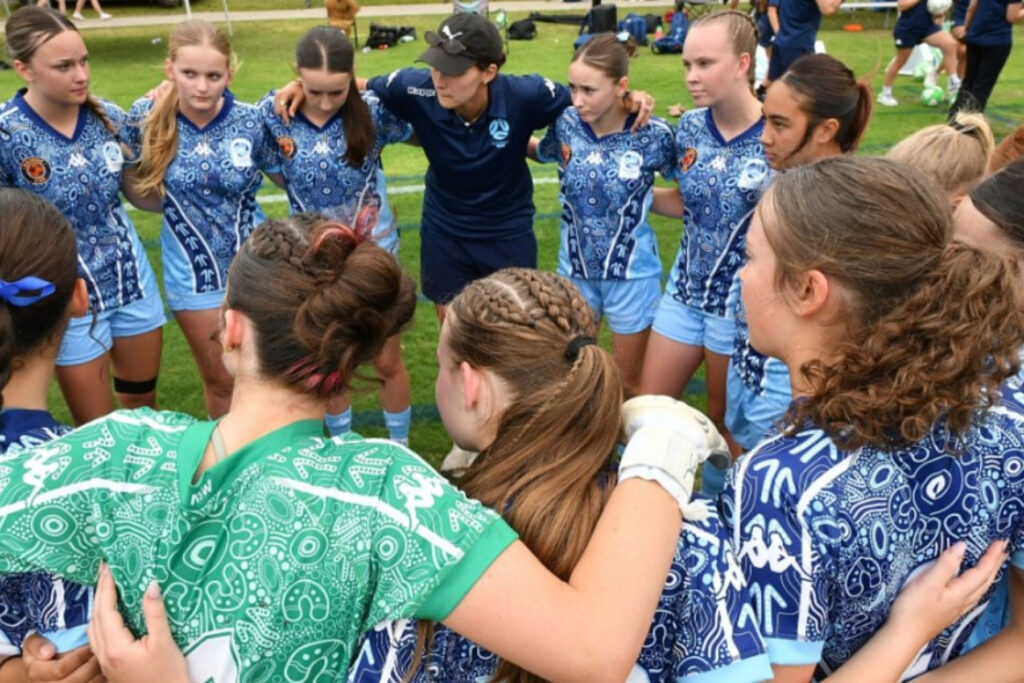
Football NSW has announced the recipients of its 2026 First Nations Scholarships, with ten emerging Aboriginal and Torres Strait Islander players from metropolitan and regional NSW receiving support designed to reduce the financial and structural barriers that have historically limited First Nations participation across the football pathway.

The scholarship program, developed and assessed in collaboration with the Football NSW Indigenous Advisory Group, targets players across both elite and development environments – recognising that talent identification alone is insufficient without the resources to support progression once players are identified.

Co-Chair of the Indigenous Advisory Group Bianca Dufty said the calibre of this year’s recipients reflected the depth of First Nations football talent across the state, and the importance of structured support in converting that talent into long-term participation.

“Their dedication to football and the desire to be role models for younger Aboriginal footballers in their communities is to be celebrated,” Dufty said. “I’m confident we will see some of these talented footballers in the A-League and national teams in the future.”


Beyond the pitch and into the pipeline

The 2026 cohort spans both metropolitan clubs and regional associations, an intentional distribution that acknowledges the particular barriers facing First Nations players outside major population centres, where access to development programs, qualified coaching and pathway competitions is more limited and the cost of participation more prohibitive.

The next phase of the program will introduce First Nations coaching scholarships, extending the initiative’s reach beyond playing pathways and into the coaching and administration pipeline – areas where Indigenous representation remains among the lowest in the game.

The structural logic is clear. Scholarships that reduce financial barriers at the entry point of elite pathways matter most when they are part of a sustained ecosystem of support rather than isolated gestures. Football NSW’s collaboration with the Indigenous Advisory Group provides that continuity, ensuring the program is shaped by the communities it is designed to serve.

Most Popular Topics

Editor Picks

Send this to a friend