Soccerscene the only online publication dedicated to the Australian and international football industry. It serves as a practical guide for those involved in the business of running a football club and bringing readers up-to-date research and development across all football matters providing insights, discussion and information related to topics that matter.
Assessing the path of A-League Women to become full-time
To ensure there is a deep-rooted legacy from the 2023 Women’s World Cup, the A-League Women becoming a full-time profession should be a matter of importance to develop the Australian game.
As the competition improves, the expectations on individual players increases, whereas the careers provided to them are not yet adequate for most players to financially support themselves merely through football.
Until the players are provided with full-time year-round employment structure, majority of the sportswomen are in the firing line juggling the physical and mental aspects of their commitments to football and part-time employment, of which three in five of those players work outside of football.
This topic of discussion was raised back in February during a two-day women’s football congress that was hosted by the players’ union, Professional Footballers Australia (PFA).
Under the 2021-2026 A-Leagues Collective Bargaining Agreement, the base limit was $20,608 in 2022-23 season for a 29-week contract for the ALW, with most of the players earned at or close to the minimum that season.
However, the remuneration for the past season rose to $25,000, which for the very first time it was transformed to a full home-and-away schedule, the current athletes are under contract for a 22 round regular season for 35 weeks, along with four extra weeks for finals.
Former Matilda and PFA executive member Elise Kellond-Knight expressed her opinion on this matter.
“We need aspirational leaders. We don’t need a long-term, 10-year strategy to get to full-time professionalism. Like, this is 2024. We need it tomorrow. We needed it yesterday,” she said.
“It’s important that the girls understand where we’ve come from and how much hard work we’ve had to do. Things don’t get handed to female athletes you have to stand up, you have to ask for it, you have to fight for it.
“It’s really important that we embed that philosophy in the next generation to come.”
In contrast to the A-League Men, just 15 percent had some type of job outside of their football commitments, 93 percent of those individuals worked less than 10 hours on a weekly basis.
The survey comments portray an evocative of the not so sustainable football/work/life balance the individuals have to commit to:
“I don’t want to feel like I have to work between seasons (for example: most of us do not get paid in the off season). It is a lot to juggle, especially going away for national team camps and the immense amount of traveling. I feel this weight on my shoulders from my work obligations.”
“If my work and football commitments clash, I am expected by my coach to skip work (where I get paid more and am respected more), and I am expected by my boss to skip soccer, and neither care if you suffer financially or reputation wise for it.”
According to the survey, it was made aware that all but three clubs had failed to provide players the desired two-month in advance training calendar as well as the seven day notice period, which makes matters even more complicated for those coping with various jobs to plan in advance.
The PFA admit changes such as this won’t occur overnight, generally speaking, to implement full-time professional contracts is the righteous thing to do for women players, but as the PFA report put it “should also be seen as an investment, not a cost.”
The full-time pay is such a significant goal for women’s football in this country, but the clubs can ease their path to that goal and can do a whole lot more to make sure those changes are modified sooner rather than later.
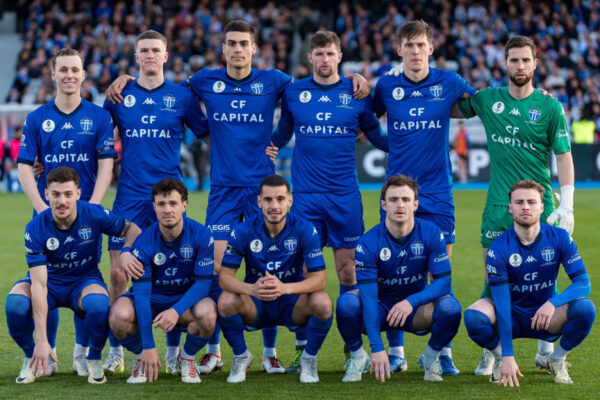
South Melbourne is knocking on the A-League’s door again. The four-time National Soccer League champions formally signalled their intention to enter the A-Leagues earlier this month, opening discussions with the Australian Professional Leagues (APL) over potential A-League Men’s and Women’s licences. The timing was significant; the announcement came a day after the APL terminated Western United’s licence.
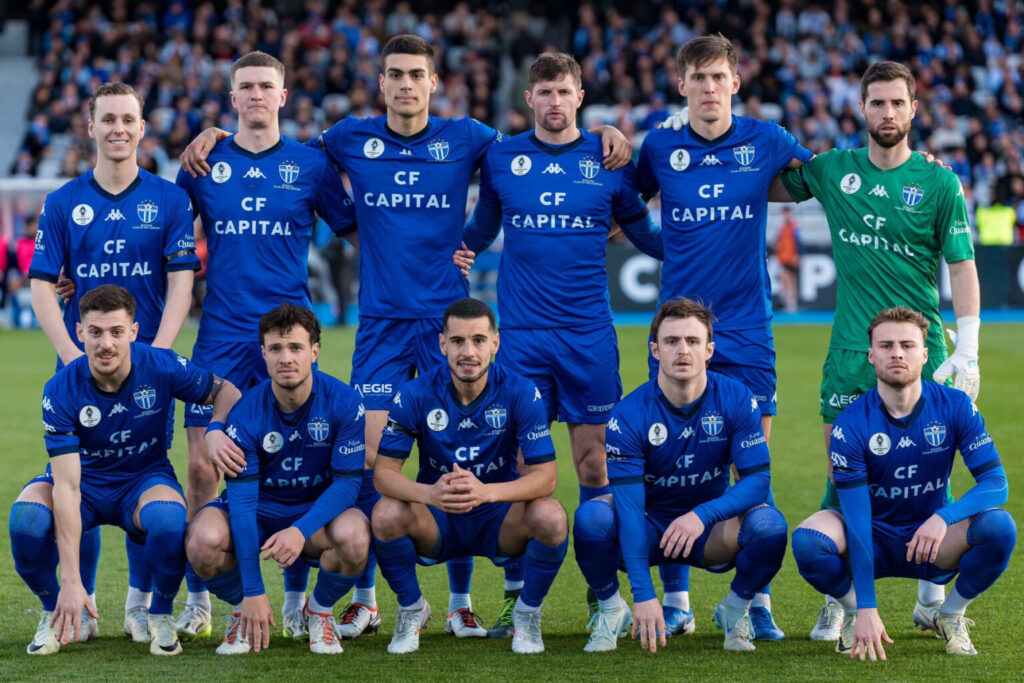
But South Melbourne’s ambitions are bigger than simply replacing Western United. The club and its co-president, Bill Papastergiadis, believe its recent success has demonstrated that it is ready for professional football once again. South won the inaugural Australian Championship in 2025, is competing professionally in the Oceania Professional League and has continued to make its mark in the Australia Cup, including a 2-1 victory over Adelaide United in July.
Time to open up
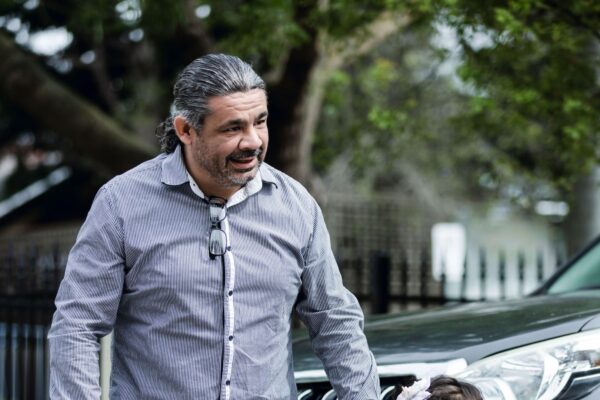
For co-president Bill Papastergiadis, however, the push is ultimately about something bigger than South Melbourne.
“The aspirations of South Melbourne, regarding A-League football, are not just a story about South Melbourne. It’s a story for the football public and the football community,” Papastergiadis said.
“It’s a story for all of us because football is a metaphor for life’s aspirations and football revolves around the ability to inspire, to improve, and to succeed.”
Papastergiadis believes the current structure of Australian football has created a ceiling for clubs outside the A-Leagues, one that limits ambition and, ultimately, competition.
“At the moment, the glass ceiling stifles that competition and stifles those aspirations, and at that upper level, and it’s to its detriment,” he said.
South Melbourne’s argument is closely tied to the history of the NSL, when clubs could be promoted and relegated based on their performances rather than being permanently separated into different tiers. Papastergiadis remembers the intensity that came with that system when South resided in the top flight of Australian football.
“I myself remember the intensity of the matches for the clubs that were in the relegation zone. Back then during the National Soccer League,” he said.
“It keeps clubs on their toes. Everyone is engaged when they know that there are ramifications for their actions and conduct. If there are no ramifications for that, how do you have accountability?”
That philosophy sits at the heart of South Melbourne’s A-League push. The club does not simply want to join the existing system; it wants to challenge the idea that the highest level of Australian football should be closed off from the rest of the pyramid. South Melbourne won the inaugural Australian Championship but, unlike in other systems, is not rewarded with top-flight football. The club has continued strongly in 2026, knocking out A-League side Adelaide United in the Australia Cup.
South Melbourne and Bill Papastergiadis celebrate a win in the Australia Cup Image Credits: Bill Papastergiadis
“Where is it in the football dictionary that winning a title doesn’t give you the opportunity to progress within the football pyramid?” Papastergiadis asked.
“All of the matches involving A-League clubs have been incredibly tight, and the majority of them were knocked out in the earlier rounds by numerous NPL clubs.
“So we can compete on the field; our crowds in the Australian Championship were more than comparable to the A-League crowds, quite often far better.”
That, he argues, makes South Melbourne a viable proposition.
“We are a viable option. It’s time to open up football and give it back to the public. The public deserves it, and it belongs to everyone.”
A familiar ambition
This is not the first time South Melbourne has tried to enter the A-League.
The club was overlooked when the competition was established in the mid-2000s and again in 2018, when the licence ultimately went to Western United. The latest attempt therefore carries history. The club that missed out on the opportunity to join the A-League in 2018 is now pursuing a place in the competition following Western United’s exit. But Papastergiadis is reluctant to predict what happens next. For now, South Melbourne has done what it believes it needs to do: start the conversation.
“It’s very early for me to comment on our prospects in relation to the A-League at this point,” he said.
“What we’ve simply done is done the appropriate thing, which is to write to the APL. Advise of our intention, advise of our interest.
“It’s in their hands to tell us if they’re interested in this story, if they’re interested in this outcome, and if they’re interested in this conversation.”
Papastergiadis has already spoken with APL chief executive Steve Rosich, who responded to South Melbourne’s initial approach.
“I had a conversation with Steve Rosich. He responded immediately, and we spoke on the phone, and it was appropriate, courteous, and responding quickly is what I’m trying to say,” Papastergiadis said.
“We advised of our intention. He thanked us for that. I indicated that we would progress to an even more formal document and he said he’ll wait to see that.
South Melbourne is ready to make their bid Image Credits: Greek Herald
There is no guarantee that South Melbourne will receive a licence, and Papastergiadis is clear that the next step is not entirely in the club’s hands.
“There is no certainty in this process,” Papastergiadis said.
“If you don’t ask, you don’t get. It’s up to Football Australia too, to show us the path forward. We need a path forward, and it’s up to the governing body to also work with us.”
The sustainability for Melbourne
The collapse of Western United has inevitably changed the context around South Melbourne’s bid.
Western United announced that the APL had terminated its participation agreement on August 10, while saying it would seek new ownership and a pathway back into the A-League. The club also emphasised the importance of maintaining a professional football presence in Melbourne’s west and continuing its academy and community programs. South Melbourne is now one of the clubs looking towards the opening created by Western United’s departure. But Papastergiadis does not celebrate another club’s demise.
Western United’s fans are left without an A-League club Image Credits: AAP
“I do want to make the point that I’m not happy about any club folding,” he said.
“I believe in football and in the football product, and I believe in football clubs.
For the players from juniors to senior levels, they must be gutted at Western United. Their administration staff, their coaching staff, they must all be gutted. So I feel for them.”
It is a notable distinction. South Melbourne’s ambition may have been reignited by the circumstances surrounding Western United. But for South there is a new opportunity to add to Melbourne football rather than take something away from it. The prospect of South Melbourne joining Melbourne City and Melbourne Victory in the A-League would immediately raise questions about whether the market could sustain another club.
A benefit to all
Papastergiadis has little doubt and points to Melbourne’s size, sporting culture and existing interest in football as reasons for optimism.
“Absolutely. We won’t cannibalise the football-attending public. We will increase it.” He said.
“There is significant potential within the Melbourne market. We reside in the largest city in Australia, and we reside in the sporting capital of Australia, if not the world.
“We will add to the fabric of football and will increase the attendance through derbies. It’s a positive.”
That is ultimately the argument behind South Melbourne’s latest attempt to break into the A-League. The club believes the benefits would extend beyond Lakeside Stadium. South Melbourne’s recent Australian Championship success, professional status in Oceania and strong performances against A-League opposition strengthen it’s case. NPL clubs can compete at the highest level, even if promotion and relegation remain off the table.
For now, South Melbourne can only wait. The APL and Football Australia will determine whether that football product has earned it a place at the top table. But Papastergiadis believes the question is worth asking, not just for South Melbourne, but for Australian football itself.
“Whatever South can achieve in regards to breaking through that glass barrier, then that’s not just the win for South, but it’s a win for football across the board.”
The A-League has just lost a Victorian club. The death of Western United and the suspension of its license by the Australian Professional Leagues (APL) on August 10th was inevitable. The club says it wants to rebuild and eventually return to the competition. That is unlikely to happen considering the search for new owners has to begin.
But one day after the announcement from Western United, South Melbourne stepped forward. The four-time NSL winners announced their intention to begin formal discussions with the APL about joining the A-Leagues. They believe the timing is right. Their argument is understandable. Their football credentials and history are stronger than most A-League teams.
But there is a problem. South Melbourne may have the history. It may have the supporters. It may even have one of the most attractive potential derbies in Australian football. But that does not mean it will get an A-League licence.
In fact, the more realistic prediction from my perspective is that South Melbourne will once again be told no.
South Melbourne has never been better placed
There is plenty to like about South Melbourne’s position. The club is not simply relying on its history. South Melbourne returned to national competition through the inaugural Australian Championship in 2025. It did not merely participate. South Melbourne won it. The club defeated Marconi Stallions 2-0 in the final to become the competition’s first champion.
That achievement matters. The Australian Championship was created to bridge state-based football and the professional game. Whilst it is seen as a second tier, there is no promotion and relegation with the A-League. But it has also continued to perform on the national stage. In the 2026 Australia Cup, which South Melbourne qualified for, they reached the final rounds and then produced one of the biggest results of the tournament.
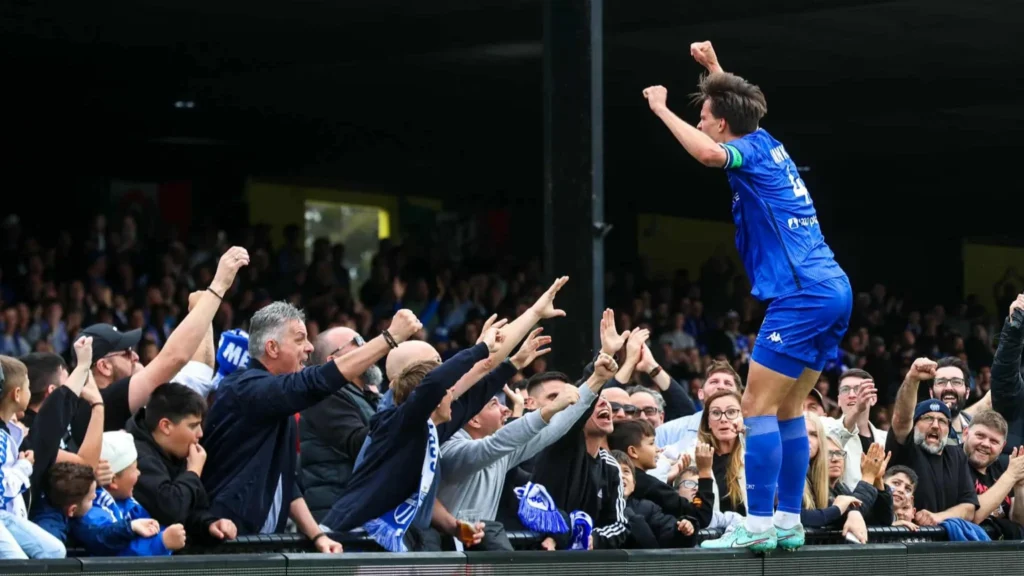
Adelaide United came to Lakeside Stadium. South Melbourne won 2-1. Adelaide had won the Australia Cup three times. South knocked them out in front of its own supporters. They’re now into the quarter-finals of the 2026 Australia Cup.
South Melbourne celebrating the Australian Championship Image Credits: South Melbourne FC
The club also has a much bigger story to tell than its recent results. Alongside its four NSL victories, the club also won the 1999 Oceania Club Championship and represented Oceania at the 2000 FIFA Club World Championship. The club has a dedicated supporter base and the history to deserve a place.
The club says its Oceania Professional League participation has helped make it Australia’s 13th professional football club. It has more than 150 businesses supporting it in 2026 and a long-term arrangement at Lakeside Stadium, in the heart of South Melbourne.
On paper, it is difficult to argue that South Melbourne is not ready. The problem is that readiness and admission are two different things.
Third time’s the charm?
South Melbourne’s current push is not new. It has been here before. The club was pursuing an A-League return almost immediately after the NSL disappeared. In 2007, South announced its interest in becoming the second Victorian A-League club.
Then came the 2008-09 process. South Melbourne backed the Southern Cross bid for the second Victorian licence. The club proposed a new team based around the redevelopment of Bob Jane Stadium and involvement from the broader Victorian football community.
It lost. The Melbourne Heart bid won the race and eventually became Melbourne City. That was South Melbourne’s first major warning. Its football heritage was not enough. Its second major attempt came almost a decade later.
The 2017-18 expansion process produced the most serious South Melbourne bid yet. South made the shortlist for an expanded A-League licence. It ultimately lost to Western United. Bill Papastergiadis has since explained that he did not genuinely expect South Melbourne to win in 2018, despite believing strongly that the club belonged in the A-League. He also reflected on the barriers facing a traditional club trying to enter the existing Victorian professional football ecosystem.
That is important context for today’s bid. South Melbourne is not entering negotiations without understanding how difficult the politics and economics of the Victorian football market can be. The club has tried the direct route twice. Neither time worked.
The Western United lesson
This is where the current situation becomes complicated. In isolation, adding South Melbourne would be fantastic for the A-League. Imagine South Melbourne against Melbourne Victory. The atmosphere would be enormous.
There is a genuine football rivalry waiting to happen. South itself points to the potential for ready-made derbies and commercial interest. But the argument that Melbourne should simply have three A-League clubs because Melbourne is a huge city ignores what has just happened to Western United.
Western United was supposed to represent Melbourne’s rapidly growing west. Its original vision centred on a major project in Geelong. The club eventually moved into Ironbark Fields in Tarneit in 2024.
Yet the geographic separation never became as clear as the original concept suggested. Western United was not a Geelong club. It was not a regional Victorian club in the traditional sense. It was a western Melbourne club based and that matters.
The A-League already has Melbourne City and Melbourne Victory. Adding South Melbourne would give the competition three clubs operating within the same metropolitan football market. It is not necessarily brilliant for the business model, which has already lost a club operating on the outskirts of Melbourne.
The NSL offers an interesting historical comparison. The Falcons provide an even more striking Victorian example. They became the first and only regional Victorian club to play in the NSL, reaching the finals in 1996. The distinction is important.
A national competition can expand its footprint by adding genuinely new markets. That is different from adding another club inside an existing Melbourne metropolitan market. That was what was envisioned for Western United, and it failed quickly.
Will the APL see South Melbourne as a safe investment? Despite the fact they’re a well-established club, I’d argue the answer is no.
Promotion and relegation is the only realistic route
There is one scenario where South Melbourne could eventually force its way into the A-League, and that’s the great missing piece of Australian football. Promotion and relegation. South Melbourne would not need somebody to decide that Melbourne suddenly has room for another licence. It would simply need to earn it.
They would have done just that in 2025, winning the Australian Championship if the football pyramid was open. Football Australia originally designed the National Second Tier with the possibility of promotion and relegation being considered once the competition matured.
The format connects NPL clubs and established foundation clubs with national competition. It does not provide a sporting pathway into the A-League. South Melbourne can win the Australian Championship, NSL and Australia Cup but none of those achievements automatically produce an A-League licence.
South Melbourne in the Oceania Championship Image Credits: Oceania Championship
Opening the pyramid is far more complicated than simply announcing promotion and relegation. Australia’s football calendar is fragmented. The A-League operates primarily through the summer months. The NPL operates through the winter and early spring. For the 2026-27 season, the A-League Men runs from October to June, while the NPL begins in February and finishes in September.
That creates an enormous structural problem for a fully connected pyramid. The clubs below the A-League would need to operate at a level capable of supporting professional football. If the A-League aligned with the NPL and the lower pyramid, it would compete in a football calendar that already has to coexist with Australia’s other major winter sports. That is a difficult feat against bigger leagues such as the AFL and NRL.
Beyond that, clubs lower down would need travel budgets and to survive commercially would take real sacrifice from all parties to make that work. The A-League’s existing clubs also have something to lose. They have invested heavily in their licences and their businesses.
Historically, A-League licences were extended through to 2034, while those licence arrangements have included provisions allowing promotion and relegation to be introduced. But the existing clubs will do everything in their power to block it. Promotion and relegation removes certainty. An A-League club can finish last in the current system with no threat to their place. Under relegation, its place is no longer guaranteed.
That is a major commercial change for clubs that have invested in securing their position in the competition. It is therefore difficult to imagine the A-League opening the door. The A-League’s licensing system gives the competition enormous control over who enters, and for South Melbourne historically they’ve been left out in the cold.
South Melbourne deserves the conversation.
The frustrating part is South Melbourne has probably never had a stronger argument. It has history, supporters, infrastructure, commercial support and most importantly, ambition. Beating A-League clubs in national competition proves the capability is there.
It deserves to be in the conversation. But being in the conversation is not the same as being selected. The Western United experience should be a warning. If the A-League could not make the Western United project work, it is difficult to see why it would suddenly decide that another Melbourne club is the answer.
South Melbourne may be the better football story. It may even be the better football club. But the A-League is not simply selecting the best football story.
It is selecting a professional competition, and until Australia embraces a genuine promotion and relegation system, South Melbourne’s path back to the top flight will remain dependent on someone handing it a licence.
That is the part of the dream that looks unrealistic. South Melbourne can keep knocking and it should. They always say third time’s the charm. But unless the pyramid is opened, I expect the door to remain closed.