



Brandon Borrello: Facing the challenges of professional football

2023 was shaping up to be one of Brandon Borrello’s most successful years until his whole world came tumbling down on November 25th when he was felled by a tackle from behind by Sydney FC hardman, Luke Brattan, in the Sydney derby.

Unbelievably, the misdemeanour by Brattan escaped any sanction from referee, Alex King, but left Borrello with a fractured foot which would exclude him from playing in the Asian Cup during January, 2024. It enforced a three-month layoff before he returned to the field with Western Sydney Wanderers.

Borrello had made several appearances for the Socceroos in 2023 and when he moved to the Wanderers in 2022/23 season after a five-year stint in Germany, his life in football had never looked brighter.

However, Borrello has not dwelled on the incident and approached his rehabilitation in a positive mindset while trying to regain the form which he exhibited before the foot injury.

Until Saturday’s derby with Sydney FC, Borrello was re-establishing his presence in the Wanderer’s frontline before he incurred a hamstring injury which saw him leave the field after 17 minutes with the prospect his season is finished.

Frustratingly for Borrello, he was sitting on the bench watching his team-mates concede defeat in the 97th minute after they missed a number of good chances on goal which should’ve paved the way for victory in the match.

However, after signing a three-year deal recently with the Wanderers, Borello can look forward to better times with the club.

In this interview with Roger Sleeman, Brandon Borello discusses his early days at Brisbane Roar, the German experience, the impact of his broken foot enforcing his omission from the Asian Cup and life at the Wanderers.

ROGER SLEEMAN

Can you relate your experience at Brisbane Roar and the main influences?

BRANDON BORRELLO

After the family moved to Brisbane in 2012, I attended the Queensland Academy of Sport and was coached and eventually drafted into the Roar National Youth League squad.

The following year, I was included in the first team squad under coach Mike Mulvey.

I was training with household names of the club including, Matt McKay, Matt Smith, Luke Devere and Thomas Broich.

Day in and day out I learned from these players and I was glad I hadn’t gone to Germany a year earlier.

Even as a senior player at the Wanderers, I have learned so much from seasoned campaigners – Ninkevic and Marcelo.

At the Roar, I was playing on the right while Broich operated from the left and I admired how he drifted with elegance like Ninkevic.

These players move so easily which is not common in our game and you pick up new tricks every day.

Their understanding of football and body movement left me with a lasting legacy.

R.S.

When you went to Germany in 2017 to play for Kaiserslautern, outline your initial experiences and what did you learn from the other clubs you played with in your five-year stay?

B.B.

You had to fight for your spot because you were taking somebody else’s food off the table so the other players weren’t your friends.  It was really cut-throat.

I had to improve my sharpness because when you lost the ball, you may not get it back until your opponents scored at the other end.

You have to take your chances which I worked hard on despite initially struggling, but in time I scored four goals and provided some assists.

I quickly realised you had to be on your toes all the time and you couldn’t afford to be lazy.

Critically, it was important to learn the language because I wasn’t South American or European. Being Australian, I wasn’t recognised so I had to communicate with my team-mates.

When I sustained a cruciate ligament rupture in my right knee in April 2018, I stayed in Germany to rehabilitate but at the end of the season, the club was relegated to the 3rd division.

At the other clubs Freiburg, Dusseldorf and Dresden, I experienced a multitude of situations which are well documented but most importantly I was living my dream playing professional football in one of the toughest environments in the world.

R.S.

What were the lessons you learned playing in Germany, particularly in improving your technique and your general approach to the game?

B.B.

If you’re fighting for a spot in the team, off the ball work is critical.

If you work early, you work less so there is the mental side of the game which has to be tuned to adopt these good habits.

Also, you need the consistency to take chances.

I worked constantly on a better first touch, dropping the shoulder before receiving the ball and improving body shape.

Borrello breaks clear of Newcastle’s Mark Natta.

R.S.

In your first season with the Wanderers in 2022/2023, you formed a great partnership with the Tunisian international, Amer Layouni.

Can you relate that experience?

B.B.

Although, he didn’t join the club till just after Christmas of 2023, Layouni was a pleasure to play with as he always knew where I would be making my runs and we formed a telepathic understanding.

In the first match he played against Adelaide United,  he scored a goal and set up mine.

He knew exactly where to be on the pitch and was a deadly finisher.

He was also a great character to have in the team but it’s hard to attract players like him from Europe due to the salary cap.

R.S.

You started the current season in a flurry before your injury against Sydney FC on November 25th.

How devastating was this for you and was Brattan lucky to get off scot free for the tackle?

B.B.

I heard the click immediately and it was a huge setback so early in the season.

However, to be out for three months with the fractured foot was not as bad as the ACL injury I experienced in Germany when I missed nine months playing.

I bore no remorse to Luke Brattan because I played with him at the Roar and he always played the way he trained.

He’s the sort of player you like to have in your team, not play against.

Brandon Borrello competes with Rhyan Grant in the Sydney Derby.

R.S.

How much did you miss playing in the Asian Cup?

B.B.

Obviously it was a huge disappointment because I’d played for the Socceroos in World Cup and Asian Cup qualifiers, but not in the Final tournaments.

R.S.

People believed you were badly missed up front in the tournament due to your speed, ability to run across the lines, getting into good positions beyond defences and finishing prowess.

Your comment?

B.B.

I suppose I may have added some energy to the front third but Kasini Yengi and Mitch Duke did run their hearts out.

We had our chances against South Korea but it just didn’t happen for the team.

R.S.

How did you rate the overall performance of the squad in the tournament?

B.B.

The problem with these tournaments is the best available players are brought together but the cohesion required to succeed is often lacking because of the limited time the players have together.

Even European teams playing against Asian opponents in tournaments like this would find it hard because they fall down and bunker down in defence.

Borrello looks on for the Socceroos.

R.S.

How hard was it for you to settle back into the Wanderers squad after you returned from the injury to your foot?

B.B.

In the first three weeks, I was attempting to exert my energy with pressing and running  and had to take a few deep breaths through the game to regain my composure.

The other players were 100% match fit while I was only 95%  by this time but before the derby last Saturday, I was feeling totally confident about my general movement and fitness levels.

We had a thorough warmup before the start of the match and my hamstring injury was just one of those unfortunate events.

R.S.

A lack of consistency has been ever present in the Wanderer’s game during the last few matches, including the late losses to Brisbane Roar and the Sydney derby last weekend.

How can this be reversed?

B.B.

We need to win more personal duels to gain more possession and create more domination of games.

As the first line of defence, the strikers have to press hard on the opposing defence and as Mark Rudan has said, the team needs to follow game plans and not replicate mistakes.
Previous ArticleNext Article

Filopoulos: Football Must Move Beyond Campaigns to Win Fans for Good

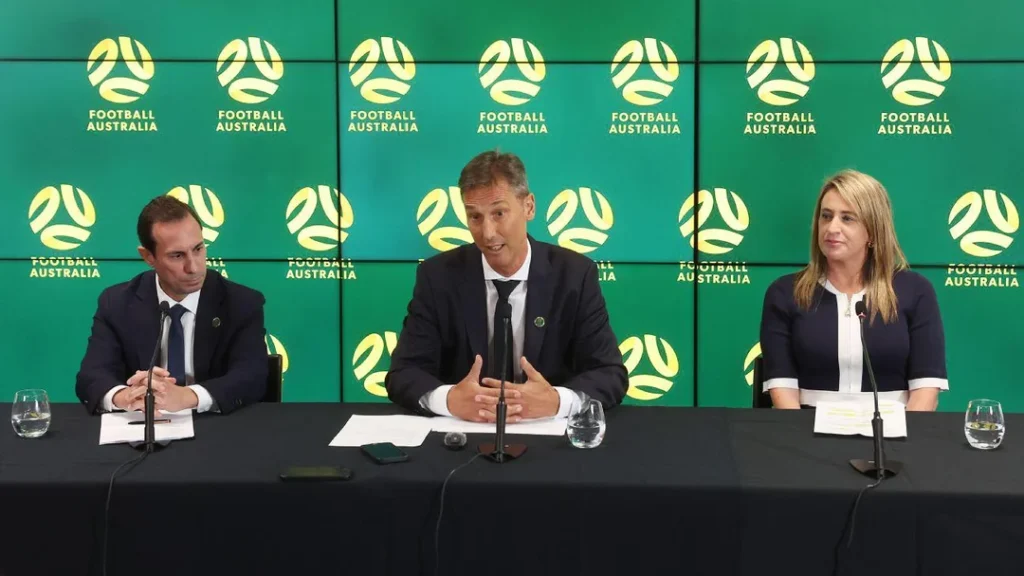
Global marketing and advisory firm Bastion has strengthened its leadership team with the appointment of Peter Filopoulos as Managing Director, Experience. This decision brings one of Australian football’s most influential administrators into a new phase of the sports business landscape.

Filopoulos, who has held senior roles across Football Australia, Football Victoria and Perth Glory, will lead Bastion’s experiential and partnerships division, applying a football-informed lens to brand engagement.

Drawing on his time in the game, Filopoulos emphasised the importance of cohesion in building meaningful fan connections.

“For me, the biggest lesson is that fans don’t see brand, content and experience as individual silos, they experience it all as one connected ecosystem,” he said.

“At Football Australia, the work resonated most when everything was aligned; the team, the narrative, the partners and the matchday experience all working together to feel cohesive and authentic. That’s when engagement moves beyond interaction and becomes something far more meaningful.”

He added that too many organisations still treat fan engagement as short-term.

“Where a lot of organisations fall short is treating fan engagement as a campaign. It’s not, it’s an always-on system.”

Filopoulos’ move reflects a broader shift within football, where commercial growth is increasingly driven by experience-led strategy.

“At Bastion, we put experience at the centre—because it’s where the brand comes to life, where partners integrate in a way that adds real value and where fans genuinely connect,” he said.

“Our focus is on building platforms that bring fans closer to the brand… Get that right, and you’re creating something people actively want to be part of.”

10:1 Against the World Game: Hume City Council’s Budget Is a Kick in the Guts for Football

The numbers don’t lie. While football leads participation across the state, Hume City Council is spending ten times more on AFL infrastructure - exposing a funding imbalance that can no longer be ignored.

Across Melbourne’s northern suburbs, football clubs are doing everything they can to keep up with demand.

Participation is rising. Teams are expanding. Young players inspired by the Matildas are flooding into community clubs. Training schedules are being pushed later into the night and volunteers are stretching limited facilities simply to keep pace with growth.

But behind the scenes, there is a problem quietly building and it is one that has little to do with the passion of players or the commitment of grassroots clubs.

It sits inside council budgets.

And when the numbers are examined closely, the picture becomes impossible to ignore.

The City of Hume’s current budget reveals a funding reality that should concern every football participant and every ratepayer in the municipality.

For every dollar spent on football infrastructure, Hume City Council is spending roughly ten dollars on AFL and oval-based facilities.

A 10:1 funding ratio against the world game.

For a sport that leads participation across Victoria, that figure isn’t just disappointing – it’s a kick in the guts for football communities across the municipality.

And for those watching the game grow while infrastructure continues to lag behind, it represents something even more troubling.

Ignorance hiding in plain sight.

The Numbers Inside Hume’s Budget

The City of Hume’s 2025-26 capital works program allocates roughly $1.55 million to football-specific infrastructure projects.

That includes:

$1.265 million for the renewal of the synthetic pitch and lighting upgrade at John Ilhan Memorial Reserve

$250,000 for portable change rooms supporting Upfield Soccer Club at Gibb Reserve

$35,000 for a goal cage for Roxburgh Park United Soccer Club

Important projects for the clubs involved, without question.

But when placed alongside the rest of the sports infrastructure spending in the same budget, the disparity becomes glaring.

Oval-based facilities – primarily serving AFL and cricket – receive close to $15 million in funding.

Projects include:

$4.71 million for the Willowbrook Recreation Reserve pavilion expansion

$3.45 million for the Vic Foster Reserve pavilion upgrade

$1.795 million for the redevelopment of Johnstone Street Reserve

$1.294 million for change room upgrades at Lakeside Drive Reserve

$1.207 million for the Bradford Avenue Sports Ground upgrade

Lighting upgrades, pavilion improvements and reserve master planning across additional oval facilities push the total even higher.

The bottom line is simple.

Ten dollars for AFL infrastructure.

One dollar for football.

The Participation Gap No One Wants to Acknowledge.

The imbalance we see in Hume mirrors a broader trend across Victoria.

Participation data shows football sitting comfortably at the top of the sporting ladder, yet infrastructure investment tells a very different story.

Across the state:

Football: approximately 260,000 participants, receiving around $9.31 million in infrastructure investment annually

Netball: around 100,000 participants, receiving $14.35 million

Cricket: roughly 80,000 participants, receiving $33.55 million

AFL: about 140,000 participants, receiving $39.17 million

The sport with the largest participation base receives dramatically less infrastructure funding than codes with significantly fewer players.

Football is carrying the participation numbers.

Other sports are receiving the infrastructure.

And when councils continue allocating funding based on outdated participation assumptions, the gap only widens.

The Pattern Across Melbourne

Hume’s spending decisions sit within a broader trend across metropolitan Melbourne.

In Whitehorse, $28 million has been committed to the redevelopment of Box Hill City Oval.

In neighboring City of Boroondara, significant funding is being directed toward the refurbishment of the Michael Tuck Stand.

Again, the issue is not whether these facilities deserve investment.

Community infrastructure should absolutely be maintained.

But when tens of millions are flowing into upgrades for oval venues while football clubs across Melbourne struggle to secure additional pitches, the imbalance becomes difficult to ignore.

Participation growth is happening in football.

Infrastructure investment is happening somewhere else.

The Frustration From Industry

There is another dimension to this issue that is rarely discussed.

In recent conversations I’ve had with business leaders and industry advocates working across the sports technology and recreation sector, many have openly vented their frustration about the lack of understanding from government when it comes to football’s broader ecosystem.

These are entrepreneurs and innovators working in areas such as performance data, AI scouting platforms, wearable technology, fan engagement systems and digital broadcast infrastructure.

Industries shaping the future of global sport.

Yet many say football innovation in Australia continues to be misunderstood by policymakers who still frame sport through traditional codes rather than recognising the scale of the global football industry.

The irony is clear.

While councils debate whether football deserves additional community pitches, the global football economy is expanding rapidly across technology, data, manufacturing and commercial innovation.

If Australia fails to recognise that opportunity, we risk missing out on industries that will define the future of sport.

A Growing Movement for Change

Last week, the Level the Playing Field campaign was launched at the Victorian State Parliament to raise awareness about exactly this issue.

The campaign highlights the growing gap between football participation and football infrastructure investment across the state.

It shines a light on a reality that grassroots clubs experience every week.

Football participation is surging.

Infrastructure investment is not keeping pace.

And unless that imbalance is addressed, the sport’s growth will eventually collide with the limits of available facilities.

If Not Now, When?

Australia has never had greater momentum behind football.

The Matildas have inspired a new generation of players.

Participation continues to grow across communities.

Clubs are expanding.

Demand is rising.

And yet the infrastructure conversation remains stuck in the past.

If councils cannot recognise football’s growth now – when participation is leading the state and the global opportunity around the sport continues to expand – then the question becomes unavoidable.

If not now, when?

A Civic Responsibility to Speak Up

As CEO of Australia’s leading football business magazine, Soccerscene, I believe it is our civic duty to raise awareness about these issues and help break down the barriers that continue to hold the game back.

For too long, football’s infrastructure challenges have been discussed quietly within the sport itself.

That must change.

Advocating for the growth of the game – and ensuring decision-makers understand the participation reality – is not just about football.

It is about communities, opportunity and fairness for the sport played by more Australians than any other code.

Championing that conversation is part of our responsibility to the game, to the industry that surrounds it, and to the communities that continue to drive its growth.

The Question That Cannot Be Ignored

The numbers inside the Hume City Council budget are clear.

A 10:1 funding ratio against the world game.

For the largest participation sport in the state, that statistic should prompt serious reflection.

As I’ve said before:

“When Hume City Council spends ten times more on AFL infrastructure than the world game, despite football’s participation growth, the problem isn’t demand – it’s ignorance staring us in the face as ratepayers.”

Football is not asking for special treatment.

It is asking for proportional investment that reflects participation, growth and opportunity.

Because if the sport with the largest participation base continues to receive only a fraction of infrastructure investment, the problem is no longer participation.

The problem is how decisions are being made.

And communities across Melbourne are starting to notice.

Most Popular Topics

Editor Picks

Send this to a friend