WOW HYDRATE and Manchester United’s ‘Red Cherry’ drink aligned with mutual values

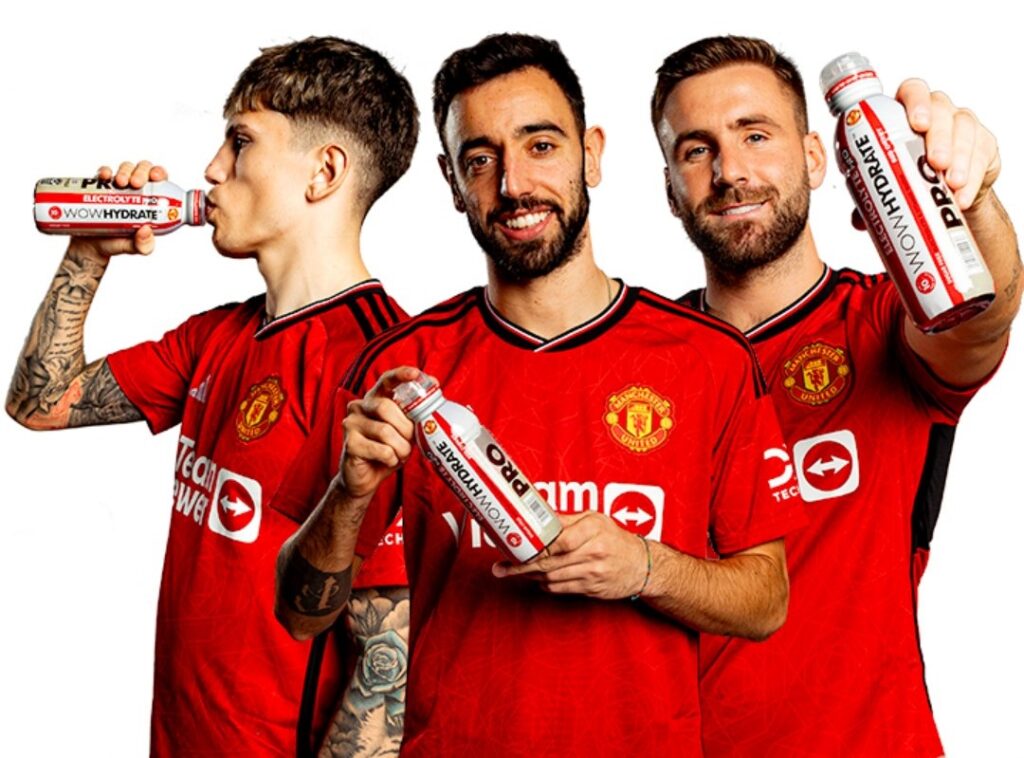
WOW HYDRATE launched its first-ever co-created ‘Red Cherry’ flavoured drink, working alongside one of the world’s biggest football clubs – demonstrating the shared mission of the two organisations that started with a multi-year global sponsorship from November last year.

WOW HYDRATE is a sports drink brand influencing the future of sports and fitness hydration, through its health benefits in the products.

Their range contains drinks with four essential electrolytes and vitamins B6, C & D – while also being sugar, fat and gluten free.

England and Manchester United centre-back Harry Maguire is a brand ambassador for WOW HYDRATE, who also partner with world heavyweight champion Tyson Fury, UK boxing promotion company BOXXER, West Ham United Women’s team, rugby club Castleford Tigers and Essex Cricket.

At the heart of these collaborations is WOW HYDRATE Managing Director Queenie Porter, who shared how the new ‘Red Cherry’ drink came about.

Harry Maguire is an ambassador from Manchester United.

“We had a board meeting last summer and we have some great individual ambassadors while also prominent in the world of boxing, so we asked how can we take the next step,” she told Soccerscene.

“We were wondering how we can resonate with the sport world and touch base with the consumer.

“When looking at football clubs, the number one priority was Manchester United because they are the biggest in the world.

“It was a mutual connection because they were looking for a hydration partner, and we were of course looking for a football club. The deal happened so quickly not in a rush, but because our values aligned so well – Manchester United are fan first, whereas we are consumer first.

“The way that Manchester United run their business is like one big family – from a receptionist all the way up to CEO.

“Both of us operate in the same manner and we just clicked as a result.”

While the sports drinks are prominent in UK-based Tesco stores, we will expect to see a greater expansion in the near future.

Porter shared what we can look forward to.

“We are planning to rollout WOW HYDRATE into 600 Woolworths stores in Australia from late April this year,” she said.

“It adds to our existing reach in Dubai and Saudi Arabia, while this year will also see the push into Europe including Spain and France – while we’ll also enter the United States towards the backend of 2024.

“We want to ensure that everything will be aligned and Manchester United will be a key part of that – whenever we venture somewhere new, the Club will be involved in the launch.”

Porter on the touchline of Old Trafford with the ‘Red Cherry’ drink.

In her role, Porter is passionate about getting the very best out of women’s sport.

Rather than competing, she sees it from a different lens when assessing fan demographics.

“Naturally I’m really passionate about women’s sport, particularly in football,” she said.

“What I want to use my platform for is to support the women’s game in its own identity.

“There’s a lot around people wanting to make the men’s and women’s game equal, but I just want to focus on making the women’s game the best it can be in its own standing.

“It brings in a much more family audience, so from a brand perspective you can tap into what you otherwise would not have before.

“Women have different needs to men such as in recovery, so I want to ensure that women have the support there.

“For example with ACL injuries, our protein drink is one of the best ways to recover white muscle tissues.”

Porter with the Manchester United home shirt.

A key orchestrator of the collaboration was Victoria Timpson, Manchester United’s CEO of Alliances and Partnerships.

The Red Devils will support WOW HYDRATE in promoting all the benefits they offer.

“We are very proud to have welcomed WOW HYDRATE as Manchester United’s official sports hydration partner and excited to work with the brand on educating our fans on the importance of hydration and the science behind its products,” she said exclusively to Soccerscene.

“WOW HYDRATE’s ability to work with the club to collaborate on the dual branded Red Cherry hydration drink and make it available to our fans within months of announcing the partnership, demonstrates its strong position within the global market. WOW HYDRATE has been well received by our fans and we look forward to building on this throughout the partnership.”

WOW HYDRATE’s health benefits in its drinks allow a club like Manchester United to rest and recover from strenuous schedules including the Premier League and European competition.

The household name that is Manchester United, coupled with international expansion, makes WOW HYDRATE a name that’s one to watch.

For full details and its products, you can view WOW HYDRATE’s website here.

Previous ArticleNext Article

SBS confirms exclusive Australian rights to 2030 FIFA World Cup

SBS has officially secured the exclusive Australian broadcast rights to the 2030 FIFA World Cup, meaning Australians will again be able to watch all 104 matches of the tournament live and free. The network will carry the tournament across television, video and radio and, as with 2026, all games will be streamed via SBS On Demand. 

The agreement was confirmed on 1 September, and will see the long-running partnership between the broadcaster and FIFA extend to 44 years. SBS first broadcast the World Cup 1986, when Argentina won the tournament in Mexico.

SBS Managing Director Jane Palfreyman said the World Cup remained central to the broadcaster’s role in Australian football, bringing Australians together across cultures, languages and communities.

The new deal follows a strong 2026 edition. More than 18 million Australians watched the coverage, while SBS also recorded more than 209 million hours of consumption across its World Cup content. Approximately 55 per cent of this consumption came via digital platforms. SBS offered full matches alongside shorter ‘mini match’ recaps through SBS On Demand.

First reporting that SBS and FIFA had extended their partnership emerged in July, although had remained unconfirmed until this point.

The latest announcement confirms that reporting. The earlier report also highlighted the importance of the deal for Australian football fans. SBS would retain a free-to-air pathway to every World Cup match. The deal also gives certainty around one of the biggest sporting properties in the world. This is particularly relevant as FIFA and its president Gianni Infantino come under increased pressure.

The 2022 edition saw FIFA increase its valuation over broadcast rights, with key markets such as China having a price tag of $349 million ($250 million USD) from the governing body. For Australian football, the significance goes beyond the tournament itself.

The World Cup remains one of the sport’s biggest drivers of mainstream attention. Keeping every match live and free gives Australian fans continued access to the competition without a subscription barrier.

Europe Is Packing Out Stadiums – Is Australia Missing the Bigger Picture?

More than 60 million fans attended matches across Europe’s five major domestic leagues during the 2025/26 season, with average attendances rising 2.4 per cent to 34,402 spectators per game.

On the surface, the figures paint a picture of a healthy ecosystem. Stadiums are fuller than ever, supporters continue to attend in large numbers and live football remains one of the most compelling entertainment products in the world.

But headline crowd figures only tell part of the story.

The more revealing measure is stadium utilisation how much of a venue’s capacity is actually being filled and the structural factors influencing those numbers.

For clubs, higher attendances don’t simply mean more ticket sales. Every additional supporter creates revenue opportunities across hospitality, food and beverage, merchandise and memberships. Modern stadiums are increasingly designed to maximise revenue per visitor, making infrastructure investment as much a commercial decision as a football one.

Attendance growth needs context

In Germany, the Bundesliga reclaimed its position as Europe’s best-attended league, averaging more than 42,300 spectators per match following a 9.4 per cent increase on last year’s figures.

However, much of that growth was driven by the return of traditional powerhouses Hamburger SV and 1. FC Köln. Both clubs continued to attract crowds of more than 50,000 despite spending recent seasons in the second division.

Their promotion didn’t suddenly create new supporters.

It returned two of German football’s biggest fan bases to the top flight, demonstrating how promotion and relegation can significantly influence league-wide attendance trends.

Everton shows how new stadiums can unlock demand

While the Premier League recorded another increase in average attendance, much of that growth can be traced to Everton’s move into the new Hill Dickinson Stadium. The larger venue added almost 13,000 spectators per home match compared with Goodison Park, accounting for more than half of the league’s overall attendance growth during the season.

Rather than generating new demand, the project unlocked demand that already existed.

That distinction matters.

Attendance should be viewed alongside stadium utilisation because many clubs have effectively reached capacity.

A stadium averaging 98 per cent capacity tells a very different story to one averaging 60 per cent, even if the latter attracts more spectators overall.

High utilisation suggests strong demand, pricing power and a compelling matchday experience, while lower utilisation can indicate untapped potential or a venue unfit for its market.

Capacity is becoming a strategic issue

In competitions where grounds are regularly close to full, future growth will depend less on attracting new supporters and more on expanding or redeveloping stadiums.

Elsewhere, the opportunity lies in making better use of existing capacity.

Spain illustrates how infrastructure can also temporarily suppress attendances. Barcelona’s continued absence from the Spotify Camp Nou during its redevelopment has limited crowd numbers despite strong demand.

Real Madrid’s renovated Santiago Bernabéu, meanwhile, demonstrates how modern stadium investment can increase not only capacity but also commercial revenue through premium hospitality.

League structures also shape attendance trends

Ligue 1’s growth over recent seasons has coincided with its reduction from 20 clubs to 18, concentrating a greater number of well-supported clubs within the competition and lifting average attendances as a result.

Stadium investment, league composition, promotion and relegation, and long-term supporter culture all play a role.

Taken together, the figures suggest that attendance growth is rarely driven by a single factor.

The lesson for Australian football

Crowd figures are often viewed as the primary indicator of a league’s health, but European football demonstrates that context matters just as much as the headline number.

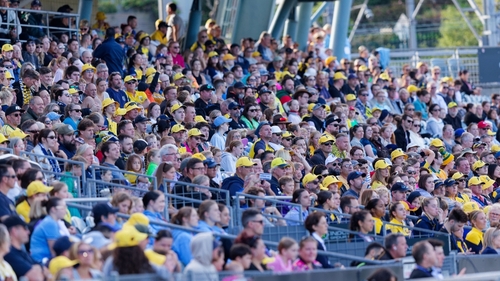
The recent Australia Cup fixture between South Melbourne and Preston Lions provides a good local example. While the official attendance was 6,673, the packed grandstands, active supporter groups and television presentation created an atmosphere that felt far larger than the raw figure suggested.

It was a reminder that fan engagement, venue utilisation and matchday experience can often say more about the health of a competition than attendance alone.

A sold-out 15,000-seat stadium may indicate stronger demand than a half-full 30,000-seat venue, while investment in infrastructure can unlock thousands of additional supporters without changing underlying interest in the game itself.

As clubs continue to invest in new stadiums and redevelop existing venues, attendance should increasingly be measured not simply by how many people are watching, but by how effectively football is meeting supporter demand.

The crowds may be rising, but the real story is why.

Most Popular Topics

Editor Picks

Send this to a friend