

777 Partners seeking completion of Everton deal

American firm 777 Partners are nearing the completion of their takeover at Everton after a long seven-month process is heading towards its conclusion.

As reported by TEAMtalk, 777 sources have confirmed that they have now passed the Premier League’s Owners’ and Directors Test on the basis that they pay back an outstanding loan to MSP Sports Capital.

The firm are not expecting an imminent announcement from the Premier League but as mentioned, are confident that the takeover will be finalised around May time, ready for the all-important summer window.

However, Everton are keeping their options open and are actively looking at backup options in case this deal falters at the last minute. It remains a real interesting story that has mixed reports and an air of  scepticism about it.

MSP and two Liverpool-based businessmen Andy Bell and George Downing loaned Everton £158m ($303m AUD) which was due to be returned on Monday this week.

A short-term extension of the loan – taken out by majority shareholder Farhad Moshiri but which 777 have to pay if their takeover is to proceed – has been agreed in principle.

777 have stakes in many other clubs around Europe and the world including Hertha Berlin, Genoa, Standard Liege and A-League giant Melbourne Victory.

There is little doubt that there are mixed results regarding the clubs they takeover with a few angry protests and controversies shining the light on a potential shaky move that Everton couldn’t afford to go wayward.

At German side Hertha Berlin, they say that they ‘don’t have as much control as they would like’ and ‘haven’t been able to make the changes they would like there’, hindered by the German rules on ownership.

After the German side’s relegation last season from the Bundesliga and slow start to life in the 2. Bundesliga this season, there were many fan protests and banners attacking 777 owner Josh Wander however the cub have managed to steer the ship this season and sit in 7th place with four games remaining.

777 believe that they have done a good job with Italian club Genoa, however, who were promoted back into the Serie A last season under their stewardship.

They managed to improve finances, particularly through smart transfers like buying Radu Dragusin for £4.3m ($8.25m AUD) and selling him on to Tottenham just a year later for a huge fee of £26.7m ($51.25m AUD).

777 have missed payments on occasion at Standard Liege, but they have since been paid. They claim that they are battling against the financial mismanagement of previous owners and have lifted the carpet at the Belgian side to find many skeletons.

For Everton, after two points deductions that added up to eight points, the key for this move to run smoothly is to remain a top flight club in 2024/25 which they are in a fantastic position to do so after a controversial 2-0 win over Nottingham Forest on the weekend.

Everton will ‘not be a closed shop’ once they take control of the club and they aim to build their income and sustainability in the years.

It also leaves an interesting discussion as to Everton’s transfer strategy following their strict FFP rules that can’t be broken again.

The firm, led by CEO Josh Wander, intend to back the Toffees’ sporting director Kevin Thelwell and are hoping to strengthen the side this summer.

They do concede that the sale of key players such as Amadou Onana, Jarrad Branthwaite and Jordan Pickford may be required to balance the books, however.

777 claim they will do everything they can to avoid a third points deduction which would be placed on the club in 2024/25.

They also say that they will put a big focus on improving the Merseyside club’s academy, insisting that it will be utilised “correctly” and hope to have more homegrown talent break into the first team.

With the new stadium built and ready to go in 2025/26, the revenue streams will improve and there is a tiny light at the end of the tunnel, as long as the Toffees can continue to do their job on the pitch and secure the Premier League broadcasting money that is required to pay off loans and debt.

Despite the very loud outside noise and criticism, 777 remain calm about the debt being paid off before the deadline and the deal will be finalised.

777’s history and mixed results at other clubs leave this one in the air, and despite fans not wanting this move to occur, it could be one that saves Everton from a worst case scenario of administration after years of financial hardship.
Previous ArticleNext Article

Football Has the Audience. Does It Have the Commercial Strategy?

Soccerscene has launched Survey 4: Commercial Confidence in Football, calling on clubs, sponsors, governing bodies, commercial leaders and football industry professionals to assess whether the game is making the most of its enormous commercial potential.

Football has the audience, participation base and community reach to be one of Australia’s most powerful commercial platforms. But does the industry have the commercial strategy, professionalism and infrastructure required to turn that potential into sustainable growth?

That is the question at the centre of Soccerscene’s latest industry research.

The survey examines how attractive grassroots football is to potential commercial partners, what industry professionals believe is limiting football’s commercial potential, and whether clubs are presenting themselves professionally enough to sponsors.

It also explores what sponsors value most when engaging with football – from community reach and participation scale to brand alignment, values and purpose – as well as whether improved facilities could directly contribute to stronger sponsorship outcomes.

Is football fully capitalising on its commercial opportunity?

Football continues to provide brands with access to highly engaged communities across grassroots, community and elite environments. Yet the commercial landscape remains fragmented, with clubs operating with vastly different levels of resources, capability, governance, media infrastructure and commercial expertise.

Soccerscene’s survey is designed to capture the industry’s perspective on where the opportunities exist – and where football may be leaving commercial value on the table.

The research will look specifically at four key areas:

  • Commercial attractiveness – How attractive is grassroots football as a commercial partnership?
  • Commercial barriers – What is holding football back from reaching its full commercial potential?
  • Club professionalism – Are clubs presenting themselves effectively and professionally to sponsors?
  • Sponsor value – What are sponsors really looking for when they invest in football?

The survey also asks whether better facilities would have a direct impact on sponsorship outcomes, highlighting the potential relationship between infrastructure, commercial presentation and investment.

Have your say

Soccerscene is encouraging football clubs, sponsors, commercial professionals, governing bodies, administrators, media professionals and industry stakeholders to participate.

The findings will contribute to Soccerscene’s ongoing program of industry research, designed to provide a clearer picture of the challenges and opportunities facing football and the organisations operating within it.

Take the Survey: Commercial Confidence in Football

Complete the Commercial Confidence in Football Survey here

The survey will close on 30 August 2026 at midnight, with responses received before the deadline included in the final analysis.

Football has the audience. The question is whether it has the commercial strategy to match.

Football Queensland’s Logan hub plan rejected by council

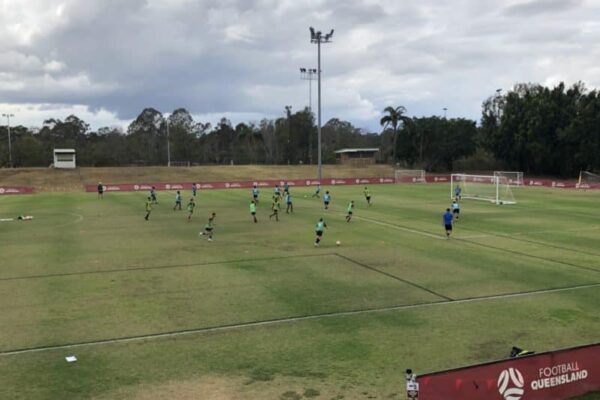
Football Queensland’s plans for a major new football hub at Meakin Park have been rejected by Logan City Council. The proposed $76.1 million redevelopment aimed to create a state home for football in Queensland.

Council unanimously rejected Football Queensland’s request for longer-term leases and additional land at the Slacks Creek site. The decision leaves the organisation’s current leases in place. The proposed development would have delivered new playing fields, elite training facilities and a dedicated home for Football Queensland.

Three-stage development

The first stage of Queensland Football’s development carried an $8.5 million price tag. It would upgrade fields, lighting, drainage and irrigation across Meakin and Mappas parks. The goal was to create a six-field, international-standard training venue.

The second stage represented the largest investment. Football Queensland planned to spend $55.3 million on a new headquarters at the adjoining Queens Park site. The facility would include a Women and Girls Academy, sports science facilities, sports medicine and strength and conditioning services.

A third $12.3 million stage would add an indoor futsal academy and two synthetic fields. Football Queensland said the project could create a major football precinct for the region. It also saw the facility playing a role in Queensland’s preparations for Brisbane 2032 and beyond.

Lease decision creates roadblock

Queensland’s governing body sought a 25-year lease with an option for another 25 years. Chief executive Robert Cavallucci said longer tenure was essential to secure government funding and move the project forward. The organisation has around three years remaining on its existing leases.

Council took a different view. Concerns included community access, funding certainty, future costs and the level of use at the existing facilities. Councillors also questioned whether a long-term arrangement would deliver enough benefit to Logan residents and grassroots clubs. Logan Council has now ordered a review of Football Queensland’s performance under its current lease.

Grassroots football at the centre

The decision highlights a wider issue for football infrastructure. Major facilities can provide elite pathways, sports science and high-performance opportunities, but unless councils can ensure local players and clubs can access the fields, they will be rejected.

Meakin Park already serves several sporting organisations, including football users and community sporting groups. Football Queensland said it had invested almost $2 million at Meakin Park and Mappas fields. It also argued the precinct operates at around 130 per cent capacity. For Queensland football, the challenge now is finding a model that can deliver high-performance facilities while expanding access for the community.

The proposal may have been rejected, but the need for better football infrastructure remains. With participation growing and Brisbane’s 2032 Olympic Games approaching, the debate over where and how Queensland builds its next generation of football facilities is unlikely to disappear.

Most Popular Topics

Editor Picks

Send this to a friend